.webp&w=384&q=75)

Loading, please wait...
Loading, please wait...

The framework consists of four key phases: development, feasibility, evaluation, and implementation. These phases are designed to systematically address uncertainties and ensure that health interventions are evidence-based and practical.
Digital tools evolve much faster than traditional medical treatments. Iterative research allows for constant software refinement and user interface adjustments based on pilot feedback before committing to expensive, large-scale clinical trials.
A structured framework provides clear progression criteria, which prevents the premature evaluation of underdeveloped tools. Consequently, this leads to higher-quality evidence and reduces the loss of time and funding in the research process.
Disclaimer: This content is for informational and educational purposes only. It does not constitute professional medical advice, diagnosis, or treatment. Always seek the advice of your physician or other qualified healthcare provider with any questions you may have regarding a medical condition. Refer to the latest local and national guidelines for clinical practice.
References
Collin C et al. Current Practices and a Novel Operational Framework for Planning Research on Digital Health Promotion Interventions From Development to Implementation: Scoping Review. J Med Internet Res. 2026 May 06. doi: 10.2196/82611. PMID: 42090719.
Skivington K, et al. A new framework for developing and evaluating complex interventions: update of Medical Research Council guidance. BMJ. 2021;374:n2061.
Murray E, et al. Evaluating digital health interventions: key questions and approaches. Am J Prev Med. 2016;51(5):843-851.
"
Read summarized clinical updates, watch expert medical content, and earn CME certifications right from your smartphone.
Open your smartphone camera to scan and install.





A new scoping review introduces a flexible operational framework to guide the development and implementation of digital health interventions, reducing resea...
5 months ago

A retrospective cohort study reveals that frailty quadruples the odds of pressure injuries in hospitalized older adults. Integrating the Clinical Frailty Scale with comprehensive geriatric care is crucial for identifying vulnerability early and implementing targeted multidisciplinary prevention.
Today

Occult maternal malignancy accounts for 3.82% of persistent unreportable NIPT results with genomic noise. Multiple chromosomal aberrations, notably on chromosome 18, warrant thorough oncological evaluation and whole-body MRI to ensure timely maternal diagnosis while preserving fetal care.
Today

This article reviews the forensic and clinical complexities of acute myocarditis arising on left ventricular hypertrophy in children, highlighting early diagnostic red flags and multidisciplinary postmortem autopsy protocols.
Today
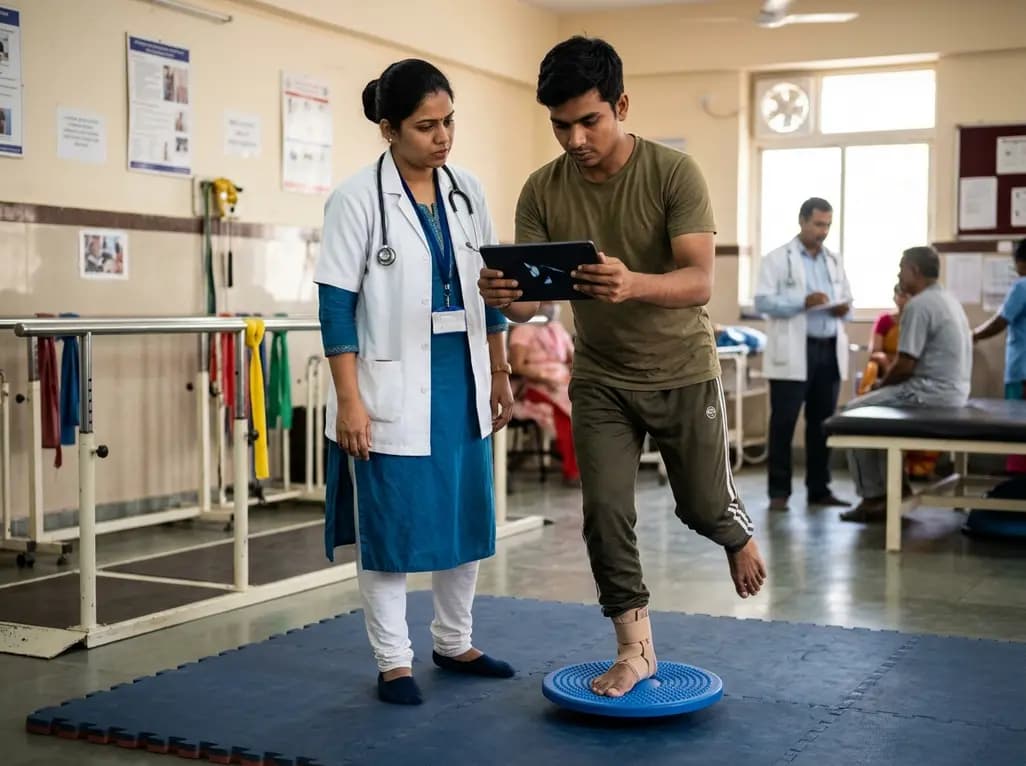
A randomized controlled trial demonstrates that an eight-week dual-task training intervention significantly improves static and dynamic postural control over standard balance exercises in individuals with chronic ankle instability, addressing critical neurocognitive deficits during athletic and daily activities.
Today

A retrospective cohort study of 7,716 ICU patients from the MIMIC-IV database demonstrates that Gradient Boosting Decision Trees significantly outperform traditional SOFA scores in predicting in-hospital mortality among patients with sepsis and diabetes, with SHAP analysis providing clinical interpretability.
Today
