

Loading, please wait...
Loading, please wait...

Advances in early detection and multimodal oncology treatments have dramatically increased the global population of cancer survivors. Consequently, health systems encounter escalating economic expenditures and care coordination challenges. Integrating innovative digital health cancer survivorship tools offers a practical path to reduce healthcare expenditures while maintaining high-quality supportive care across diverse patient cohorts.
Modern oncology has transformed many malignant conditions into manageable chronic illnesses. However, this clinical success creates substantial long-term demands on health services. Survivors frequently experience persistent physical complications, psychological distress, and elevated risks of secondary malignancies. Traditional post-treatment models rely heavily on scheduled, resource-intensive outpatient visits. These routine clinic consultations often create severe financial and logistical strains on patients and tertiary hospitals alike. In lower- and middle-income countries such as India, travel expenses, wage loss, and high out-of-pocket spending compound the problem. Furthermore, regional oncologists face immense patient loads that limit personalized post-treatment engagement. Therefore, clinicians must re-evaluate routine follow-up protocols. By shifting stable survivors away from recurring hospital visits toward structured digital models, health systems can preserve vital clinical capacity for acute cancer cases while reducing out-of-pocket costs for families.
Digital health solutions span diverse technologies, including smartphone applications, remote symptom monitoring portals, wearable sensors, and conversational artificial intelligence agents. These digital platforms actively gather patient-generated health data between scheduled appointments. When patients record abnormal symptoms or declining functional metrics, algorithmic triage flags the deviation for timely clinical escalation. Furthermore, digital therapeutics provide interactive lifestyle coaching, physical rehabilitation guidelines, and cognitive behavioral interventions directly into the patient's home. Consequently, survivors gain continuous access to supportive resources without traveling long distances. Mobile health also minimizes unnecessary emergency room admissions through early recognition of manageable complications. In resource-constrained settings, automated educational modules empower patients to practice effective self-management. Thus, remote technological tools effectively bridge the geographical gap between centralized cancer centers and rural populations.
Although digital interventions show strong clinical and psychosocial efficacy, healthcare payers demand rigorous proof of their financial viability. A landmark systematic review protocol by Liu and colleagues establishes a robust framework to appraise economic evaluations in this domain. Researchers systematically synthesize full and partial economic analyses, including cost-utility, cost-effectiveness, and cost-benefit studies. Data extraction follows the World Bank framework for digital health evaluations to examine costs across programmatic, societal, and patient perspectives. Additionally, investigators apply the Consolidated Health Economic Evaluation Reporting Standards checklist to critique study reporting quality. Preliminary screening of thousands of records yielded 46 eligible economic studies evaluating diverse digital tools. Rigorous synthesis of this evidence helps healthcare administrators establish whether technological investments provide tangible value for money. Transparent economic reporting ultimately prevents unnecessary expenditures on redundant digital infrastructure.
Determining the cost-effectiveness of supportive oncology applications requires comprehensive evaluation of incremental cost-effectiveness ratios. Developing, maintaining, and securing digital platforms requires notable upfront capital. However, successful digital platforms offset operational costs by lowering downstream acute care consumption. For instance, continuous remote symptom monitoring prevents severe chemotherapy-related toxicities and reduces preventable readmissions. In addition, digital lifestyle and exercise interventions improve metabolic parameters and functional independence among breast and colorectal cancer survivors. These physical improvements directly translate into reduced cardiovascular morbidity and lower long-term medication use. Moreover, virtual survivorship visits reduce lost workplace productivity for working-age survivors and family caregivers. Hence, comprehensive economic models that incorporate societal perspectives often reveal that digital supportive care is cost-effective or even cost-saving over extended analytic horizons.
India's unique healthcare landscape presents both pressing needs and extraordinary opportunities for digital oncology care. Most comprehensive cancer centers operate in major metropolitan areas, forcing non-urban patients to travel hundreds of kilometers for brief surveillance visits. As a result, many survivors drop out of active surveillance, leading to delayed detection of recurrences. Fortunately, widespread mobile telecommunication infrastructure offers an ideal delivery mechanism for decentralized survivorship programs. Community health workers and general practitioners can leverage digital checklists to monitor survivors locally while consulting oncologists through telemedicine. Nevertheless, clinicians must ensure digital tools feature intuitive regional-language interfaces to overcome low health literacy. Standardizing reimbursement policies for digital survivorship consultations will further accelerate widespread clinical adoption across private and public sectors.
Disclaimer: This content is for informational and educational purposes only. It does not constitute formal medical or financial advice. Clinicians must exercise independent professional judgment. Refer to the latest local and national guidelines for clinical practice.
References
Liu J et al. Economic Evaluations of Digital Health Interventions for Cancer Survivorship Care: Protocol for a Systematic Review. JMIR Res Protoc. 2026 Nov 13. doi: 10.2196/101773. PMID: 43024883.
Gentili A et al. The cost-effectiveness of digital health interventions: A systematic review of the literature. Front Public Health. 2022;10:787135. doi: 10.3389/fpubh.2022.787135.
Soto-Perez-de-Celis E et al. Feasibility and Cost of Telehealth Head and Neck Cancer Survivorship Care: A Systematic Review. J Cancer Surviv. 2023;17(3):680-692. doi: 10.1007/s11764-023-01362-7.
Digital health interventions reduce overall expenditure by minimizing routine in-person hospital visits, lowering transportation costs, and avoiding patient wage losses. Furthermore, continuous remote monitoring identifies treatment-related complications early, preventing expensive emergency department presentations and hospital readmissions. Consequently, digital platforms offer favorable incremental cost-effectiveness ratios by improving patient quality-adjusted life years while optimizing clinical workforce efficiency across institutional and societal perspectives.
Health economists utilize standardized frameworks such as the Consolidated Health Economic Evaluation Reporting Standards checklist to assess reporting transparency and methodological rigor. Reviewers evaluate whether studies clearly define time horizons, perspective types, discounting rates, and measurement of relevant health outcomes. Additionally, investigators employ international frameworks, including World Bank benchmarks, to examine infrastructure setup expenses, ongoing software maintenance, and comparative cost consequences.
Yes, healthcare systems can successfully deploy digital oncology interventions in low-resource environments by utilizing basic mobile technologies and regional languages. Telemedicine consultations, automated text messaging, and mobile monitoring allow local community health workers to coordinate post-treatment surveillance effectively. This decentralized strategy dramatically lowers travel burdens for rural survivors while maintaining direct communication lines with tertiary regional cancer centers.

Read summarized clinical updates, watch expert medical content, and earn CME certifications right from your smartphone.
Open your smartphone camera to scan and install.





As cancer survival rates rise globally, healthcare systems face increasing economic pressures. This review examines how digital health tools, AI-driven monitoring, and telehealth optimize resource allocation and clinical outcomes for post-treatment cancer survivors.
Today
A multicenter study validates a machine learning-guided recalibrated SOFA score, demonstrating significantly improved ICU mortality discrimination while preserving the simple, additive, point-based structure critical for bedside decision-making.
Today

A landmark study reveals that lipid-rich malignant ascites alters the T-cell metabolic transcriptome, causing cholesterol efflux and impaired fatty acid oxidation. This suppresses TCR signalling and blocks BiTE immunotherapy, while lipid depletion restores antitumour cytotoxicity in ovarian cancer.
Today

A registry study of 4,989 patients evaluates transvenous lead extraction for right-sided cardiac devices. Despite longer dwell times and older leads, right-sided extractions achieve high procedural success and comparable safety to left-sided approaches.
Today
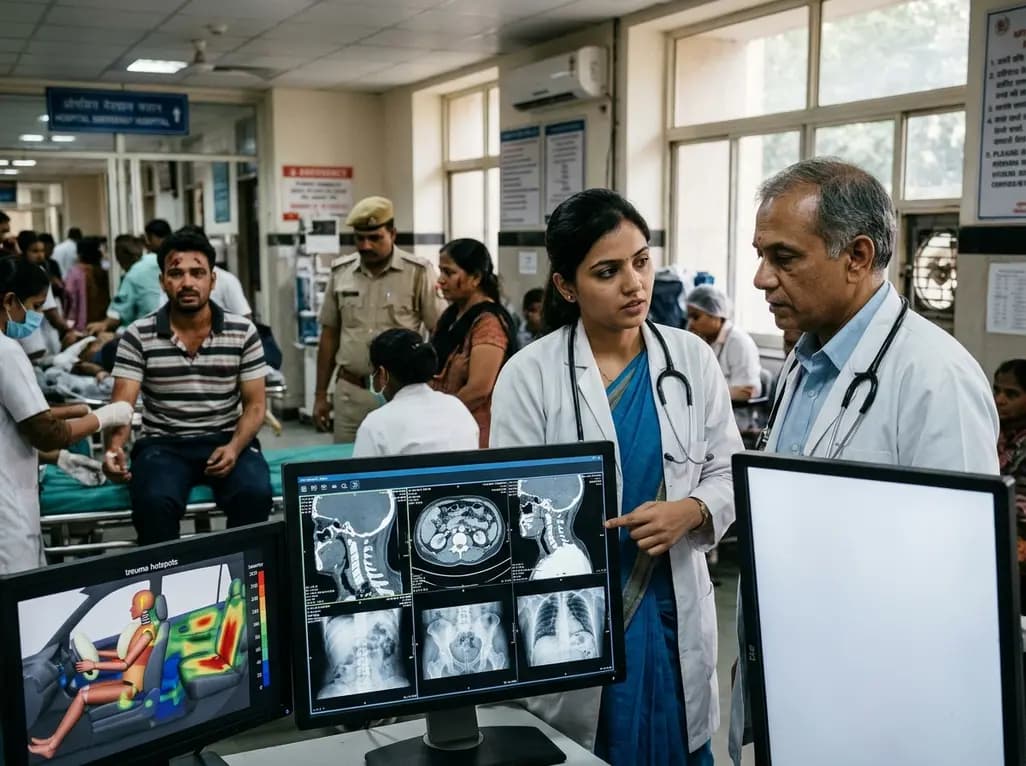
Recent crash analyses demonstrate significant variations in traffic injury severity across vehicle seating positions. Electric vehicle passengers face disproportionately higher trauma risks than drivers, particularly during airbag deployments, demanding adapted emergency assessment and clinical vigilance.
Today
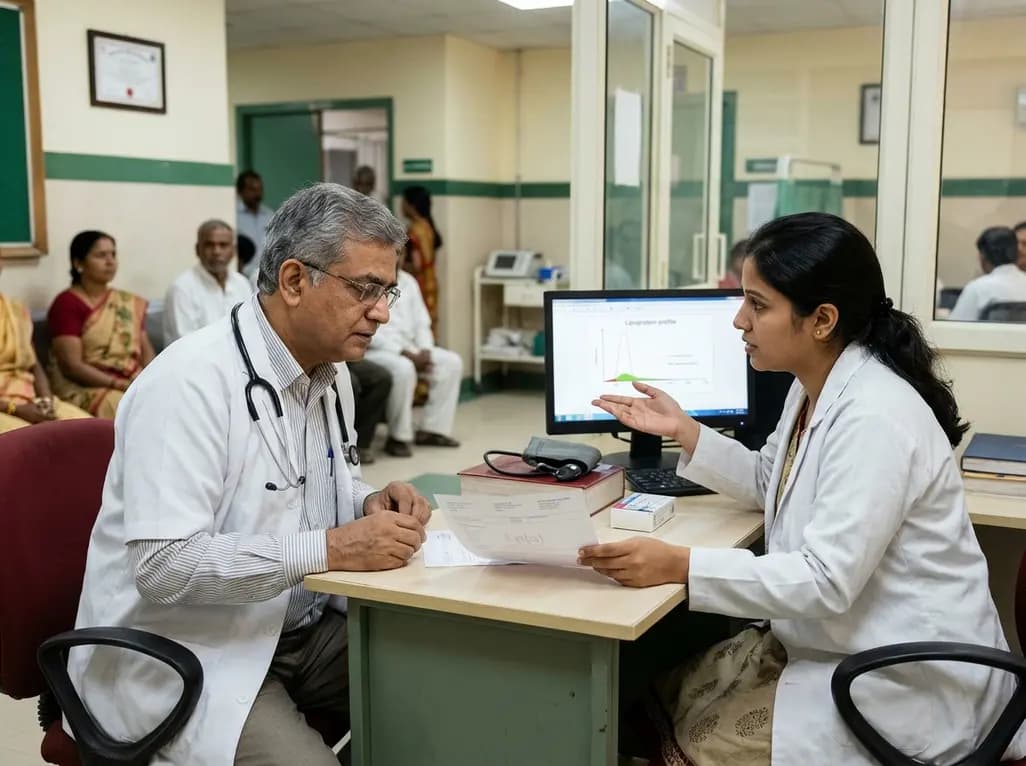
Understand the causal role of Lipoprotein(a) in cardiovascular disease, why international guidelines recommend once-in-a-lifetime molar testing, and the clinical implications of recent phase 3 RNA outcome trials.
Today
