.webp&w=384&q=75)

Loading, please wait...
Loading, please wait...

Total joint reconstruction restores mobility and alleviates pain for millions of arthritic individuals worldwide. However, managing patients with end-stage renal disease requires heightened clinical vigilance. A recent multicenter investigation examined outcomes among patients undergoing dialysis total hip arthroplasty to clarify surgical risks under matched baseline conditions. Advanced renal failure disrupts mineral homeostasis, impairs immune defenses, and accelerates systemic vascular calcification. Consequently, elective reconstructive procedures in this fragile cohort demand rigorous perioperative planning. Orthopedic teams must balance functional gains against substantial postoperative morbidity. Furthermore, understanding complication trajectories enables clinicians to optimize care pathways, guide informed consent, and minimize avoidable adverse events.
Historical literature linked dialysis dependence with poor arthroplasty outcomes. Nevertheless, earlier studies rarely matched cohorts across crucial baseline variables, obscuring true attributable risk. To address this gap, researchers analyzed the TriNetX global health research network. They identified patients undergoing primary elective total hip replacement between 2005 and 2025. The investigators established two distinct cohorts. The study group included patients requiring chronic dialysis, whereas controls had no history of dialysis. Through rigorous propensity score matching for age, sex, race, and underlying medical comorbidities, the authors assembled 707 well-balanced pairs. This method minimized confounding factors that typically skew registry analyses. Consequently, the study isolated the independent effect of maintenance dialysis on surgical outcomes. The investigators evaluated patients across three critical follow-up periods: 90 days, 2 years, and 5 years. Primary endpoints included adverse events, surgical site infection, deep periprosthetic infection, and revision surgery.
During the initial 90-day recovery window, surgical teams observed pronounced differences in morbidity. Specifically, dialysis patients experienced any adverse event at nearly double the rate of controls, reaching 24.5% versus 13.6%. This sharp contrast emphasizes the severe physiological burden that major joint surgery imposes on uremic patients. Furthermore, acute deep infections presented a significant challenge. The incidence of infected hip prosthesis within 90 days climbed to 4.4% in dialysis patients, compared with 1.4% in controls. Surgical site infections were also higher at 2.4% versus 1.4%, though without statistical significance. Similarly, early revision arthroplasty trended higher at 2.5% compared to 1.4%. Uremic platelet dysfunction, delayed wound healing, and immunosuppression primarily drive these early complications. Additionally, frequent vascular access manipulation during hemodialysis increases the risk of transient bacteremia. Therefore, surgical teams must maintain intensive wound surveillance throughout the acute postoperative period.
Follow-up at two years confirmed that elevated surgical risks persist well beyond the early postoperative stage. Dialysis patients exhibited substantial ongoing vulnerability to deep joint complications. Specifically, the cumulative rate of infected hip prosthesis reached 6.1% in the dialysis cohort, compared to 2.3% among controls. This significant difference demonstrates that late hematogenous seeding remains a persistent threat. Moreover, implant revisions escalated concurrently. At two years, 5.0% of dialysis patients required revision surgery compared to 2.4% of matched non-dialysis controls. This elevated failure rate highlights the hostile biological environment associated with chronic renal failure. Secondary hyperparathyroidism, abnormal bone turnover, and osteomalacia collectively impair initial implant osseointegration. Consequently, mechanical loosening and periprosthetic bone loss progress more rapidly. Furthermore, recurrent microvascular compromise impedes local tissue healing. Therefore, surgical teams must collaborate closely with nephrologists to manage mineral metabolism actively during intermediate recovery.
By five years following surgery, prosthetic survivorship showed sustained divergence between the cohorts. The study documented ongoing disparities in implant durability and chronic deep infection. In the dialysis cohort, cumulative prosthesis infections reached 6.6%, compared with 2.5% among non-dialysis patients. This divergence confirms that bacteremic events from vascular access sites continuously endanger artificial joints over prolonged follow-up. Similarly, cumulative revision rates at five years rose to 6.1% for dialysis patients versus 2.7% for controls. Thus, the risk of revision more than doubled for dialysis recipients. Chronic biofilm formation and impaired bone quality compromise prosthetic stability over time. Furthermore, repetitive systemic interventions increase opportunities for bacterial colonization. These sobering findings indicate that long-term prosthetic survival in dialysis patients remains substantially lower than in the general population. Orthopedic surgeons must clearly emphasize these durable risks during preoperative discussions.
Given these heightened risks, surgical teams must implement standardized multidisciplinary protocols before elective arthroplasty. First, preoperative evaluations should screen thoroughly for occult infections and assess vascular access integrity. Surgical scheduling requires close coordination with nephrology teams to complete hemodialysis 24 hours prior to surgery, minimizing fluid and electrolyte shifts. In addition, anesthesia teams must safeguard existing arteriovenous fistulas while maintaining stable intraoperative hemodynamics. Postoperative wound management also demands meticulous attention. Closed-suction drainage protocols and advanced dressings help protect fragile uremic tissues from superficial contamination. Furthermore, clinicians must optimize serum calcium, phosphate, and parathyroid hormone levels to bolster bone mineralization around the prosthesis. Antimicrobial prophylaxis requires strict adjustment according to renal clearance while maintaining bactericidal tissue concentrations. Ultimately, mitigating complications in this vulnerable cohort demands coordinated oversight among orthopedic surgeons, nephrologists, and infectious disease specialists.
Dialysis patients face increased infection risks because end-stage renal disease causes uremic immune dysfunction, impairing leukocyte and phagocytic function. In addition, regular vascular access through hemodialysis catheters or arteriovenous fistulas creates frequent portals for transient bacteremia. When circulating bacteria encounter hip implants, they rapidly adhere to foreign surfaces, generating protective biofilms that resist antibiotic therapies and endogenous immune defenses.
Chronic kidney disease-mineral and bone disorder disrupts normal bone turnover, resulting in osteomalacia, secondary hyperparathyroidism, and poor trabecular mineralization. These metabolic abnormalities weaken host bone support and impede durable biological osseointegration around femoral and acetabular components. Consequently, implants experience accelerated mechanical loosening, periprosthetic osteolysis, and early component migration, which significantly increases long-term revision surgery rates.
Perioperative optimization requires close coordination between orthopedic surgeons and nephrologists. Hemodialysis should occur approximately 24 hours before surgery to correct fluid and electrolyte imbalances without causing intraoperative hypotension. Additionally, clinicians must tailor antibiotic dosing to renal clearance, protect vascular access limbs from pressure injuries, and maintain strict sterile wound management to detect early surgical site issues promptly.
Disclaimer: This content is for informational and educational purposes only and is not intended as medical advice. Healthcare professionals should make clinical decisions based on each patient’s unique presentation and clinical condition. Refer to the latest local and national guidelines for clinical practice.
References

Read summarized clinical updates, watch expert medical content, and earn CME certifications right from your smartphone.
Open your smartphone camera to scan and install.





A propensity-matched analysis reveals that patients undergoing total hip arthroplasty on maintenance dialysis experience significantly higher rates of adverse events, periprosthetic infection, and revision surgery at 90 days, 2 years, and 5 years compared to non-dialysis peers.
Today
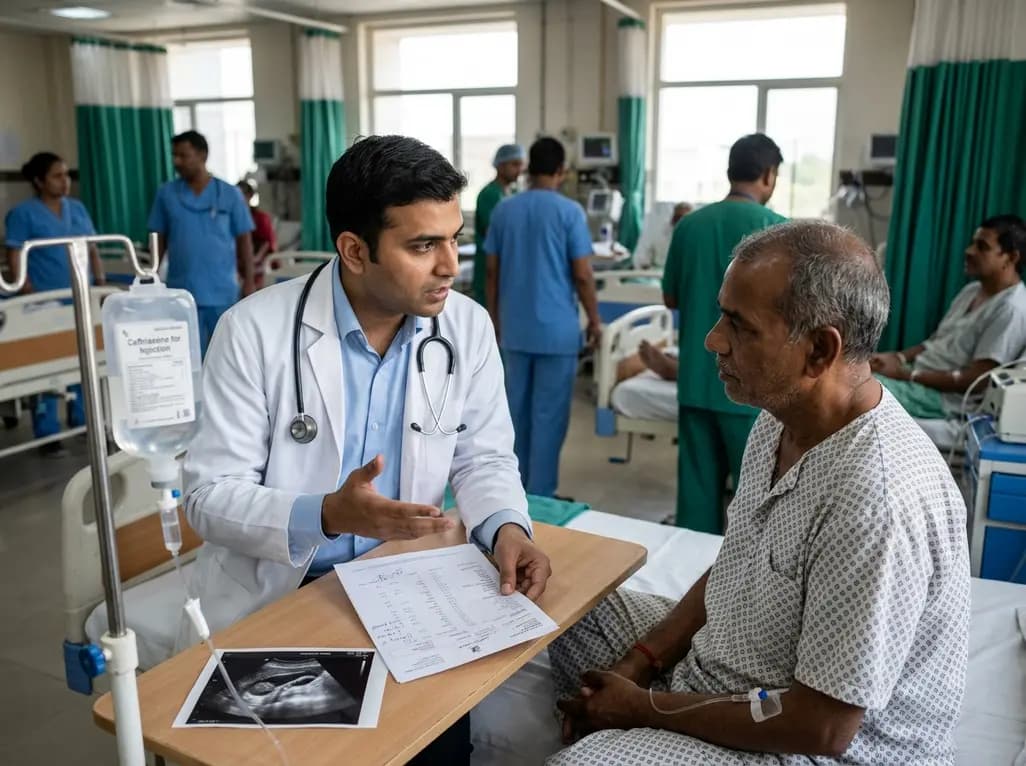
Ceftriaxone therapy can lead to biliary sludge and gallstone formation due to calcium-ceftriaxone precipitation. A recent cohort study shows that the noninvasive Fibrosis-4 (FIB-4) index, alongside treatment duration, independently predicts lithogenesis, enabling proactive risk stratification.
Today

A multiparametric MRI approach combining quantitative T2 shading, apparent diffusion coefficient (ADC) measurements, and morphological signs provides superior diagnostic accuracy over subjective evaluation to differentiate ovarian endometriomas from benign hemorrhagic cysts.
Today

A landmark case report reveals a donor heart beating for a century in a 63-year-old recipient, challenging conventional age limits in cardiac transplantation and offering critical lessons on organ longevity, donor selection, and long-term graft survival.
Today
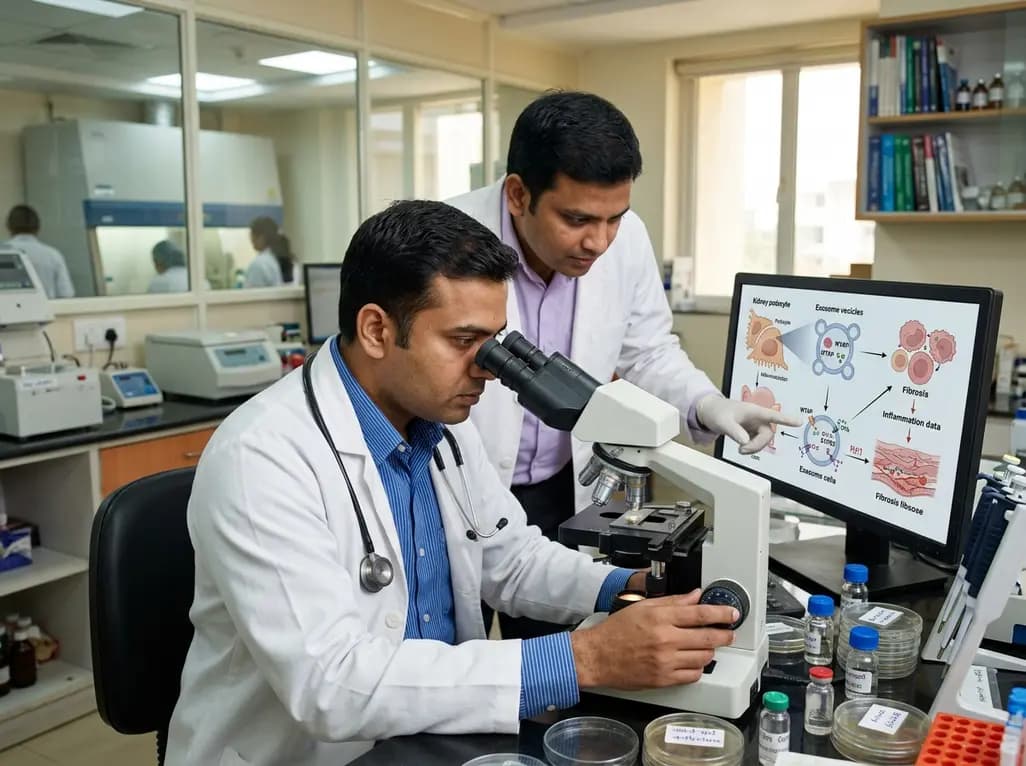
New research reveals that M1 macrophage-derived exosomes aggravate diabetic nephropathy by transferring WTAP to stabilize S1PR2 mRNA. Silencing WTAP in these vesicles attenuates endothelial injury and renal fibrosis, pointing toward innovative nanomedicine therapies.
Yesterday
