.webp&w=384&q=75)

Loading, please wait...
Loading, please wait...
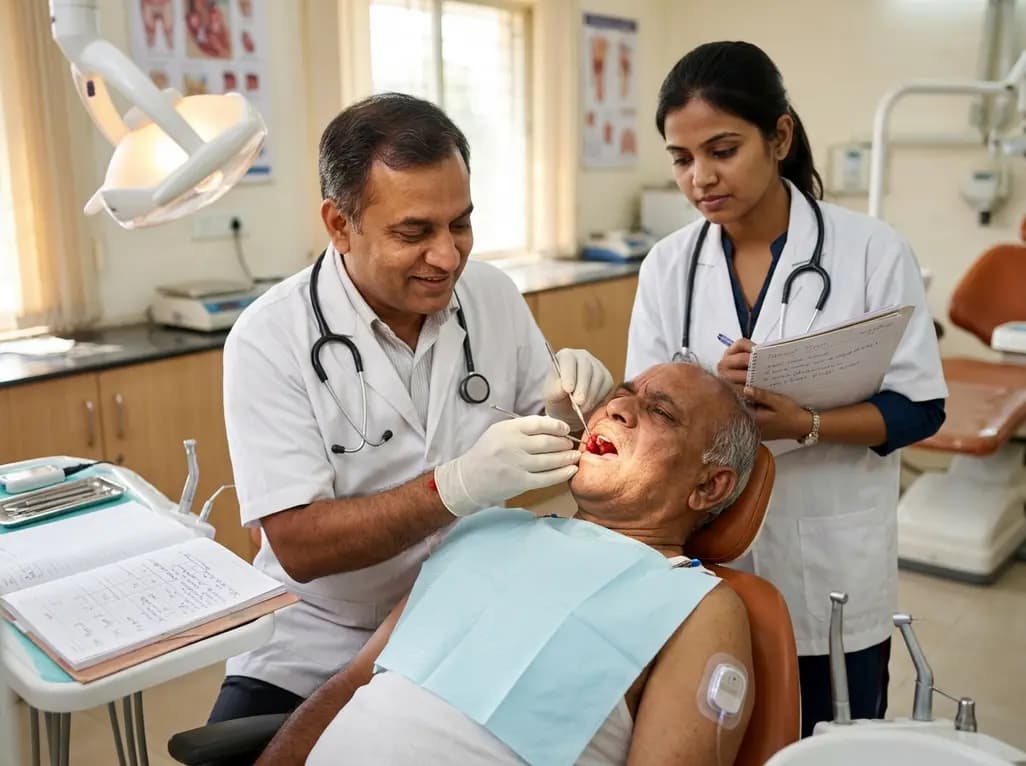
Diabetes mellitus significantly alters the oral environment, leading to various systemic and localized complications. The relationship between Diabetes and Periodontal Health is well-documented, yet the specific magnitude of clinical differences remains a subject of intense scientific study. This article synthesizes recent evidence to help practitioners understand the extent of periodontal destruction in diabetic patients compared to non-diabetics. In the Indian context, where the prevalence of both conditions is soaring, recognizing these nuances is essential for holistic patient care. Furthermore, clinicians must acknowledge that the interaction between these two diseases is bidirectional. Poor glycemic control often leads to severe gingival inflammation and bone loss, while chronic oral infection can conversely impair systemic glucose metabolism. Therefore, healthcare providers must adopt a more integrated approach to management. By understanding the clinical parameters such as attachment loss and probing depths, doctors can better predict patient outcomes and design more effective treatment plans. This synthesis provides a clear roadmap for identifying high-risk patients in a clinical setting.
To understand the clinical findings, one must first examine the biological mechanisms at play. High blood glucose levels lead to the accumulation of advanced glycation end-products (AGEs) in the periodontal tissues. These AGEs interact with specific receptors, triggering a cascade of oxidative stress and the release of pro-inflammatory cytokines. This process significantly compromises the host immune response, making the periodontium more susceptible to bacterial challenges from dental plaque. Furthermore, impaired collagen synthesis and increased matrix metalloproteinase activity further exacerbate the breakdown of the periodontal ligament and alveolar bone. Consequently, patients with uncontrolled diabetes often present with more aggressive forms of periodontal disease than their healthy counterparts. Notably, these cellular changes occur even before clinical symptoms become obvious to the patient. Understanding this mechanism is vital because periodontal health can influence systemic inflammation levels. Therefore, managing the oral cavity is not just a matter of dental hygiene but a critical component of metabolic stabilization. Clinicians should educate patients on how their systemic health directly dictates the longevity of their natural dentition.
When evaluating Diabetes and Periodontal Health, Clinical Attachment Level (CAL) serves as a primary marker for lifetime disease progression. Systematic reviews indicate that patients with Type 1 Diabetes Mellitus (DM I) experience a small to substantial increase in CAL compared to non-diabetic individuals. While some younger patients may show minimal changes, the cumulative effect of the disease often leads to significant support loss over time. In contrast, the data for Type 2 Diabetes Mellitus (DM II) is even more striking. The magnitude of difference in CAL for DM II patients is consistently described as substantial. This suggests that adult patients with Type 2 diabetes are at a significantly higher risk of losing the structural attachment of their teeth. These findings highlight the importance of early dental screening in both pediatric and adult diabetic populations. General practitioners should be aware that even if deep pockets are not immediately visible, attachment loss may be occurring silently beneath the gingival margin. Regular monitoring of CAL is therefore essential for preventing tooth mobility and eventual loss in this vulnerable patient cohort.
Probing Pocket Depth (PPD) is another critical parameter used to assess current periodontal disease activity. For individuals with Type 1 diabetes, the differences in PPD compared to non-diabetics range from zero to moderate. This variability may be attributed to differences in age, duration of diabetes, and individual oral hygiene habits. However, in the Type 2 diabetes population, the evidence points toward moderate to substantial differences in pocket depths. Deeper pockets signify active disease and provide a reservoir for anaerobic bacteria, which further drives local and systemic inflammation. Interestingly, when studies combine both types of diabetes, the difference remains small to substantial, confirming that diabetes in any form acts as a major risk modifier for periodontitis. These deeper pockets often require more intensive professional intervention, such as scaling and root planing or even periodontal surgery. Clinicians must recognize that achieving stable pocket depths is much harder in the presence of fluctuating blood sugar levels. Consequently, successful periodontal therapy in these patients often requires concurrent optimization of their glycemic control by their treating physician or endocrinologist.
Beyond the primary markers of CAL and PPD, researchers also examine secondary parameters such as gingival inflammation, plaque accumulation, and gingival recession. However, the evidence regarding these parameters is currently considered weak or inconsistent. This inconsistency often stems from the high variability in daily oral hygiene practices among patients, which can mask the underlying systemic impact of diabetes. For instance, a patient with well-managed diabetes but poor brushing habits may show high plaque scores regardless of their metabolic state. Conversely, a patient with poor glycemic control but excellent hygiene might show minimal gingival bleeding. Despite the weaker evidence for these secondary markers, they should not be ignored in clinical practice. Gingival inflammation often serves as the precursor to more permanent damage like attachment loss. Therefore, monitoring bleeding on probing remains a useful, albeit less certain, clinical tool for assessing immediate risk. Researchers emphasize that while the primary destruction (CAL and PPD) is clearly linked to diabetes, the early inflammatory signs require more standardized longitudinal studies to reach a definitive conclusion on their diagnostic weight.
In India, frequently referred to as the diabetes capital of the world, the clinical burden of periodontitis is exceptionally high. Many patients remain undiagnosed for both conditions simultaneously, leading to advanced tissue destruction before intervention begins. Integrating periodontal screening into routine diabetic clinics can improve patient outcomes significantly across the country. Dentists and physicians must collaborate more closely to ensure that patients receive comprehensive counseling on bidirectional risks. Effective plaque control and professional periodontal cleaning have been shown to lead to modest improvements in HbA1c levels, illustrating that treating the mouth is a critical component of treating the entire body. Indian medical guidelines are increasingly emphasizing this collaborative approach to minimize systemic complications such as cardiovascular disease and nephropathy, which are also linked to chronic oral inflammation. For the rural population, where access to specialized dental care is limited, general practitioners play a pivotal role in identifying early signs of oral disease. By incorporating simple oral health checks into their workflow, they can prevent the debilitating consequences of tooth loss and improve the quality of life for millions of diabetic Indians.
Diabetic patients experience more severe Clinical Attachment Loss primarily due to a heightened inflammatory response and compromised tissue repair mechanisms. High blood glucose levels lead to the accumulation of advanced glycation end-products (AGEs), which increase oxidative stress within the periodontal tissues. This process damages the collagen fibers and bone that support the teeth. Consequently, the structural integrity of the periodontium weakens faster in diabetic individuals compared to those with healthy glycemic levels.
Research indicates that both types of diabetes significantly increase the risk of periodontal destruction, though the magnitude can vary. Type 2 diabetes often shows a more substantial and consistent difference in Probing Pocket Depth (PPD) and attachment loss compared to healthy individuals. Type 1 diabetes also presents significant risks, especially in long-standing cases. However, the overall clinical impact remains high for both, necessitating regular dental monitoring regardless of the specific type of diabetes diagnosed.
Managing periodontal disease is a crucial component of diabetes care because oral inflammation can exacerbate systemic insulin resistance. Studies suggest that successful non-surgical periodontal therapy can lead to a modest reduction in HbA1c levels, typically around 0.4%. This improvement occurs because reducing oral bacterial load and inflammation helps the body process glucose more efficiently. Therefore, physicians should encourage diabetic patients to seek regular dental cleanings to support their overall metabolic health goals.
Disclaimer: This content is for informational and educational purposes only. It does not constitute professional medical advice, diagnosis, or treatment. Always seek the advice of your physician or other qualified healthcare provider with any questions you may have regarding a medical condition. Refer to the latest local and national guidelines for clinical practice.
References
Weijdijk LPM et al. What Is the Clinical Periodontal Condition of Patients With Diabetes Mellitus as Compared to Those Without?-A Synthesis of Systematic Reviews. Int J Dent Hyg. 2026 Jul 12. doi: 10.1111/idh.70109. PMID: 42437954.
Preshaw PM, et al. Periodontitis and diabetes: a two-way relationship. Diabetologia. 2012;55(1):21-31.
Sanz M, et al. Scientific evidence on the links between periodontal diseases and diabetes: Consensus report and guidelines of the joint EFP/AAP workshop on periodontitis and systemic diseases. J Periodontol. 2013;84(4 Suppl):S106-12.

Read summarized clinical updates, watch expert medical content, and earn CME certifications right from your smartphone.
Open your smartphone camera to scan and install.





A synthesis of systematic reviews reveals that patients with Diabetes Mellitus (DM) exhibit significantly worse clinical periodontal conditions, including greater attachment loss and deeper probing depths, compared to non-diabetic individuals.
3 months ago

Failing to account for competing events like mortality in longitudinal geriatric studies produces biased risk estimates and misleading inferences. This review highlights key methodological principles, insights from the Precipitating Events Project, and practical approaches for clinical research appraisal.
Today

A study in JAMIA Open shows lightweight open-source reasoning LLMs achieve up to 95% sensitivity and accelerate evidence synthesis screening by nearly twentyfold, presenting a cost-effective, scalable AI solution for biomedical research and systematic reviews.
Today

A landmark study details how an enterprise pediatric remote patient management model expanded from a single cardiology pilot to 16 diverse specialty programs by combining centralized digital operations with specialty clinical leadership.
Today

A comparative review of tension band wiring and intramedullary screw fixation in thumb metacarpophalangeal arthrodesis, evaluating union rates, hardware complications, and clinical outcomes.
Yesterday

A breakthrough ultrathin multimodal sensor decouples physical hemodynamic monitoring from disposable electrochemical calibration, achieving long-term wearable glucose prediction with 81.36% accuracy and a 9.12% MARD. This offers a robust, drift-free solution for outpatient metabolic surveillance.
Today
