.webp&w=384&q=75)

Loading, please wait...
Loading, please wait...

Cranioplasty is an essential procedure for restoring skull integrity and achieving cosmetic goals in children following decompressive surgery. Recent research has focused on identifying pediatric cranioplasty outcomes to minimize risks and enhance aesthetic results. Consequently, clinicians are now better equipped to understand the variables that influence post-surgical symmetry and long-term stability. Furthermore, systematic multicenter data helps in standardizing care for these young patients. In addition, the size of the cranial defect and the patient's age at the time of surgery remain primary considerations for neurosurgeons.
A multicenter retrospective study investigated several predictors of success. Researchers found that cranial defect size and surgical timing are pivotal. Specifically, larger defects are often linked with a higher incidence of bone resorption. However, younger age also correlates with an increased risk of complications, particularly when using autologous bone grafts. Therefore, selecting the appropriate material and timing is crucial for long-term success. Moreover, maintaining aesthetic symmetry requires precise surgical planning and specialized techniques to accommodate the growing pediatric skull.
Common complications include infection, implant displacement, and resorption. Because children's physiological responses differ from adults, personalized surgical approaches are necessary. For instance, using synthetic materials might be preferable in cases where bone stock is insufficient. Nevertheless, the study emphasizes that vigilant follow-up is necessary to detect early signs of failure. Thus, understanding these pediatric cranioplasty outcomes enables a proactive approach to complication management.
The primary determinants include the size of the initial defect and the precision of graft placement. Additionally, surgical timing plays a significant role in how well the scalp and bone integrate.
Bone resorption is the most frequent complication, particularly in autologous reconstructions. Other risks include surgical site infections and seroma formation.
Disclaimer: This content is for informational and educational purposes only. It does not constitute medical advice or establish a doctor-patient relationship. Always seek the advice of a qualified healthcare provider for any medical condition. Refer to the latest local and national guidelines for clinical practice.
References
Niu J et al. Determinants of aesthetic symmetry and complications after pediatric cranioplasty: a retrospective multicenter study. J Neurosurg Pediatr. 2026 Apr 03. doi: 10.3171/2025.11.PEDS25423. PMID: 41931840.
Kwak Y et al. Complications of Cranioplasty in Pediatric Patients. Korean J Neurotrauma. 2021;17(2):117-124. doi: 10.13004/kjnt.2021.17.e18.
Waschke A et al. Complications and aesthetic outcomes of cranioplasty: A systematic review. J Cranio-Maxillofac Surg. 2013;41(8):e196-202. doi: 10.1016/j.jcms.2012.08.001.

Read summarized clinical updates, watch expert medical content, and earn CME certifications right from your smartphone.
Open your smartphone camera to scan and install.





This retrospective multicenter study identifies factors like defect size and patient age as predictors of symmetry and complications in pediatric cranioplas...
6 months ago

A retrospective cohort study of 7,716 ICU patients from the MIMIC-IV database demonstrates that Gradient Boosting Decision Trees significantly outperform traditional SOFA scores in predicting in-hospital mortality among patients with sepsis and diabetes, with SHAP analysis providing clinical interpretability.
Today
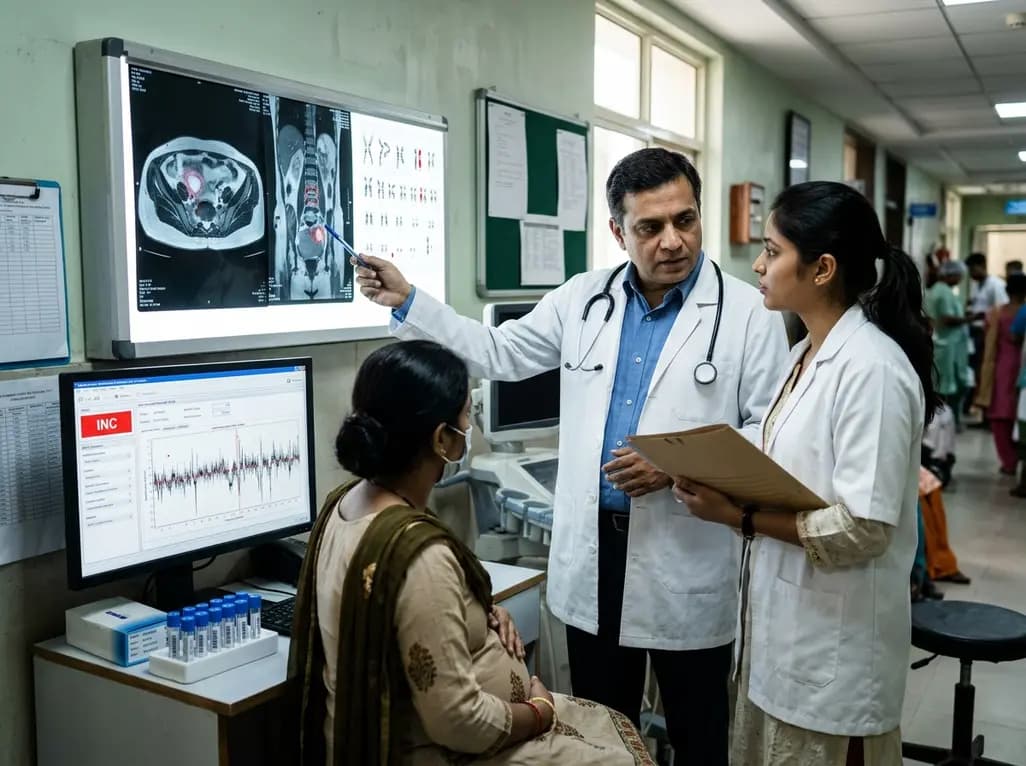
Occult maternal malignancy accounts for 3.82% of persistent unreportable NIPT results with genomic noise. Multiple chromosomal aberrations, notably on chromosome 18, warrant thorough oncological evaluation and whole-body MRI to ensure timely maternal diagnosis while preserving fetal care.
Today
This article reviews the forensic and clinical complexities of acute myocarditis arising on left ventricular hypertrophy in children, highlighting early diagnostic red flags and multidisciplinary postmortem autopsy protocols.
Today

This comparative study evaluates posterior labral tears with and without glenohumeral instability, highlighting distinct demographic patterns, MRI underestimation in stable shoulders, and successful arthroscopic repair outcomes.
Yesterday

A clinical study demonstrates that early intervention with tocilizumab, either as monotherapy or bridged with corticosteroids, achieves significant proptosis reduction and resolves active inflammation in treatment-naive thyroid eye disease.
Yesterday
