.webp&w=384&q=75)

Loading, please wait...
Loading, please wait...

DeSanto-Shinawi syndrome represents a rare autosomal dominant neurodevelopmental condition linked to loss-of-function pathogenic variants in the WW domain-containing adaptor with coiled-coil (WAC) gene. Clinicians frequently observe global developmental delay, intellectual disability, distinctive craniofacial dysmorphisms, and behavioral difficulties in affected children. The WAC gene coordinates critical cellular mechanisms, including ubiquitin-mediated histone modification and transcription elongation during early neural development. Consequently, heterozygous truncating mutations, nonsense changes, or frameshift indels disrupt protein synthesis and trigger functional haploinsufficiency. Recent genetic investigations describe a novel de novo frameshift variant (p.Met598Serfs*8) in a nine-year-old male, reinforcing the mechanistic role of loss-of-function mutations. Furthermore, these molecular disruptions compromise normal synaptic maturation and perturb cortical network stability. As genetic sequencing techniques expand across clinical settings, physicians uncover wider phenotypic variability than historical data suggested. Therefore, understanding the downstream consequences of WAC deficiency allows pediatricians and pediatric neurologists to appreciate the systemic complexity of this syndrome. Early recognition ensures prompt developmental intervention, genetic counseling, and proactive monitoring of associated organ involvement.
Epilepsy occurs in a notable subset of individuals with DeSanto-Shinawi syndrome, yet detailed electroencephalographic literature remains scarce. While earlier reports highlighted generalized or frontal paroxysmal abnormalities, recent longitudinal electrophysiological data delineate persistent bilateral temporo-occipital epileptiform activity. In specific pediatric presentations, serial electroencephalography demonstrates focal sharp waves and spike-wave discharges localized to the posterior cortical regions, occasionally persisting predominantly over the left temporo-occipital channels during sleep and wakefulness. Interestingly, high-resolution neuroimaging, including structural brain magnetic resonance imaging, frequently demonstrates normal cortical architecture without visible malformations. This clinicoradiological dissociation emphasizes that functional synaptic dysregulation, rather than gross structural lesions, drives epileptogenesis in WAC-related disorders. Consequently, clinicians should maintain a low threshold for ordering baseline and long-term video electroencephalography in patients presenting with unprovoked paroxysmal events or unexplained neurodevelopmental regression. Moreover, identifying focal temporo-occipital discharges guides precise anti-seizure medication selection, thereby improving seizure control and preserving cognitive potential.
Although neurological features dominate the initial clinical presentation, congenital heart defects represent a crucial multisystemic manifestation of DeSanto-Shinawi syndrome. Recent patient cohorts demonstrate structural cardiac anomalies, including perimembranous ventricular septal defects and bicuspid aortic valves. The WAC protein participates in fundamental embryogenetic signaling pathways that orchestrate cardiac septation and valvular morphogenesis. Therefore, genetic perturbations disrupting WAC expression can impair both neurogenesis and cardiogenesis simultaneously. Congenital cardiac defects may remain clinically silent during early infancy or present as subtle systolic murmurs during routine pediatric examinations. Furthermore, structural heart lesions such as bicuspid aortic valves demand sustained vigilance due to long-term risks of valvular stenosis, progressive regurgitation, and infectious endocarditis. Consequently, every child diagnosed with a pathogenic WAC variant requires an immediate comprehensive baseline echocardiogram and ongoing pediatric cardiology evaluation. Clinicians must integrate cardiovascular surveillance into standard developmental pathways to prevent hemodynamic complications and ensure timely surgical or medical management.
Establishing a definitive diagnosis of DeSanto-Shinawi syndrome presents significant clinical challenges because many features overlap with other syndromic neurodevelopmental conditions. Routine chromosomal microarray analysis and targeted single-gene testing frequently yield negative or inconclusive results. Therefore, comprehensive next-generation sequencing, particularly trio whole-exome sequencing, serves as the gold-standard diagnostic modality for identifying novel and de novo WAC variants. Molecular geneticists utilize the ACMG/AMP variant interpretation framework to classify novel frameshift or nonsense variants based on predicted loss of function, allele frequency in population databases, and de novo confirmation. In addition, thorough clinical phenotyping remains essential to interpret ambiguous variants of uncertain significance. When clinicians identify a pathogenic WAC mutation, they can promptly eliminate diagnostic odysseys, counsel families regarding minimal recurrence risks in verified de novo cases, and exclude parental germline mosaicism through targeted testing. Thus, modern genomic diagnostics streamline clinical workflows and facilitate accurate risk stratification.
Comprehensive care for patients with DeSanto-Shinawi syndrome necessitates an integrated multidisciplinary framework that unites pediatric subspecialties. Pediatric neurologists supervise anti-seizure regimens, tailoring antiepileptic pharmacotherapy according to electroencephalographic findings and seizure semiology. Concurrently, developmental pediatricians and allied therapists must implement early intervention programs, including physical, speech, and occupational therapies to enhance psychomotor milestones. Behavioral difficulties, such as attention deficit hyperactivity disorder, anxiety, and autism spectrum traits, frequently emerge during early childhood and require behavioral interventions or psychopharmacological support. Furthermore, pediatric cardiologists must monitor structural cardiac anomalies through periodic serial echocardiograms. Gastroenterologists, ophthalmologists, and audiologists should also evaluate feeding difficulties, refractive errors, strabismus, and sensory deficits. Consequently, collaborative clinical models improve patient well-being, mitigate chronic morbidity, and provide invaluable resources for affected families navigating complex educational and medical systems.
The long-term prognosis of DeSanto-Shinawi syndrome depends largely on the severity of neurological impairment, seizure burden, and associated systemic malformations. Although intellectual disability and speech delays persist across the lifespan, many pediatric patients achieve favorable seizure control with standard anti-seizure monotherapy. Moreover, ongoing international patient registries and collaborative clinical trials continue to expand phenotypic knowledge, shedding light on the natural history of WAC-related disorders from childhood into adulthood. Future translational research aims to uncover exact cellular pathways downstream of WAC haploinsufficiency, potentially identifying targeted molecular therapies that restore transcriptional homeostasis. In addition, increasing awareness among primary care physicians and pediatricians ensures timely referral for genetic testing and early multidisciplinary support. As genomic tools become more accessible in clinical medicine, clinicians will diagnose more individuals earlier in life, thereby optimizing developmental trajectories and enhancing overall quality of life.
DeSanto-Shinawi syndrome is characterized primarily by global developmental delay, intellectual disability, behavioral problems, distinctive facial dysmorphisms, and hypotonia. Additionally, affected individuals often present with seizures, ocular abnormalities such as strabismus, gastrointestinal issues like severe constipation, and congenital cardiac anomalies. Because clinical features exhibit variable expressivity among patients, clinicians rely on comprehensive clinical evaluations and genomic sequencing to confirm the diagnosis and tailor appropriate interventions.
Clinicians should perform prolonged or serial video electroencephalography to detect focal or generalized epileptiform discharges, particularly temporo-occipital paroxysms. Although structural brain magnetic resonance imaging is typically normal, it remains essential to rule out anatomical lesions. Furthermore, pediatric neurologists should monitor electroclinical correlations closely, as early identification of electroencephalographic abnormalities allows for targeted anti-seizure therapy and helps prevent subsequent cognitive regression in affected children.
Cardiovascular evaluation is crucial because pathogenic WAC variants are increasingly associated with congenital structural heart defects, including ventricular septal defects and bicuspid aortic valves. Early transthoracic echocardiography identifies occult hemodynamic abnormalities before clinical symptoms emerge. Consequently, pediatric cardiologists can establish long-term surveillance protocols, prevent complications such as aortic valvulopathy or endocarditis, and coordinate necessary medical or surgical management alongside neurodevelopmental care.
Disclaimer: This content is for informational and educational purposes only and does not constitute medical advice. Consult qualified healthcare professionals for diagnosis and management. Refer to the latest local and national guidelines for clinical practice.
References

Read summarized clinical updates, watch expert medical content, and earn CME certifications right from your smartphone.
Open your smartphone camera to scan and install.





A newly reported de novo WAC frameshift variant expands the electroclinical and systemic phenotype of DeSanto-Shinawi syndrome, highlighting temporo-occipital epileptiform discharges alongside congenital heart anomalies.
last month

A recent clinical report details an atypical presentation of bilateral proptosis as the primary manifestation of aggressive multiple myeloma. Explore the diagnostic pathway, imaging findings, and critical multidisciplinary management strategies essential for handling extramedullary plasma cell dyscrasias.
Today

Prenatal evaluation of fetal growth restriction requires an integrated diagnostic approach. While chromosomal microarray remains fundamental, exome sequencing offers significant diagnostic yield in isolated and syndromic cases, especially when ultrasound shows skeletal anomalies or normal placental function.
Today
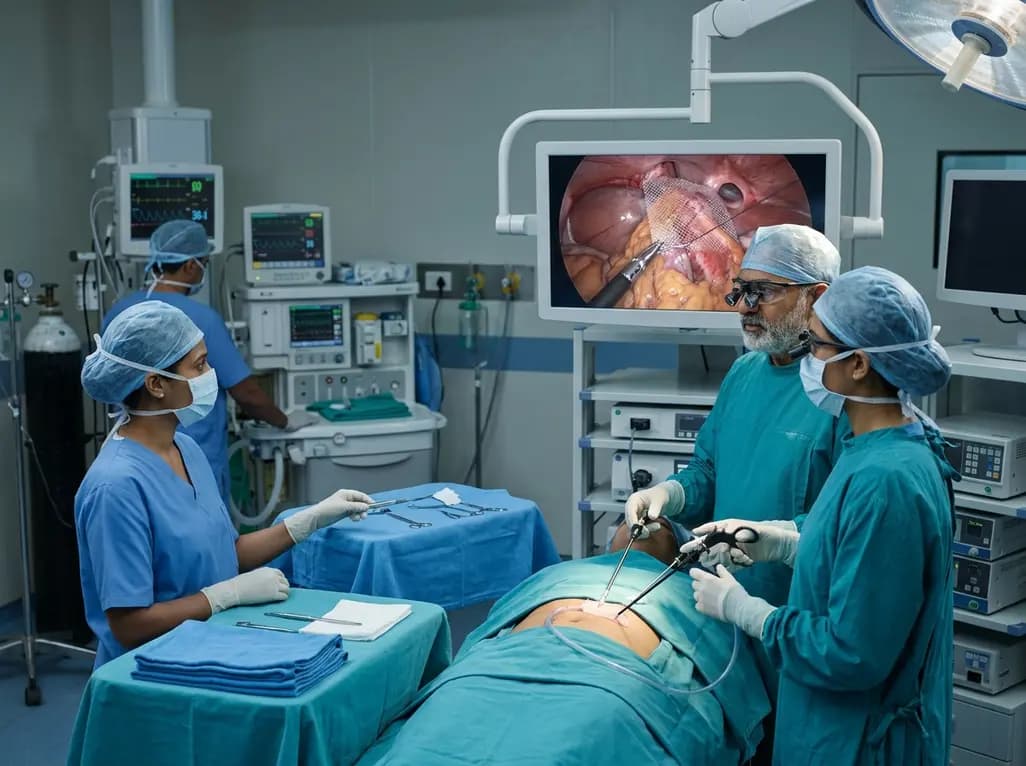
Discover a novel laparoscopic approach for iatrogenic diaphragmatic hernia repair following pedicled omentoplasty. This modified Sugarbaker technique integrates dorsal pedicle lateralization and round ligament reinforcement to secure the diaphragmatic defect while preserving vital omental vascularity.
Today

Evaluating Hill-Sachs lesion size and the distance to dislocation is critical in recurrent shoulder instability. As bone loss concepts shift from binary on-track classifications to continuous risk assessment, clinicians must identify when isolated Bankart repair is insufficient and supplementary procedures are needed.
Today

New research reveals that M1 macrophage-derived exosomes aggravate diabetic nephropathy by transferring WTAP to stabilize S1PR2 mRNA. Silencing WTAP in these vesicles attenuates endothelial injury and renal fibrosis, pointing toward innovative nanomedicine therapies.
Today
