.webp&w=384&q=75)

Loading, please wait...
Loading, please wait...

Dengue virus (DENV) infection remains a significant global health challenge, especially in endemic regions like India. However, physicians currently lack approved antiviral therapies to treat the disease. Recent research highlights Dengue NS4B inhibitors as a promising breakthrough in drug discovery. While the NS4B protein lacks intrinsic enzymatic activity, it serves as a critical regulator of viral replication. By targeting this essential membrane protein, researchers aim to halt the virus before it causes severe clinical complications.
NS4B is a small, hydrophobic protein residing in the endoplasmic reticulum (ER) membrane. It facilitates viral replication by inducing ER remodeling and assisting the assembly of the replication complex. Furthermore, NS4B mediates interactions between viral proteins and host factors. Because the protein sequence maintains high conservation across all four serotypes, it provides a stable target for pan-serotype therapy. Consequently, blocking its function could potentially prevent the progression of all dengue variants.
Modern Dengue NS4B inhibitors, such as NITD-688 and JNJ-1802, operate through a unique mechanism. These small molecules bind directly to the NS4B protein with high affinity. This binding prevents NS4B from interacting with the NS3 helicase, which is a vital step for RNA synthesis. Similarly, these inhibitors disrupt pre-existing complexes in infected cells. By preventing these molecular associations, the drugs effectively shut down the viral manufacturing plant. Moreover, this approach offers a high genetic barrier to resistance compared to older candidates.
Advancements in phenotypic screening have successfully identified several potent candidates. For instance, JNJ-1802 has shown oral bioavailability and safety in preclinical models. It is currently progressing through Phase II clinical trials to evaluate its efficacy in humans. In addition, the compound NITD-688 has demonstrated nanomolar potency against all serotypes. Therefore, these developments signal a major shift toward specific, small-molecule antivirals for dengue. If successful, these therapies could reduce the healthcare burden by preventing severe dengue cases.
Even without enzymatic activity, NS4B is essential for organizing the viral replication complex. Targeting its structural role prevents the virus from building the machinery it needs to replicate.
Yes, many candidates currently in development are pan-serotype inhibitors. They target regions of the protein that are similar across DENV-1, DENV-2, DENV-3, and DENV-4.
Candidates like JNJ-1802 and NITD-688 are currently in Phase II clinical trials. They must still pass Phase III trials and regulatory approvals before becoming available to doctors.
Disclaimer: This content is for informational and educational purposes only and does not constitute medical advice; always consult a healthcare professional for diagnosis and treatment. Refer to the latest local and national guidelines for clinical practice.
References
Pang S et al. Drug Discovery of Antiviral Inhibitors Targeting Dengue Virus NS4B Protein. ACS Infect Dis. 2026 Apr 21. doi: 10.1021/acsinfecdis.6c00091. PMID: 42014928.
Wang Y et al. Mechanistic insights into dengue virus inhibition by a clinical trial compound NITD-688. PNAS. 2025 Mar 28;122(13):e2426922122. doi: 10.1073/pnas.2426922122.
Vergne F et al. Discovery of JNJ-1802, a First-in-Class Pan-Serotype Dengue Virus NS4B Inhibitor. J Med Chem. 2024 Mar 14;67(6):4483-4501. doi: 10.1021/acs.jmedchem.3c02336.

Read summarized clinical updates, watch expert medical content, and earn CME certifications right from your smartphone.
Open your smartphone camera to scan and install.





Research reveals Dengue NS4B inhibitors as powerful pan-serotype antivirals. Learn how these candidates disrupt viral replication in clinical trials....
6 months ago

Explore vital recurrent stroke predictors in lacunar stroke patients managed with intensive blood pressure lowering. This analysis examines trial findings from SPS3 to uncover residual vascular risks, metabolic factors, and targeted secondary prevention strategies for high-risk neurological patients.
Today
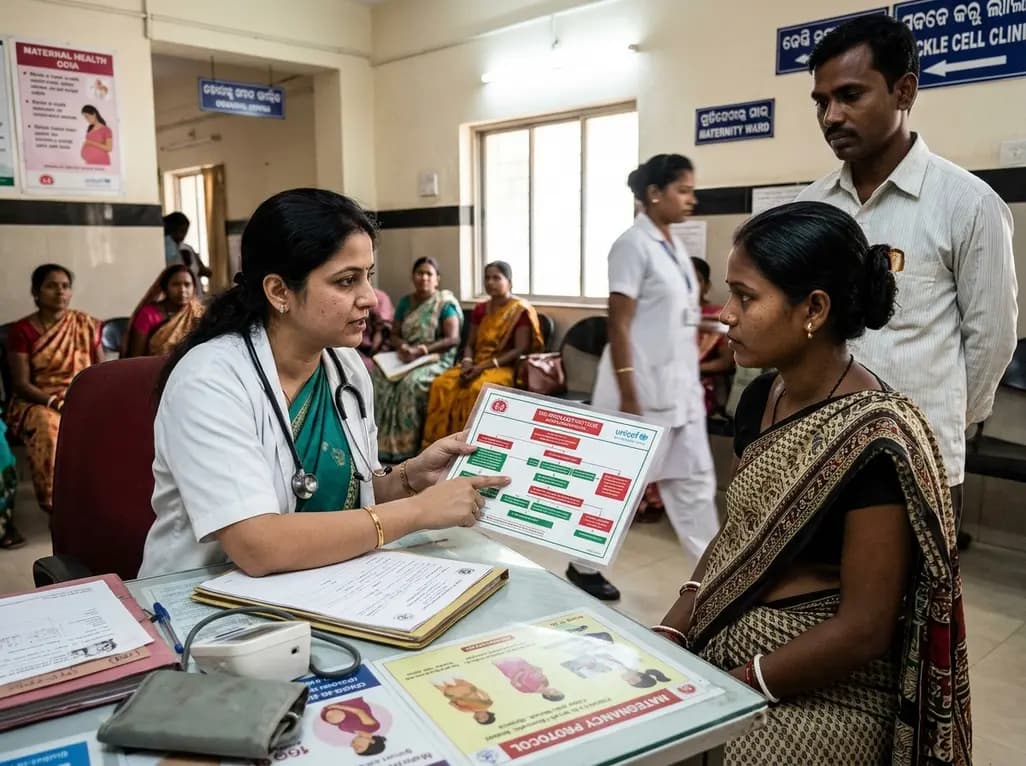
Odisha has established India's first state-level clinical protocol specifically tailored for pregnant women with sickle cell disease. Developed with NHM and UNICEF, the framework provides structured antenatal screening, crisis mitigation, standardized referral pathways, and specialized interdisciplinary care.
Today

The Directorate General of Health Services directs Indian states to halt the hazardous reuse and reprocessing of single-use medical devices. Discover regulatory implications under the Drugs and Cosmetics Act, critical infection risks, legal liabilities, and operational changes required across clinical specialties.
Today

A randomized controlled trial demonstrates that an eight-week dual-task training intervention significantly improves static and dynamic postural control over standard balance exercises in individuals with chronic ankle instability, addressing critical neurocognitive deficits during athletic and daily activities.
Today

India is advancing preventive healthcare by integrating genomics, artificial intelligence, and quantum technologies. With the SANGAM programme sequencing one million Indian genomes, clinicians can unlock personalized therapies, detect cardiometabolic risks early, and curb the burden of diabetes and heart disease.
Today
