.webp&w=384&q=75)

Loading, please wait...
Loading, please wait...
The Delhi High Court has ordered a comprehensive Fortis forensic audit to scrutinize major financial transactions involving prominent healthcare entities. Specifically, the court directed the appointment of an independent forensic auditor to evaluate deal structures involving Fortis Healthcare Limited, Malaysia-based IHH Healthcare Berhad, and Singapore-listed RHT Health Trust. This judicial directive represents a major development in the ongoing enforcement proceedings initiated by Japanese pharmaceutical leader Daiichi Sankyo. Consequently, the legal mandate seeks to unravel complex capital movements linked to an international arbitration award valued at approximately 4.6 billion dollars against former promoters Malvinder Singh and Shivinder Singh.
The prolonged legal confrontation began when Daiichi Sankyo acquired a majority stake in Ranbaxy Laboratories in 2008. Subsequently, regulatory investigations revealed concealed compliance issues and product safety violations at Ranbaxy manufacturing facilities. Because of these undisclosed liabilities, Daiichi initiated international arbitration proceedings against the former promoters in Singapore. In 2016, the Singapore arbitral tribunal awarded substantial monetary damages to Daiichi Sankyo after finding evidence of fraudulent misrepresentation.
Therefore, the Japanese pharmaceutical firm approached Indian judicial forums to execute the multi-billion-dollar arbitral award. Meanwhile, the former promoters faced mounting debt across their varied corporate holdings. As a result, major institutional lenders began liquidating pledged shares in Fortis Healthcare to recover outstanding credit lines. Daiichi argued that these actions deliberately compromised asset recovery channels. In response, Indian courts issued strict status quo orders to prevent further dissipation of encumbered promoter assets.
The recent High Court ruling directly implements directions earlier outlined by the Supreme Court of India. In September 2022, the apex court remanded the matter to the Delhi High Court for detailed scrutiny. Furthermore, the Supreme Court empowered the executing court to commission an exhaustive Fortis forensic audit to evaluate potential nexus and clandestine transfers. The primary objective is to verify whether institutional transactions remained bona fide or served to siphon funds away from legitimate award enforcement.
Specifically, the appointed forensic experts will investigate the dilution of promoter shareholding across multiple corporate levels. Additionally, auditors will analyze alleged violations of solemn undertakings previously submitted to the judiciary by the Singh brothers. Daiichi has consistently claimed that corporate restructuring maneuvers diluted the recoverable asset pool. By ordering an external financial investigation under judicial oversight, the High Court aims to establish complete transparency regarding historical corporate conduct and money flow patterns.
A central pillar of the forensic probe involves the 2018 acquisition of Fortis Healthcare by Malaysia-based IHH Healthcare Berhad. During that period, IHH acquired a 31 percent controlling stake in Fortis through an open bidding process for roughly 4,000 crore rupees. However, the subsequent open offer for an additional 26 percent stake faced immediate legal hurdles. Daiichi challenged the transaction framework, alleging that capital inflows were routed away through secondary entities.
Moreover, the forensic investigation will examine a major transaction involving RHT Health Trust in Singapore. Daiichi has alleged an improper or clandestine transfer of approximately 4,666 crore rupees connected to these asset purchases. Consequently, the forensic auditors must trace how funds received from IHH were utilized across domestic and overseas accounts. The inquiry will clarify whether these complex corporate arrangements adhered strictly to legal standards or violated interim judicial restraints.
In addition to promoter entities, the High Court inquiry encompasses the conduct of seventeen prominent commercial banks and non-banking financial institutions. Daiichi filed specific applications seeking thorough audits of leading lenders such as HDFC, Yes Bank, Axis Bank, Citicorp Finance, and Kotak Mahindra Investments. Specifically, the petition alleges that these financial institutions invoked pledges on Fortis Healthcare shares despite active court orders restricting share transfers.
Furthermore, the petition questions the credit appraisal practices adopted by these institutional lenders. It alleges that financial institutions extended substantial credit lines to loss-making corporate entities without adequate due diligence. Subsequently, lenders seized and liquidated underlying healthcare equity to satisfy corporate debts. The forensic audit will therefore determine whether institutional actions constituted legitimate debt recovery or contributed to unauthorized asset diversion.
This judicial directive holds profound governance implications for the broader Indian private healthcare ecosystem. Major hospital chains require significant foreign direct investment and transparent corporate structures to expand clinical infrastructure. However, prolonged litigation and allegations of promoter misconduct can destabilize hospital administration. Therefore, forensic scrutiny ensures that clinical assets remain untangled from legacy financial liabilities.
Ultimately, establishing corporate accountability protects patient care continuity and sustains investor confidence across tertiary hospital networks. Healthcare providers and administrative leaders must recognize the critical importance of statutory compliance and ethical financial reporting. As the forensic audit progresses, the findings will likely establish landmark precedents for corporate governance, promoter accountability, and debt enforcement in India.
Q1: Why did the Delhi High Court order a forensic audit in the Fortis case?
The Delhi High Court ordered the forensic audit to examine complex corporate transactions involving Fortis Healthcare, IHH Healthcare, and RHT Health Trust. This judicial investigation follows directions from the Supreme Court to determine whether asset sales, share dilutions, and multi-crore fund transfers violated court orders or hindered Daiichi Sankyo from recovering its international arbitration award.
Q2: What is the primary dispute between Daiichi Sankyo and the former Fortis promoters?
The dispute stems from Daiichi Sankyo's 2008 acquisition of Ranbaxy Laboratories from Malvinder and Shivinder Singh. Daiichi won a 2016 Singapore arbitration award after proving the promoters concealed critical regulatory probes. Consequently, Daiichi has pursued enforcement in Indian courts, arguing that subsequent promoter transactions improperly dissipated recoverable Fortis assets and corporate shares.
Q3: Which financial institutions are being examined in this judicial inquiry?
The judicial inquiry examines seventeen major banks and financial institutions, including HDFC, Yes Bank, Axis Bank, Citicorp Finance, and Kotak Mahindra Investments. The forensic probe evaluates whether these lenders improperly invoked share pledges and extended uncollateralized loans to promoter entities in violation of judicial status quo orders and court undertakings.
Disclaimer: This content is for informational and educational purposes only. It does not constitute medical advice or replace professional judgment. Refer to the latest local and national guidelines for clinical practice.
References

Read summarized clinical updates, watch expert medical content, and earn CME certifications right from your smartphone.
Open your smartphone camera to scan and install.





The Delhi High Court has directed the appointment of a forensic auditor to probe complex corporate transactions involving Fortis Healthcare, IHH Healthcare, and RHT Health Trust amid Daiichi Sankyo's long-standing recovery efforts against former promoters Malvinder and Shivinder Singh.
4 weeks back
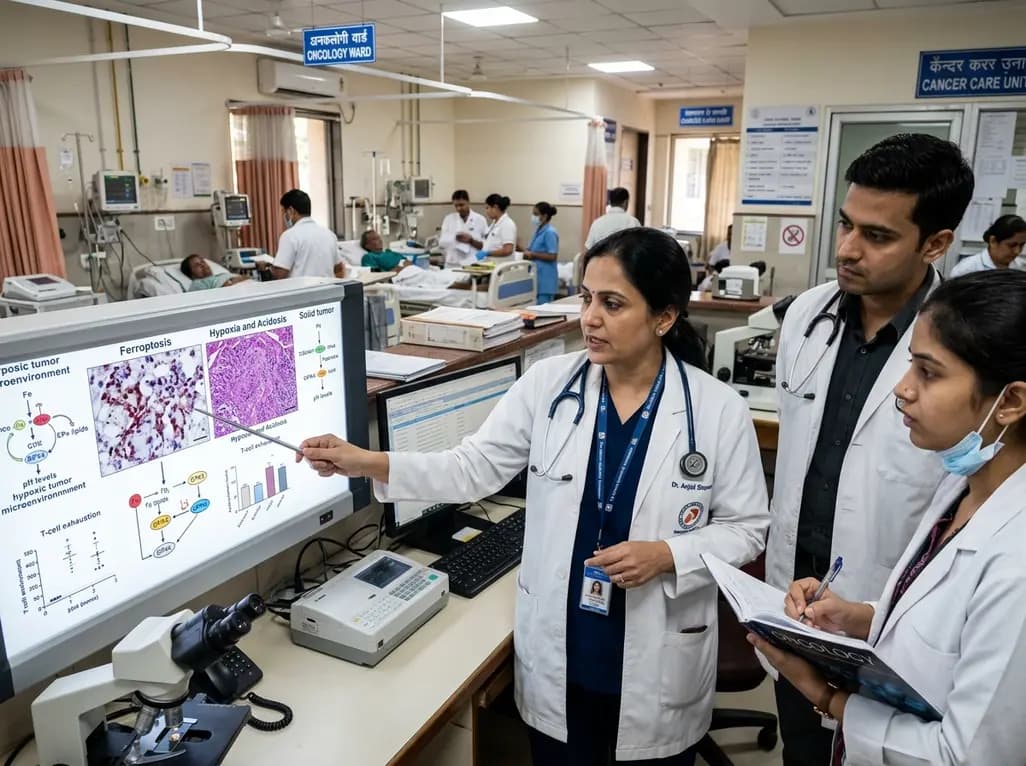
Targeting ferroptosis provides a compelling strategy to dismantle hypoxia- and acidosis-driven immunosuppression in solid tumors, enhancing response to modern immunotherapy.
Today

Findings from Project Viva indicate that sustained postpartum weight retention, rather than excessive gestational weight gain alone, directly worsens women's mid-life cardiovascular health, degrading blood pressure and glycemic parameters decades after delivery.
Today
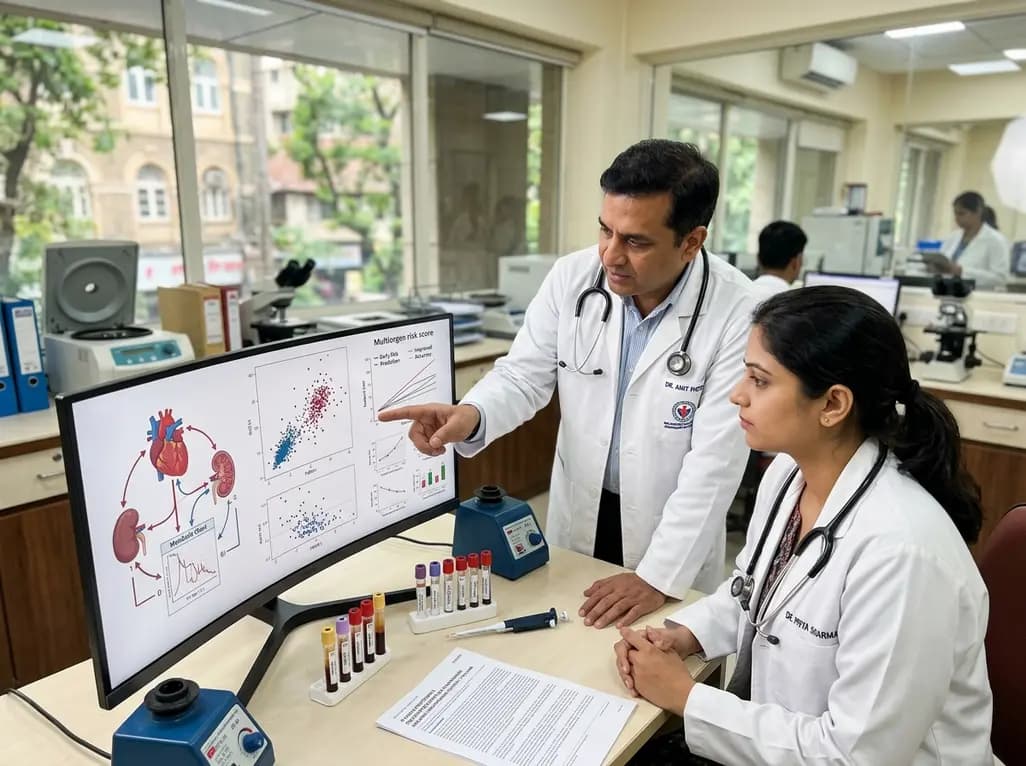
A large UK Biobank study reveals that plasma proteomic signatures capture preclinical organ damage and improve multiorgan risk prediction across early CKM syndrome stages 0 to 2 beyond traditional PREVENT clinical models.
Today
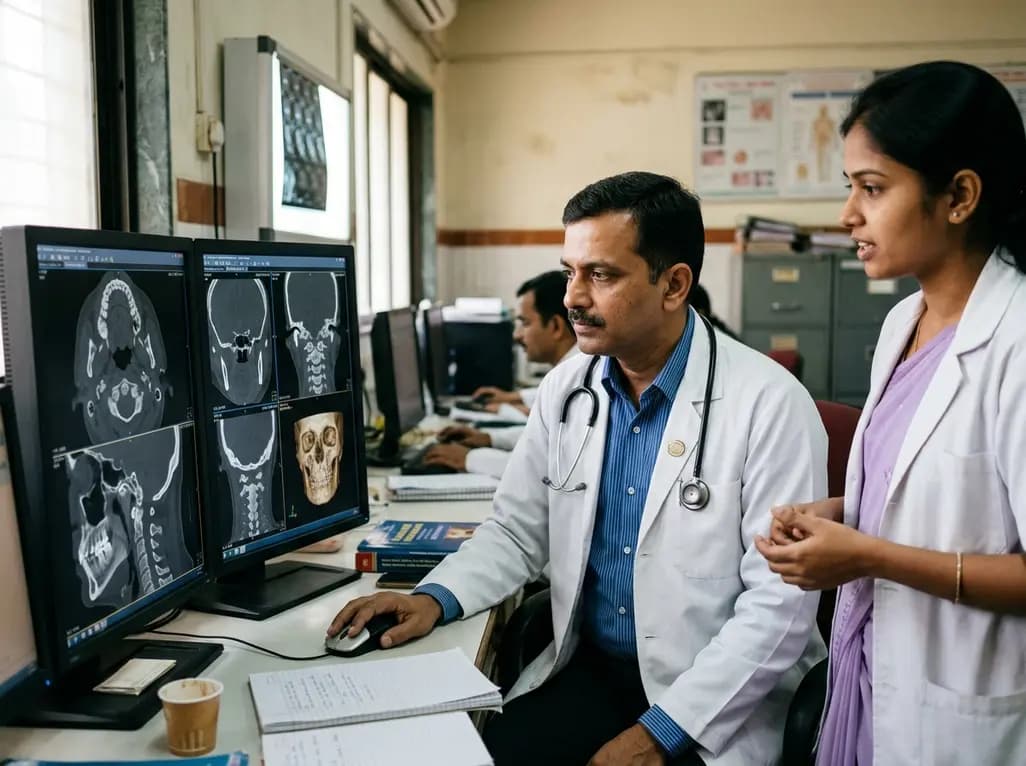
A retrospective CBCT study reveals that superior TMJ space asymmetry correlates moderately with occipital condyle-atlas-axis asymmetry in unilateral TMJ osteoarthritis, highlighting an imaging correlate between jaw biomechanics and upper cervical alignment rather than a standalone diagnostic marker.
Today

A Bayesian multilevel meta-analysis reveals that aerobic training combined with moderate carbohydrate restriction modestly lowers HbA1c in type 2 diabetes. However, sparse data and very low certainty leave incremental benefits over exercise or diet alone unproven, highlighting the need for individualized care.
Today
