.webp&w=384&q=75)

Loading, please wait...
Loading, please wait...
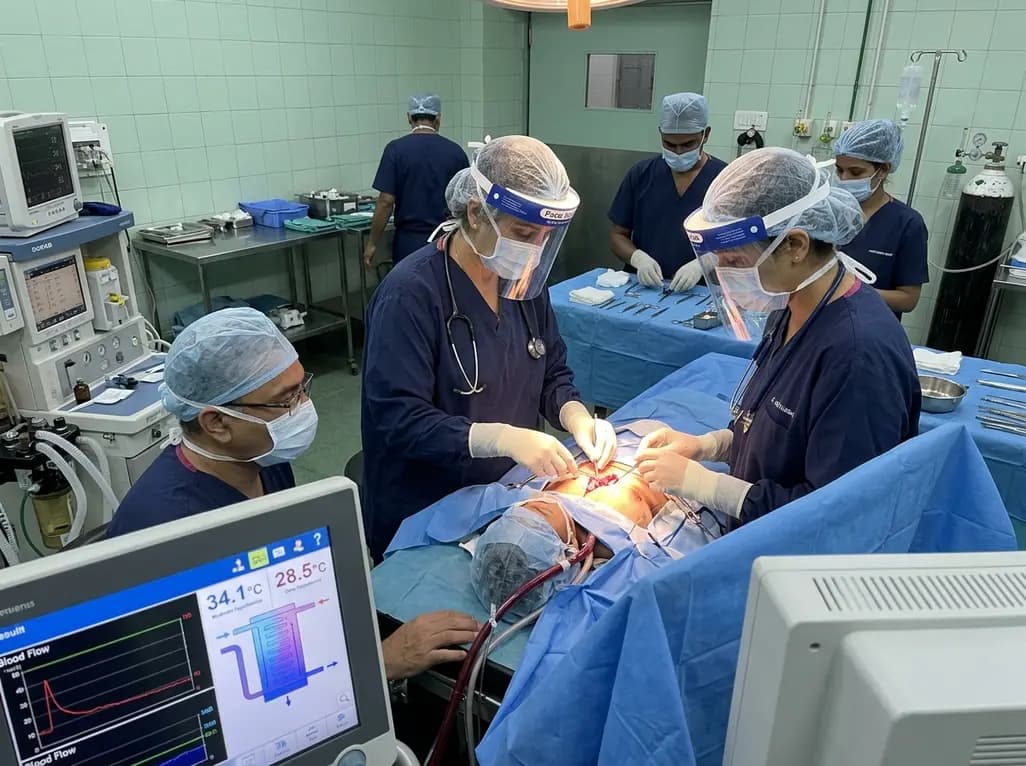
Pediatric cardiac surgery demands rigorous intraoperative organ preservation techniques to safeguard vulnerable neonates and infants during complex reconstructive procedures. For decades, congenital heart surgeons and perfusion teams routinely relied on deep hypothermia to suppress metabolic activity and preserve vital organ systems. However, extreme cooling can cause significant physiological derangements, including endothelial dysfunction, profound coagulopathy, and severe systemic inflammatory cascades. Consequently, modern surgical teams frequently explore moderate hypothermia as a viable physiological alternative. While deep hypothermia reduces oxygen consumption drastically, rewarming requires prolonged cardiopulmonary bypass time, which increases perioperative risk. Therefore, clinicians must carefully weigh the metabolic advantages of profound thermal reduction against its associated clinical burdens. Recent advancements in selective regional perfusion and cardioplegic strategies have further accelerated this debate across pediatric centers. Ultimately, determining the optimal thermal strategy remains essential to optimize recovery and minimize early complications in fragile pediatric cohorts.
To resolve these clinical dilemmas, investigators conducted a rigorous systematic review and meta-analysis evaluating early postoperative outcomes across comparative pediatric cohorts. The research team searched major medical databases, including PubMed, Cochrane Library, and Embase, according to PRISMA guidelines. Specifically, the study identified five high-quality comparative investigations encompassing 448 pediatric patients undergoing complex repairs. In this cohort, 250 patients underwent surgical intervention with moderate hypothermia, whereas 198 patients received deep hypothermia. Baseline demographics, including patient age, body weight, and preoperative diagnostic complexity, showed remarkable balance across the two study arms. Furthermore, aortic arch reconstruction accounted for the vast majority of operations in both cohorts. Researchers systematically extracted critical metrics such as short-term mortality, neurological events, acute kidney injury, duration of mechanical ventilation, and operative times. Consequently, this synthesized evidence provides robust statistical power to clarify whether avoiding profound thermal reduction compromises early clinical success in vulnerable children.
The pooled meta-analysis revealed comparable early mortality and major complication rates between deep and moderate hypothermia groups. Overall, thirty-day mortality showed no statistically significant difference, demonstrating that moderate cooling provides adequate visceral and myocardial protection during reconstructive procedures. Furthermore, the analysis demonstrated similar rates of postoperative neurological deficits, acute renal failure requiring dialysis, and low cardiac output syndrome. Patients managed with moderate hypothermia did not experience higher incidences of organ dysfunction despite operating at warmer core temperatures. In contrast, avoiding deep cooling substantially attenuated the systemic inflammatory response and minimized transfusion requirements in the intensive care unit. Moreover, rates of surgical re-exploration for mediastinal hemorrhage did not differ significantly between the groups. Therefore, these collective findings indicate that moderate hypothermia achieves equivalent safety profiles without exposing patients to the metabolic penalties of extreme hypothermic arrest. Consequently, multidisciplinary teams can confidently employ moderate hypothermia in well-selected pediatric cases.
Intraoperative perfusion parameters provide crucial insights into the procedural efficiencies of varying thermal management strategies during pediatric cardiac surgery. Notably, the meta-analysis revealed that cross-clamp duration was significantly longer in patients managed under deep hypothermia compared to moderate cooling. In addition, deep hypothermia required extended rewarming periods on cardiopulmonary bypass to safely restore baseline normothermia. These extended bypass durations frequently correlate with increased capillary leak syndrome and pulmonary parenchymal edema in small infants. Conversely, moderate hypothermia shortens total bypass runs by reducing the cooling and rewarming intervals. As a direct result, patients undergoing moderate hypothermia often require fewer total inotropic support days and shorter post-bypass stabilization times. Furthermore, reduced pump time directly correlates with lower red blood cell and platelet consumption during the intraoperative phase. Thus, minimizing profound thermal extremes streamlines operative execution while preserving cellular integrity and vascular tone.
Successful application of moderate hypothermia requires meticulous coordination between the cardiothoracic surgeon, anesthesiologist, and clinical perfusionist. Specifically, surgeons often combine moderate thermal targets with selective antegrade cerebral perfusion to guarantee adequate cerebral oxygen delivery during arch reconstruction. In addition, real-time neuromonitoring using near-infrared spectroscopy and bispectral index tracking helps clinicians titrate regional flows dynamically. Meanwhile, targeted pharmacological neuroprotection and tight glycemic control further safeguard fragile central nervous systems against localized ischemic insults. Moreover, maintaining adequate hematocrit levels during moderate bypass ensures optimal oxygen transport despite higher metabolic rates compared to deep arrest. Therefore, clinicians must establish standardized intraoperative checklists to monitor acid-base balance, organ perfusion pressures, and core temperature gradients continuously. Accordingly, institutional expertise and vigilant perfusion protocols represent critical determinants in achieving superior surgical outcomes under moderate hypothermic conditions.
Translating these meta-analytic findings into routine clinical practice requires individualizing thermal protocols based on patient anatomy and procedural complexity. For instance, neonates with complex single-ventricle anatomy or interrupted aortic arches may still require deep hypothermic circulatory arrest when visualization demands a bloodless surgical field. However, for standard coarctation repairs, ventricular septal defect closures, and isolated arch reconstructions, moderate hypothermia offers significant recovery benefits. Consequently, pediatric cardiac centers should develop multidisciplinary temperature management guidelines that balance procedural exposure with physiological preservation. Furthermore, intensive care teams must align their postoperative rewarming and hemodynamic management strategies with the selected intraoperative target. Future prospective multi-center randomized trials will undoubtedly refine our understanding of long-term neurodevelopmental trajectories in these patients. Nevertheless, current evidence strongly supports moderate hypothermia as an effective, reliable, and protective strategy in contemporary pediatric cardiac care.
In pediatric cardiac practice, clinicians generally define deep hypothermia as cooling core body temperature below 22°C, often between 14°C and 18°C during circulatory arrest. In contrast, moderate hypothermia maintains core temperatures between 22°C and 28°C, or occasionally up to 32°C. These warmer targets provide adequate metabolic suppression while avoiding severe coagulopathy and prolonged rewarming durations on cardiopulmonary bypass.
Moderate hypothermia lowers cerebral metabolic requirements while teams commonly deliver continuous oxygenated blood using selective antegrade cerebral perfusion. This combined approach maintains cerebral autoregulation, ensures continuous substrate delivery, and prevents deep hypothermia-induced microvascular dysfunction. Consequently, clinical evidence confirms that neurological morbidity rates under moderate hypothermia with selective perfusion remain comparable to traditional deep hypothermic arrest techniques.
Yes, moderate hypothermia significantly reduces total cardiopulmonary bypass duration by eliminating the prolonged cooling and rewarming phases required during deep hypothermia. Consequently, shorter bypass runs attenuate platelet dysfunction, reduce inflammatory cytokine release, and decrease post-bypass capillary leak syndrome. As a direct result, pediatric patients often experience improved pulmonary function, reduced inotropic support requirements, and shorter intensive care stays.
Disclaimer: This content is for informational and educational purposes only and does not constitute medical advice. Refer to the latest local and national guidelines for clinical practice.
References
Zoupas I et al. Deep versus moderate hypothermia in pediatric cardiac surgery: Systematic review and meta-analysis of early postoperative outcomes. Perfusion. 2026 Aug 16. doi: 10.1177/02676591261477954. PMID: 42604841.
Tian DH, Wan B, Bannon PG, et al. A meta-analysis of deep hypothermic circulatory arrest versus moderate hypothermic circulatory arrest with selective antegrade cerebral perfusion. Ann Cardiothorac Surg. 2013;2(2):148-158.
Cao L, Yan D, Yuan H, et al. Effect of Deep Hypothermic Circulatory Arrest Versus Moderate Hypothermic Circulatory Arrest in Aortic Arch Surgery on Postoperative Renal Function: A Systematic Review and Meta-Analysis. J Am Heart Assoc. 2020;9(19):e017939.

Read summarized clinical updates, watch expert medical content, and earn CME certifications right from your smartphone.
Open your smartphone camera to scan and install.





A systematic review and meta-analysis compares deep versus moderate hypothermia in pediatric cardiac surgery, demonstrating equivalent early mortality and organ protection alongside reduced cross-clamp and bypass durations.
last month

Targeting ferroptosis provides a compelling strategy to dismantle hypoxia- and acidosis-driven immunosuppression in solid tumors, enhancing response to modern immunotherapy.
Today

Findings from Project Viva indicate that sustained postpartum weight retention, rather than excessive gestational weight gain alone, directly worsens women's mid-life cardiovascular health, degrading blood pressure and glycemic parameters decades after delivery.
Today

A large UK Biobank study reveals that plasma proteomic signatures capture preclinical organ damage and improve multiorgan risk prediction across early CKM syndrome stages 0 to 2 beyond traditional PREVENT clinical models.
Today

A retrospective CBCT study reveals that superior TMJ space asymmetry correlates moderately with occipital condyle-atlas-axis asymmetry in unilateral TMJ osteoarthritis, highlighting an imaging correlate between jaw biomechanics and upper cervical alignment rather than a standalone diagnostic marker.
Today

A Bayesian multilevel meta-analysis reveals that aerobic training combined with moderate carbohydrate restriction modestly lowers HbA1c in type 2 diabetes. However, sparse data and very low certainty leave incremental benefits over exercise or diet alone unproven, highlighting the need for individualized care.
Today
