.webp&w=384&q=75)

Loading, please wait...
Loading, please wait...

Daycare chemotherapy is rapidly becoming the standard for cancer treatment across Karnataka's government and private hospitals. Specifically, nearly 80% of patients now receive their infusion therapies without needing overnight hospitalization. This shift significantly reduces the burden on tertiary care centers like the Kidwai Memorial Institute of Oncology. Consequently, patients can access high-quality treatment closer to their homes. Furthermore, the daycare model supports better bed management and lowers overall healthcare costs for both providers and patients.
Doctors highlight several clinical benefits associated with the outpatient delivery of cancer drugs. Primarily, shorter infusion times and improved drug tolerability allow patients to return home the same day. This approach minimizes disruptions to daily life and fosters a more comfortable recovery environment. Additionally, the risk of hospital-acquired infections decreases when patients spend less time in a traditional inpatient setting. However, medical teams still reserve inpatient care for roughly 10% of complex cases, such as leukemia or severe sarcoma. Thus, the model provides a balanced approach to modern oncology by prioritizing efficiency for the majority.
The Karnataka government established 16 District Daycare Chemotherapy Centres (DDCCs) in June 2025 to decentralize cancer care effectively. These centers follow a hub-and-spoke model where primary centers refer complex queries to specialist institutes for guidance. For instance, the Mysuru District Hospital has successfully treated dozens of patients through multiple cycles without requiring transfers to the capital. This decentralization ensures that patients from rural areas do not have to travel long distances for routine sessions. Moreover, the state plans to expand this network to further improve clinical adherence and long-term patient outcomes across the region.
Q1: What are the main benefits of daycare chemotherapy for patients?
Daycare chemotherapy offers lower treatment costs, a reduced risk of hospital-acquired infections, and the comfort of recovering at home with family support.
Q2: Who is eligible for daycare treatment versus inpatient admission?
Most oncology patients are eligible for daycare services; however, complex cases like leukemia or patients requiring intensive side-effect monitoring still need inpatient admission.
Disclaimer: This content is for informational and educational purposes only. It does not constitute medical advice or replace professional judgment. Refer to the latest local and national guidelines for clinical practice.
References

Read summarized clinical updates, watch expert medical content, and earn CME certifications right from your smartphone.
Open your smartphone camera to scan and install.





Karnataka's shift to daycare chemotherapy reduces inpatient stays, cuts costs, and improves patient comfort through an expanded hub-and-spoke model....
6 months ago

Explore vital recurrent stroke predictors in lacunar stroke patients managed with intensive blood pressure lowering. This analysis examines trial findings from SPS3 to uncover residual vascular risks, metabolic factors, and targeted secondary prevention strategies for high-risk neurological patients.
Today

Odisha has established India's first state-level clinical protocol specifically tailored for pregnant women with sickle cell disease. Developed with NHM and UNICEF, the framework provides structured antenatal screening, crisis mitigation, standardized referral pathways, and specialized interdisciplinary care.
Today

India is advancing preventive healthcare by integrating genomics, artificial intelligence, and quantum technologies. With the SANGAM programme sequencing one million Indian genomes, clinicians can unlock personalized therapies, detect cardiometabolic risks early, and curb the burden of diabetes and heart disease.
Today
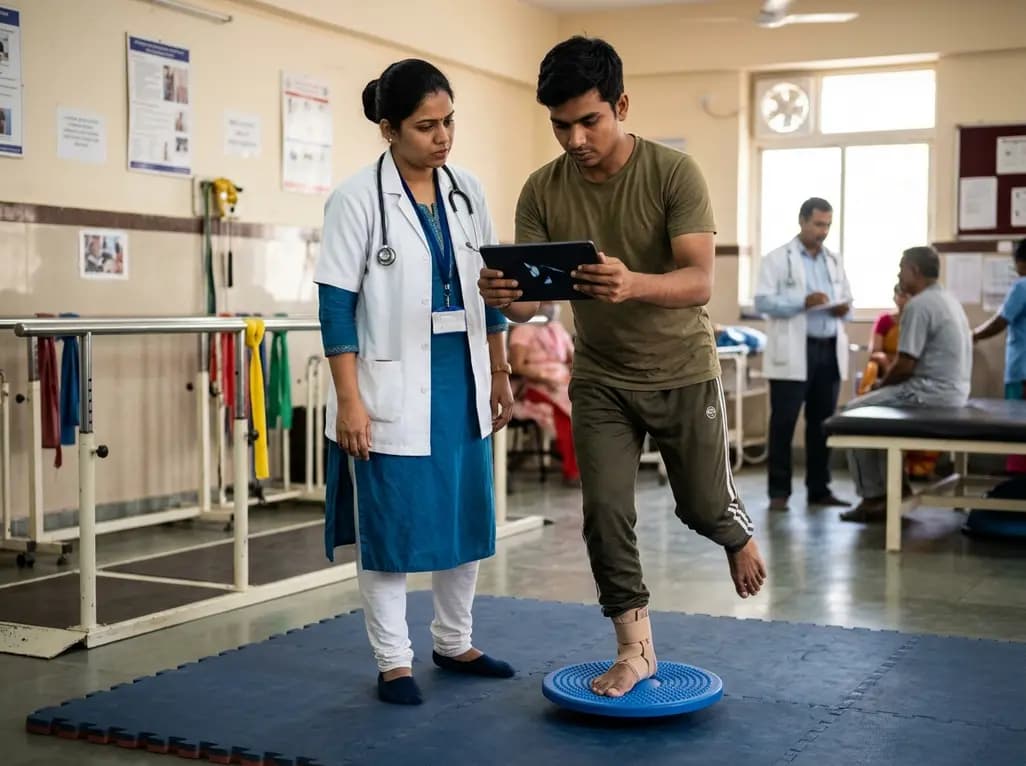
A randomized controlled trial demonstrates that an eight-week dual-task training intervention significantly improves static and dynamic postural control over standard balance exercises in individuals with chronic ankle instability, addressing critical neurocognitive deficits during athletic and daily activities.
Today

A retrospective cohort study of 7,716 ICU patients from the MIMIC-IV database demonstrates that Gradient Boosting Decision Trees significantly outperform traditional SOFA scores in predicting in-hospital mortality among patients with sepsis and diabetes, with SHAP analysis providing clinical interpretability.
Today
