.webp&w=384&q=75)

Loading, please wait...
Loading, please wait...

Modern healthcare systems increasingly rely on digital health metrics to guide clinical decision-making and enhance resident outcomes. However, establishing comprehensive data maturity in LTC remains a significant hurdle for many healthcare organizations worldwide. Long-term care facilities collect vast quantities of clinical, functional, and personal information every day. Despite this rich data stream, administrators and clinicians rarely utilize these insights for systematic quality improvement. When organizations fail to transform raw health documentation into actionable intelligence, clinical processes stagnate and care outcomes suffer. Understanding the foundational capabilities of healthcare institutions is the first step toward bridging this digital divide. By systematically evaluating institutional infrastructure, clinician workflows, and organizational culture, healthcare systems can transition from fragmented records to robust, data-informed practice.
Data maturity describes the degree to which an organization systematically captures, manages, analyzes, and applies digital information to meet its operational and clinical objectives. In geriatric care and chronic disease management, high maturity empowers teams to track disease progression, optimize medication regimens, and prevent avoidable hospital admissions. Conversely, low maturity leaves clinical staff dependent on disconnected records and intuition alone. A recent exploratory mixed-methods study evaluated the readiness of long-term care organizations using an extensive assessment across seven distinct organizational domains. The researchers established interprofessional communities of practice involving clinicians, managers, information technology specialists, and patient representatives. Their findings confirmed that long-term care environments consistently operate at an early baseline of data maturity. Although facilities maintain routine electronic health documentation, they rarely connect these metrics to broader strategic quality initiatives or bedside quality improvements.
The evaluation revealed widespread deficiencies in foundational domains, specifically organizational strategy, formal data governance, and overall data quality. Furthermore, these structural vulnerabilities appeared consistently across different care organizations, indicating a systemic challenge within the eldercare sector. Most healthcare institutions lack a coherent, unified vision for digital health transformation. Without centralized strategic leadership, disparate departments frequently purchase incompatible software tools that trap valuable clinical metrics within digital silos. In addition, poorly defined governance frameworks lead to inconsistent documentation standards among nursing staff and allied healthcare workers. When clinical data entry lacks uniform protocols, information reliability drops sharply. As a consequence, healthcare leaders cannot extract trustworthy analytics to guide policy or resource allocation. Establishing standardized terminology and centralized governance protocols is essential to resolve these chronic administrative and structural deficits.
While technical architecture provides the necessary baseline, organizational culture determines whether digital initiatives actually succeed. The study identified substantial variability and wide capability gaps in institutional leadership and cultural readiness. In many facilities, leadership teams focus exclusively on regulatory compliance rather than cultivating an environment of continuous learning. Clinicians frequently perceive documentation as an administrative burden rather than a valuable diagnostic or therapeutic asset. Consequently, frontline workers demonstrate hesitation or skepticism toward advanced digital dashboards. Building an authentic digital culture requires proactive nurse managers and medical directors who champion data literacy. When clinical leaders actively demonstrate how analytics improve resident safety and functional independence, frontline teams engage more readily. Therefore, cultural readiness and sustained educational support must accompany any technological investment to foster genuine organizational transformation.
Effective clinical digital integration requires seamless collaboration across diverse disciplines, yet interprofessional silos continue to hinder progress. Healthcare organizations frequently maintain a distinct divide between technical IT professionals, administrative managers, and bedside care providers. Because these distinct groups operate with different vocabularies and conflicting priorities, technological rollouts often fail to address practical clinical needs. For example, software developers might create complex reporting interfaces that disrupt bedside nursing workflows rather than streamlining them. Similarly, care professionals often struggle to articulate their analytical requirements to database administrators. Developing structured communities of practice creates a collaborative space where clinicians and technical specialists can co-design useful tools. Ultimately, continuous interdisciplinary dialogue ensures that digital health interventions directly enhance patient care without overburdening healthcare staff with convoluted software workflows.
Advancing digital health capabilities in long-term care requires a synchronized approach that aligns technical infrastructure with human workflows. Healthcare leaders must establish realistic, phased implementation roadmaps instead of attempting rapid, uncoordinated digital overhauls. First, organizations should invest in foundational digital infrastructure and automated data capture mechanisms to minimize manual entry errors. Next, management must establish regular training programs to enhance analytical competence among interprofessional staff members. Longitudinal monitoring is equally crucial, as organizations need to assess whether analytical initiatives genuinely correlate with improved clinical indicators, such as reduced pressure injuries or optimized fall prevention. By aligning strong leadership commitment with intuitive digital systems, long-term care facilities can successfully establish a resilient, data-informed ecosystem that optimizes chronic care delivery for aging populations.
Data maturity reflects the capability of a healthcare organization to systematically capture, govern, and leverage clinical information. In long-term care, higher maturity indicates that clinicians and administrators routinely use structured health metrics to monitor treatment outcomes, optimize daily care routines, and enhance institutional safety rather than relying solely on fragmented, unanalyzed health records.
Facilities often struggle due to limited technical infrastructure, poor interprofessional communication, and an absence of clear digital vision. Additionally, frontline clinicians often experience heavy administrative workloads, which makes adopting complex software interfaces challenging. Without adequate leadership support and standardized data governance protocols, digital transformation efforts consistently fail to gain traction.
Leaders can cultivate a positive data culture by actively demonstrating how health analytics improve direct resident outcomes. Providing ongoing training, involving clinicians in software selection, and simplifying documentation workflows help reduce skepticism. When healthcare providers see that data-informed tools save time and elevate clinical care, their engagement and analytical literacy increase substantially.
Disclaimer: This content is for informational and educational purposes only. It is not intended to substitute professional medical advice, diagnosis, or treatment. Refer to the latest local and national guidelines for clinical practice.
References
Bouchmal S et al. Data Maturity Assessment in Long-Term Care: Mixed Methods Study. J Med Internet Res. 2026 Aug 19. doi: 10.2196/93162. PMID: 42617155.
Wilcox A, Dorr DA, Knosp B, Champieux R, Barnett W, Anderson N, Starren J, Platt J, Vaidyanathan A, Embí PJ. The Maturity of Maturity Models in Health Care and Informatics. AMIA Jt Summits Transl Sci Proc. 2026 Jun 1;2026:506-515. PMID: 42317830.
Javaid M, Haleem A, Singh RP. Health informatics to enhance the healthcare industry's culture: An extensive analysis of its features, contributions, applications and limitations. Inform Med Unlocked. 2024;1:123-148.

Read summarized clinical updates, watch expert medical content, and earn CME certifications right from your smartphone.
Open your smartphone camera to scan and install.





A mixed-methods study evaluates data maturity in long-term care, identifying persistent gaps in governance, leadership, and digital culture. Learn how healthcare institutions can systematically build technical readiness and interdisciplinary collaboration to deliver high-quality, data-informed geriatric care.
last month

A recent case shows that exertional rhabdomyolysis can trigger marked transaminase spikes despite moderate creatine kinase elevation. Preserved hepatic synthetic function confirms muscle injury rather than liver failure, guiding conservative hydration and preventing unnecessary invasive diagnostics.
Today

A pharmacometric and machine learning study reveals that specific vaginal bacteria alter cervical antiretroviral exposure, highlighting the need for precision HIV PrEP strategies.
Today

Abdominal aortic aneurysm rupture remains a catastrophic vascular emergency. Groundbreaking research reveals that USP53 accelerates aneurysm progression by reprogramming smooth muscle cell metabolism toward aerobic glycolysis, highlighting a promising target beyond conventional diameter-based surveillance.
Today
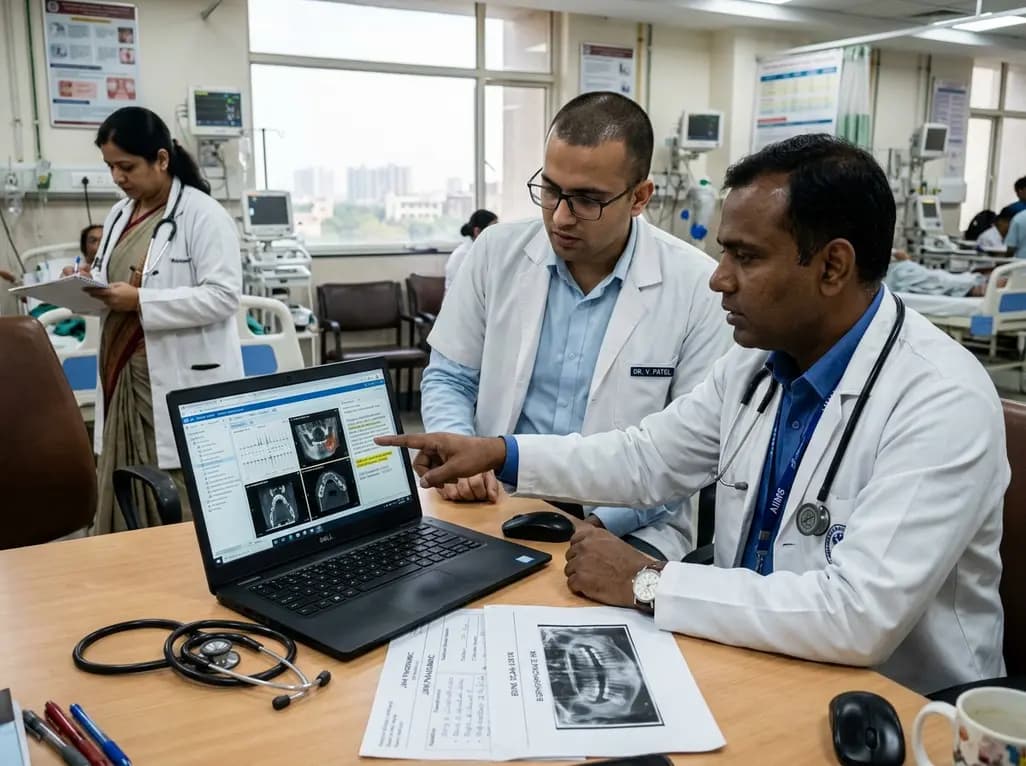
A breakthrough study leverages natural language processing to accurately identify incident medication-related osteonecrosis of the jaw and track antiresorptive drug holidays from clinical narratives in electronic health records, advancing osteoporosis pharmacovigilance and dental safety.
Today
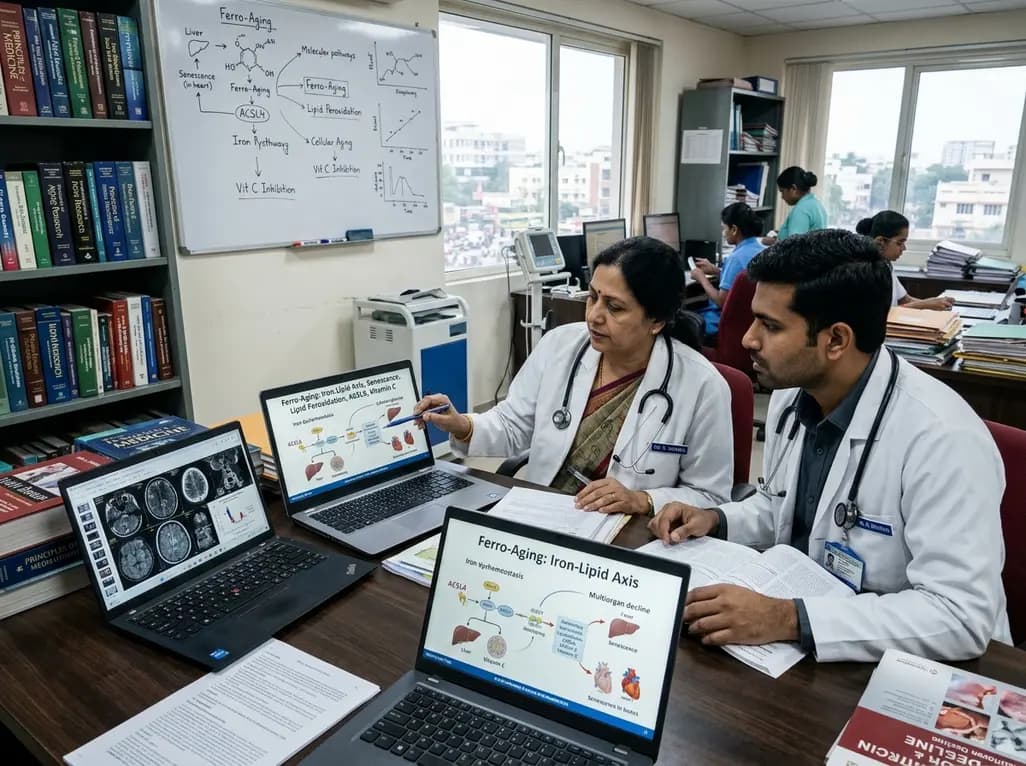
Recent research defines ferro-aging as a conserved iron-lipid axis driving organ decline across primates. Age-related iron dyshomeostasis stimulates ACSL4-mediated lipid peroxidation, promoting cellular senescence. Notably, vitamin C directly inhibits ACSL4, suppressing phospholipid oxidation and multi-organ decay.
Yesterday
