.webp&w=384&q=75)

Loading, please wait...
Loading, please wait...

Immune surveillance relies on the precise detection of danger cues to preserve host homeostasis and eliminate pathogenic threats. At the center of this protective sentinel network lies DAMPs and PAMPs signaling, which discriminates between exogenous invaders and endogenous cellular disruption. Pathogen-associated molecular patterns (PAMPs) represent evolutionarily conserved microbial components, whereas damage-associated molecular patterns (DAMPs) and alarmins are endogenous molecules released during cellular stress, necrosis, or structural injury. Consequently, understanding how these molecular triggers direct immune responses provides foundational insight into acute inflammation, resolution phases, and autoimmune destruction.
Pathogen-associated signals originate from diverse microbial structures, including lipopolysaccharide, viral nucleic acids, bacterial flagellin, and fungal glucans. These motifs alert host defense systems to active infection. Conversely, endogenous alarmins originate from distinct subcellular compartments during tissue trauma, ischemia, or non-apoptotic cell death. Nuclear factors such as high-mobility group box 1 (HMGB1) and interleukin-1α rapidly exit injured cells to recruit innate responders. Similarly, mitochondrial constituents, including mitochondrial DNA and formyl peptides, mirror ancestral bacterial structures, thereby provoking intense inflammatory responses when released into the extracellular milieu. In addition, extracellular matrix breakdown products like hyaluronic acid fragments and fibronectin extra domain A signal physical tissue compromise. Therefore, structural breakdown and necrotic clearance continuously supply potent agonists that activate local immune sentinels.
Host cells detect danger cues through a specialized arsenal of pattern recognition receptors (PRRs). Membrane-bound Toll-like receptors (TLRs) and C-type lectin receptors scan the extracellular space and endosomal compartments for molecular signatures. Meanwhile, intracellular sensors, such as NOD-like receptors (NLRs) and cyclic GMP-AMP synthase (cGAS), monitor the cytosol for misplaced nucleic acids and invasive toxins. Importantly, DAMPs and PAMPs signaling converges on shared downstream effector cascades, most notably the NF-κB, MAPK, and type I interferon pathways. Moreover, assembly of the NLRP3 inflammasome cleaves pro-caspase-1, triggering the maturation and rapid release of interleukin-1β and interleukin-18. Because both microbial and sterile triggers engage overlapping receptor architectures, innate immune pathways mount uniform initial defense programs regardless of the inciting stimulus.
Recent discoveries demonstrate that danger signals exert systemic influence far beyond localized tissue defense. Specifically, sustained exposure to low-level danger signals induces metabolic and epigenetic reprogramming in myeloid progenitor cells within the bone marrow. This phenomenon, known as trained immunity, enhances innate responsiveness to unrelated secondary challenges through persistent chromatin remodeling. Furthermore, alarmins orchestrate intricate interorgan cross-talk. For instance, ischemic myocardial tissue releases alarmins like S100A8 and S100A9 into systemic circulation, which directly signals bone marrow progenitors to accelerate granulopoiesis. Consequently, circulating neutrophils increase rapidly, homing back to the damaged myocardium and amplifying secondary tissue pathology. Thus, danger signals coordinate multi-organ inflammatory circuits that shape acute survival and chronic disease progression.
When regulatory checkpoints fail, danger signals convert protective immune responses into destructive systemic pathologies. In septic shock, massive concurrent releases of PAMPs and DAMPs trigger overwhelming cytokine storms, endothelial permeability, microvascular thrombosis, and multi-organ dysfunction syndrome. Similarly, sterile injury syndromes like severe trauma, acute pancreatitis, and ischemia-reperfusion injury mirror septic shock kinetics due to excessive alarmin release. Furthermore, persistent alarmin secretion fuels chronic inflammatory disorders. In rheumatoid arthritis and systemic lupus erythematosus, sustained levels of extracellular HMGB1, calprotectin, and nucleic acids drive autoreactive leukocyte recruitment and synovial proliferation. In atherosclerosis, oxidized lipids and crystalline cholesterol activate macrophage inflammasomes, accelerating plaque instability and acute cardiovascular events.
Given their central role in disease pathogenesis, danger molecules serve as sensitive clinical biomarkers and actionable drug targets. Quantitative assays measuring circulating calprotectin (S100A8/A9) and HMGB1 now assist in stratifying disease severity in sepsis, inflammatory bowel disease, and acute coronary syndromes. Therapeutically, neutralizing monoclonal antibodies against specific alarmins offer precise anti-inflammatory effects without causing broad immunosuppression. Small-molecule inhibitors targeting PRRs, such as TLR4 antagonists and NLRP3 inflammasome inhibitors, demonstrate substantial efficacy in mitigating ischemia-reperfusion injury and autoinflammatory syndromes. Additionally, extracorporeal cytokine and alarmin adsorption columns offer supportive rescue therapies for patients experiencing refractory septic shock. Therefore, translating danger signaling biology into clinical interventions holds immense promise for personalized medicine.
Clinicians across specialties must recognize the dual nature of danger signaling pathways in human health. While acute sensing is vital for host survival and wound healing, unconstrained alarmin release drives organ failure and long-term fibro-inflammatory sequelae. Accordingly, distinguishing sterile alarmin-mediated inflammation from active microbial infection remains critical for optimizing antimicrobial stewardship and timing immunomodulatory therapies. Future diagnostic algorithms will likely integrate multi-omic alarmin panels with point-of-care PRR activation assays. By combining early detection with targeted receptor antagonism, physicians can selectively attenuate tissue-damaging cascades while preserving essential host defense mechanisms.
PAMPs represent exogenous molecular structures derived exclusively from invading microorganisms, such as bacterial lipopolysaccharide or viral RNA. Conversely, DAMPs and alarmins are endogenous host molecules released during non-apoptotic cell death, cellular stress, or tissue trauma. While PAMPs signify active infection, DAMPs drive sterile inflammation during trauma, myocardial infarction, and autoimmune conditions.
Trained immunity involves long-term functional reprogramming of innate immune cells, particularly monocytes and macrophages, driven by metabolic rewiring and chromatin modifications. Brief exposure to specific PAMPs or DAMPs alters histone methylation in myeloid bone marrow progenitors. Consequently, these primed cells display heightened inflammatory and antimicrobial responses upon encountering subsequent, unrelated physiological challenges.
Therapeutic approaches targeting alarmin pathways include monoclonal antibodies directed against specific mediators like HMGB1 and S100 proteins, direct receptor antagonists blocking TLR4 or RAGE, and small-molecule NLRP3 inflammasome inhibitors. Additionally, selective extracorporeal blood purification columns remove circulating alarmins and cytokines to attenuate overwhelming systemic inflammation in severe sepsis.
Disclaimer: This content is for informational and educational purposes only. It is not intended to be a substitute for professional medical advice, diagnosis, or treatment. Always seek the advice of your physician or other qualified health provider with any questions you may have regarding a medical condition. Refer to the latest local and national guidelines for clinical practice.
References

Read summarized clinical updates, watch expert medical content, and earn CME certifications right from your smartphone.
Open your smartphone camera to scan and install.





Discover the evolving biology of DAMPs, PAMPs, and alarmins. Learn how danger signal sensing, epigenetic trained immunity, and interorgan communication drive human diseases and unlock novel biomarker strategies and targeted immunomodulatory therapeutics.
last month

Targeting ferroptosis provides a compelling strategy to dismantle hypoxia- and acidosis-driven immunosuppression in solid tumors, enhancing response to modern immunotherapy.
Today

Findings from Project Viva indicate that sustained postpartum weight retention, rather than excessive gestational weight gain alone, directly worsens women's mid-life cardiovascular health, degrading blood pressure and glycemic parameters decades after delivery.
Today
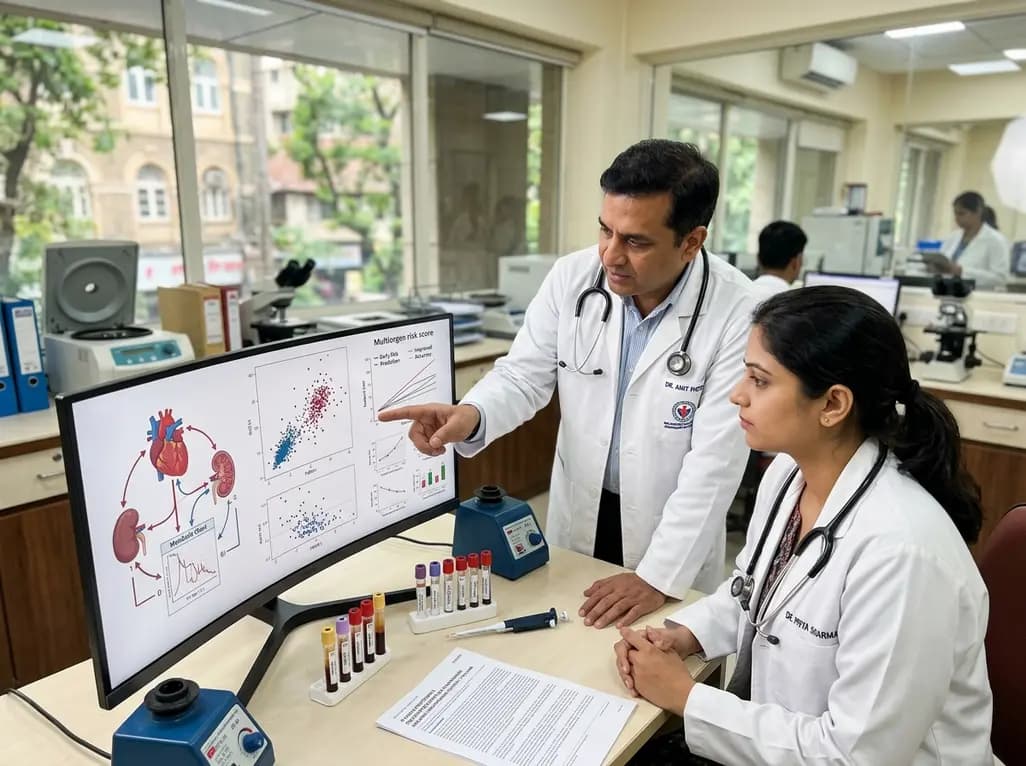
A large UK Biobank study reveals that plasma proteomic signatures capture preclinical organ damage and improve multiorgan risk prediction across early CKM syndrome stages 0 to 2 beyond traditional PREVENT clinical models.
Today

A retrospective CBCT study reveals that superior TMJ space asymmetry correlates moderately with occipital condyle-atlas-axis asymmetry in unilateral TMJ osteoarthritis, highlighting an imaging correlate between jaw biomechanics and upper cervical alignment rather than a standalone diagnostic marker.
Today

A Bayesian multilevel meta-analysis reveals that aerobic training combined with moderate carbohydrate restriction modestly lowers HbA1c in type 2 diabetes. However, sparse data and very low certainty leave incremental benefits over exercise or diet alone unproven, highlighting the need for individualized care.
Today
