.webp&w=384&q=75)

Loading, please wait...
Loading, please wait...

Researchers recently conducted a head-to-head comparison between mass cytometry and spectral flow cytometry. This study highlights significant CyTOF mass cytometry advantages for analyzing complex biological systems. While flow cytometry remains a common diagnostic tool, it often struggles with spectral overlap and cellular autofluorescence. These issues frequently reduce the resolution of low-abundance markers. In contrast, mass cytometry uses metal-tagged antibodies to eliminate these barriers. Consequently, the technology provides a much clearer picture of the immune landscape.
The study focused on three clone-matched panels containing intracellular targets. These included cytokines, transcription factors, and phosphoproteins. Notably, CyTOF demonstrated superior signal resolution for all target types. Specifically, mass cytometry resolved IL-10 and IL-13 cytokine-producing cells with high clarity. Standard fluorescent platforms often fail to detect these specific signals. Furthermore, this precision allowed researchers to quantify rare populations like T regulatory 1 (Tr1) cells. Therefore, CyTOF acts as a powerful tool for discovering novel diagnostic biomarkers.
Additionally, this technology assists in developing better therapeutics and vaccines. By resolving transcription factors like T-bet and TOX, clinicians can better understand cellular mechanisms. This comprehensive view is essential for tackling infectious diseases and tumor heterogeneity. Overall, the findings suggest that shifting focus toward mass cytometry could catalyze major breakthroughs in immune profiling. These advancements will likely drive more effective therapeutic designs in precision medicine.
CyTOF eliminates background noise and spectral bleed-through by using heavy metal isotopes instead of fluorochromes. This results in a higher signal-to-noise ratio compared to traditional fluorescent dyes.
Yes, the high resolution of CyTOF allows for the accurate detection of rare cells, such as Tr1 and Tc2 subsets. These populations are often difficult to distinguish in flow cytometry panels due to low expression levels.
Disclaimer: This content is for informational and educational purposes only. It does not constitute medical advice or a professional recommendation. Refer to the latest local and national guidelines for clinical practice.
References

Read summarized clinical updates, watch expert medical content, and earn CME certifications right from your smartphone.
Open your smartphone camera to scan and install.





A comparative study reveals that CyTOF offers higher resolution for intracellular targets, enabling the detection of rare immune subsets like Tr1 cells....
6 months ago
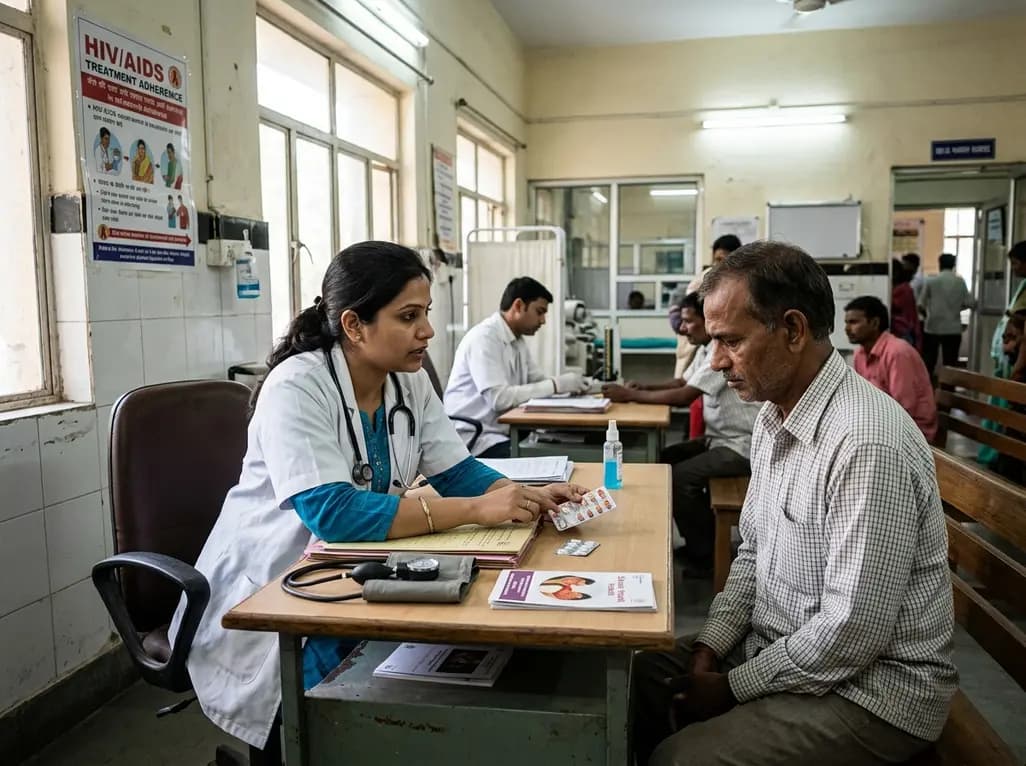
A new study reveals that over half of individuals living with HIV and alcohol use disorder experience missed ART doses, strongly linked to condomless sex under the influence and concurrent syphilis infection. Integrated addiction and sexual health care are urgently needed.
Today

A multicentre RCT in China shows that the PAICS AI system significantly boosts sonographer sensitivity in detecting fetal intracranial malformations by 8.7% without compromising specificity, offering promising diagnostic support for prenatal neurosonography.
Today

A recent study highlights the utility of two-dimensional speckle tracking echocardiography in assessing right atrial mechanics in OSAHS. Progressive reductions in reservoir and conduit strain, coupled with elevated contraction strain, signal early right heart remodeling correlated with apnea severity.
Today

A premature neonate developed upper limb compartment syndrome after uterine rupture extruded the arm through a scar defect. Conservative management with continuous monitoring yielded complete functional recovery and normal limb growth at 10-year follow-up, highlighting non-operative safety in selected cases.
Yesterday

The Supreme Court questioned FSSAI's phased warning approach, urging single-phase implementation for foods exceeding limits in any nutrient of concern. Backed by ICMR-NIN recommendations, the proposed red hexagonal warnings target added sugar, salt, and fat to combat India's escalating chronic disease epidemic.
Today
