.webp&w=384&q=75)

Loading, please wait...
Loading, please wait...

A widespread cyclosporiasis outbreak highlights the critical need for heightened clinical vigilance regarding foodborne protozoan infections. Contaminated fresh produce frequently triggers widespread gastrointestinal illness across diverse communities. Consequently, clinicians must recognize the distinctive clinical features, diagnostic hurdles, and therapeutic protocols necessary to manage this stubborn parasite effectively.
Recent epidemiological reports indicate that foodborne parasitic infections can spread rapidly through commercial distribution networks. A major cyclosporiasis outbreak typically links to contaminated fresh produce, especially raw leafy greens, herbs, and berries. Ingestion of sporulated oocysts from contaminated irrigation water or agricultural handling drives human infection.
Importantly, Cyclospora cayetanensis requires several days to weeks in the environment to mature and become infective. Direct person-to-person transmission remains virtually non-existent because newly excreted oocysts are unsporulated. Furthermore, processing delays and reporting backlogs in municipal laboratories frequently distort real-time case numbers. Because symptoms appear gradually, epidemiological tracing remains challenging without timely surveillance and molecular tracking.
Cyclospora cayetanensis infects the enterocytes of the human small intestine, primarily targeting the jejunum and duodenum. The parasite causes villous atrophy, crypt hyperplasia, and mucosal inflammation. Consequently, patients experience malabsorption and profound secretory fluid loss.
The incubation period typically ranges from two to fourteen days, with an average onset at seven days. Therefore, clinicians must elicit a thorough dietary and travel history extending back at least two to three weeks. In addition, symptoms often follow a relapsing-remitting course over several weeks if untreated. Hallmark manifestations include explosive, watery diarrhea accompanied by profound fatigue, anorexia, abdominal cramping, nausea, low-grade fever, and significant weight loss.
Diagnosing cyclosporiasis requires specific laboratory techniques because standard ova and parasite examinations often fail to detect the organism. Routine stool wet mounts and conventional trichrome stains frequently miss these coccidian oocysts. Therefore, clinicians must specifically request testing for Cyclospora on laboratory requisition forms.
Microbiologists employ modified acid-fast staining or modified safranin staining to visualize the 8 to 10 micrometer spherical oocysts. Furthermore, Cyclospora oocysts exhibit distinctive blue-green autofluorescence under ultraviolet microscopy. Multiplex gastrointestinal polymerase chain reaction panels offer superior sensitivity and rapid detection. Because oocyst shedding can be intermittent, clinicians should collect multiple stool specimens across different days to rule out persistent infection.
Unlike many viral and bacterial diarrheal illnesses, cyclosporiasis responds promptly to targeted antimicrobial therapy. Trimethoprim-sulfamethoxazole represents the first-line treatment of choice for confirmed cases. For immunocompetent adults, the standard oral regimen consists of 160 mg trimethoprim and 800 mg sulfamethoxazole twice daily for seven to ten days.
However, clinicians must tailor therapy when managing patients with known sulfonamide hypersensitivity. In such cases, oral ciprofloxacin or nitazoxanide serves as an acceptable alternative, although clinical efficacy remains lower than standard co-trimoxazole. Clinicians should avoid empiric antidiarrheal monotherapy without addressing the underlying parasitic etiology. Prompt pharmacological intervention shortens the duration of symptoms and reduces the risk of prolonged nutrient malabsorption.
Aggressive supportive care remains a cornerstone of management alongside antimicrobial therapy. Severe watery diarrhea rapidly causes dehydration, hypokalemia, and metabolic disturbances. Therefore, clinicians must emphasize oral rehydration salts or intravenous fluid resuscitation based on clinical severity.
Furthermore, older adults, young pediatric patients, and immunocompromised individuals face an elevated risk of severe morbidity and hospitalization. In patients with human immunodeficiency virus or underlying chronic illnesses, Cyclospora can cause protracted, debilitating diarrhea lasting several months. Consequently, these vulnerable individuals often require prolonged antimicrobial therapy and secondary prophylaxis to prevent frequent clinical relapses.
Preventing foodborne protozoan transmission requires strict adherence to agricultural hygiene and safe food preparation. Standard chemical sanitizers and routine chlorine washes do not reliably inactivate hardy Cyclospora oocysts on fresh produce. Therefore, primary prevention relies on preventing fecal contamination of agricultural water sources.
Clinicians should educate patients to wash all fresh fruits and vegetables thoroughly under safe, running water before consumption. Moreover, individuals should thoroughly cook produce during active regional outbreaks to eliminate viable parasites. Healthcare facilities must also maintain rigorous reporting mechanisms to notify local public health authorities promptly, ensuring rapid containment of foodborne contamination vectors.
Q1: Why does routine stool examination often miss Cyclospora infection?
Routine ova and parasite examinations utilize standard trichrome or wet mount stains that do not adequately stain Cyclospora oocysts. Furthermore, symptomatic patients often shed low numbers of oocysts intermittently. Clinicians must specifically request modified acid-fast staining, ultraviolet fluorescence microscopy, or gastrointestinal molecular polymerase chain reaction assays to achieve an accurate diagnosis.
Q2: Can Cyclospora transmit directly from person to person within households?
Direct person-to-person transmission is extremely unlikely because freshly excreted Cyclospora oocysts are non-infectious. The oocysts require one to two weeks in favorable environmental conditions outside the human host to sporulate and become infective. Consequently, infection occurs almost exclusively through the ingestion of contaminated food or agricultural water.
Q3: What is the recommended treatment for patients with a sulfa allergy?
Trimethoprim-sulfamethoxazole is the established first-line treatment for cyclosporiasis. However, for patients with severe sulfonamide allergies, oral ciprofloxacin (500 mg twice daily for seven days) or oral nitazoxanide (500 mg twice daily for seven days) serves as an alternative. Clinicians must monitor these patients closely, as alternative agents demonstrate lower efficacy rates than co-trimoxazole.
Disclaimer: This content is for informational and educational purposes only. It does not constitute medical advice or replace professional judgment. Refer to the latest local and national guidelines for clinical practice.
References

Read summarized clinical updates, watch expert medical content, and earn CME certifications right from your smartphone.
Open your smartphone camera to scan and install.





A surge in foodborne protozoan infections highlights key clinical challenges in managing cyclosporiasis. This comprehensive review covers pathogen characteristics, incubation timelines, targeted stool testing methods, first-line antimicrobial therapy, and essential fluid management strategies for practicing clinicians.
last month

A recent clinical report details an atypical presentation of bilateral proptosis as the primary manifestation of aggressive multiple myeloma. Explore the diagnostic pathway, imaging findings, and critical multidisciplinary management strategies essential for handling extramedullary plasma cell dyscrasias.
Today

Prenatal evaluation of fetal growth restriction requires an integrated diagnostic approach. While chromosomal microarray remains fundamental, exome sequencing offers significant diagnostic yield in isolated and syndromic cases, especially when ultrasound shows skeletal anomalies or normal placental function.
Today

Discover a novel laparoscopic approach for iatrogenic diaphragmatic hernia repair following pedicled omentoplasty. This modified Sugarbaker technique integrates dorsal pedicle lateralization and round ligament reinforcement to secure the diaphragmatic defect while preserving vital omental vascularity.
Today

High-grade trochlear dysplasia disrupts patellofemoral stability. Although the patellotrochlear index measures cartilage overlap on MRI, cartilage contact does not ensure osseous containment. Relying solely on two-dimensional metrics may lead surgeons to overlook necessary tibial tubercle osteotomy procedures.
Today
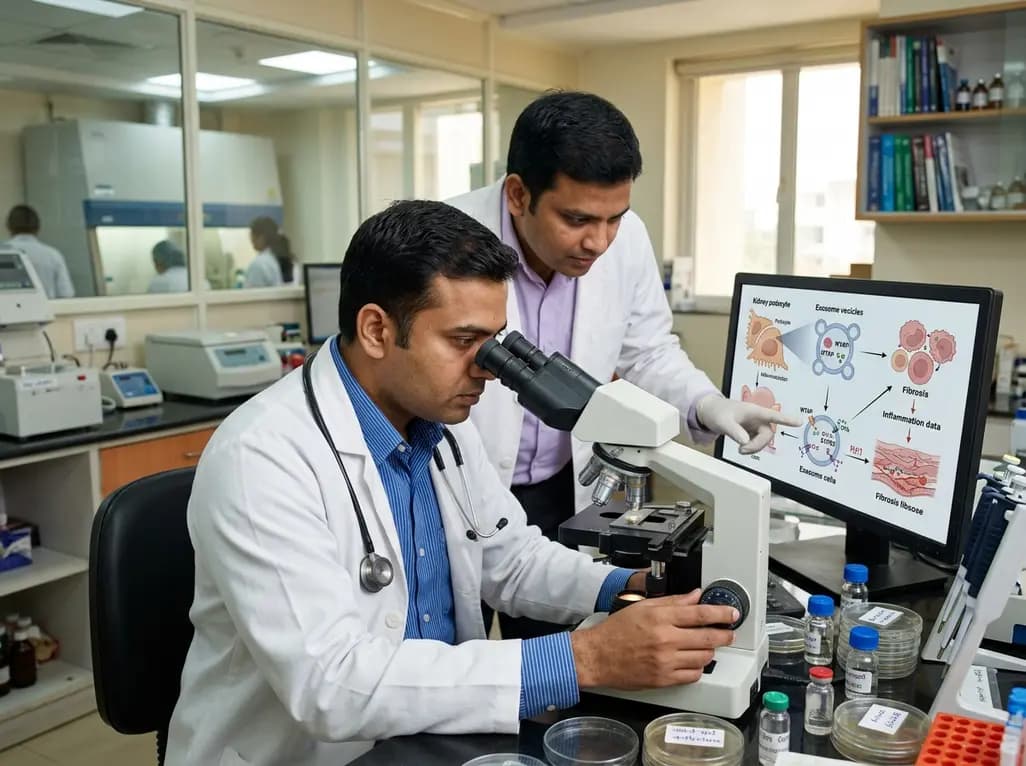
New research reveals that M1 macrophage-derived exosomes aggravate diabetic nephropathy by transferring WTAP to stabilize S1PR2 mRNA. Silencing WTAP in these vesicles attenuates endothelial injury and renal fibrosis, pointing toward innovative nanomedicine therapies.
Today
