.webp&w=384&q=75)

Loading, please wait...
Loading, please wait...

The global surge in cycling popularity for both recreation and commuting has led to a parallel rise in road traffic accidents involving cyclists. Consequently, healthcare providers are witnessing a significant increase in Cycling-related cranio-spinal injuries within major trauma centers. Recent epidemiological data from the United Kingdom indicates that over half of all cycling-related admissions involve trauma to either the head or the spine. Demographic analysis reveals that males in mid-adulthood, specifically with a median age of 46, represent the most vulnerable demographic. This trend suggests that while younger cyclists may frequently engage in the activity, the severity of injuries leading to hospital admission is often concentrated in slightly older age groups. Furthermore, the rising number of adult cyclists in urban environments has altered the traditional trauma landscape. Therefore, clinicians must remain vigilant in assessing these patients for multi-system trauma. The complexity of these injuries often stems from the high kinetic energy involved during collisions, especially when bicycles share the road with larger vehicles. Additionally, the lack of substantial external protection for cyclists makes them susceptible to profound neurological damage. Understanding these demographic shifts is essential for resource allocation in emergency departments. Moreover, this data highlights the critical need for targeted public health interventions to protect this growing population of road users.
Head injuries represent the most frequent and life-threatening component of Cycling-related cranio-spinal injuries. Clinical studies demonstrate that approximately 53% of patients admitted for cycling trauma sustain either a head or spine injury. Among these, intracranial bleeds are the most prevalent diagnosis, occurring in nearly 29% of cases. These hemorrhages often include subdural hematomas, subarachnoid hemorrhages, and extradural hematomas, each carrying distinct prognostic implications. Furthermore, skull fractures affect approximately 12% of the admitted population, frequently indicating high-impact force. Cerebral contusions are also common, appearing in roughly 10% of patients. Because the mechanism of injury often involves a sudden deceleration or direct impact with asphalt, the resulting coup-contrecoup injuries can lead to diffuse axonal damage. Consequently, patients may present with varying degrees of consciousness, necessitating immediate GCS assessment and neuroimaging. In addition to primary injuries, secondary brain injury remains a significant concern during the acute phase. Therefore, neurosurgical teams must prioritize the management of intracranial pressure and cerebral perfusion. Interestingly, even in non-motorized falls, the risk of significant intracranial pathology remains high. This underscores the reality that any cycling accident, regardless of the perceived mechanism, warrants a thorough neurological evaluation to prevent delayed deterioration. Clinical outcomes are significantly influenced by the speed of triage and the availability of specialized neurocritical care.
Spinal trauma is another critical concern in the management of Cycling-related cranio-spinal injuries, with cervical segments being the most frequently involved. Research indicates that the C2, C6, and C7 vertebrae are particularly prone to fractures during cycling collisions. This vulnerability often arises because the neck acts as a pivot point during high-velocity impact, leading to hyperflexion or hyperextension. Furthermore, cervical injuries are frequently associated with concomitant head trauma, creating a complex clinical picture for emergency responders. It is important to note that while thoracic and lumbar fractures do occur, they are less common than cervical pathologies in this specific patient group. Consequently, the standard of care involves immediate cervical spine stabilization until imaging can definitively rule out instability. Furthermore, multi-vertebral fractures are significantly more likely in accidents involving motorized vehicles. These complex fractures often require surgical stabilization and long-term rehabilitation. Moreover, the presence of a spinal injury significantly increases the complexity of airway management in the acute setting. Therefore, clinicians must use manual in-line stabilization when performing endotracheal intubation. In addition, the long-term morbidity associated with spinal cord injury necessitates a multidisciplinary approach involving orthopedics, neurosurgery, and physical therapy. Ultimately, recognizing the specific cervical segments most at risk allows for more focused radiological screening and faster clinical decision-making during the golden hour of trauma care.
The mechanism of injury is a primary determinant of severity in Cycling-related cranio-spinal injuries. Specifically, collisions involving motorized vehicles are associated with much more severe clinical profiles than solo falls. Data shows that motorized collisions correlate with a significantly higher prevalence of spine fractures across all segments. Furthermore, these patients often exhibit a lower Glasgow Coma Scale (GCS) score at the scene, indicating impaired consciousness. Consequently, the Injury Severity Score (ISS) is typically higher in this group, reflecting the systemic nature of the trauma. In addition, victims of motorized collisions generally require longer hospital stays and more intensive care resources. Therefore, the presence of a motor vehicle in the accident history should serve as a major red flag for trauma teams. These high-energy impacts often cause multi-vertebral fractures and more severe intracranial hemorrhages. Moreover, the risk of multi-organ involvement, including thoracic and abdominal injuries, is significantly elevated. This necessitates a comprehensive whole-body CT scan for most cyclists involved in such incidents. Furthermore, the mortality rate is predictably higher when high-speed vehicles are involved. Therefore, public safety initiatives must focus on segregating cycling lanes from heavy traffic to reduce these high-velocity impacts. In conclusion, the interaction between cyclists and motorized traffic remains the single most dangerous factor in the landscape of modern urban cycling.
Helmet use remains a cornerstone of injury prevention in the context of Cycling-related cranio-spinal injuries. Extensive clinical evidence confirms that the lack of head protection is directly associated with more severe intracranial injuries and poorer long-term outcomes. Furthermore, non-helmeted cyclists are significantly more likely to sustain skull fractures and large-volume intracranial bleeds. Consequently, these individuals often require more invasive surgical interventions and face higher rates of permanent neurological deficit. Therefore, promoting helmet use is not merely a legal or policy issue but a critical medical necessity. In addition to reducing the severity of primary brain injury, helmets also play a role in mitigating facial fractures. Moreover, the presence of a helmet can often provide clinicians with a visual cue regarding the force of impact, as a cracked helmet indicates a high-energy transfer. Furthermore, while helmets do not prevent spinal injuries, they significantly improve the overall survival rate by protecting the most vital organ. In addition, public education campaigns must emphasize the correct fit and replacement of helmets after any impact. Therefore, healthcare providers should take an active role in counseling patients on safety equipment. Ultimately, the integration of protective gear into daily cycling habits could drastically reduce the burden on major trauma centers. Consequently, physicians should advocate for mandatory helmet laws as part of a comprehensive approach to road safety.
In India, the epidemiology of Cycling-related cranio-spinal injuries presents unique challenges due to diverse road conditions and high traffic density. Unlike in some European nations, cycling in India is often a primary mode of transport for lower-income groups who may have limited access to high-quality safety gear. Furthermore, the lack of dedicated cycling infrastructure in most Indian cities increases the probability of motorized vehicle collisions. Research conducted in Indian tertiary care centers shows that a large proportion of cycling injuries occur in rural areas or on highways where speeds are higher. Consequently, the severity of head injuries in these regions can be particularly high. Therefore, there is an urgent need to improve pre-hospital care and rapid transport systems for injured cyclists in India. Moreover, the integration of trauma registries can help Indian clinicians better understand local injury patterns. In addition, clinicians must be aware that many Indian cyclists do not wear helmets, necessitating a higher suspicion for intracranial bleeds even in seemingly minor accidents. Therefore, emergency protocols should be standardized across regional hospitals to ensure timely neurosurgical consultation. Furthermore, public health initiatives should focus on making affordable safety equipment available to all demographics. In conclusion, addressing the burden of cycling trauma in India requires a combination of clinical excellence, improved infrastructure, and robust public policy.
The most common head injuries include intracranial bleeds, which occur in about 29% of trauma cases, followed by skull fractures and cerebral contusions. These injuries often result from direct impact or sudden deceleration during a fall or collision, frequently requiring urgent neuroimaging and specialized neurosurgical management to prevent long-term damage.
Motorized collisions significantly increase injury severity, leading to a higher prevalence of fractures across all spinal segments and a greater likelihood of multi-vertebral fractures. These high-energy accidents are also associated with lower Glasgow Coma Scale scores, higher injury severity scores, and significantly longer hospital stays compared to non-motorized cycling accidents.
Yes, helmet use is a critical factor in reducing the severity of cranio-spinal trauma. Data indicates that a lack of head protection is consistently associated with more severe intracranial hemorrhages, higher rates of skull fractures, and poorer overall clinical outcomes. Helmets effectively absorb impact energy, significantly decreasing the risk of life-threatening brain injuries.
Disclaimer: This content is for informational and educational purposes only and does not constitute medical advice. It is not intended to be a substitute for professional medical advice, diagnosis, or treatment. Always seek the advice of your physician or other qualified health provider with any questions you may have regarding a medical condition. Refer to the latest local and national guidelines for clinical practice.
References
Chabros J et al. Cycling-related cranio-spinal injuries admitted to a Major Trauma Centre in the cycling capital of the UK. Br J Neurosurg. 2025 Aug. doi: 10.1080/02688697.2023.2255280. PMID: 37698133.
Munivenkatappa A, Devi BI, Gregor TI, Bhat DI, Kumarsamy AD, Shukla DP. Bicycle accident related head injuries in India. Indian J Neurotrauma. 2013;10(1):27-30.
World Health Organization. Road safety - India. Published October 18, 2018. Available at: https://www.who.int/india/health-topics/road-safety.

Read summarized clinical updates, watch expert medical content, and earn CME certifications right from your smartphone.
Open your smartphone camera to scan and install.





A comprehensive study of 851 cycling trauma cases reveals that 53% involve cranio-spinal injuries. Motorized collisions and lack of helmets significantly increase severity, leading to poorer outcomes. This guide explores injury patterns and clinical management strategies for healthcare providers.
3 months ago
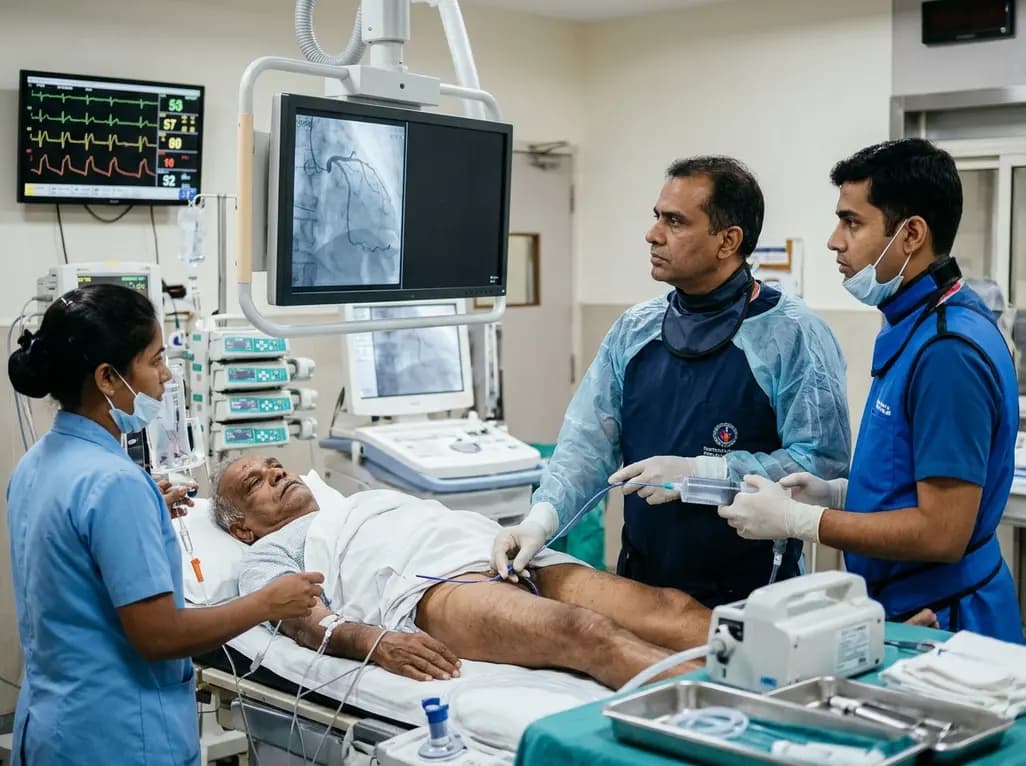
An elderly man with partially repaired Tetralogy of Fallot presented with STEMI caused by coronary embolism rather than atherosclerosis. Successful treatment with sustained mechanical aspiration thrombectomy underscores the vital need for high clinical vigilance in adult congenital heart disease.
Today

Demanding exhaustive hormonal profiling can inadvertently discourage clinical studies involving females. Methodological standards must align with the specific scientific question to expand, not restrict, equitable evidence for women.
Today

A recent study demonstrates that spinal oxygen sensors do not require mitochondrial electron transport to trigger sympathetic excitation during acute hypoxia, revealing new insights into how mitochondrial oxidative stress modulates autonomic tone in cardiovascular and neurological diseases.
Today

A novel calcium polyphosphate coacervate enables injectable bone implants with in situ hierarchical porosity via phase separation and gas foaming, significantly enhancing cell proliferation, energy metabolism, and osteogenic differentiation for minimally invasive bone defect repair.
Today

Following regulatory scrutiny from FSSAI regarding promotional representations and lean muscle preservation claims, Dr. Reddy's Laboratories and Nestlé Health Science are currently reviewing the branding and marketing strategy for their joint nutritional supplement Celevida GLP+.
Today
