.webp&w=384&q=75)

Loading, please wait...
Loading, please wait...
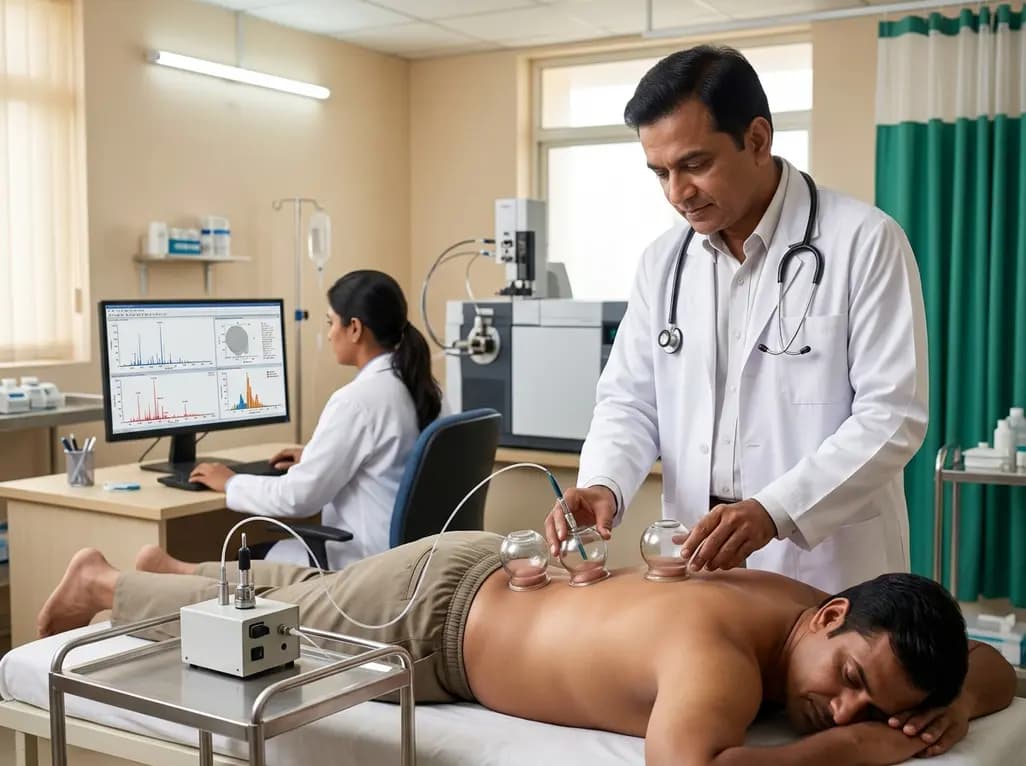
Cupping therapy is a cornerstone of traditional Chinese and Unani medicine, yet its biological mechanisms have long remained a subject of debate. Many practitioners and patients attribute its benefits to the concept of chemical detoxification. However, proving this theory has been challenging due to a lack of real-time, noninvasive analytical tools. Recent cupping therapy detoxification research has introduced a sophisticated method to analyze volatile organic compounds (VOCs) released from the skin during treatment.
Researchers have developed a technique combining thin-film solid-phase microextraction (TF-SPME) with dielectric barrier discharge ionization mass spectrometry (DBDI-MS). This approach allows for the rapid, in-situ capture of compounds within the cupping jar. Initially, pork skin served as a surrogate to refine the process, successfully detecting five specific volatile organic compounds. Subsequently, the method was applied to human volunteers to monitor changes in skin emanations before and after therapy. This breakthrough offers a more convenient and rapid alternative to previous invasive studies, directly correlating chemical clearance with traditional therapeutic claims.
The study found significant shifts in the levels of compounds emanating from the skin surface following cupping. These changes align with the theory that cupping facilitates the removal of certain chemicals from the body. For clinicians in India, where cupping or \"Hijama\" is frequently practiced, this research provides a vital scientific framework. It bridges the gap between traditional practices and modern analytical chemistry, ensuring that practitioners can offer evidence-based insights into how these therapies might impact systemic health.
The method uses TF-SPME membranes to collect volatile compounds directly from the skin inside the cupping jar. By analyzing these compounds with mass spectrometry, researchers can quantify changes in chemical levels, supporting the idea that cupping helps clear specific substances from the skin.
VOCs are organic chemicals that have a high vapor pressure at room temperature. In cupping therapy, these are emitted from the skin and can serve as biomarkers for metabolic processes or the presence of toxins being released during the vacuum application.
Disclaimer: This content is for informational and educational purposes only. It does not constitute medical advice or endorse any specific treatment. Refer to the latest local and national guidelines for clinical practice.
References
Liu S et al. Noninvasive Analysis of Skin Emanations during Cupping Therapy by Thin-Film Solid-Phase Microextraction and Dielectric Barrier Discharge Ionization Mass Spectrometry. Anal Chem. 2026 Jun 10. doi: 10.1021/acs.analchem.6c02559. PMID: 42267511.
Aboushanab TS, AlSanad S. Cupping Therapy: An Overview from a Modern Medicine Perspective. J Acupunct Meridian Stud. 2018;11(3):83-87.
Mitra AT, Razumovskaya-Hough A, Hanna GB. Volatile Organic Compound Emission from Human Skin in Health and Disease. In: Clinical Practice and Modern Medical Research. 2023.
"
Read summarized clinical updates, watch expert medical content, and earn CME certifications right from your smartphone.
Open your smartphone camera to scan and install.





New research introduces a noninvasive method using TF-SPME and mass spectrometry to analyze skin emanations during cupping therapy, providing scientific evidence for the traditional detoxification theory.
4 months ago

The TREM-AB open-label pilot study evaluated a wearable passive nonlinear vibration absorber for essential tremor. The Nonlinear Energy Sink bracelet reduced clinical Fahn-Tolosa-Marin tremor scores by 32.1% and electrophysiological tremor power by 49.2% with no adverse effects reported.
Today

A population-based study of 20,928 children reveals that small vulnerable newborns face sex-divergent mental capital outcomes at ages 6-7: term SGA girls show higher behavioral difficulties and lower resilience, while preterm non-SGA boys experience increased behavioral problems.
Today
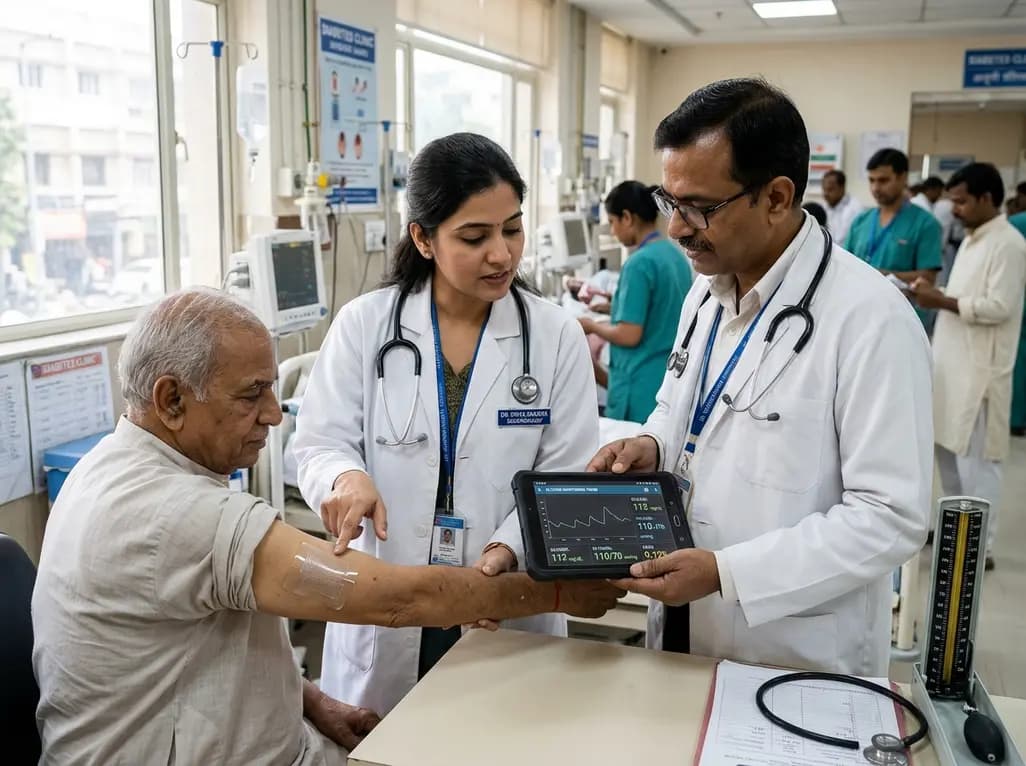
A breakthrough ultrathin multimodal sensor decouples physical hemodynamic monitoring from disposable electrochemical calibration, achieving long-term wearable glucose prediction with 81.36% accuracy and a 9.12% MARD. This offers a robust, drift-free solution for outpatient metabolic surveillance.
Today

A comparative review of tension band wiring and intramedullary screw fixation in thumb metacarpophalangeal arthrodesis, evaluating union rates, hardware complications, and clinical outcomes.
Today
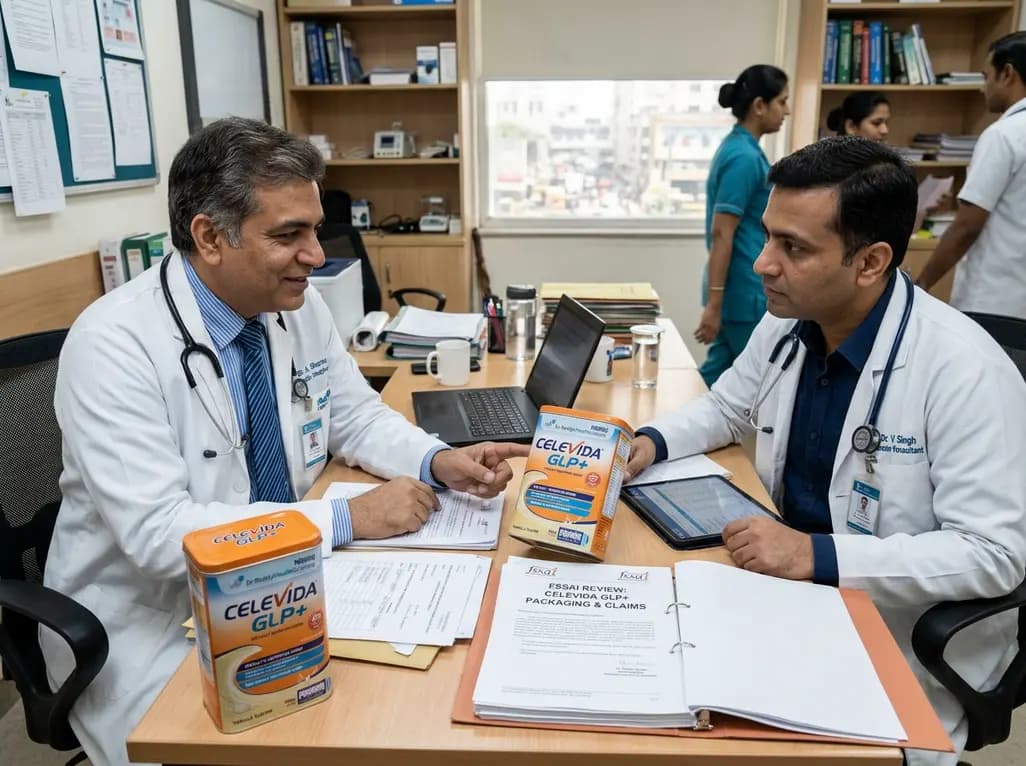
Following regulatory scrutiny from FSSAI regarding promotional representations and lean muscle preservation claims, Dr. Reddy's Laboratories and Nestlé Health Science are currently reviewing the branding and marketing strategy for their joint nutritional supplement Celevida GLP+.
Today
