.webp&w=384&q=75)

Loading, please wait...
Loading, please wait...
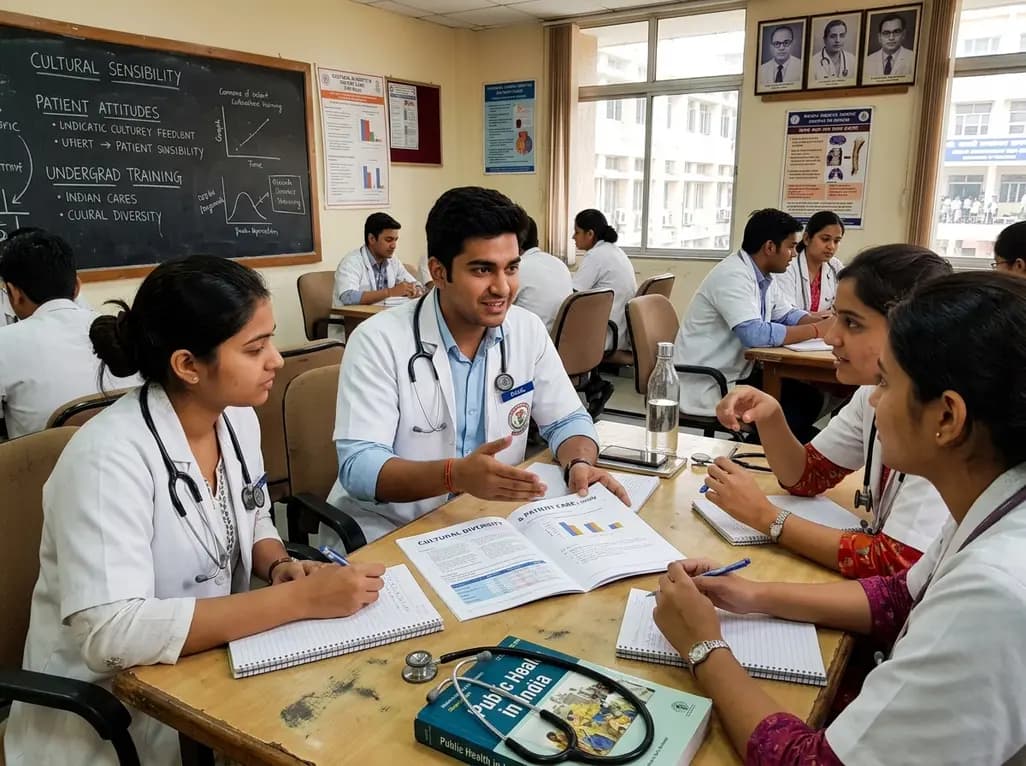
Modern healthcare environments require medical practitioners who navigate complex demographic landscapes with professional awareness. Consequently, implementing structured cultural diversity education within undergraduate medical curricula has emerged as a crucial global priority. Medical educators recognize that clinical excellence extends far beyond biomedical proficiency to encompass empathetic communication. In particular, early exposure during preclinical training establishes foundational attitudes that shape physician-patient interactions throughout clinical practice.
Modern healthcare systems serve increasingly diverse patient populations characterized by varied cultural traditions, languages, and socioeconomic backgrounds. Therefore, medical schools bear a profound responsibility to prepare future physicians to understand how sociocultural factors influence health beliefs and outcomes. Historically, conventional medical curricula prioritized disease pathology while neglecting patient perspectives. However, contemporary evidence demonstrates that cultural dissonance between healthcare providers and patients exacerbates health disparities and impairs clinical trust. In addition, when doctors understand diversity, they build stronger therapeutic relationships and elicit more accurate medical histories. By embedding these competencies into early preclinical training, academic institutions nurture empathetic practitioners who appreciate individual contexts. Consequently, fostering cultural awareness early in the educational pipeline strengthens health equity and enhances patient safety across diverse healthcare settings.
A notable pilot study investigated changes in first-year medical students' attitudes toward diversity at a Korean medical institution. Researchers utilized a single-group pre-test and post-test design comprising 85 undergraduate medical students during the 2023-2024 academic year. Furthermore, the educational intervention consisted of a single, structured three-hour session exploring cultural awareness and physician-patient communication. The investigators administered a comprehensive 14-item questionnaire, adapted from validated assessment tools developed by Panthi and colleagues. Additionally, the authors reclassified these items into four distinct analytical domains to measure specific perceptual shifts. Statistical analyses applied the rigorous Bonferroni correction for item-level comparisons to maintain analytical validity. The empirical findings demonstrated statistically significant positive shifts in student attitudes immediately following the session. Consequently, this brief educational intervention successfully stimulated reflective thinking among trainees.
The conceptual architecture of this educational intervention drew inspiration from foundational medical education theory, particularly Nisha Dogra's diversity model. Specifically, Dogra differentiated between two distinct pedagogical paradigms: cultural expertise and cultural sensibility. The traditional cultural expertise approach assumes that medical trainees can acquire factual knowledge about specific ethnic or religious groups. However, medical educators criticize this method because it inadvertently promotes stereotyping and oversimplifies individual patient experiences. In contrast, the cultural sensibility model emphasizes ongoing self-reflection, awareness of personal biases, and genuine openness toward differing viewpoints. Therefore, students learn to examine their own internal assumptions rather than categorizing patients into rigid cultural boxes. Medical educators strongly advocate for cultural sensibility because it cultivates lifelong humility, active listening, and responsive patient engagement in routine clinical practice.
These pedagogical insights carry profound relevance for medical education systems worldwide, particularly within highly diverse environments such as India. Under the National Medical Commission's Competency-Based Medical Education curriculum, longitudinal modules such as AETCOM emphasize ethical communication and sociocultural awareness. Consequently, Indian medical graduates must navigate extensive linguistic, regional, and socioeconomic diversities in routine clinical encounters. Introducing structured sensibility training during the initial foundation course prevents unconscious bias from compromising clinical decision-making. Moreover, early educational interventions establish robust interpersonal communication skills before students encounter vulnerable patient cohorts in hospital wards. Training doctors to recognize social determinants of health directly enhances clinical compliance and reduces healthcare disparities. Thus, incorporating reflective diversity workshops into undergraduate training cultivates resilient, socially accountable physicians equipped to serve multicultural populations effectively.
Transitioning cultural learning from theoretical classrooms to active clinical clerkships represents a crucial step in medical training. During bedside teaching, clinical faculty can model culturally sensitive communication during patient history taking and informed consent discussions. Furthermore, debriefing clinical encounters in small groups encourages medical students to articulate how cultural or economic factors influenced patient management. When senior clinicians actively demonstrate cultural humility, junior trainees naturally adopt similar empathetic behaviors. Additionally, integrating structured diversity objectives into clinical rotations ensures that students maintain cultural awareness across various specialties, including pediatrics and internal medicine. Case-based learning scenarios that feature complex cross-cultural ethical dilemmas also reinforce practical problem-solving skills. Consequently, experiential learning consolidates classroom concepts into enduring clinical habits, ensuring compassionate care throughout clinical practice.
Despite clear educational benefits, incorporating cultural training into already congested undergraduate curricula presents several practical challenges. For instance, medical educators frequently encounter time constraints, competing biomedical curricular demands, and a lack of standardized assessment tools. To overcome these barriers, medical schools must integrate diversity concepts directly into core subjects rather than treating them as isolated extracurricular lectures. In addition, interactive pedagogical formats, such as simulation training, role-playing, and community health immersion, produce substantially higher student engagement than passive didactic teaching. Faculty development programs are equally vital to equip educators with effective facilitation and assessment techniques. Moreover, longitudinal tracking of student attitudes throughout their training will provide valuable empirical data on educational retention. Ultimately, committed institutional support ensures that diversity education remains a fundamental pillar of modern medical professionalism.
Cultural diversity education helps preclinical students recognize subconscious biases and understand how diverse socioeconomic and cultural backgrounds influence health outcomes. Early training fosters foundational empathy, enhances active listening, and prepares students for complex patient encounters during later clinical clerkships. Consequently, future physicians communicate far more effectively, build stronger therapeutic rapport, and achieve superior diagnostic accuracy across heterogeneous patient populations.
The cultural expertise model attempts to teach factual knowledge about specific ethnic or religious groups, which often leads to inadvertent stereotyping. In contrast, cultural sensibility focuses on continuous self-reflection, awareness of personal biases, and openness toward individual patient perspectives. Therefore, cultural sensibility equips medical students with the adaptive communication tools required to provide respectful, personalized, and patient-centered healthcare.
Medical educators can assess cultural competence using multi-source evaluation strategies rather than simple written knowledge tests. Objective Structured Clinical Examinations with standardized patients effectively measure communication skills and empathy in realistic cross-cultural scenarios. Additionally, reflective writing assignments, self-assessment questionnaires, and direct clinical observations provide valuable qualitative insights into a student's evolving cultural awareness, humility, and bedside professionalism.
Disclaimer: This content is for informational and educational purposes only and does not constitute medical, legal, or professional advice. Healthcare professionals should exercise their independent clinical judgment. Refer to the latest local and national guidelines for clinical practice.
References

Read summarized clinical updates, watch expert medical content, and earn CME certifications right from your smartphone.
Open your smartphone camera to scan and install.





A pilot study explores how structured cultural diversity education shifts first-year medical students' attitudes, emphasizing the essential transition from cultural expertise to cultural sensibility in undergraduate medical training.
4 weeks back

A systematic review of 41 preclinical studies reveals that baicalin dampens systemic inflammation, inhibits NF-κB and NLRP3 pathways, and improves organ preservation in sepsis models. However, substantial study heterogeneity and a complete lack of human clinical trials highlight the need for further translational research.
Today
Discover the crucial distinctions between mesonephric and mesonephric-like proliferations of the female genital tract. Learn the key histomorphologic, immunohistochemical, and molecular differences essential for accurate diagnosis and clinical management.
Today
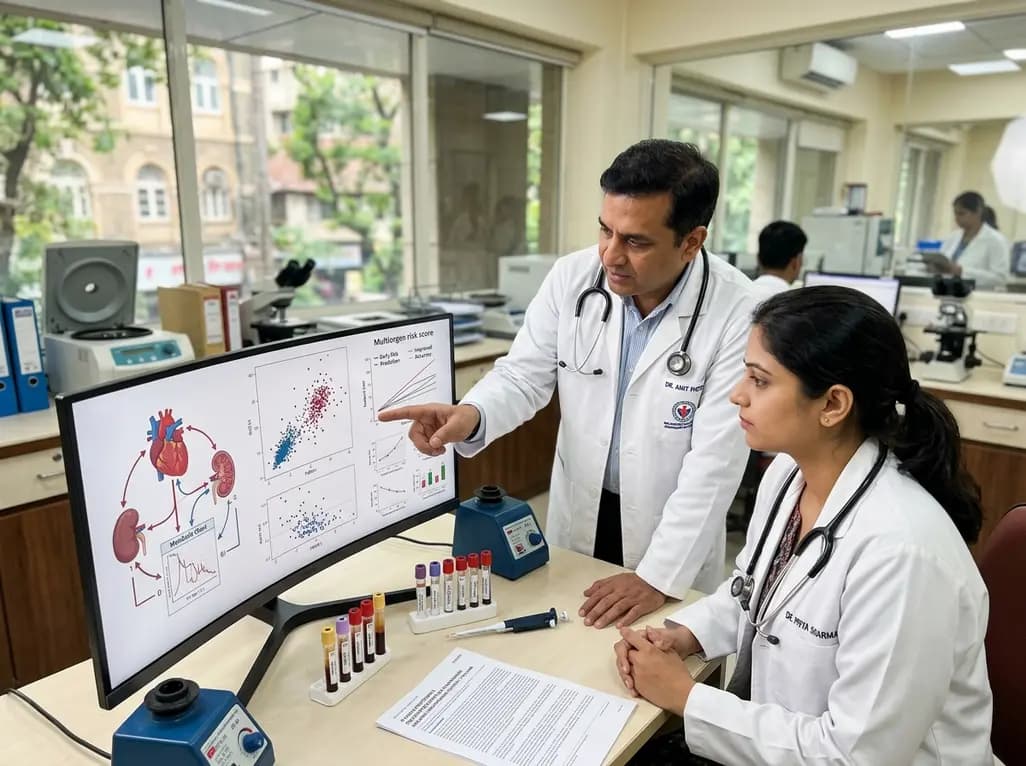
A large UK Biobank study reveals that plasma proteomic signatures capture preclinical organ damage and improve multiorgan risk prediction across early CKM syndrome stages 0 to 2 beyond traditional PREVENT clinical models.
Today
A narrative review investigates whether the articularis genus muscle functions as an independent anatomical entity or blends with the vastus intermedius. We evaluate its morphology, role in retracting the suprapatellar bursa, and direct clinical significance in anterior knee pain and arthroplasty.
Today

A Bayesian multilevel meta-analysis reveals that aerobic training combined with moderate carbohydrate restriction modestly lowers HbA1c in type 2 diabetes. However, sparse data and very low certainty leave incremental benefits over exercise or diet alone unproven, highlighting the need for individualized care.
Today
