.webp&w=384&q=75)

Loading, please wait...
Loading, please wait...
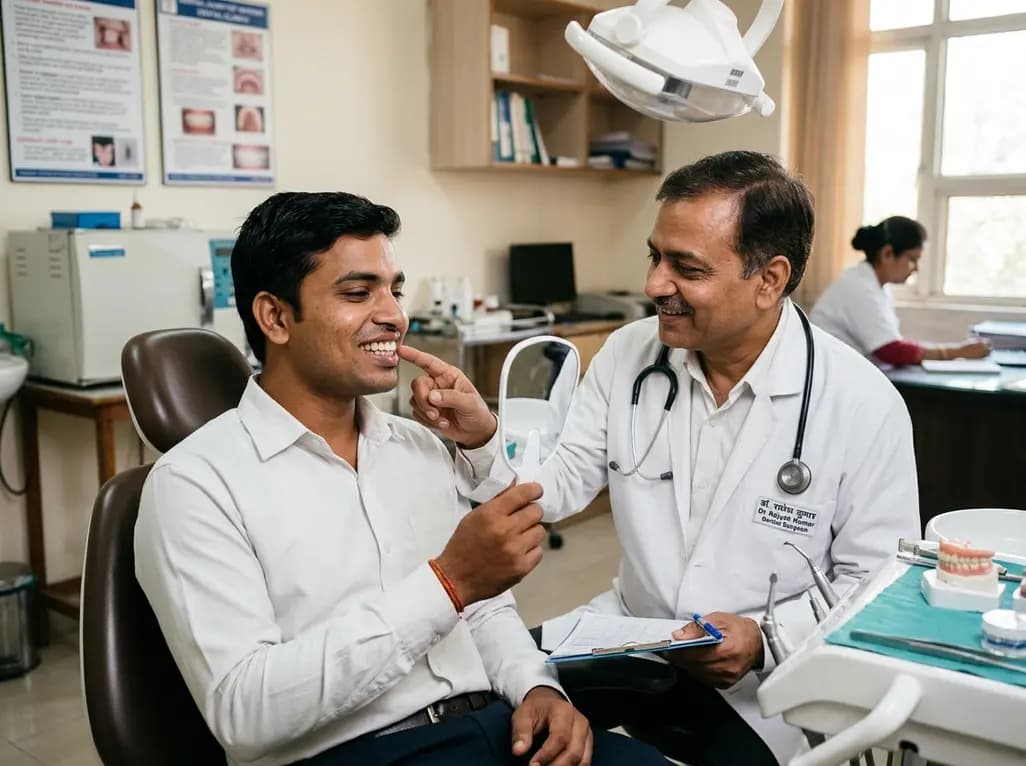
Rehabilitating patients with unilateral complete cleft lip and palate presents profound structural, functional, and esthetic challenges for restorative clinicians. Conventional treatment plans prioritize secondary alveolar bone grafting followed by endosseous implant placement. However, late alveolar grafting procedures occasionally fail to generate sufficient bone volume for safe fixture installation. In such complex clinical scenarios, a cross-arch monolithic zirconia fixed dental prosthesis offers a resilient, tissue-friendly, and esthetically pleasing alternative. When combined with customized pink-ceramic characterization and meticulous orthodontic retention, this non-implant strategy achieves predictable long-term clinical success across challenging alveolar cleft defects.
Comprehensive rehabilitation of cleft lip and palate requires seamless multidisciplinary collaboration extending across several years. Clinicians initiated phased orthodontic therapy during early childhood to guide transverse maxillary expansion and align collapsed dental arches. Subsequently, practitioners managed dental spacing to optimize the anterior segment for surgical and restorative interventions. Fixed orthodontic appliances coordinated tooth movement while addressing severe arch constrictions common in cleft malformations. Consequently, this phased approach established proper bilateral Class I occlusal relationships before surgeons attempted secondary alveolar bone reconstruction.
At age 17, the surgical team performed late secondary alveolar bone grafting to close the osseous continuity defect. Simultaneously, the surgeon extracted a periodontally compromised maxillary lateral incisor located within the cleft margin. Although the bone graft achieved meaningful structural closure and adequate soft-tissue recontouring, postoperative cone-beam computed tomography demonstrated insufficient bone height and width for stable implant placement. Because the patient declined secondary augmentation surgeries, the interdisciplinary team shifted the definitive strategy toward fixed tooth-supported prosthodontics.
The dental team designed a six-unit canine-to-canine tooth-supported restoration to span the anterior arch defect. Clinicians selected high-translucency monolithic zirconia to prevent ceramic chipping, which frequently compromises traditional bi-layered porcelain restorations under heavy functional loads. Furthermore, full-contour milling provided exceptional fracture resistance while preserving healthy tooth structure during conservative abutment preparation. The cross-arch configuration also enhanced cross-arch stabilization across the premaxillary and maxillary segments.
To overcome vertical tissue deficiencies in the cleft area, dental technicians incorporated pink-ceramic characterization into an ovate pontic design. This pink ceramic effectively masked the underlying alveolar deficit, thereby restoring a harmonious gingival architecture without invasive soft-tissue grafting. Additionally, the ovate pontic geometry created light, hygienic contact against the conditioned mucosal tissues. As a result, the finalized prosthesis established symmetrical tooth proportions, lifelike optical properties, and natural lip support without compromising speech mechanics or smile esthetics.
Predictable long-term retention of tooth-supported zirconia restorations relies heavily on chemical bonding protocols. Clinicians conditioned the intaglio surfaces of the zirconia framework with airborne-particle abrasion using aluminum oxide particles at low pressure. Subsequently, the operator applied a primer containing 10-methacryloyloxydecyl dihydrogen phosphate to achieve durable chemical adhesion between the resin cement and the zirconium oxide crystalline substrate.
The clinical team then seated the restoration using an MDP-containing dual-cure resin cement under strict moisture isolation. This adhesive cementation approach sealed marginal interfaces against microleakage and secondary caries. Over the 5-year follow-up period, the supporting abutment teeth exhibited healthy periodontal parameters. Notably, the peri-abutment gingiva showed no clinical inflammation, bleeding on probing, or abnormal pocket depths. Moreover, the smooth polished zirconia surfaces resisted bacterial plaque accumulation, facilitating routine oral hygiene maintenance for the patient.
Transverse maxillary collapse represents one of the highest relapse risks in surgically repaired cleft palate cases. Fortunately, five years after definitive cementation, the patient maintained ideal bilateral Class I occlusion and intact transverse arch dimensions. Although the anterior cross-arch prosthesis provided structural bridging across the cleft site, clinicians attribute the prolonged transverse stability primarily to the rigorous orthodontic retention protocol.
The patient followed a strict dual-retention regimen combining a lingual fixed retainer with a custom thermoformed removable retainer. This dual retention effectively countered continuous soft-tissue scar forces from earlier lip and palate surgeries. Consequently, the combination of a rigid anterior fixed dental prosthesis and sustained dual retention prevented palatal relapse. This finding underscores that anterior-only prosthetic rehabilitations remain entirely compatible with lasting arch stability when clinicians reinforce mechanical retention protocols.
This 5-year longitudinal evaluation highlights the clinical efficacy of monolithic zirconia as a definitive restorative material for cleft-associated edentulism. Modern dental ceramics allow practitioners to solve complex functional deficiencies while simultaneously meeting high esthetic expectations. Monolithic zirconia exhibits high flexural strength, wear compatibility against opposing enamel, and outstanding biocompatibility with surrounding gingival tissues.
Furthermore, avoiding secondary bone augmentation shortened the overall treatment timeline and eliminated donor-site surgical morbidity. Patients who are unsuitable for dental implants due to anatomical, financial, or personal reasons can achieve predictable oral rehabilitation through this pathway. Ultimately, successful management hinges on detailed digital planning, precise adhesive bonding, gingival soft-tissue masking, and permanent orthodontic retention to preserve lifelong esthetic harmony.
Cone-beam computed tomography revealed that the residual alveolar bone height and width remained inadequate for safe implant placement following bone grafting. Because the patient declined further invasive bone augmentation surgeries, the multidisciplinary dental team selected a six-unit cross-arch monolithic zirconia fixed dental prosthesis. This approach eliminated additional surgical morbidity while delivering excellent mechanical strength, durable function, and optimal esthetic contours across the cleft defect.
Alveolar cleft defects frequently leave significant vertical and horizontal soft-tissue deficits that cause unnatural tooth elongation if restored with white ceramic alone. Incorporating customized pink ceramic onto the ovate pontic effectively simulates natural attached gingiva. This prosthetic masking technique restores a harmonious smile line, supports the upper lip, and blends seamlessly with adjacent natural gingival tissues without requiring complex soft-tissue surgery.
Clinicians implemented a comprehensive dual orthodontic retention protocol consisting of a bonded fixed retainer and an overlay removable retainer worn continuously. While the rigid anterior zirconia bridge helped stabilize the anterior maxillary segments, long-term transverse arch preservation relied predominantly on this active orthodontic retention. The dual regimen successfully counteracted the constrictive forces exerted by surgically repaired palatal scar tissue.
Disclaimer: This content is for informational and educational purposes only and does not constitute formal medical or dental advice. Clinical decisions should be guided by comprehensive individual assessment and multidisciplinary evaluation. Refer to the latest local and national guidelines for clinical practice.
References
1. Altundal G et al. Long-Term Esthetic-Functional Rehabilitation of Unilateral Cleft Lip and Palate With a Cross-Arch Monolithic Zirconia Fixed Dental Prosthesis Following Multidisciplinary Treatment: 5-Year Post-Prosthetic Follow-Up. J Esthet Restor Dent. 2026 Aug 16. doi: 10.1111/jerd.70250. PMID: 42604440.
2. Bidra AS. Full arch monolithic zirconia prosthesis in a patient with bilateral cleft palate: A clinical report. J Prosthet Dent. 2021;126(3):273-278. doi:10.1016/j.prosdent.2020.05.016.
3. Acar O, Kaya B, Saka M, Yuzugullu B. Prosthodontic Rehabilitation of Cleft Lip and Palate Patients using Conventional Methods: A Case Series. Int J Prosthodont Restor Dent. 2013;3(3):120-124.

Read summarized clinical updates, watch expert medical content, and earn CME certifications right from your smartphone.
Open your smartphone camera to scan and install.





A 5-year follow-up demonstrates the esthetic and functional success of a cross-arch monolithic zirconia fixed prosthesis with pink ceramic masking and continued orthodontic retention in a unilateral cleft lip and palate patient when dental implants were unfeasible.
last month

A review examines how vagal neuroimmune circuits link the brain and immune system, sensing cytokine surges and dampening peripheral inflammation. Bioelectronic medicine harnesses these pathways to provide targeted, non-pharmacological therapies for chronic inflammatory and autoimmune diseases.
Today
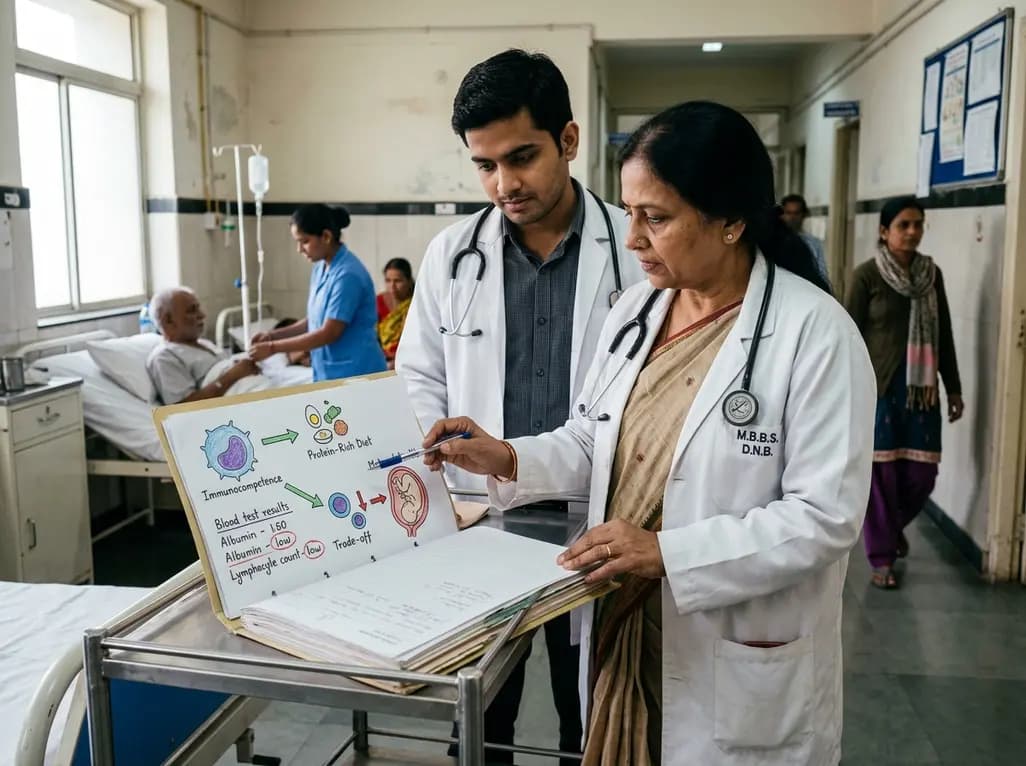
Explore the crucial link between dietary protein and immunocompetence. This review examines how low-protein nutrition shifts metabolic resources away from pathogen defense toward early reproduction, compromising host survival and immunity against severe bacterial infections.
Today

A post hoc analysis of the PARM-T2D study shows pemafibrate exerts baseline-dependent effects on LDL-C and particle size in type 2 diabetes and hypertriglyceridemia. It lowers triglycerides and remnants while favorably remodeling atherogenic LDL particles based on initial lipid control status.
Today
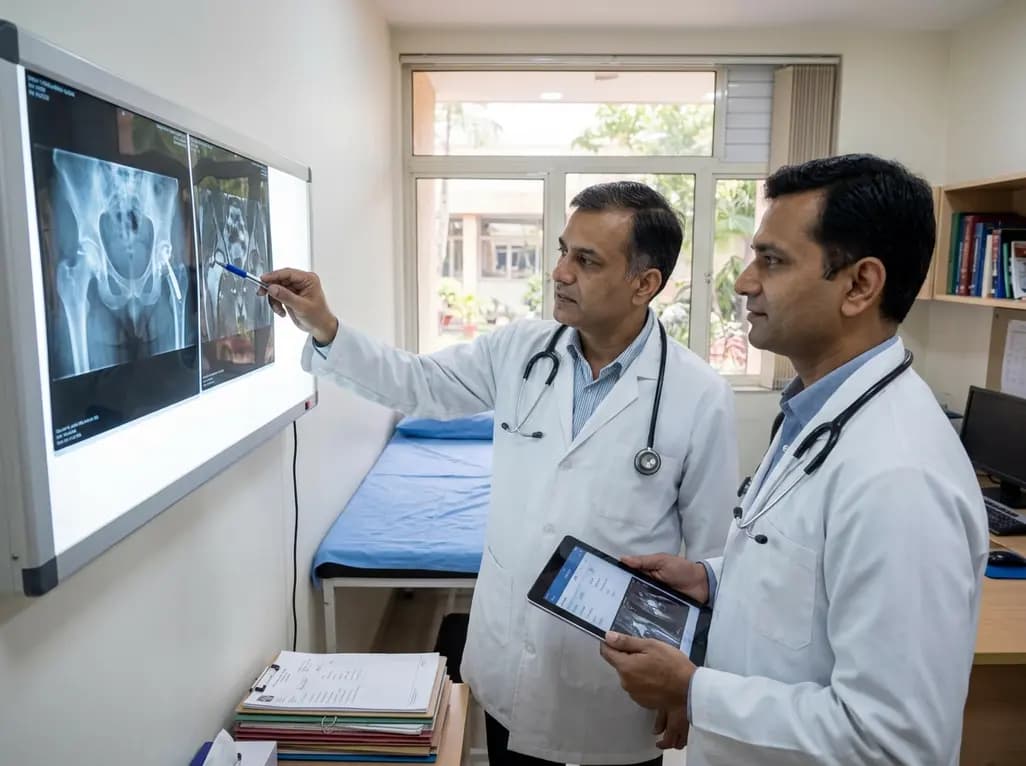
A longitudinal study reveals that patients undergoing staged bilateral hip arthroscopy experience progressive contralateral labral deterioration during surgical intervals. However, structural degradation does not compromise 2-year postoperative clinical outcomes or patient-reported satisfaction scores.
Today
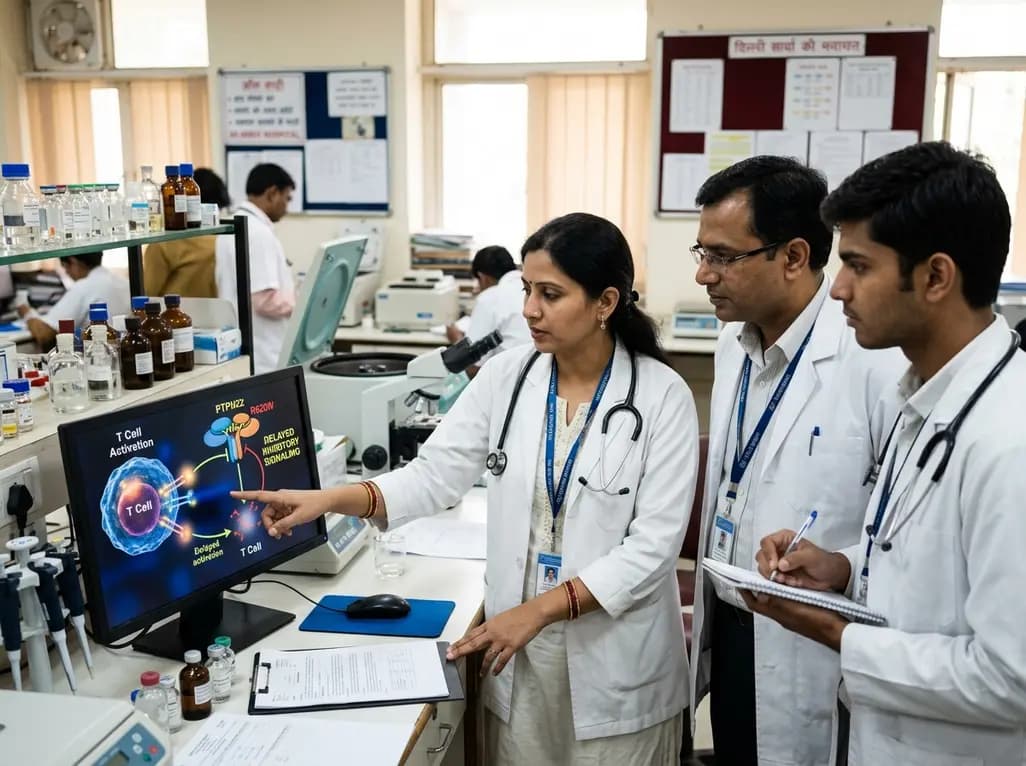
New immunological research reveals how PTPN22 forms a delayed inhibitory signaling complex to restrain T cell activation, explaining how the autoimmune-linked R620W variant disrupts feedback control and promotes persistent inflammation in conditions like rheumatoid arthritis and type 1 diabetes.
Today
