.webp&w=384&q=75)

Loading, please wait...
Loading, please wait...
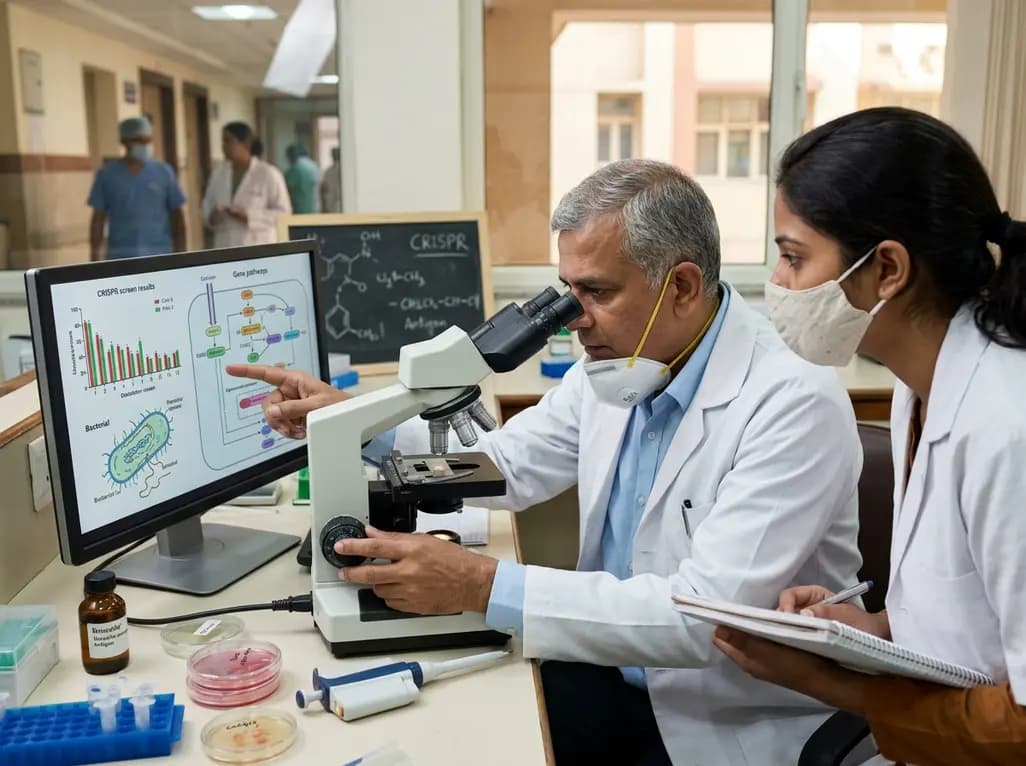
Human brucellosis remains one of the most widespread zoonotic bacterial infections globally, causing significant morbidity and substantial diagnostic dilemmas for clinicians. The causative organism, Brucella, depends fundamentally on establishing a protected intracellular niche within host mononuclear phagocytes to establish persistent infection. Consequently, understanding the host molecular machinery that facilitates Brucella intracellular survival is essential for developing novel interventions. Traditional antimicrobial regimens often suffer from prolonged treatment durations, high relapse rates, and emerging drug resistance. Therefore, deciphering host-pathogen interactions at a functional genomic scale represents an invaluable strategy for uncovering innovative host-directed therapeutic targets.
The clinical manifestations of brucellosis range from acute undulant fever to debilitating osteoarticular complications, neurobrucellosis, and chronic relapsing disease. Pathogenetically, Brucella species possess sophisticated mechanisms to circumvent normal immune surveillance. After phagocytic uptake by human macrophages, the bacterium avoids rapid lysosomal degradation by remodeling the phagosome into a specialized replicative organelle known as the Brucella-containing vacuole. This intracellular compartment interacts dynamically with the endoplasmic reticulum and autophagic machinery, creating a permissive microenvironment for bacterial replication.
Furthermore, Brucella modulates host cell death pathways, selectively inhibiting apoptosis during early stages while promoting controlled host cell exit during later phases. Consequently, the pathogen establishes long-term chronicity within reticuloendothelial tissues such as the bone marrow, liver, and spleen. Traditional antibiotics struggle to penetrate intracellular compartments effectively and eradicate dormant bacterial subpopulations. Thus, characterizing host factors that the bacterium hijacks during initial invasion and sustained replication provides crucial insights into targeted therapies. These insights could transform standard treatment paradigms, which currently rely on multi-drug antibiotic combinations that often cause substantial systemic toxicity.
To systematically map host determinants required for bacterial persistence, researchers conducted an unbiased, genome-wide CRISPR-Cas9 knockout screen in human THP-1 macrophages. This functional genomics platform enables the simultaneous disruption of thousands of individual human genes, revealing specific host dependencies without prior mechanistic assumptions. As a result of this comprehensive screening effort, investigators identified 35 candidate host genes that distinctly influence bacterial infectivity.
Subsequently, eleven prioritized candidate genes underwent rigorous functional validation using monoclonal knockout cell lines. Among these validated targets, the disruption of specific host genes—including WDR4, ZNF532, and MTHFD1—significantly restricted Brucella invasion and early intracellular survival within macrophages. These findings highlight that the pathogen relies on diverse host biological pathways, ranging from RNA modification and transcriptional regulation to one-carbon folate metabolism. Moreover, these functional validations confirm that Brucella actively co-opts distinct host metabolic and structural pathways to facilitate early intracellular establishment. Therefore, systematic genomic screening serves as a powerful discovery engine, elucidating the complex host interactome that supports intracellular zoonotic pathogens.
Among all the candidate genes evaluated in the screen, the knockout of TRAPPC2 demonstrated the most pronounced antibacterial phenotype. Specifically, TRAPPC2 deficiency significantly impaired both the initial internalization of the bacteria and sustained Brucella intracellular survival across all stages of infection. TRAPPC2 encodes a core subunit of the transport protein particle complex, which orchestrates critical vesicular trafficking between the endoplasmic reticulum and the Golgi apparatus.
Because Brucella depends heavily on host endomembrane trafficking to construct its replication niche, the loss of TRAPPC2 creates an inhospitable intracellular environment for the pathogen. In contrast to other candidate knockouts that merely delayed early uptake, the ablation of TRAPPC2 exerted a continuous, potent inhibitory effect on bacterial replication. Consequently, the pathogen failed to establish its typical intracellular colonies within macrophage lines lacking this transport protein. These findings establish TRAPPC2 as an indispensable host dependency factor for chronic bacterial persistence. Moreover, targeting host vesicular transport mechanisms represents a compelling strategy to restrict intracellular bacterial proliferation without directly inducing selective pressure for antimicrobial resistance.
Investigating the cellular mechanisms downstream of TRAPPC2 knockout revealed critical connections between intracellular vesicular trafficking, autophagy, and macrophage survival. Under physiological conditions, Brucella manipulates the host autophagic machinery to facilitate vacuolar maturation and intracellular replication. However, TRAPPC2 deficiency markedly suppresses Brucella infection by inhibiting autophagosome formation in macrophages. Consequently, the pathogen cannot complete its typical vacuolar cycle, leading to rapid intracellular clearance.
In addition to suppressing autophagosome development, the loss of TRAPPC2 significantly decreases macrophage apoptosis following bacterial challenge. Brucella infection typically triggers cell death pathways in heavily infected host cells, which facilitates pathogen dissemination and tissue inflammation. By preserving host cell viability and reducing apoptotic demise, TRAPPC2 depletion enhances overall macrophage resilience. Therefore, host cells maintain functional integrity while restricting bacterial colonization. These combined cellular effects demonstrate that modulating host transport complexes simultaneously impairs bacterial replication pathways and protects host immune cell vitality during severe intracellular challenges.
The identification of essential host dependencies opens exciting possibilities for host-directed therapeutics in clinical infectious diseases. Current standard management for brucellosis mandates prolonged combination therapy, typically combining doxycycline with rifampicin, aminoglycosides, or trimethoprim-sulfamethoxazole. Nevertheless, therapeutic failure and relapses occur in up to fifteen percent of clinical cases, often due to poor intracellular drug bioavailability or treatment non-adherence.
By contrast, host-directed therapies target host cellular machinery rather than the bacterium itself, significantly lowering the risk of acquired microbial resistance. Pharmacological modulation of targets identified through CRISPR screens, such as TRAPPC2-dependent vesicular trafficking or folate-related metabolic enzymes like MTHFD1, could serve as powerful adjuncts to existing antibiotic regimens. Furthermore, enhancing macrophage survival while inhibiting bacterial autophagic co-option could accelerate bacterial clearance in deep-seated foci, including osteoarticular and neurovascular tissues. Consequently, integrating host-targeted compounds into standard regimens holds substantial promise for shortening treatment durations, minimizing systemic toxicity, and preventing disease recurrence.
In endemic regions such as India and across the Mediterranean and Middle East, brucellosis represents a substantial public health and veterinary burden. Clinicians frequently encounter diagnostic delays because the disease mimics common systemic conditions, such as enteric fever, malaria, tuberculosis, and rheumatologic disorders. Therefore, a deeper understanding of host-pathogen interactions provides valuable translational frameworks for clinical and academic medicine.
Beyond therapeutic discovery, exploring host genetic variations in screening candidates like TRAPPC2, MTHFD1, or ZNF532 may elucidate why certain exposed individuals develop severe, chronic complications while others experience self-limiting subclinical infections. In addition, these functional genomic insights stimulate translational research into biomarker development for treatment response and disease progression. As functional genomic screening technologies continue to mature, their application to zoonotic pathogens will undoubtedly illuminate novel biological vulnerabilities. Ultimately, bridging fundamental molecular discovery with clinical trial evaluation will strengthen global antimicrobial stewardship and enhance our therapeutic armamentarium against persistent intracellular infections.
Brucella avoids rapid destruction by remodeling its entry phagosome into an endoplasmic reticulum-derived compartment called the Brucella-containing vacuole. Furthermore, the bacterium actively manipulates host intracellular trafficking and autophagic machinery. By subverting these host vesicular pathways, Brucella avoids lysosomal degradation, acquires vital nutrients, and creates a protected niche for sustained intracellular proliferation while shielding itself from host immune surveillance.
TRAPPC2 encodes an essential structural component of the transport protein particle complex involved in endoplasmic reticulum-to-Golgi vesicular transport. When TRAPPC2 is deleted, macrophages exhibit impaired autophagosome formation, which blocks the maturation of the bacterial replicative niche. Consequently, Brucella intracellular survival and invasion are severely restricted, while macrophage apoptosis is reduced, thereby enhancing host cellular viability during infection.
Host-directed therapies target human host factors rather than bacterial enzymes, which prevents the development of antimicrobial drug resistance. In persistent infections like brucellosis, combining host-targeted inhibitors with standard antibiotics can improve intracellular bacterial clearance, reduce required treatment durations, and lower relapse rates. Additionally, these therapies may protect vital host immune cells from infection-induced apoptosis, preserving immune function.
Disclaimer: This content is for informational and educational purposes only and should not be considered as medical advice. Always consult a qualified healthcare professional for diagnosis, treatment, and specific medical conditions. Refer to the latest local and national guidelines for clinical practice.
References

Read summarized clinical updates, watch expert medical content, and earn CME certifications right from your smartphone.
Open your smartphone camera to scan and install.





A breakthrough genome-wide CRISPR knockout screen in human macrophages has identified host genes essential for Brucella invasion and survival. Deletion of TRAPPC2 significantly restricted bacterial persistence by impairing autophagosome formation, opening new avenues for host-directed therapies against brucellosis.
last month

A nationwide multicenter study identified three COPD clinical phenotypes, finding that mild smoking males experience the highest rate of rapid lung function decline. A CatBoost model using six routine clinical and socioeconomic variables accurately stratifies high-risk patients for early therapeutic intervention.
Today
Discover the crucial distinctions between mesonephric and mesonephric-like proliferations of the female genital tract. Learn the key histomorphologic, immunohistochemical, and molecular differences essential for accurate diagnosis and clinical management.
Today
A large UK Biobank study reveals that plasma proteomic signatures capture preclinical organ damage and improve multiorgan risk prediction across early CKM syndrome stages 0 to 2 beyond traditional PREVENT clinical models.
Today
A narrative review investigates whether the articularis genus muscle functions as an independent anatomical entity or blends with the vastus intermedius. We evaluate its morphology, role in retracting the suprapatellar bursa, and direct clinical significance in anterior knee pain and arthroplasty.
Today

A Bayesian multilevel meta-analysis reveals that aerobic training combined with moderate carbohydrate restriction modestly lowers HbA1c in type 2 diabetes. However, sparse data and very low certainty leave incremental benefits over exercise or diet alone unproven, highlighting the need for individualized care.
Today
