.webp&w=384&q=75)

Loading, please wait...
Loading, please wait...

Continuous positive airway pressure (CPAP) remains the gold standard treatment for obstructive sleep apnea (OSA). However, long-term adherence to CPAP therapy continues to pose a major clinical challenge globally. Patient comfort and interface fit play decisive roles in treatment compliance. Consequently, understanding CPAP mask switching patterns offers valuable insight into patient compliance and therapeutic failure. The SwitchAdene real-world cohort study evaluated long-term mask-type trajectories among adults receiving CPAP therapy. Researchers evaluated over 4,600 newly diagnosed patients across a long-term follow-up period to understand how changing interface types impacts clinical outcomes. Interestingly, clinicians frequently offer mask changes as a primary strategy to resolve side effects like air leaks, facial pressure, or dryness. However, frequent interface switching often indicates underlying treatment dissatisfaction rather than a sustainable resolution. By tracking mask utilization over extended periods, researchers identified distinct switching pathways that correlate directly with adherence levels and treatment termination. Therefore, clinicians must carefully evaluate interface selections early in therapy to optimize long-term compliance and reduce premature treatment abandonment.
Interface selection directly influences how comfortable patients feel during sleep, thereby affecting night-after-night compliance. In the SwitchAdene study, adherent patients changed their mask types far less frequently than nonadherent individuals or those who terminated therapy. Specifically, over half of nonadherent patients and those who discontinued CPAP underwent multiple mask switches. Conversely, adherent patients demonstrated far greater interface stability throughout their treatment course. When patients switch between nasal masks, oronasal masks, and nasal-pillow devices, they often experience inconsistent seal dynamics and varying pressure requirements. Furthermore, switching to oronasal masks frequently resulted from persistent oral leaks or nasal congestion. However, oronasal interfaces often require higher therapeutic pressures to overcome upper airway collapse, which can inadvertently increase leak rates and discomfort. Consequently, frequent switching may inadvertently exacerbate the very issues it aims to solve. Clinicians should recognize that frequent requests for different interface styles serve as an early warning sign for impending treatment drop-out.
Identifying key predictors of treatment termination allows healthcare providers to intervene before patients abandon therapy entirely. Multivariable analysis from the cohort study demonstrated that specific mask transition patterns significantly elevate the risk of nonadherence and permanent treatment cessation. For instance, transitioning from nasal or nasal-pillow masks to oronasal interfaces was strongly associated with higher nonadherence and increased termination odds. Conversely, switching from an oronasal mask back to a nasal or nasal-pillow design did not increase the risk of treatment failure. This crucial distinction highlights that nasal-route breathing generally yields superior therapeutic comfort and compliance compared to oronasal interface routes. Furthermore, high baseline apnea-hypopnea index scores and age factors also influenced overall long-term compliance patterns. Patients who fail to achieve comfortable nasal breathing early in therapy face a higher risk of struggling with long-term CPAP usage. Therefore, proactive management of nasal resistance and mask fit is critical for patient retention.
To improve long-term outcomes, sleep specialists must implement structured follow-up protocols rather than relying solely on reactive interface changes. When a patient reports interface discomfort, clinicians should first assess mask sizing, headgear tension, and sleep position before changing the mask category entirely. Managing underlying nasal pathology, such as rhinitis or septal deviation, can successfully preserve nasal mask usage and prevent forced transitions to oronasal interfaces. Additionally, utilizing heated humidification and targeted nasal steroids significantly reduces dry mouth and nasal resistance. When CPAP mask switching becomes necessary, educators should provide thorough acclimatization support, including daytime practice sessions and remote tele-monitoring. Furthermore, early objective data downloads allow clinical teams to detect rising leak rates or declining usage hours before the patient decides to abandon therapy. By addressing technical and physiological challenges systematically, clinicians can foster stable long-term interface habituation and maximize cardiovascular and metabolic benefits.
Optimizing long-term support requires a multidisciplinary approach involving sleep physicians, respiratory therapists, and specialized nurses. Patient education regarding mask hygiene, cushion degradation, and regular accessory replacement prevents gradual drops in therapy comfort. Real-world evidence emphasizes that unrestricted access to multiple mask models does not automatically guarantee therapeutic success unless guided by clinical expertise. Moreover, establishing standardized protocols for managing side effects helps healthcare teams deliver consistent care. Digital health tools and remote monitoring platforms enable early identification of nonadherent behavioral patterns. Consequently, care teams can initiate timely outreach, offer targeted troubleshooting, and reassure anxious patients. Ultimately, shifting from a trial-and-error approach to a structured, evidence-based interface management strategy improves long-term compliance, enhances sleep quality, and reduces morbidity associated with untreated obstructive sleep apnea.
Frequent CPAP mask switching often indicates persistent discomfort, air leaks, or treatment dissatisfaction. Real-world study data show that patients who switch mask types frequently have significantly higher rates of nonadherence and treatment termination compared to patients who remain on a stable, well-fitted initial interface.
Oronasal masks cover both the nose and mouth, which can require higher pressure settings to maintain airway patency. This increased pressure often leads to higher leak rates, dry mouth, and facial irritation, making long-term compliance more difficult compared to nasal or nasal-pillow interfaces.
Clinicians should systematically evaluate mask fit, headgear adjustment, humidification settings, and nasal patency before changing the mask type. Addressing underlying nasal congestion or leak issues directly often resolves discomfort while allowing the patient to remain on a comfortable nasal interface.
Disclaimer: This content is for informational and educational purposes only and does not constitute medical advice, diagnosis, or treatment. Always seek the advice of a qualified healthcare provider with any questions regarding a medical condition or treatment regimen. Refer to the latest local and national guidelines for clinical practice.
References
Vidal C et al. Mask-Type Switching Trajectories and CPAP Use in Long-Term Obstructive Sleep Apnoea: The SwitchAdene Real-World Cohort Study. Arch Bronconeumol. 2026 Aug 12. doi: undefined. PMID: 42586919.

Read summarized clinical updates, watch expert medical content, and earn CME certifications right from your smartphone.
Open your smartphone camera to scan and install.





A real-world cohort study reveals that frequent CPAP mask switching trajectories strongly correlate with treatment nonadherence and termination in obstructive sleep apnea patients. Proper initial fitting and early clinical support are vital for long-term therapeutic success.
last month

A recent clinical report details an atypical presentation of bilateral proptosis as the primary manifestation of aggressive multiple myeloma. Explore the diagnostic pathway, imaging findings, and critical multidisciplinary management strategies essential for handling extramedullary plasma cell dyscrasias.
Today

Prenatal evaluation of fetal growth restriction requires an integrated diagnostic approach. While chromosomal microarray remains fundamental, exome sequencing offers significant diagnostic yield in isolated and syndromic cases, especially when ultrasound shows skeletal anomalies or normal placental function.
Today
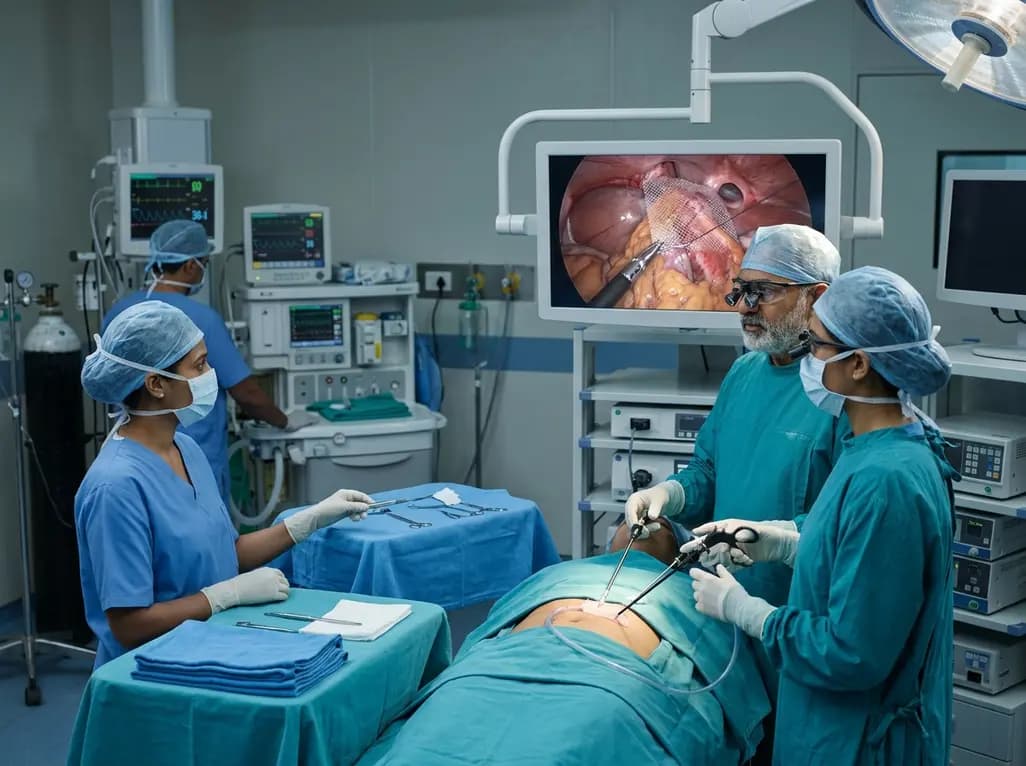
Discover a novel laparoscopic approach for iatrogenic diaphragmatic hernia repair following pedicled omentoplasty. This modified Sugarbaker technique integrates dorsal pedicle lateralization and round ligament reinforcement to secure the diaphragmatic defect while preserving vital omental vascularity.
Today

High-grade trochlear dysplasia disrupts patellofemoral stability. Although the patellotrochlear index measures cartilage overlap on MRI, cartilage contact does not ensure osseous containment. Relying solely on two-dimensional metrics may lead surgeons to overlook necessary tibial tubercle osteotomy procedures.
Today
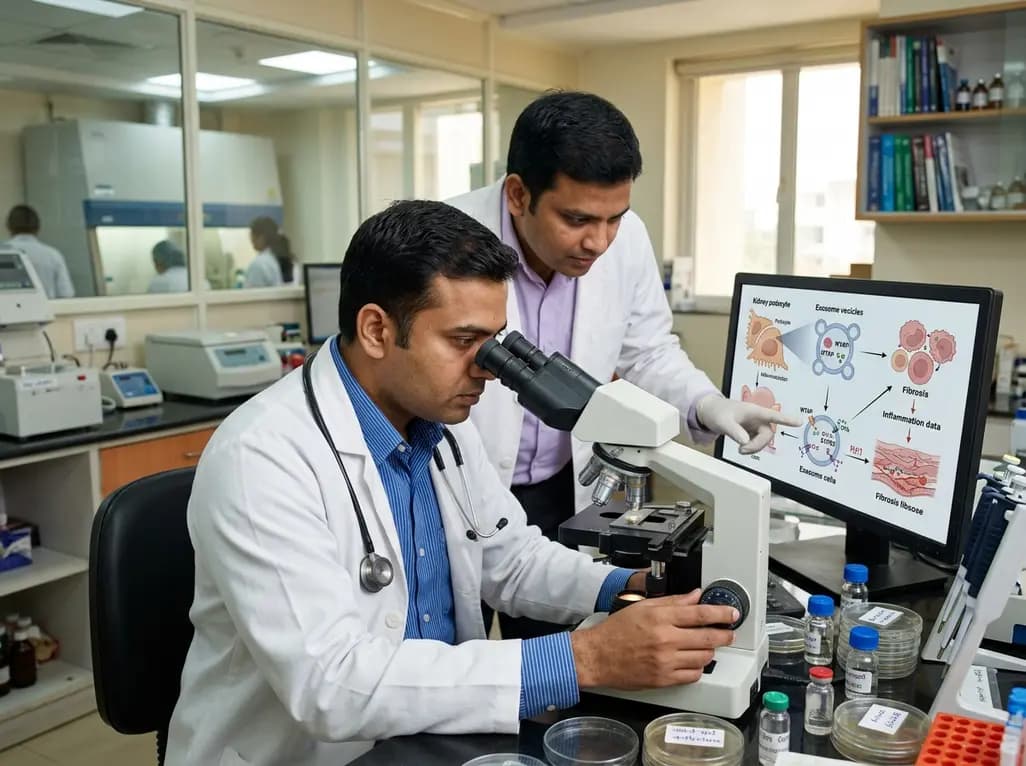
New research reveals that M1 macrophage-derived exosomes aggravate diabetic nephropathy by transferring WTAP to stabilize S1PR2 mRNA. Silencing WTAP in these vesicles attenuates endothelial injury and renal fibrosis, pointing toward innovative nanomedicine therapies.
Today
