.webp&w=384&q=75)

Loading, please wait...
Loading, please wait...
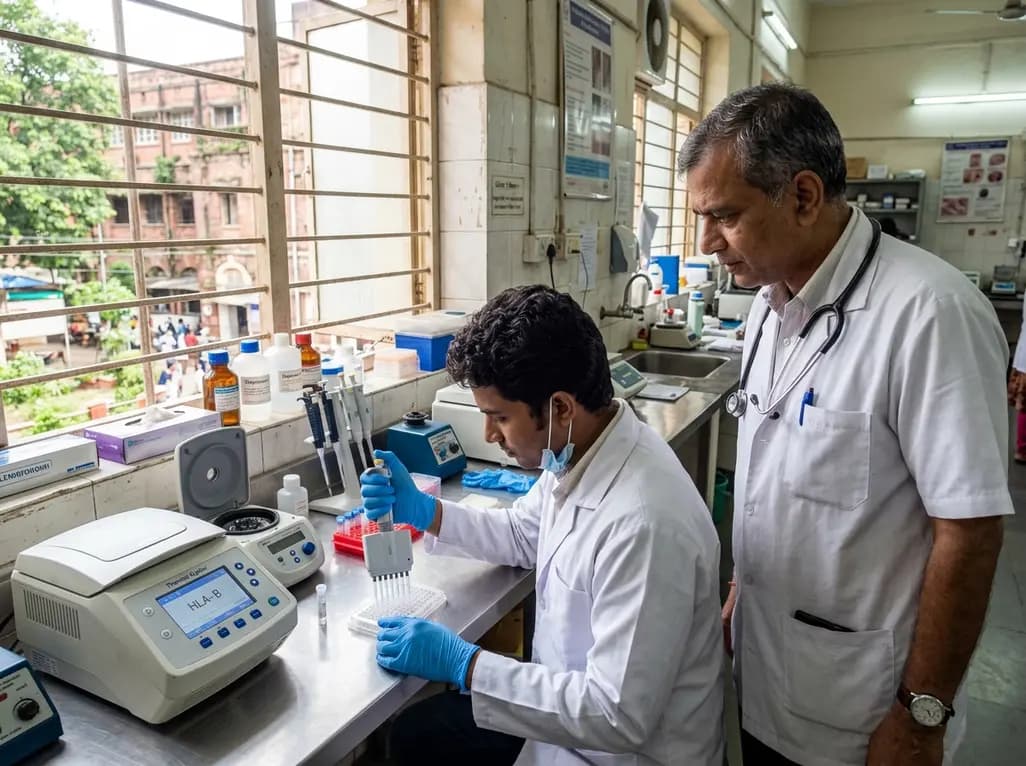
Leprosy remains a persistent global public health challenge, particularly across South Asia and Southeast Asia where transmission continues. Multidrug therapy relies heavily on dapsone as a cornerstone antimicrobial agent. However, severe adverse drug reactions frequently compromise therapeutic adherence and patient safety. Dapsone hypersensitivity syndrome presents a major clinical hazard that can cause severe systemic morbidity and even death. Fortunately, recent advances in pharmacogenomics demonstrate that pre-treatment testing can mitigate these clinical dangers. Implementing reliable HLA-B*13:01 genotyping before starting therapy offers a crucial pathway toward personalized medicine in high-burden regions.
Dapsone serves as an essential antimicrobial component of standard multidrug therapy regimens for leprosy. Nevertheless, approximately one to three percent of patients exposed to dapsone develop dapsone hypersensitivity syndrome. This severe delayed-type immune reaction typically manifests within two to eight weeks following treatment initiation. Patients classically present with persistent high fever, extensive cutaneous eruptions, painful lymphadenopathy, and progressive exfoliative dermatitis. Furthermore, the syndrome frequently triggers multi-organ involvement, including acute toxic hepatitis, renal impairment, and severe hematologic cytopenias.
Clinicians often find that managing this complication requires prolonged hospitalization, high-dose systemic corticosteroids, and intensive supportive care. The condition carries a reported mortality rate reaching nearly ten percent in severe presentations. Consequently, fear of severe drug toxicity often undermines patient confidence in healthcare programs. In addition, misdiagnosing the syndrome as an acute lepra reaction can lead to inappropriate treatment escalation. For these reasons, identifying susceptible individuals prior to multidrug therapy initiation represents an urgent public health priority. Preventing this life-threatening drug reaction protects patients and significantly improves overall treatment compliance in endemic regions.
Extensive genomic investigations have firmly established the human leukocyte antigen allele as a primary risk determinant for dapsone toxicity. Carriers of this specific allele face a dramatically increased risk of developing severe hypersensitivity reactions. In high-prevalence Asian populations, the allele occurs in substantial subsets of the general population. However, standard testing protocols have traditionally relied on real-time quantitative PCR or complex next-generation sequencing. These sophisticated platforms demand expensive instrumentation, specialized reagents, and continuous cold-chain logistics. Consequently, routine pharmacogenetic screening has remained largely unattainable for rural healthcare clinics and endemic peripheral centers.
To address this diagnostic barrier, researchers designed a novel duplex endpoint polymerase chain reaction assay. This practical assay specifically targets and amplifies the risk allele while simultaneously incorporating an internal amplification control. Moreover, laboratory technicians can perform the entire testing procedure using standard thermal cyclers and basic agarose gel electrophoresis. This conventional approach drastically lowers capital expenditure and eliminates dependence on proprietary optical reagents. Therefore, this endpoint PCR method democratizes precision medicine by bringing vital genetic testing directly into resource-limited laboratory settings.
Rigorous clinical validation is essential before deploying any genetic screening tool in routine medical practice. In a recent validation study at Anandaban Hospital in Nepal, investigators analyzed DNA samples from leprosy patients. The duplex endpoint PCR demonstrated exceptional diagnostic capability across extensive comparative testing. Specifically, the assay achieved one hundred percent sensitivity and one hundred percent specificity when compared against a validated quantitative PCR method. In addition, comparative next-generation sequencing in fifty-eight samples confirmed an impressive concordance rate of ninety-eight point three percent.
Notably, the duplex assay reliably distinguishes the target allele from other closely related genetic variants. This precise allelic discrimination prevents false-positive results that might unnecessarily disqualify safe and inexpensive therapeutic choices. Furthermore, analytical evaluations revealed a low detection limit of one hundred genome equivalents, corresponding to zero point six seven nanograms of DNA per reaction. Consequently, the test functions reliably even with minimal biological sample volumes or slightly degraded DNA specimens. These robust diagnostic parameters prove that conventional endpoint PCR delivers the exact diagnostic accuracy of high-end platforms at a fraction of the cost.
Low-resource health systems encounter multiple logistical hurdles when attempting to implement advanced molecular diagnostics. Expensive equipment maintenance, frequent power fluctuations, and complicated software interfaces frequently disrupt specialized laboratory workflows. In contrast, endpoint PCR platforms utilize durable, low-power thermal cyclers that local laboratory personnel already operate routinely. Because the reagents remain stable under standard laboratory conditions, procurement and inventory management become far simpler and more dependable.
Additionally, adopting cost-effective genetic screening transforms the economic landscape of neglected tropical disease management. The cumulative expenses associated with managing severe hypersensitivity episodes far outweigh the modest cost of pre-treatment genetic testing. Treating prolonged intensive care hospitalizations and complex multi-organ failure places an immense economic strain on impoverished families and overburdened public hospitals. Therefore, investing in affordable point-of-care or district-level testing generates substantial long-term healthcare savings. Most importantly, reliable pre-screening protects vulnerable individuals from preventable drug-induced injury and permanent organ damage. By removing technological and financial barriers, endpoint PCR empowers frontline clinics to practice safe, individualized antimicrobial prescribing.
Integrating pre-treatment screening into national leprosy control programs offers a transformative opportunity for endemic nations. When clinicians identify allele-positive individuals, they can promptly prescribe alternative, safe multidrug regimens. For example, clinicians can replace dapsone with effective second-line agents such as clofazimine, minocycline, or clarithromycin without interrupting necessary therapy. This proactive pharmacogenomic strategy ensures continuous bactericidal coverage while entirely eliminating the risk of catastrophic hypersensitivity reactions.
Furthermore, integrating genetic screening strengthens public trust in community-wide leprosy detection and management initiatives. Patients participate more willingly in screening programs when healthcare providers actively prevent severe drug-induced complications. To maximize clinical impact, health authorities should establish centralized district hubs capable of processing batches of conventional PCR tests. Consequently, peripheral clinics can collect simple blood or buccal swab samples and receive actionable results before dispensing therapy. As global health organizations strive to interrupt transmission and eliminate leprosy, incorporating accessible molecular screening into standard care represents a vital milestone. Ultimately, personalized therapy bridges the gap between sophisticated genomic science and equitable grassroots healthcare delivery.
Dapsone hypersensitivity syndrome is a severe, multi-system drug reaction characterized by high fever, exfoliative dermatitis, lymphadenopathy, and organ involvement such as hepatitis. It typically develops between two to eight weeks after beginning dapsone therapy. Because the condition carries a mortality rate of nearly ten percent and causes extensive organ injury, early identification and prompt medical intervention are critical to prevent fatal complications during leprosy treatment.
The duplex endpoint PCR demonstrates outstanding analytical performance, achieving one hundred percent sensitivity and one hundred percent specificity compared to commercial real-time PCR platforms. It reliably discriminates the target risk allele from closely related genetic variants using standard gel electrophoresis. Consequently, it delivers equivalent clinical accuracy while significantly reducing hardware costs, software complexity, and expensive fluorescent reagent dependencies in resource-constrained environments.
When pre-treatment screening reveals the presence of the high-risk allele, clinicians should avoid dapsone and select alternative antimicrobial agents. Physicians can modify the standard multidrug regimen by substituting dapsone with effective second-line drugs like minocycline, clarithromycin, or clofazimine. This personalized adjustment maintains strong antimicrobial efficacy against Mycobacterium leprae while completely preventing dangerous hypersensitivity reactions in genetically susceptible individuals.
Disclaimer: This content is for informational and educational purposes only. It is not intended to substitute for professional medical advice, diagnosis, or treatment. Always seek the advice of qualified healthcare professionals with any questions you may have regarding a medical condition or clinical decision-making. Refer to the latest local and national guidelines for clinical practice.
References
Rana DR et al. A cost-effective conventional endpoint PCR assay for HLA-B*13:01 genotyping to guide personalized dapsone therapy in leprosy in low-resource settings. Per Med. 2026 Aug 30. doi: 10.1080/17410541.2026.2724106. PMID: 42669080.
Zhang FR, Liu H, Irwanto A, et al. HLA-B*13:01 and the dapsone hypersensitivity syndrome. N Engl J Med. 2013;369(17):1620-1628.
Liu H, Wang Z, Bao F, et al. Evaluation of prospective HLA-B*13:01 screening to prevent dapsone hypersensitivity syndrome in patients with leprosy. JAMA Dermatol. 2019;155(6):666-672.
Chiramel M, George R, Daniel D, et al. Case-control study measuring the association between HLA-B*13:01 and dapsone hypersensitivity syndrome in Indian patients. Lepr Rev. 2019;90(4):371-377.

Read summarized clinical updates, watch expert medical content, and earn CME certifications right from your smartphone.
Open your smartphone camera to scan and install.





A cost-effective duplex endpoint PCR assay accurately detects the HLA-B*13:01 allele in leprosy patients, providing an affordable genetic screening tool to prevent severe dapsone hypersensitivity syndrome in low-resource clinical settings.
4 weeks back

This clinical review examines the dangerous intersection of climate change and antimicrobial resistance (AMR). It highlights thermal selection, altered transmission pathways, and the imperative for One Health and Planetary Health adaptation frameworks to preserve therapeutic efficacy.
Today
Discover the crucial distinctions between mesonephric and mesonephric-like proliferations of the female genital tract. Learn the key histomorphologic, immunohistochemical, and molecular differences essential for accurate diagnosis and clinical management.
Today
A large UK Biobank study reveals that plasma proteomic signatures capture preclinical organ damage and improve multiorgan risk prediction across early CKM syndrome stages 0 to 2 beyond traditional PREVENT clinical models.
Today

A narrative review investigates whether the articularis genus muscle functions as an independent anatomical entity or blends with the vastus intermedius. We evaluate its morphology, role in retracting the suprapatellar bursa, and direct clinical significance in anterior knee pain and arthroplasty.
Today

A Bayesian multilevel meta-analysis reveals that aerobic training combined with moderate carbohydrate restriction modestly lowers HbA1c in type 2 diabetes. However, sparse data and very low certainty leave incremental benefits over exercise or diet alone unproven, highlighting the need for individualized care.
Today
