.webp&w=384&q=75)

Loading, please wait...
Loading, please wait...

Adolescent major depressive disorder is a pervasive psychiatric condition that disrupts psychosocial development and carries substantial morbidity. Although structural brain abnormalities have long been documented in depressed youth, their correspondence with underlying transcriptional profiles has remained largely unknown. A compelling study published in Psychological Medicine provides novel insights into these complex neurobiological mechanisms. By applying an innovative Morphometric Inverse Divergence (MIND) network model, investigators successfully linked macroscopic cortical similarity changes directly to microscale gene expression patterns in adolescents with depression.
Neurodevelopment during adolescence involves rapid synaptic pruning, axonal myelination, and functional remodeling. Consequently, disruptions occurring throughout this critical maturational window significantly heighten vulnerability to affective disorders. Adolescent major depressive disorder represents a major clinical challenge characterized by pervasive low mood, cognitive dysfunction, and elevated suicide risk. Previous neuroimaging investigations in pediatric cohorts primarily focused on isolated morphological metrics, including regional cortical thickness and volumetric measurements. However, these univariate assessments frequently failed to detect synchronized alterations across distributed anatomical circuits. The cerebral cortex functions as an integrated network where morphologically similar regions share developmental trajectories and biological functions. Therefore, modern psychiatric research requires multidimensional network models to capture structural coordination effectively. In this study, investigators evaluated structural neuroimaging scans from 174 adolescents with depression and 82 healthy controls. By examining whole-brain inter-regional morphological similarity, the researchers mapped personalized network disturbances across the cortex. This innovative approach moves beyond regional atrophy, providing a comprehensive framework to understand how depressive illness reshapes the developing brain. Furthermore, these macroscale network models establish an objective baseline for identifying subtle neuroanatomical anomalies in young patients.
To capture complex topological relationships, the study employed a novel Morphometric Inverse Divergence network framework. This computational method calculates inter-regional similarity across multiple structural parameters simultaneously, including cortical thickness, volume, surface area, and sulcal geometry. Instead of evaluating these parameters independently, the algorithm measures symmetric divergence between cortical parcels to quantify morphological covariance. Consequently, higher similarity values reflect closely aligned cytoarchitectural properties and shared maturational trajectories between interconnected brain areas. Traditional structural covariance networks typically rely on group-level correlations, which unfortunately obscure individual patient variations. In contrast, the MIND model constructs an individualized morphological network for each participant. This personalized profiling enables clinicians and researchers to track patient-specific architectural alterations with high sensitivity. Furthermore, the resulting connectivity matrices provide rich multidimensional inputs suitable for predictive machine learning algorithms. By mapping these detailed similarity networks across the whole cortex, the investigators identified reproducible topological alterations unique to adolescent depression. Therefore, the MIND framework represents a substantial methodological advance over traditional structural imaging techniques. Ultimately, this approach enhances our ability to characterize complex neurodevelopmental disorders at single-subject resolution.
Regional analyses demonstrated significant cortical similarity network abnormalities concentrated within specific functional domains in depressed adolescents. Most prominently, profound alterations emerged within the orbitofrontal cortex, an essential region responsible for emotional regulation, valuation, and reward processing. Furthermore, marked structural abnormalities appeared across primary sensorimotor cortices and visual network regions. In healthy development, the orbitofrontal cortex maintains balanced morphological similarity with paralimbic and prefrontal networks. However, adolescents with major depression exhibited substantial architectural decoupling across these regulatory circuits. Consequently, this structural disruption impairs affective appraisal and disrupts emotional homeostasis. Similarly, the pronounced alterations within sensorimotor and visual hubs align with frequent clinical manifestations of altered psychomotor activity and sensory disturbances. Depressed adolescents regularly experience profound fatigue, somatic pain, and heightened stress reactivity alongside primary affective symptoms. Therefore, depressive pathology involves widespread perceptual and affective processing networks rather than isolated frontal deficits. Notably, these distributed alterations highlight how early depressive episodes alter structural coordination across multiple functional systems. These findings help explain the heterogeneous symptom presentation observed across adolescent psychiatric clinics.
Beyond mapping regional network differences, the investigators developed supervised machine learning models to evaluate the diagnostic utility of MIND features. They trained predictive algorithms using individualized morphometric network metrics to classify adolescents as depressed patients or healthy controls. Notably, the optimal machine learning classifier achieved a high area under the receiver operating characteristic curve of 0.824 in the primary cohort. This diagnostic performance significantly outperformed models relying solely on conventional volumetric or thickness parameters. Moreover, demonstrating clinical applicability requires validating predictive algorithms across independent datasets. The researchers therefore tested their model on an external, independent cohort to assess its generalizability. Crucially, the classifier retained strong diagnostic accuracy, achieving an area under the curve of 0.724 in the replication dataset. This external validation confirms that MIND network features reflect authentic biological signatures rather than dataset-specific statistical artifacts. Consequently, individualized morphological similarity networks offer substantial promise as reliable neuroimaging biomarkers. In the future, objective computational classifiers could support clinical decision-making, helping clinicians identify at-risk youth and evaluate treatment responsiveness with greater precision.
To bridge macroscale neuroimaging findings with microscale biology, the investigators performed spatial transcriptomic analyses using partial least squares regression. They cross-referenced regional MIND network alterations with whole-brain post-mortem gene expression profiles. Importantly, this analysis revealed that morphological network changes were strongly associated with genes governing synaptic signaling, cellular metabolism, and neurodevelopment. Furthermore, cell-type enrichment analyses linked these structural disruptions to specific glial and neuronal populations, notably astrocytes, microglia, and excitatory neurons. Developmental trajectory assessments subsequently identified distinct, region-specific susceptibility windows during childhood and adolescence. This finding demonstrates that normative maturational gene expression patterns may create vulnerable windows for depressive onset under psychosocial stress. Consequently, linking macroscopic cortical similarity to transcriptional profiles provides crucial mechanistic insights into pediatric psychiatric illness. These findings hold valuable implications for clinical practice, emphasizing that adolescent depression is a complex neurodevelopmental disorder requiring timely intervention. Identifying biological susceptibility windows reinforces the urgency of early therapeutic interventions to protect evolving neural architecture. Ultimately, integrating neuroimaging with molecular genomics paves the way toward personalized psychiatric diagnostics and targeted therapeutic interventions.
The Morphometric Inverse Divergence (MIND) model is an advanced neuroimaging framework. It reconstructs individualized structural similarity networks across cortical regions using multiple morphological parameters. Consequently, it measures coordinated architectural divergence between brain areas, providing superior sensitivity for detecting subtle neurodevelopmental alterations compared to conventional single-metric cortical thickness or volume measurements.
In adolescent depression, structural network alterations predominate within the orbitofrontal cortex, sensorimotor cortices, and visual processing regions. These disruptions undermine emotional appraisal, sensory gating, and cognitive-affective integration. Therefore, aberrant morphometric similarity in these circuits mirrors the affective volatility, anhedonia, and somatic distress observed frequently in pediatric and adolescent clinical presentations.
Spatial transcriptomic analyses link regional neuroimaging variations to post-mortem gene expression maps. Specifically, researchers utilize partial least squares regression to associate macroscale morphometric abnormalities with cellular pathways. This analysis demonstrated that structural disruptions correspond to genetic programs governing synaptic signaling, neurodevelopmental timing, cellular metabolism, and distinct cortical cell-type vulnerability windows.
Disclaimer: This content is for informational and educational purposes only... Refer to the latest local and national guidelines for clinical practice.
References

Read summarized clinical updates, watch expert medical content, and earn CME certifications right from your smartphone.
Open your smartphone camera to scan and install.





A breakthrough neuroimaging study links cortical similarity network alterations to transcriptional profiles in adolescent major depressive disorder. Using the novel MIND model, researchers identified regional dysregulations in orbitofrontal cortex and neurodevelopmental susceptibility windows.
Today

The CARE study protocol introduces a multilingual, RAG-powered conversational interface designed by IIT Bombay to support tobacco cessation in India. Evaluating feasibility and behavioral outcomes across three cessation centers, this digital health initiative aims to enhance quitting support for diverse users.
Today

A large UK cohort study of 1.4 million women shows that pregnancy complications, including gestational diabetes, hypertension, and preterm birth, substantially raise long-term risks for hypertension, chronic kidney disease, type 2 diabetes, and cardiovascular events, highlighting early postpartum intervention needs.
Today
A cross-sectional study reveals that hypertension knowledge, illness perceptions, depression, and substance use significantly predict self-care behaviors. Addressing mental health and cognitive beliefs in primary care is crucial for optimal blood pressure control and cardiovascular disease prevention.
Today
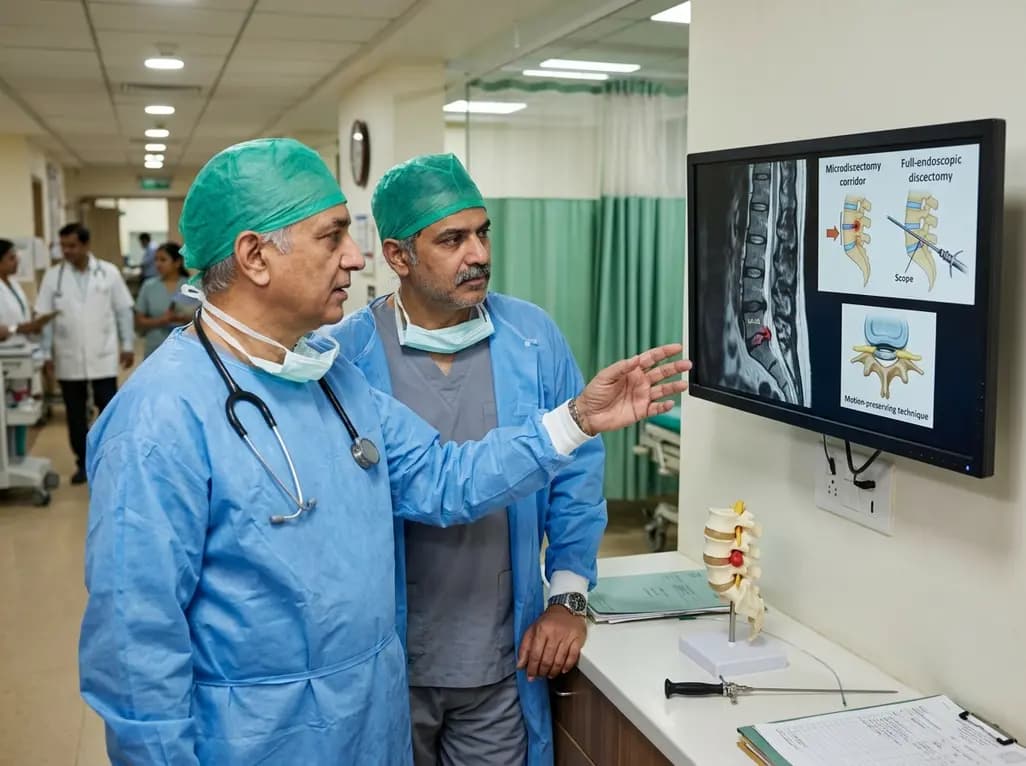
This clinical overview examines recent advancements in lumbar disc herniation surgery, comparing microscopic and full-endoscopic discectomy while highlighting biportal techniques and emerging motion-preserving innovations for spine specialists.
Today

Small interfering RNA (siRNA) therapeutics harness RNA interference to degrade disease-causing messenger RNA. By delivering hepatocyte-targeted, durable gene silencing, agents targeting PCSK9, LPA, and angiotensinogen offer potent cardiovascular risk reduction with infrequent, biannual dosing schedules.
Today
