

Loading, please wait...
Loading, please wait...

Recent advances in digital health continue to reshape clinical triage and patient interactions. Today, conversational health AI represents a rapidly expanding avenue for consumer medical inquiries. In response, Apple launched its Apple Health AI Usage Study in the United States. This clinical research initiative investigates how everyday users interact with artificial intelligence when seeking medical advice. Furthermore, the study explores how conversational algorithms influence user trust, clinical comprehension, and subsequent health actions.
The virtual trial utilizes a dedicated iOS application developed specifically for clinical dialogue research. To provide verified medical insights, Apple partnered with OpenEvidence, a clinical artificial intelligence platform. Consequently, the application grounds its responses directly in peer-reviewed scientific literature. The system sources information from prestigious publications, including The New England Journal of Medicine, JAMA, and Nature. Thus, the software avoids unverified web claims that frequently distort consumer medical inquiries.
Study participants submit text-based questions regarding everyday symptoms, surgical recovery, or preventive wellness. In response, the platform provides accessible explanations accompanied by direct citations from medical literature. Furthermore, users evaluate each answer by rating its clarity, clinical relevance, and helpfulness. Regular surveys supplement this direct feedback to monitor user reactions over time. Through this structured methodology, researchers evaluate how lay individuals comprehend complex clinical data. In addition, the interface encourages active self-reflection after each interaction. Clinicians often observe that patients struggle with technical jargon. Therefore, the app evaluates whether plain-language summaries maintain diagnostic accuracy without confusing users. Ultimately, these longitudinal assessments will reveal whether clinical citations strengthen user comprehension and patient decision-making.
Practitioners frequently consult patients who present biased ideas derived from digital searches. However, conversational health AI introduces an interactive dynamic that significantly alters clinical communication. This research study focuses directly on the intersection between machine-generated advice and patient choices. Specifically, investigators examine how users translate algorithmic feedback into practical decisions, such as booking medical consultations or adopting lifestyle modifications.
Moreover, the trial observes whether digital assistants prepare individuals for clinical consultations. When patients arrive with well-structured symptom timelines, doctors can conduct more focused diagnostic evaluations. Conversely, misleading algorithmic summaries can generate health anxiety and overburden emergency services. Therefore, analyzing user behavior remains an essential clinical priority. For primary care physicians, these findings will clarify common misunderstandings regarding artificial intelligence. Furthermore, the research investigates whether users verify digital suggestions with certified clinicians. By examining these interactions, medical educators can develop better patient guidance strategies. In addition, researchers evaluate how technological literacy affects personal trust in algorithmic conclusions. As a result, future tools can offer safer clinical triage while preserving professional oversight. Ultimately, clear digital feedback helps bridge the communication gap between patients and attending doctors.
To achieve statistically robust insights, Apple aims to enroll approximately 200,000 adult volunteers across the United States. Eligible participants must be at least 21 years old and operate an iPhone 15 Pro or newer device running iOS 26. This technological baseline provides adequate processing power for on-device Apple Intelligence models. Consequently, the research software leverages local foundation models to categorize questions securely before cloud transmission.
Enrolled individuals participate in the study for up to 12 consecutive months. During this observation period, users submit queries during real-life medical scenarios. Furthermore, participants explore questions regarding disease symptoms, lab interpretations, and medication concepts. To deliver contextual answers, the application allows users to link their personal HealthKit metrics. This optional feature incorporates variables such as resting heart rate, physical activity, sleep architecture, and laboratory results. However, HealthKit sharing remains entirely voluntary throughout the research period. Investigators will measure whether biometric data integration improves perceived clarity and personal relevance. In addition, the longitudinal design captures seasonal health variations and evolving user habits. Ultimately, this large cohort provides unprecedented evidence on how sustained digital health exposure shapes user literacy.
Digital healthcare adoption depends heavily on privacy protection, transparency, and user consent. Accordingly, this research protocol institutes strict technical boundaries to protect sensitive health metrics. Apple explicitly confirms that participant data will never train artificial intelligence models. Furthermore, all transmitted queries undergo de-identification before reaching secure third-party cloud infrastructure. To enforce data minimization, OpenEvidence permanently removes all query and response logs within 24 hours.
Equally critical are the clinical safety guardrails built directly into the software. For instance, the system deploys automated classifiers designed to identify concerning symptoms or medical emergencies. When a user asks about chest pain, acute dyspnea, or suicidal ideation, the app triggers rapid safety responses. Rather than offering diagnostic advice, the application immediately directs the user to emergency services or local clinical facilities. Apple explicitly emphasizes that the app cannot diagnose conditions or replace physician consultations. Instead, the program functions exclusively as an observational research study. Therefore, these clinical safeguards ensure that vulnerable patients do not mistake automated responses for direct medical intervention. Through these transparent safeguards, the project demonstrates how clinical trials can balance technological exploration with participant safety.
The integration of conversational clinical systems brings notable considerations for practicing physicians worldwide. Today, doctors in outpatient clinics regularly manage patients who seek clinical confirmation for internet searches. Therefore, understanding how patients interact with these technologies helps doctors preserve trust and open communication. Although consumer algorithms can organize patient notes, they cannot replicate physical examinations or nuanced clinical reasoning.
Furthermore, physicians should educate patients on identifying reliable, peer-reviewed medical sources. Unvetted online models often generate inaccurate outputs that can delay urgent clinical care. However, when algorithmic tools provide validated citations, patients develop a more mature understanding of medical nuances. In addition, incorporating biometric records presents meaningful opportunities for preventive medicine. Clinicians can utilize aggregated metrics to optimize chronic care for diabetes, hypertension, and heart disease. Nevertheless, physicians must remind individuals that technology cannot replace formal diagnostic workups. Ultimately, research like Apple's clinical study provides valuable data to guide the safe integration of software into clinical workflows. As technology advances, practitioners must remain central to diagnostic choices and patient-centered clinical care. Consequently, healthcare professionals should champion digital literacy initiatives to empower informed decision-making.
Q1: How does the Apple Health AI Usage Study protect participant data privacy?
The study incorporates stringent data privacy protocols and safeguards. Apple states that participant information is never used to train commercial artificial intelligence models. Furthermore, all transmitted health metrics undergo complete de-identification before reaching secure third-party cloud infrastructure. In addition, OpenEvidence deletes all user queries and generated responses within 24 hours. Participants also retain complete discretion over whether to share their HealthKit biometric data during the virtual clinical trial.
Q2: Can the Apple Health AI Study app diagnose conditions or replace clinical consultations?
No, the application cannot diagnose illnesses, formulate treatment plans, or replace licensed medical professionals. Instead, the software functions strictly as a virtual research tool designed to evaluate user comprehension and engagement. Furthermore, the application includes automated safety guardrails that detect alarming symptoms. When concerning health issues arise, the software promptly advises users to consult certified healthcare providers or emergency medical services immediately for appropriate clinical care.
Q3: Which medical sources does the study app utilize to answer health inquiries?
The application relies on technology from OpenEvidence, a specialized clinical artificial intelligence platform built for medical professionals. Consequently, the system grounds its plain-language responses directly in peer-reviewed clinical research and accredited publications. These reputable sources include the Journal of the American Medical Association, The New England Journal of Medicine, and Nature. In addition, the platform provides direct reference citations so participants can verify clinical evidence behind every generated answer.
Disclaimer: This content is for informational and educational purposes only. It does not constitute medical advice or replace professional judgment. Refer to the latest local and national guidelines for clinical practice.
References

Read summarized clinical updates, watch expert medical content, and earn CME certifications right from your smartphone.
Open your smartphone camera to scan and install.





Apple has initiated a large-scale virtual research project enrolling up to 200,000 participants to evaluate conversational health AI. In collaboration with OpenEvidence, the initiative investigates how clinically backed artificial intelligence impacts user comprehension, clinical consultations, and data privacy.
Today
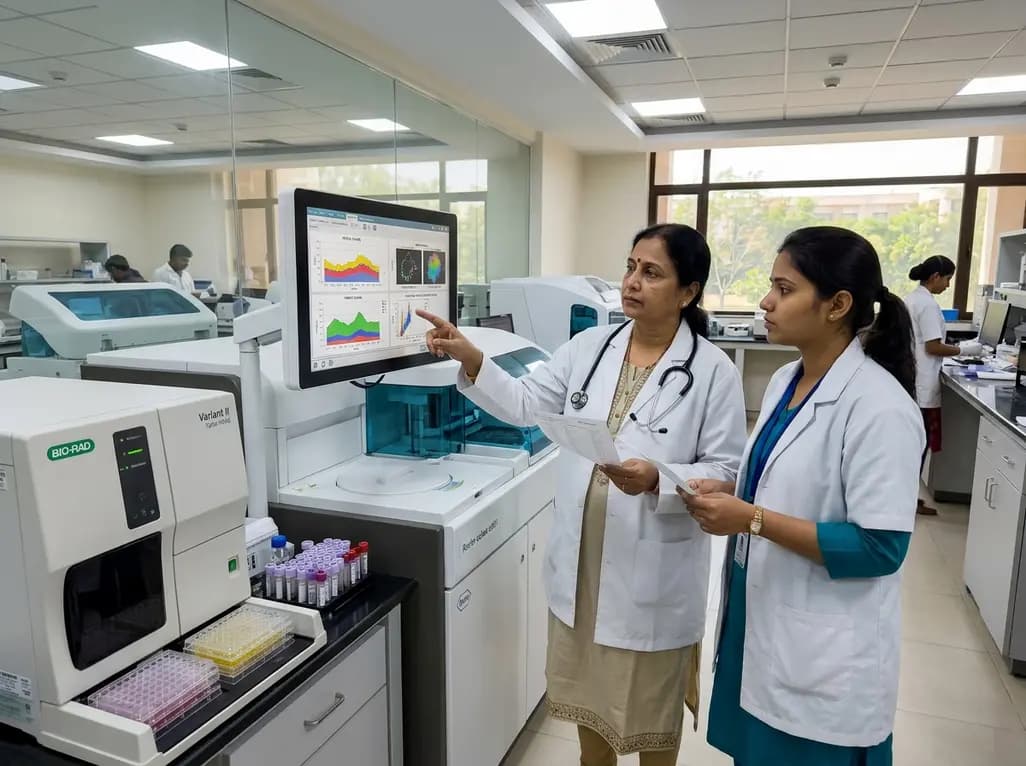
AIIMS Bhubaneswar has established three upgraded laboratories under its biochemistry department. These facilities introduce specialized antenatal panels, newborn screening for rare metabolic disorders, automated immunology platforms, and high-throughput HPLC HbA1c testing to enhance healthcare delivery across Odisha.
Today

A Canadian nutrition study reveals that higher diet costs predict lower dietary energy density and higher fruit intake, but also increase sodium and processed meat consumption.
Today

Idiopathic spinal cord herniation is a rare pathology presenting with progressive thoracic myelopathy. Early MRI identification and meticulous microsurgical reduction with dual bolstered dural defect repair prevent irreversible neurological deterioration.
Today
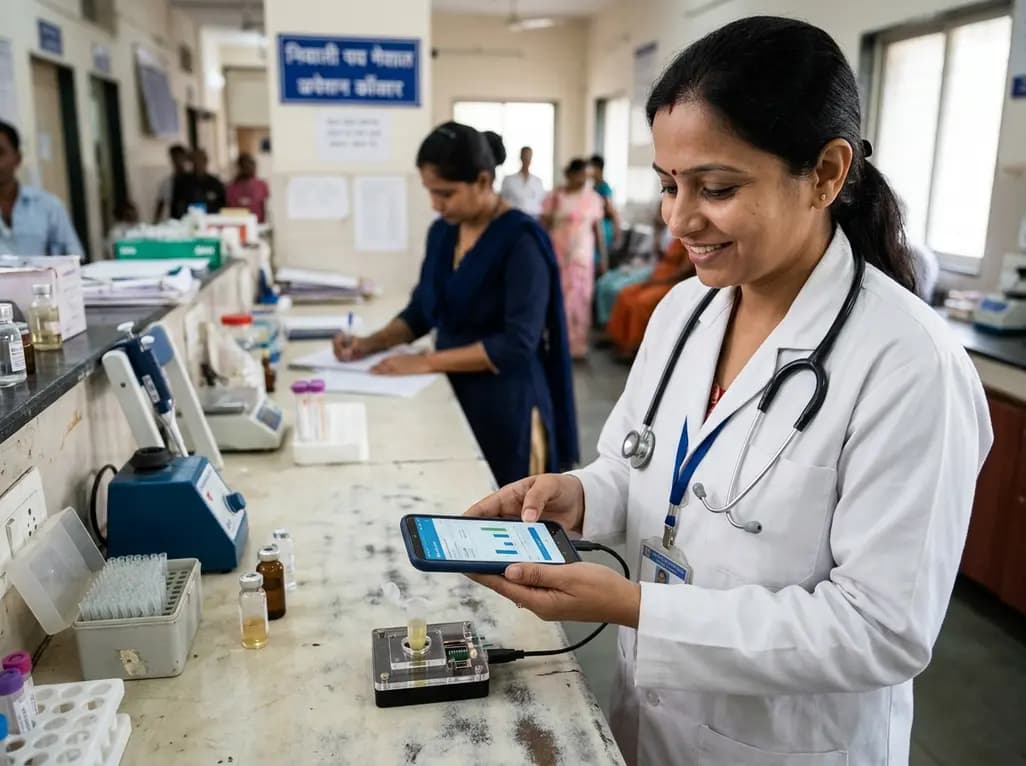
A novel smartphone-assisted biosensor utilizing molecularly imprinted polymers and catalytic nanozymes offers antibody-free, enzyme-free urinary microalbumin testing, enabling rapid, low-cost point-of-care screening for early chronic kidney disease.
Today
