.webp&w=384&q=75)

Loading, please wait...
Loading, please wait...

Endovascular aneurysm repair (EVAR) has significantly improved the management of aortic disease. However, clinicians often encounter complications such as type II endoleaks (T2EL). Usually, these leaks are benign. Consequently, surgeons often choose observation. Nonetheless, a small percentage of patients experience sac enlargement or even rupture. In such critical moments, immediate surgery is the traditional path. However, this case explores the rare success of conservative T2EL management for a ruptured aneurysm.
An 89-year-old male with a prior EVAR presented with acute abdominal pain and low blood pressure. He had a known, persistent T2EL. Therefore, the medical team ordered an emergency computed tomography angiography (CTA). The scan confirmed a ruptured abdominal aortic aneurysm (rAAA) and a retroperitoneal haematoma. Furthermore, the patient’s advanced age and comorbid conditions increased the surgical risks significantly. Moreover, the patient expressed a strong preference against undergoing surgery. Consequently, the team opted for non-operative care after initial resuscitation. Notably, the patient remained stable throughout his five-day hospital stay.
Following his discharge, the patient underwent a follow-up CTA at the four-week mark. This scan revealed that the haematoma had resolved successfully. However, the aneurysm sac showed a slight increase in size. Accordingly, the patient received elective embolization two and four months later. One year after the rupture, the aneurysm remained stable. Thus, this unique outcome suggests that conservative T2EL management may be appropriate for select stable patients. Nevertheless, doctors must maintain close surveillance for all patients at risk of post-EVAR rupture.
Yes, while isolated type II endoleaks are generally considered low risk, they can lead to a rupture in less than 1% of cases. Therefore, persistent endoleaks associated with sac expansion require vigilant monitoring.
Non-operative management is typically considered only for patients who remain hemodynamically stable after resuscitation and have contraindications to surgery. Additionally, it may be an option when patients or families choose to avoid invasive procedures due to advanced age.
Most guidelines suggest follow-up imaging every 6 to 12 months for stable type II endoleaks. However, if the aneurysm sac increases in size by more than 5 to 10 mm, clinicians should consider intervention through embolization.
Disclaimer: This content is for informational and educational purposes only. It does not constitute medical advice or establish a doctor-patient relationship. Always seek the advice of a qualified healthcare provider for any questions regarding a medical condition. Refer to the latest local and national guidelines for clinical practice.
References
Chan CL et al. Conservative management of ruptured abdominal aortic aneurysm secondary to type II endoleak. Vascular. 2026 Feb 14. doi: 10.1177/17085381261425718. PMID: 41689835.
Chaikof EL, et al. The Society for Vascular Surgery practice guidelines on the care of patients with an abdominal aortic aneurysm. J Vasc Surg. 2018;67(1):2-77.e2.
Karira A, et al. Management of Type II Endoleaks: A Review. Semin Intervent Radiol. 2020;37(4):368-376.

Read summarized clinical updates, watch expert medical content, and earn CME certifications right from your smartphone.
Open your smartphone camera to scan and install.





An 89-year-old patient with a post-EVAR ruptured AAA was successfully managed non-operatively, showing the potential for conservative T2EL management....
8 months ago

Novel glucose-responsive mPEG-PSA nanocarriers deliver insulin aspart on demand, achieving dual postprandial and basal glycemic control without hypoglycemia in diabetic models. This biomaterial breakthrough offers promising clinical implications for physiologic diabetes management.
Today

A novel folate-conjugated tecto-dendrimer nanoplatform successfully delivers siRNA to achieve targeted HK2 silencing, disrupting ovarian cancer glycolysis and suppressing lactate output.
Today
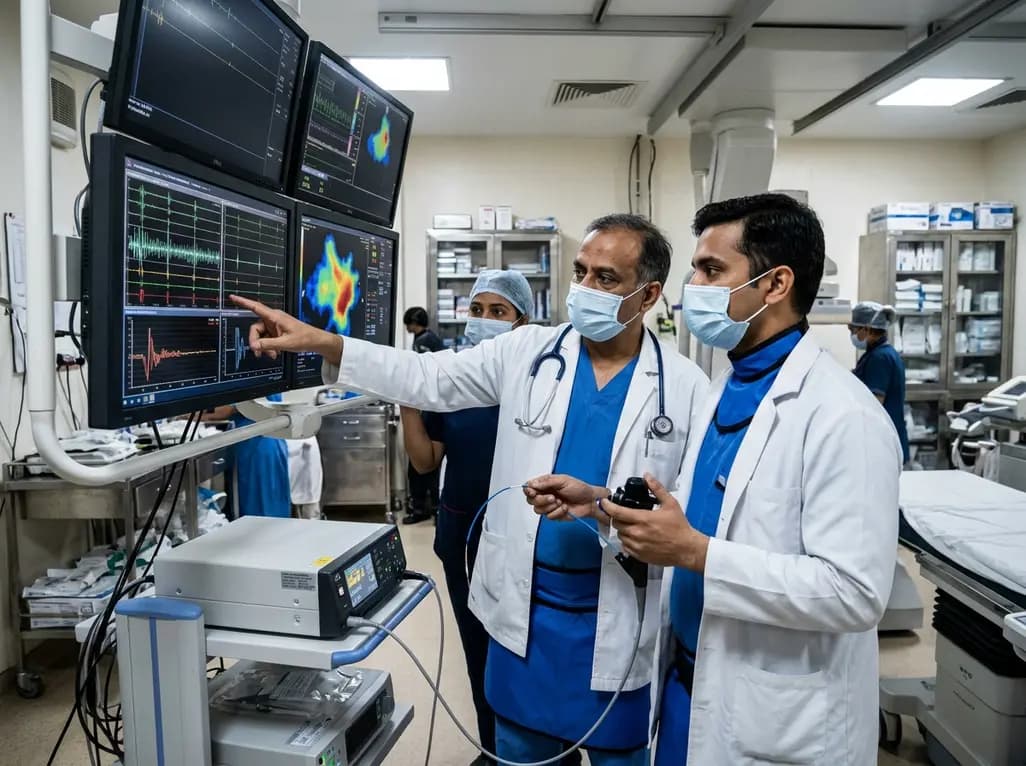
A comparative non-contact study reveals that high-power radiofrequency delivery with the QDOT MICRO catheter induces an artifactual contact force rise. Electrophysiologists must understand this power-dependent thermal and electrical phenomenon to avoid inadvertent catheter withdrawal and ineffective ablation.
Today

A novel proof-of-concept study presents a six-degree-of-freedom articulated manikin neck equipped with linear potentiometers. The system provides real-time kinematic motion feedback during cervical immobilisation, delivering sub-degree tracking accuracy to improve pre-hospital trauma training and patient safety.
Today

A retrospective comparative cohort study evaluated genitourinary safety in HFpEF between dapagliflozin and empagliflozin over six months. Rates of symptomatic UTI and asymptomatic bacteriuria showed no statistically significant differences, supporting comparable safety profiles across both SGLT2 inhibitors.
Today
