.webp&w=384&q=75)

Loading, please wait...
Loading, please wait...

The current Congo Ebola outbreak presents a complex challenge to international public health authorities and local clinicians. Specifically, recent reports indicate that the virus is spreading largely undetected across several key provinces. Consequently, epidemiological data suggest that the official case counts represent only a fraction of the actual burden. Therefore, understanding the underlying factors driving this silent transmission is essential for clinicians and global health professionals alike. In response, healthcare teams must adapt their diagnostic and tracing strategies to capture overlooked cases. This article evaluates the critical clinical features and containment struggles of this evolving health crisis.
The World Health Organization recently warned that the current Congo Ebola outbreak could be much larger than official reports indicate. Specifically, experts estimate that the true scale of the epidemic might be two to four times larger than documented. Furthermore, government data list over 1,700 cases and hundreds of deaths in the country’s northeastern region. However, modeling based on test positivity rates paints a far more troubling picture. In contrast to previous epidemics, a vast majority of new patients do not appear on established contact-tracing lists. Consequently, this disconnect suggests that health workers are missing critical chains of transmission. This surveillance gap makes containment extremely difficult to achieve. Additionally, it means that many infected individuals remain untreated within their local communities. As a result, the virus can spread silently to adjacent provinces. Meanwhile, clinical teams are working under immense pressure to identify suspected cases early. Ultimately, closing this information gap remains the top priority for international responders. Thus, expanding diagnostic capacity is crucial to resolving this crisis. Without accurate data, deploying resources effectively becomes nearly impossible. Consequently, local health units must receive immediate material support to survive this wave. Finally, international agencies must sustain their collaboration to prevent a wider regional emergency.
The Bundibugyo strain of the Ebola virus primarily drives the ongoing epidemic. Interestingly, preliminary evidence suggests this specific variant causes milder symptoms compared to other strains. For instance, patients may experience less severe hemorrhaging and fever. Consequently, affected communities often perceive the infection as a routine, non-lethal illness. As a result, many families choose to care for sick relatives at home rather than seeking professional medical help. While this home care may slightly improve immediate comfort, it dramatically increases the risk of household exposure. Furthermore, infected individuals remain in contact with their families for longer periods. Consequently, this prolonged exposure facilitates continuous viral transmission within households. In contrast, patients who present early to dedicated treatment centers have a much better chance of survival. Therefore, public health campaigns must focus on correcting these low-risk perceptions. Indeed, clinical education needs to emphasize that even mild symptoms can indicate a highly contagious infection. Additionally, communities must learn to recognize the subtle signs of the Bundibugyo strain. Ultimately, overcoming community-level hesitation is vital for halting the outbreak. Without this behavioral shift, home-based transmission will continue to undermine medical interventions.
The epicentre of this outbreak is heavily concentrated in the Ituri province, specifically in the capital city of Bunia. This bustling urban area is home to approximately one million residents. Alarmingly, roughly one in two patients tested for Ebola in Bunia turns out to be positive. Therefore, this high positivity rate indicates exceptionally intense, ongoing community transmission. Furthermore, the virus has already begun spreading beyond Ituri to North Kivu, South Kivu, and Tshopo provinces. This geographic expansion poses a significant threat to the entire country. Consequently, health authorities must treat this situation with the utmost urgency. In contrast to rural areas, densely populated cities accelerate viral spread due to high contact rates. Additionally, weak urban sanitation infrastructure further exacerbates these transmission risks. Consequently, local authorities must implement containment measures immediately. Meanwhile, epidemiological modeling suggests that many cases are still going completely unnoticed. To combat this, clinicians must maintain a high index of suspicion for any presenting febrile illness. Indeed, rapid screening at all entry points in Bunia is absolutely essential. Ultimately, without aggressive community-level interventions, the virus will continue to expand its footprint.
Public health experts widely recognize effective contact tracing as the cornerstone of Ebola containment. However, the current outbreak in Ituri province reveals a severe breakdown in this critical system. Specifically, nearly eighty percent of newly confirmed patients in Bunia have no known links to existing cases. Consequently, this statistic demonstrates that the traditional contact-tracing lists are failing to capture the true network of exposure. To address this failure, authorities have recently initiated an extensive community outreach program. This program involves training over twenty-one thousand local community health workers. Specifically, these workers conduct systematic, house-to-house visits in affected neighborhoods. Consequently, they can identify suspected cases early and encourage immediate medical evaluation. Furthermore, this approach helps demystify the disease and reduces the stigma associated with seeking treatment. Additionally, building trust with skeptical communities is vital for obtaining accurate contact history. Indeed, when families trust health workers, they are far more likely to report symptoms. Ultimately, this house-to-house surveillance model represents the best hope for re-establishing control over the chains of transmission. Thus, sustained funding and support for these frontline workers must remain a primary focus.
Healthcare workers in northeastern Congo are operating under exceptionally difficult conditions. For example, conflict and ongoing insecurity in Ituri province frequently disrupt medical operations. Furthermore, many medical staff have recently engaged in protest actions due to unpaid salaries. Consequently, these disruptions further weaken an already fragile healthcare infrastructure. To successfully manage the outbreak, authorities must guarantee health workers safe working environments and fair compensation. Additionally, clinicians require continuous access to personal protective equipment to prevent nosocomial transmission. Indeed, protecting responders is crucial, as their safety directly impacts community trust. In contrast, if communities perceive healthcare facilities as unsafe, patients will avoid seeking care. As a result, community-based deaths will continue to rise. Specifically, data show that about seventy percent of early deaths in this outbreak occurred outside of treatment centers. Therefore, strengthening localized clinic capacity is essential to bring care closer to the people. Meanwhile, clinical trials evaluating novel therapeutics, such as monoclonal antibodies, are underway. These trials offer a beacon of hope for improving survival rates. Ultimately, a combination of community trust, secure working conditions, and clinical innovation will determine the success of this response. Therefore, global health partners must remain actively engaged in supporting these brave local responders.
Q1: Why is the Bundibugyo strain of the Ebola virus particularly challenging to contain?
The Bundibugyo strain often causes milder clinical symptoms compared to other variants. Consequently, infected individuals frequently mistake the disease for a minor illness and delay seeking professional care. This leads to prolonged home care by families, which dramatically increases household transmission. Therefore, the virus spreads silently within communities before health officials can identify the cases and initiate proper isolation protocols.
Q2: Why are contact-tracing efforts currently struggling in Ituri province?
Contact-tracing systems are failing because nearly eighty percent of newly confirmed patients have no established link to known Ebola cases. Specifically, intense community transmission in densely populated urban centers like Bunia allows the virus to spread through unidentified contact networks. Additionally, community mistrust and delayed care-seeking behavior mean that many patients remain in their homes, completely bypassed by traditional surveillance methods.
Q3: What steps are being taken to improve case detection and surveillance in the Congo?
To enhance surveillance, authorities are training and deploying over twenty-one thousand community health workers. These workers conduct systematic, house-to-house visits in high-risk zones to identify suspected cases. Additionally, they educate families about the importance of early treatment and seek to rebuild trust. Consequently, this proactive community engagement helps identify silent chains of transmission that conventional tracing lists have missed.
Disclaimer: This content is for informational and educational purposes only. It does not constitute medical advice or replace professional judgment. Refer to the latest local and national guidelines for clinical practice.
References

Read summarized clinical updates, watch expert medical content, and earn CME certifications right from your smartphone.
Open your smartphone camera to scan and install.





A major Ebola outbreak in the Democratic Republic of Congo is spreading largely undetected, driven by a milder Bundibugyo strain and intense community transmission in Ituri province. This analysis explores the public health hurdles, contact tracing deficits, and the critical clinical implications.
3 months ago
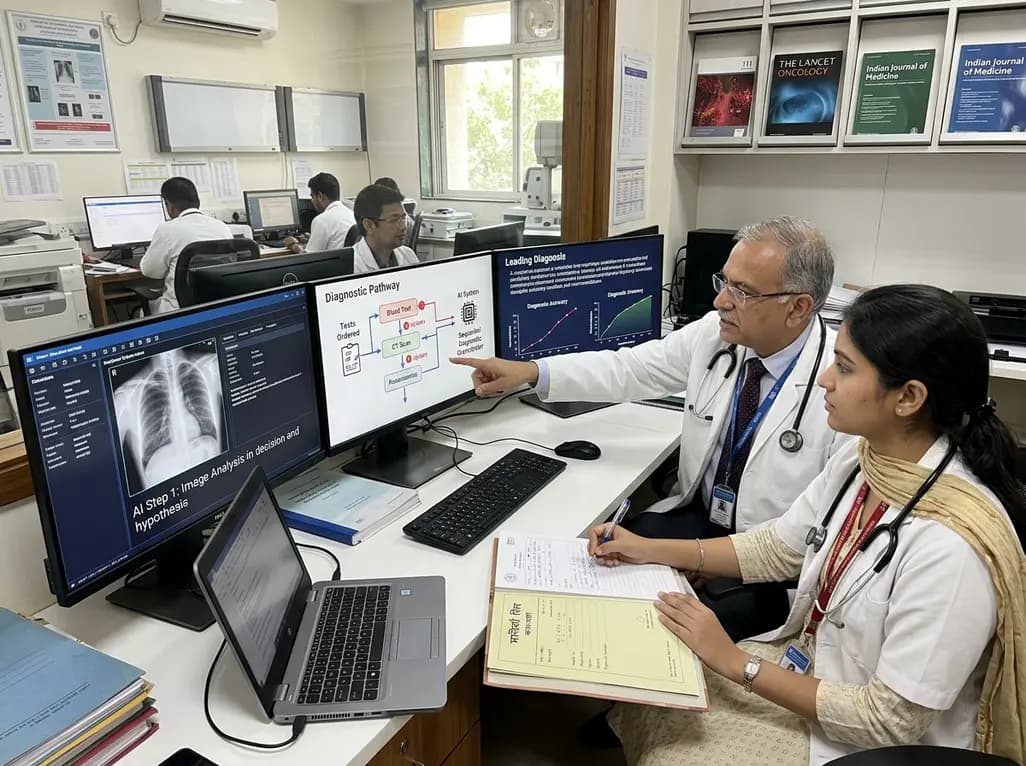
A breakthrough peer-reviewed study demonstrates that a sequential AI diagnosis system can mirror real-world clinical reasoning. By ordering stepwise tests and updating hypotheses dynamically, this multi-agent orchestrator achieved superior diagnostic accuracy while reducing investigative costs.
Today

A prenatal case highlights severe glutaric acidemia type II presenting as bilateral hyperechoic cystic kidneys at 18 weeks. Whole-exome sequencing revealed a novel homozygous ETFDH frameshift variant, demonstrating the power of rapid genetic testing in fetal renal anomalies.
Today

Review how tailored exercise programs benefit frail older patients with heart failure. Explore pathophysiological mechanisms, individualized training prescriptions, and strategies to overcome adherence barriers in clinical practice.
Yesterday

This comparative study evaluates posterior labral tears with and without glenohumeral instability, highlighting distinct demographic patterns, MRI underestimation in stable shoulders, and successful arthroscopic repair outcomes.
Yesterday

A clinical study demonstrates that early intervention with tocilizumab, either as monotherapy or bridged with corticosteroids, achieves significant proptosis reduction and resolves active inflammation in treatment-naive thyroid eye disease.
Yesterday
