.webp&w=384&q=75)

Loading, please wait...
Loading, please wait...

Congenital syphilis remains a significant public health burden in low- and middle-income countries. Specifically, congenital syphilis management India faces critical bottlenecks across the entire prevention cascade. A recent study from northern India highlighted several cases where maternal screening was either absent or ignored. Consequently, healthcare providers often miss the opportunity to intervene early during pregnancy. While many neonates appear asymptomatic at birth, they still require rigorous evaluation based on maternal history. Therefore, understanding these recurring failures is essential for improving neonatal outcomes.
Clinicians find diagnosing congenital syphilis in asymptomatic infants notoriously difficult. For instance, the rapid plasma reagin (RPR) test might be non-reactive even in infected neonates. In the Indian case series, only one out of five neonates showed a reactive RPR at birth. Moreover, physicians must rely heavily on maternal treatment history to classify risk levels. According to NACO and CDC criteria, infants fall into categories ranging from highly probable to unlikely. However, the lack of standardized screening protocols often leads to delayed or missed diagnoses in busy clinical settings.
Successful congenital syphilis management India requires consistent access to specific medications and robust follow-up. Unfortunately, the limited availability of aqueous crystalline penicillin remains a major obstacle in many tertiary centers. This shortage frequently forces clinicians to use benzathine penicillin as an alternative treatment for neonates. Additionally, maternal treatment is often inadequate or completed too close to the time of delivery. To fix this, health systems must prioritize universal antenatal screening and secure drug supply chains. Furthermore, pediatricians should maintain a high index of suspicion for all infants born to mothers with reactive serology.
Diagnosis depends on a combination of maternal history, physical examination, and serological testing. Even if the neonate is asymptomatic, clinicians evaluate risk based on the adequacy of maternal treatment and a comparison of maternal and neonatal non-treponemal titers.
While aqueous crystalline penicillin G is the gold standard for confirmed cases, benzathine penicillin G is often utilized in resource-limited settings. However, using this alternative requires careful clinical and serological follow-up to ensure treatment success.
Adequate treatment involves a penicillin-based regimen appropriate for the stage of syphilis, completed at least 30 days before delivery. The treatment must also result in a four-fold decrease in maternal non-treponemal titers to be considered fully effective.
Disclaimer: This content is for informational and educational purposes only. It does not constitute professional medical advice, diagnosis, or treatment. Always seek the advice of your physician or other qualified healthcare provider with any questions you may have regarding a medical condition. Refer to the latest local and national guidelines for clinical practice.
References

Read summarized clinical updates, watch expert medical content, and earn CME certifications right from your smartphone.
Open your smartphone camera to scan and install.





This article reviews diagnostic and treatment failures in congenital syphilis prevention in India, highlighting clinical gaps and latest guideline updates....
4 months ago
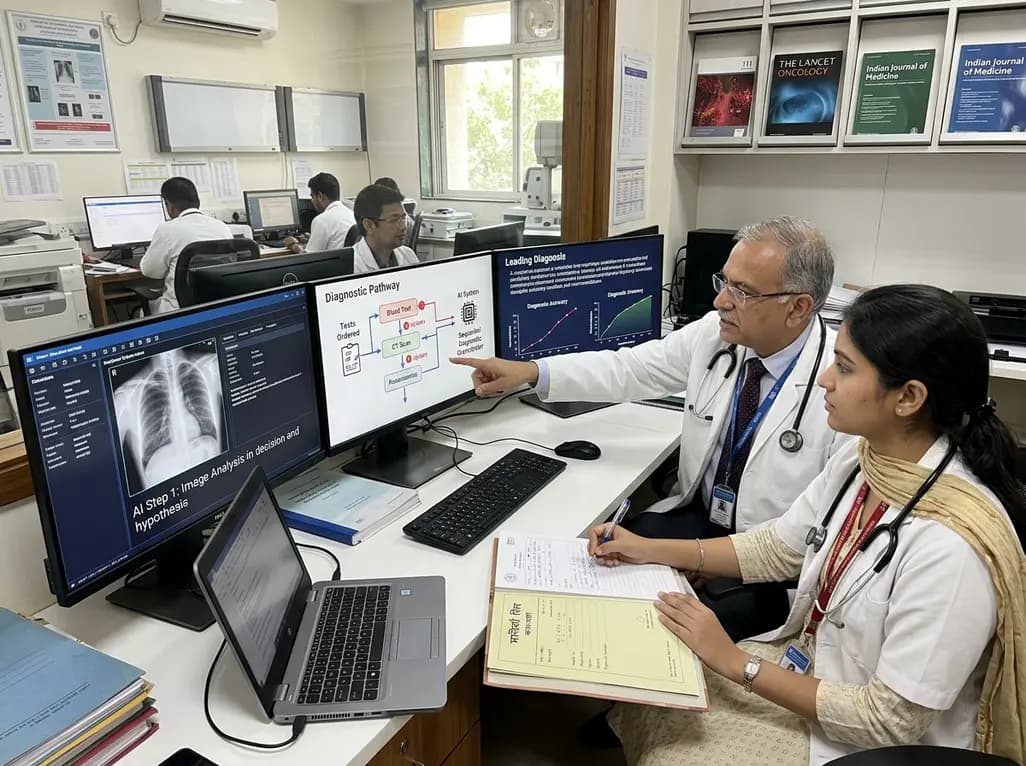
A breakthrough peer-reviewed study demonstrates that a sequential AI diagnosis system can mirror real-world clinical reasoning. By ordering stepwise tests and updating hypotheses dynamically, this multi-agent orchestrator achieved superior diagnostic accuracy while reducing investigative costs.
Today

A prenatal case highlights severe glutaric acidemia type II presenting as bilateral hyperechoic cystic kidneys at 18 weeks. Whole-exome sequencing revealed a novel homozygous ETFDH frameshift variant, demonstrating the power of rapid genetic testing in fetal renal anomalies.
Today

Review how tailored exercise programs benefit frail older patients with heart failure. Explore pathophysiological mechanisms, individualized training prescriptions, and strategies to overcome adherence barriers in clinical practice.
Yesterday

This comparative study evaluates posterior labral tears with and without glenohumeral instability, highlighting distinct demographic patterns, MRI underestimation in stable shoulders, and successful arthroscopic repair outcomes.
Yesterday

A clinical study demonstrates that early intervention with tocilizumab, either as monotherapy or bridged with corticosteroids, achieves significant proptosis reduction and resolves active inflammation in treatment-naive thyroid eye disease.
Yesterday
