.webp&w=384&q=75)

Loading, please wait...
Loading, please wait...
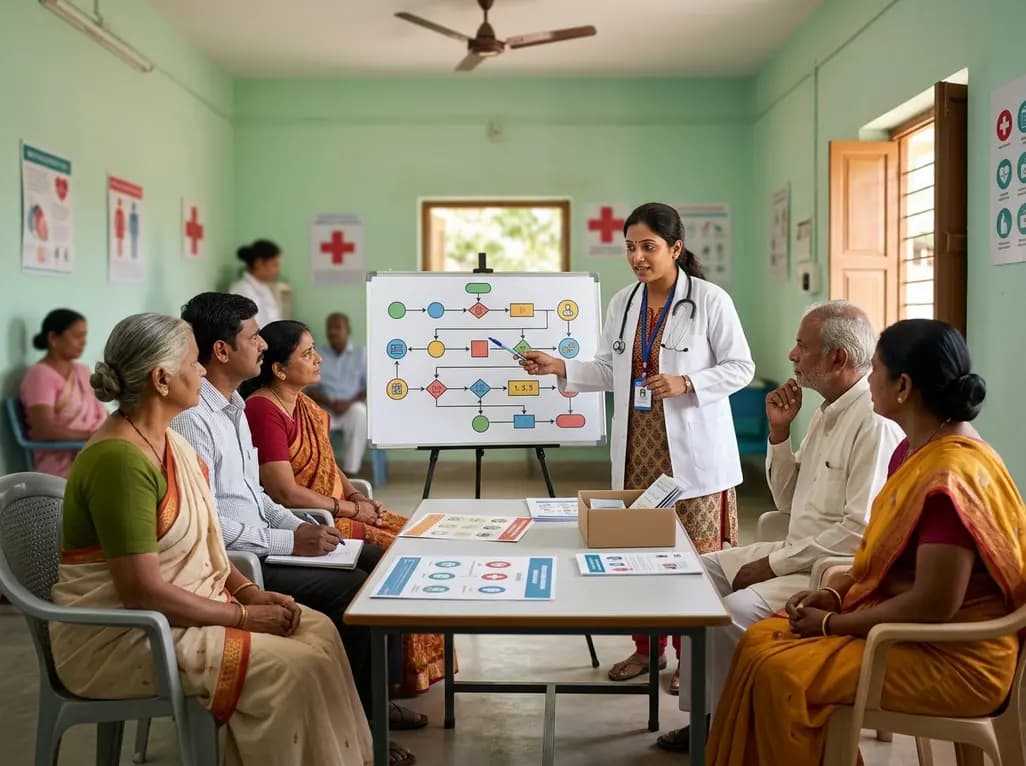
The Community Engagement Roadmap is a publicly available online resource designed to bridge the gap between academic institutions and local communities. Researchers co-designed this toolkit alongside community partners to ensure that health research remains accessible, inclusive, and equitable. Because community-academic partnerships often face structural barriers, this resource provides a structured pathway for effective collaboration among public health practitioners, researchers, and health advocates.
A recent 12-month study utilized a mixed-methods design to evaluate how well the toolkit performs in real-world settings. The research team collected data from focus groups, surveys, and collaboration sessions involving 90 community partners. Most participants reported positive outcomes, with 94% stating the resource was useful for their work. Additionally, 92% of respondents anticipated that the toolkit would strengthen their professional connections. Furthermore, 89% of partners agreed that the Community Engagement Roadmap directly addressed their organizational needs, proving its relevance across various public health sectors.
Qualitative analysis revealed that the toolkit’s primary strengths lie in its accessibility and adaptability. Partners appreciated how easily they could modify the resources to fit specific local contexts. However, the study also identified several hurdles to widespread implementation. Specifically, participants noted that language access remains a significant concern for non-English speaking communities. Moreover, limited institutional infrastructure, financial constraints, and time pressures often hinder the full adoption of engagement strategies. Despite these challenges, the findings suggest that the roadmap provides a rigorous framework for sustaining equitable research partnerships.
The successful co-development of this toolkit justifies further investigation into its long-term effectiveness. Researchers now emphasize the need for formal implementation studies to test scalability across different global settings. By refining the Community Engagement Roadmap, practitioners can better address systemic health disparities and empower community-led initiatives. Consequently, this toolkit serves as a vital instrument for any medical professional or researcher aiming to improve health outcomes through community-centered practice.
The roadmap aims to support effective research engagement by providing a co-designed, adaptable toolkit that strengthens the bond between academic researchers and community members.
This resource is designed for a wide audience, including public health practitioners, academic researchers, community health advocates, and local community members involved in health initiatives.
Common challenges include limited financial resources, time constraints, lack of supportive infrastructure, and the need for better language accessibility for diverse populations.
Disclaimer: This content is for informational and educational purposes only. It does not constitute medical advice or a professional recommendation. Refer to the latest local and national guidelines for clinical practice.
References
D'Agostino EM et al. The roadmap for community engagement: co-design and evaluation of a toolkit to strengthen community-academic research partnerships. J Public Health (Oxf). 2026 Jun 07. doi: undefined. PMID: 42251753.
National Institutes of Health (NIH). Principles of Community Engagement (Second Edition). Clinical and Translational Science Awards Consortium.
Yale School of Medicine. Benefits of Community Engaged Research. Cultural and Linguistic Competence resources.

Read summarized clinical updates, watch expert medical content, and earn CME certifications right from your smartphone.
Open your smartphone camera to scan and install.





A new study evaluates the Community Engagement Roadmap, a toolkit designed to foster equitable and effective community-academic research partnerships....
4 months ago

A retrospective cohort study of 7,716 ICU patients from the MIMIC-IV database demonstrates that Gradient Boosting Decision Trees significantly outperform traditional SOFA scores in predicting in-hospital mortality among patients with sepsis and diabetes, with SHAP analysis providing clinical interpretability.
Today

Occult maternal malignancy accounts for 3.82% of persistent unreportable NIPT results with genomic noise. Multiple chromosomal aberrations, notably on chromosome 18, warrant thorough oncological evaluation and whole-body MRI to ensure timely maternal diagnosis while preserving fetal care.
Today

This article reviews the forensic and clinical complexities of acute myocarditis arising on left ventricular hypertrophy in children, highlighting early diagnostic red flags and multidisciplinary postmortem autopsy protocols.
Today

This comparative study evaluates posterior labral tears with and without glenohumeral instability, highlighting distinct demographic patterns, MRI underestimation in stable shoulders, and successful arthroscopic repair outcomes.
Yesterday

A clinical study demonstrates that early intervention with tocilizumab, either as monotherapy or bridged with corticosteroids, achieves significant proptosis reduction and resolves active inflammation in treatment-naive thyroid eye disease.
Yesterday
