.webp&w=384&q=75)

Loading, please wait...
Loading, please wait...

Column skin transplantation represents a major advancement in the management of extensive burns and complex wounds. This technique offers significant benefits, including nearly unlimited donor areas and minimal damage at the donor site. Traditionally, clinicians relied on manual trephination for skin harvesting. However, this manual approach often results in low efficiency and inconsistent skin core quality. Consequently, researchers are turning toward powered trephination to improve surgical outcomes and graft reliability.
To enhance the harvesting process, a recent study utilized finite element simulation to model the puncture process. Specifically, researchers established a three-dimensional multilayer skin model on the ABAQUS/EXPLICIT platform. They analyzed how relative humidity and rotational speed affect the mechanical response of the tissue. Moreover, the study validated these simulations using pig skin, which closely resembles human skin structure. Notably, the findings highlighted that high humidity levels (98%) and specific rotational speeds (up to 90 rad/s) produce superior skin columns.
These optimized parameters ensure the production of smooth, regular, and nearly cylindrical skin grafts. High-quality grafts are essential for preserving skin appendages and facilitating functional recovery after transplantation. Additionally, this research provides a strong theoretical foundation for designing novel electric skin grafting devices. Therefore, these insights help surgeons perform individualized preoperative assessments, ultimately promoting the clinical adoption of this innovative technique. Improving the mechanical modeling of skin extraction holds significant implications for both surgical engineering and patient care.
Column skin transplantation offers theoretically unlimited donor sites and causes significantly less donor site morbidity. It allows for faster re-epithelialization and better preservation of functional skin appendages compared to traditional split-thickness grafts.
High relative humidity and optimal rotational speeds reduce mechanical resistance during puncture. Consequently, these factors ensure the extraction of smooth, cylindrical skin cores, which are more likely to take successfully and function well at the recipient site.
Simulation allows researchers to analyze mechanical responses that they cannot easily test on human subjects. It provides quantitative data to optimize device parameters before proceeding to experimental validation and clinical application.
Disclaimer: This content is for informational and educational purposes only and does not constitute medical advice or a professional relationship between the reader and the author. While we strive for accuracy, medical knowledge is constantly evolving. Refer to the latest local and national guidelines for clinical practice.
References
Sun F et al. Parameter optimization and finite element simulation analysis of skin graft harvesting using an electric dermatome. Med Eng Phys. 2026 Feb 13. doi: 10.1088/1873-4030/ae45ac. PMID: 41687128.
Nuutila K et al. Full-thickness skin columns: A method to reduce healing time and donor site morbidity in deep partial-thickness burns. Burns. 2023 Sep 15. doi: 10.1016/j.burns.2023.09.001.
Nuutila K et al. Clinical study comparing full-thickness skin columns and split-thickness skin graft donor sites in terms of pain and healing outcomes. Burns. 2025 Nov 4. doi: 10.1016/j.burns.2025.107767.
"
Read summarized clinical updates, watch expert medical content, and earn CME certifications right from your smartphone.
Open your smartphone camera to scan and install.





Study identifies optimal parameters for electric dermatomes in column skin transplantation, improving efficiency and graft quality for burn care....
8 months ago
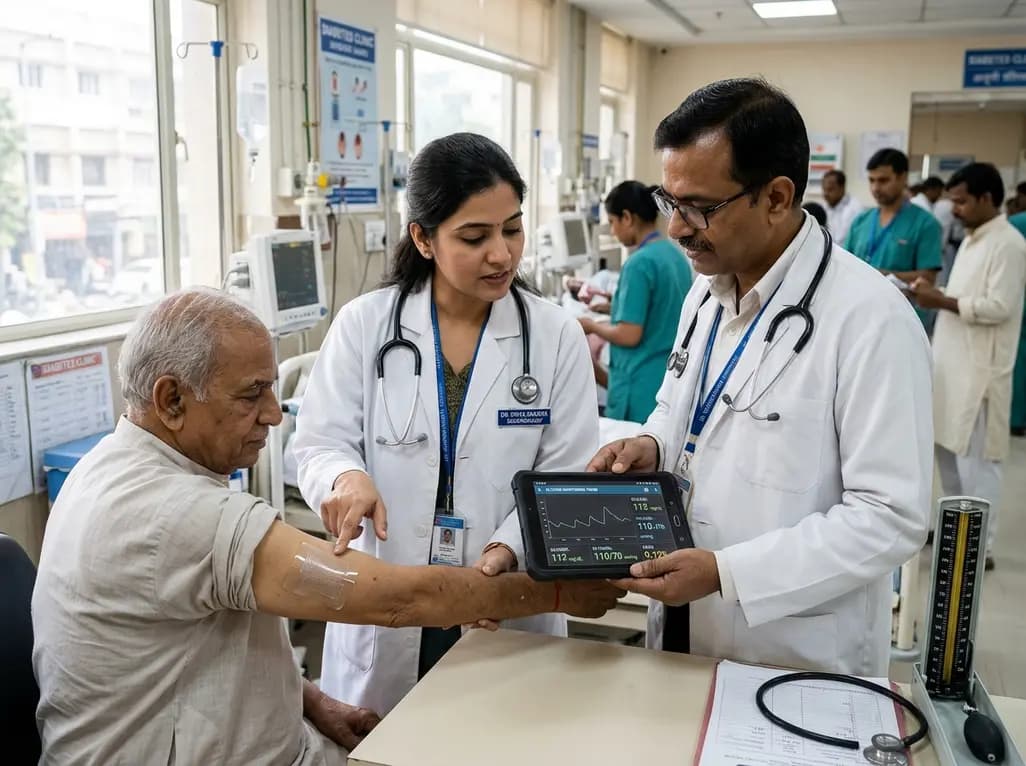
A breakthrough ultrathin multimodal sensor decouples physical hemodynamic monitoring from disposable electrochemical calibration, achieving long-term wearable glucose prediction with 81.36% accuracy and a 9.12% MARD. This offers a robust, drift-free solution for outpatient metabolic surveillance.
Today

Demanding exhaustive hormonal profiling can inadvertently discourage clinical studies involving females. Methodological standards must align with the specific scientific question to expand, not restrict, equitable evidence for women.
Today

Co-administering antiseizure medications and DOACs frequently causes pharmacokinetic interactions, subtherapeutic drug levels, and thromboembolic failures. This review highlights enzyme induction risks, unpredictable outcomes with levetiracetam, and the vital role of therapeutic drug monitoring.
Today

A comparative review of tension band wiring and intramedullary screw fixation in thumb metacarpophalangeal arthrodesis, evaluating union rates, hardware complications, and clinical outcomes.
Today

Following regulatory scrutiny from FSSAI regarding promotional representations and lean muscle preservation claims, Dr. Reddy's Laboratories and Nestlé Health Science are currently reviewing the branding and marketing strategy for their joint nutritional supplement Celevida GLP+.
Today
