.webp&w=384&q=75)

Loading, please wait...
Loading, please wait...

Effective colorectal cancer screening remains a vital strategy for decreasing gastrointestinal malignancy mortality worldwide. Although clinical guidelines offer multiple screening options, disparities in uptake persist across diverse populations. Understanding how patient demographic factors influence test choice helps clinicians design tailored screening programs. Recent data from the CONFIRM trial provide critical insights into prior screening behaviors among individuals entering comparative effectiveness trials.
The Colonoscopy Versus Fecal Immunochemical Test in Reducing Mortality from Colorectal Cancer (CONFIRM) trial enrolled more than 50,000 average-risk participants across United States Veterans Affairs medical centers. Because the trial operated within an integrated healthcare system, researchers could evaluate screening patterns while substantially mitigating financial barriers to care. Consequently, the study setting provides an ideal environment to examine true patient and provider preferences. Investigators gathered baseline survey information from 50,125 veterans upon enrollment into the randomized trial. The primary exposures of interest were self-identified race and ethnicity, with multivariable logistic regression adjusted for variables reflecting healthcare access. Overall, 56.5% of participants reported prior use of any screening modality before trial enrollment. Interestingly, non-invasive stool testing proved more prevalent than invasive endoscopy in this cohort. Specifically, 40.7% of individuals reported prior fecal occult blood testing or fecal immunochemical testing, whereas 25.3% reported prior colonoscopy. These baseline figures demonstrate that average-risk individuals frequently engage with non-invasive modalities when accessible.
Multivariable analysis revealed distinct associations between participant race and prior screening test choices. Black participants demonstrated higher odds of prior screening compared to White participants, achieving a statistically significant odds ratio of 1.06. Furthermore, this overall increase was driven predominantly by higher utilization of stool-based testing, with an odds ratio of 1.16. In contrast, Hispanic ethnicity did not show a statistically significant association with prior screening rates relative to White individuals. These findings highlight that patient engagement varies across demographic subgroups even when systemic financial obstacles are minimized. Clinicians must recognize that historical disparities often stem from complex interactions between cultural perceptions, provider communication, and modality acceptability. Therefore, offering non-invasive options alongside colonoscopy can significantly enhance overall screening participation among minority groups. When healthcare systems provide accessible stool-based testing, uptake rates among underserved populations often increase markedly. Consequently, flexible screening pathways bridge critical preventive care gaps.
Both colonoscopy and annual fecal immunochemical testing serve as primary tier-one strategies in contemporary clinical guidelines. Colonoscopy offers direct visualization of the colonic mucosa, enabling immediate polypectomy of precancerous adenomas. However, colonoscopy requires dietary restrictions, thorough bowel preparation, conscious sedation, and dedicated transportation assistance. Consequently, some patients face logistical barriers that prevent adherence to endoscopic procedures. In contrast, fecal immunochemical testing presents a highly accessible, non-invasive alternative that patients can complete at home without dietary changes. Annual fecal testing demonstrates excellent sensitivity for occult hemoglobin, effectively triggering timely diagnostic colonoscopy when results are abnormal. Clinical trials demonstrate that organized stool screening programs substantially lower colorectal cancer mortality. Therefore, primary care practitioners should present both modalities during shared decision-making conversations. Matching the screening modality to individual patient preferences ensures consistent, long-term adherence.
Eliminating financial barriers represents an essential first step toward achieving equitable cancer prevention outcomes. However, equal financial coverage does not automatically eliminate all health disparities. Transportation challenges, health literacy limitations, and mistrust of medical systems can continue to affect screening participation. Therefore, structured outreach and patient navigation programs must complement clinical offerings. Primary care teams can implement automated electronic reminders, multilingual educational brochures, and direct-to-home test kit delivery. For example, mailed stool test initiatives have proven highly successful in improving screening compliance among historically marginalized populations. Furthermore, establishing clear diagnostic follow-up pathways for abnormal non-invasive tests remains essential. If a patient tests positive on a stool-based assay, timely diagnostic colonoscopy must occur without unnecessary delay. Comprehensive tracking systems ensure that high-risk findings receive prompt therapeutic intervention.
The findings from the CONFIRM cohort offer valuable lessons for primary care physicians and gastroenterologists globally. As colorectal cancer incidence rises in diverse populations, structured screening frameworks must accommodate varied patient preferences. While colonoscopy remains the definitive structural examination, non-invasive stool assays serve as powerful population-health tools. Consequently, primary care clinicians should actively assess screening eligibility during routine adult preventative visits. Physicians can initiate clear dialogues regarding the advantages and demands of each screening strategy. When patients express reluctance toward invasive procedures, clinicians should promptly offer stool-based testing rather than deferring screening entirely. By embracing patient-centered options, healthcare providers can maximize participation rates across diverse demographic groups. Ultimately, routine adherence to any validated screening modality provides significantly better cancer protection than avoiding screening altogether.
The analysis revealed that 56.5% of veterans had undergone prior screening, with stool testing being significantly more common than colonoscopy. Furthermore, Black participants had slightly higher odds of prior screening compared to White participants, driven primarily by greater use of fecal occult blood testing. Hispanic ethnicity showed no significant difference in screening rates relative to White participants, demonstrating how modality access influences participation patterns across diverse demographics.
Colonoscopy allows direct visualization of the entire colon and immediate removal of precancerous polyps, requiring repeating every ten years for average-risk individuals. Conversely, fecal immunochemical testing is a non-invasive, annual at-home test that detects microscopic stool blood without dietary restrictions or bowel preparation. Although colonoscopy provides superior single-application structural assessment, regular annual fecal testing offers comparable mortality reduction when abnormal findings receive prompt follow-up colonoscopy.
Offering multiple screening choices empowers patients to select the option that best fits their personal lifestyle, cultural values, and logistical constraints. While some individuals prefer the ten-year interval and therapeutic capability of colonoscopy, others favor the non-invasive convenience of annual home stool testing. Therefore, providing flexible options dramatically increases overall screening uptake, mitigates systemic healthcare disparities, and ensures broader population-level protection against colorectal malignancy.
Disclaimer: This content is for informational and educational purposes only and does not constitute formal medical advice, diagnosis, or treatment recommendations. Healthcare providers should make individualized clinical decisions based on specific patient evaluations and clinical judgment. Refer to the latest local and national guidelines for clinical practice.
References
Robertson DJ et al. Race, ethnicity, and prior colorectal screening test use in CONFIRM colonoscopy vs fecal immunochemical testing trial participants. JNCI Cancer Spectr. 2026 Aug 26. doi: undefined. PMID: 42644818.
US Preventive Services Task Force. Screening for Colorectal Cancer: US Preventive Services Task Force Recommendation Statement. JAMA. 2021;325(19):1965–1977.
Shaukat A, Kahi CJ, Burke CA, Rabeneck L, Sauer BG, Rex DK. ACG Clinical Guidelines: Colorectal Cancer Screening 2021. Am J Gastroenterol. 2021;116(3):458-479.

Read summarized clinical updates, watch expert medical content, and earn CME certifications right from your smartphone.
Open your smartphone camera to scan and install.





A secondary analysis of 50,125 participants in the CONFIRM trial examined how race and ethnicity influence colorectal cancer screening patterns. The study revealed higher stool-based testing uptake among Black veterans, emphasizing the crucial role of offering diverse screening modalities.
last month

Explore the therapeutic promise of TLR7 and TLR8 inhibitors in managing systemic lupus erythematosus and monogenic autoimmune diseases. Learn how targeting endolysosomal single-stranded RNA sensing and regulatory checkpoints like UNC93B1 and PLD4 offers precision treatment without broad immunosuppression.
Today

A pharmacometric and machine learning study reveals that specific vaginal bacteria alter cervical antiretroviral exposure, highlighting the need for precision HIV PrEP strategies.
Today
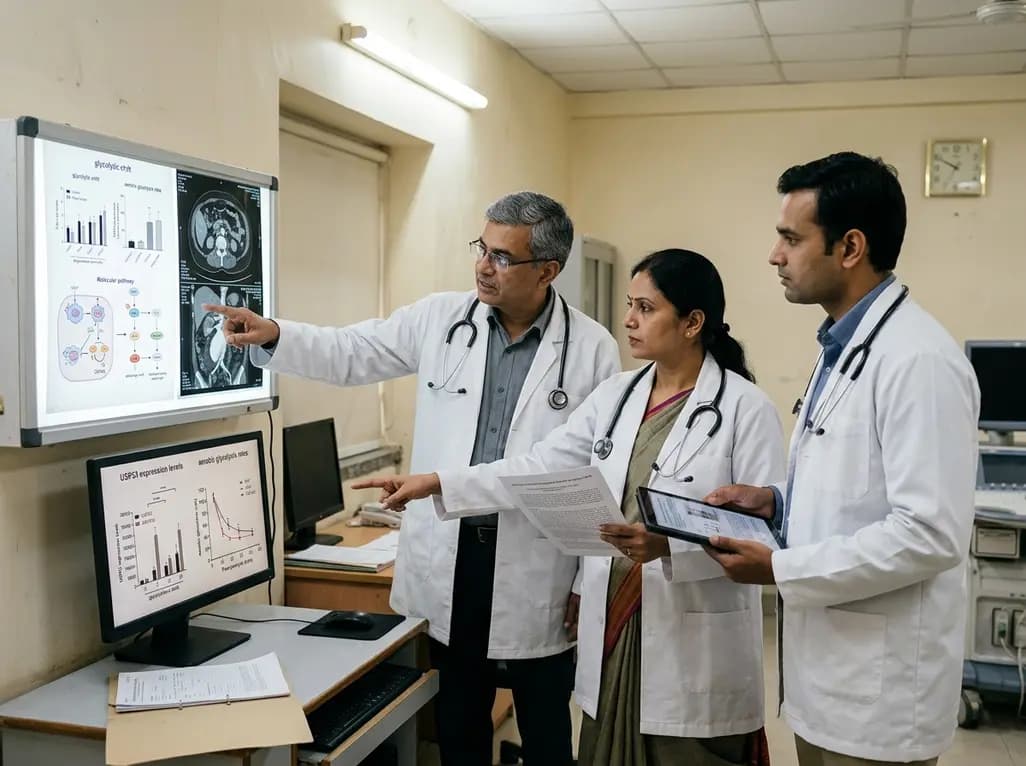
Abdominal aortic aneurysm rupture remains a catastrophic vascular emergency. Groundbreaking research reveals that USP53 accelerates aneurysm progression by reprogramming smooth muscle cell metabolism toward aerobic glycolysis, highlighting a promising target beyond conventional diameter-based surveillance.
Today
A breakthrough study leverages natural language processing to accurately identify incident medication-related osteonecrosis of the jaw and track antiresorptive drug holidays from clinical narratives in electronic health records, advancing osteoporosis pharmacovigilance and dental safety.
Today
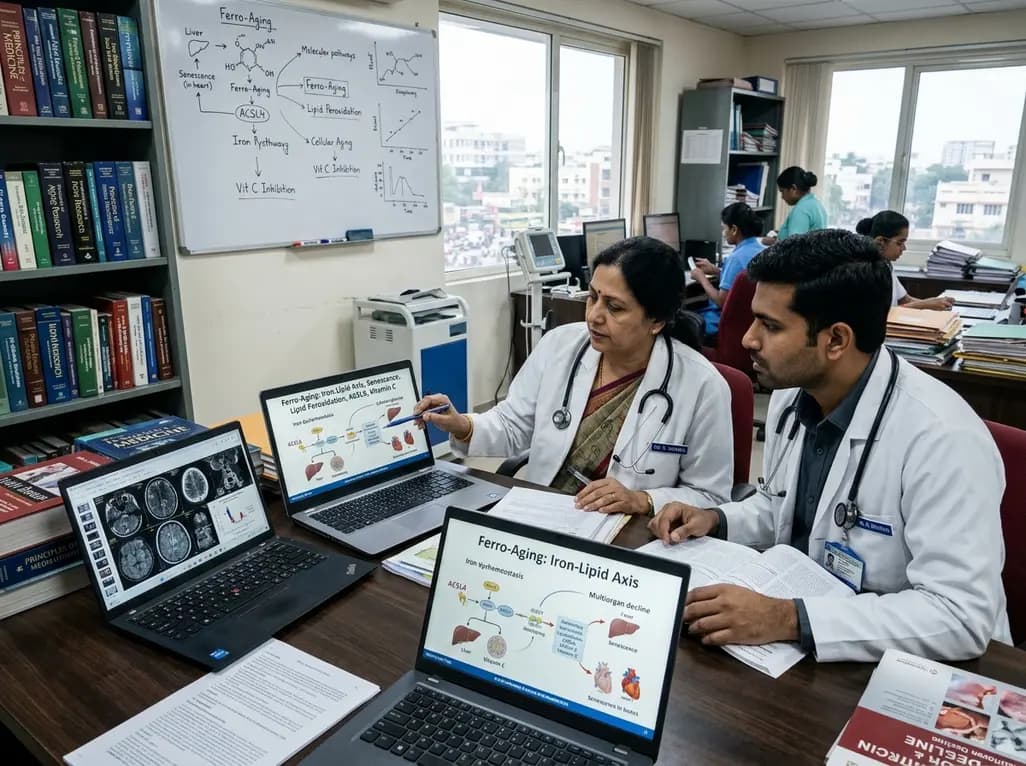
Recent research defines ferro-aging as a conserved iron-lipid axis driving organ decline across primates. Age-related iron dyshomeostasis stimulates ACSL4-mediated lipid peroxidation, promoting cellular senescence. Notably, vitamin C directly inhibits ACSL4, suppressing phospholipid oxidation and multi-organ decay.
Today
