.webp&w=384&q=75)

Loading, please wait...
Loading, please wait...
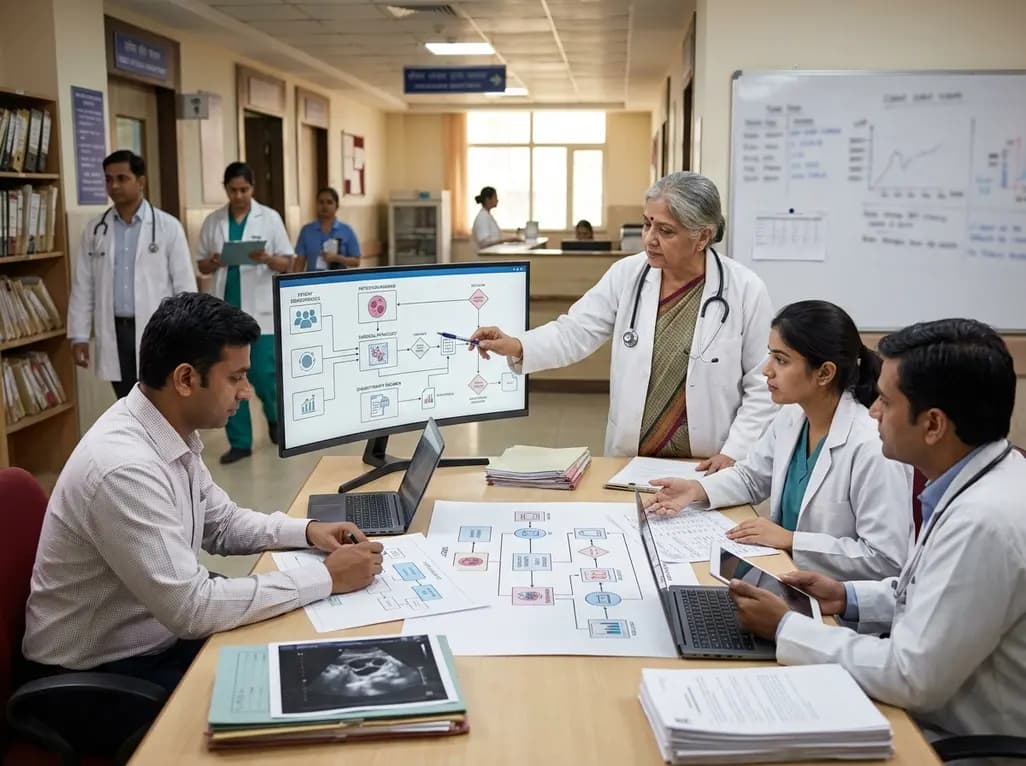
Colorectal malignancies represent the third most prevalent cancer globally and remain a leading cause of oncological mortality. As disease incidence increases across diverse clinical demographics, modern healthcare institutions require robust health informatics frameworks to track patient trajectories, treatment adherence, and long-term survivorship. Establishing a comprehensive colorectal cancer registry enables clinicians and researchers to capture granular real-world evidence, monitor surgical margins, track systemic therapies, and audit clinical outcomes. However, many hospitals still struggle with fragmented record-keeping systems and disparate databases. A well-structured electronic registry bridges these systemic gaps, turning raw clinical documentation into actionable oncology intelligence.
Colorectal cancer imposes a significant global health burden that requires continuous, multi-year clinical surveillance. Clinicians frequently encounter challenges when evaluating long-term recurrence rates, post-resection complications, and protocol variations. Consequently, hospital-based cancer registries serve as vital tools to synthesize longitudinal patient data into unified repositories. In contrast to population-based registries that primarily monitor incidence across geographical areas, hospital-based registries focus directly on care delivery, treatment responses, and clinical quality metrics. Furthermore, these systems support institutional audits, institutional benchmarking, and clinical trial recruitment. By documenting every phase of patient care, an advanced registry facilitates robust epidemiological assessments and identifies therapeutic disparities. Transitioning from paper-based or unstandardized spreadsheets to an automated clinical registry fundamentally enhances institutional decision-making. Therefore, developing a validated structural blueprint remains a vital first step for healthcare institutions aiming to modernize their oncology care pathways and academic research programs.
Developing an effective hospital registry requires sophisticated software engineering methodologies that can accommodate complex oncology workflows. The object-oriented modeling approach utilizing the Unified Modeling Language offers exceptional modularity, scalability, and reusability for clinical health informatics. In this framework, system analysts and clinicians define key clinical entities—such as patients, tumor staging, pathology reports, and chemotherapy regimens—as distinct objects with defined attributes and interactions. Additionally, researchers develop operational, structural, and behavioral diagrams to depict real-time hospital interactions precisely. In a recent cross-sectional validation study, investigators created unified use-case diagrams, sequence maps, and class structures using dedicated modeling platforms. Delphi consensus panels comprising medical oncologists, surgical oncologists, and health informatics specialists subsequently validated the framework with over 99% consensus agreement. This rigorous architectural design ensures that the electronic registry integrates smoothly with existing hospital information systems, picture archiving communication systems, and laboratory databases without redundant data entry.
A reliable clinical registry depends entirely on the standardized capture of essential patient variables. The validated object-oriented architecture establishes 42 core data sets distributed across five comprehensive clinical categories. Specifically, these categories encompass demographic profiles, diagnostic modalities, detailed treatment plans, ongoing clinical status assessments, and clinical trial participation metrics. In addition, the operational framework organizes hospital workflows into six sequential processes: case finding, automated data collection, clinical summarization, multi-tiered quality control, institutional reporting, and longitudinal follow-up. Case finding algorithms actively scan pathology reports and diagnostic imaging archives to identify eligible cases automatically. Subsequently, built-in data verification rules preserve record integrity by catching transcription errors at entry. This systematic structure guarantees that oncologists, pathologists, and nurses record critical variables such as histological differentiation, microsatellite instability, and surgical lymph node yield with high fidelity and clinical consistency.
Implementing a structured registry delivers immediate benefits to hospital tumor boards and surgical oncology teams. When multidisciplinary panels review complex cases, having instant access to verified diagnostic staging, molecular markers, and prior interventions streamlines clinical consensus. Furthermore, the registry facilitates objective tracking of postoperative outcomes, including thirty-day readmissions, anastomotic leak rates, and resection margin status. Because the object-oriented structure standardizes follow-up schedules, oncology coordinators can automatically identify patients due for surveillance colonoscopies, carcinoembryonic antigen testing, or interval cross-sectional imaging. Consequently, centers can dramatically reduce rates of lost-to-follow-up patients, ultimately improving early recurrence detection and overall disease-specific survival. In addition, the collected longitudinal data accelerate hospital participation in multi-center clinical trials, biobanking initiatives, and national quality improvement registries, positioning the healthcare institution at the forefront of evidence-based oncology practice.
Although the benefits of an object-oriented registry are substantial, successful real-world implementation requires addressing practical hurdles. Hospital leadership must invest in secure computing infrastructure, ongoing staff training, and data governance policies. Moreover, maintaining strict adherence to data privacy legislation and medical record security standards remains paramount. In addition, healthcare facilities must configure seamless interoperability between electronic health records and specialized cancer modules using standardized formats such as Fast Healthcare Interoperability Resources. Looking forward, integrating natural language processing algorithms into the case-finding phase will further reduce manual abstraction workloads for registry personnel. As predictive analytics and machine learning tools mature, registries will evolve from passive observational databases into active clinical decision support engines. Ultimately, adopting a validated, object-oriented conceptual framework provides hospitals with the ideal technical roadmap to transform colorectal cancer surveillance and elevate oncology outcomes.
A robust colorectal registry incorporates forty-two core data sets across five key clinical domains. These domains include patient demographics, diagnostic investigations, comprehensive therapeutic interventions, ongoing clinical assessments, and clinical trial enrolment details. Standardizing these categories ensures that multidisciplinary teams consistently record vital tumor markers, staging parameters, histopathological findings, and long-term surveillance metrics.
An electronic registry aggregates diagnostic staging, molecular profiles, surgical notes, and pathology findings into a centralized, easily accessible interface. Consequently, multidisciplinary tumor boards can review complete, error-checked longitudinal data during case discussions. This organized access reduces clinical ambiguity, accelerates consensus on complex treatment plans, and facilitates tracking institutional adherence to standard clinical guidelines.
Critical non-functional requirements include high data security, stringent patient confidentiality protocols, role-based access control, system scalability, and continuous data backup mechanisms. Furthermore, the registry software must maintain rapid query response times and comply with international health interoperability standards, ensuring seamless data exchange with existing hospital electronic health records and laboratory information systems.
Disclaimer: This content is for informational and educational purposes only and does not constitute medical advice or legal consultation. Healthcare professionals should make clinical decisions based on their independent professional judgment and patient evaluation. Refer to the latest local and national guidelines for clinical practice.
References
Sheykhmohammadi N et al. Providing a Conceptual Object-Oriented Model for Hospital-Based Colorectal Cancer Registry: Cross-Sectional Study. Health Sci Rep. 2026 Aug undefined. doi: 10.1002/hsr2.72597. PMID: 42609514.
Mathur P, Sathishkumar K, Chaturvedi M, et al. Cancer Statistics, 2020: Report From National Cancer Registry Programme, India. JCO Glob Oncol. 2020;6:1063-1075.
Waldenstedt S, Haglind E, Klintefelt Collet S, Angenete E. Evaluation of data quality in the Swedish ColoRectal Cancer Registry. Scand J Surg. 2026;115(1):45-52.

Read summarized clinical updates, watch expert medical content, and earn CME certifications right from your smartphone.
Open your smartphone camera to scan and install.





A cross-sectional study outlines a validated object-oriented conceptual model for a hospital-based colorectal cancer registry, incorporating 42 core data sets and 6 workflow processes to optimize multidisciplinary cancer surveillance and clinical decision-making.
last month

A systematic review of 41 preclinical studies reveals that baicalin dampens systemic inflammation, inhibits NF-κB and NLRP3 pathways, and improves organ preservation in sepsis models. However, substantial study heterogeneity and a complete lack of human clinical trials highlight the need for further translational research.
Today
Discover the crucial distinctions between mesonephric and mesonephric-like proliferations of the female genital tract. Learn the key histomorphologic, immunohistochemical, and molecular differences essential for accurate diagnosis and clinical management.
Today
A large UK Biobank study reveals that plasma proteomic signatures capture preclinical organ damage and improve multiorgan risk prediction across early CKM syndrome stages 0 to 2 beyond traditional PREVENT clinical models.
Today
A narrative review investigates whether the articularis genus muscle functions as an independent anatomical entity or blends with the vastus intermedius. We evaluate its morphology, role in retracting the suprapatellar bursa, and direct clinical significance in anterior knee pain and arthroplasty.
Today

A Bayesian multilevel meta-analysis reveals that aerobic training combined with moderate carbohydrate restriction modestly lowers HbA1c in type 2 diabetes. However, sparse data and very low certainty leave incremental benefits over exercise or diet alone unproven, highlighting the need for individualized care.
Today
