.webp&w=384&q=75)

Loading, please wait...
Loading, please wait...

Modern surgical oncology requires high precision to ensure complete tumor removal while sparing healthy tissue. Intraoperative fluorescence imaging has emerged as a vital tool to help surgeons visualize hidden margins in real-time. Recently, researchers developed duNP-DA, which is a smart nanoprobe that significantly improves detection accuracy for colorectal cancer (CRC). This probe utilizes a cascade-responsive \"AND-logic\" mechanism to ensure it only activates inside tumor cells. Consequently, this innovation provides a remarkable 100-fold enhancement in signal. Therefore, even the smallest metastatic lesions become visible to the naked eye. Furthermore, the rapid reaction kinetics allow for quick surgical decision-making.
Specifically, the duNP-DA nanoprobe operates by sensing specific triggers in the tumor microenvironment. First, the acidic environment of the tumor triggers a charge inversion. Subsequently, the probe requires both endogenous hydrogen sulfide and lysosomal pH to activate its fluorescent signal. Because of this dual-requirement activation, the probe effectively minimizes background noise. In contrast to always-on probes, it avoids nonspecific accumulation. Notably, this specific targeting allowed researchers to achieve a tumor-to-background ratio of up to 8.2. Additionally, such high contrast is essential for delineating deep-seated peritoneal metastases that standard visual inspection often misses.
In recent clinical evaluations, duNP-DA successfully identified primary tumors and occult lymph node metastases. Moreover, the probe detected omental metastatic lesions as small as 2 mm with 100% diagnostic sensitivity. Beyond simple visualization, the intensity of the fluorescence showed a strong correlation with tumor cellularity quantified by artificial intelligence. In fact, the Pearson correlation was 0.9103. Therefore, surgeons can use this technology to perform more aggressive yet precise resections. Ultimately, this leads to improving overall patient outcomes in colorectal surgery. Indeed, this platform represents a significant step forward in translational medicine.
Unlike \"always-on\" fluorescent probes that accumulate nonspecifically, duNP-DA uses AND-logic activation. This means it only lights up when it encounters specific chemical markers inside cancer cells, reducing background noise and improving clarity.
Yes, clinical evaluations demonstrated that this nanoprobe can identify lesions as small as 2 mm. It is particularly effective for deep-seated peritoneal metastases that are often invisible during standard surgery.
Disclaimer: This content is for informational and educational purposes only. It does not constitute medical advice or a professional recommendation. Refer to the latest local and national guidelines for clinical practice.
References
Fang L et al. A Cascade-Responsive AND-Logic-Activatable Nanoprobe for Intraoperative Fluorescence Imaging of Colorectal Cancer. J Am Chem Soc. 2026 Apr 15. doi: 10.1021/jacs.6c04349. PMID: 41985171.
Sohn DK, et al. Fluorescence-guided surgery in colorectal cancer: current evidence, quantitative advances, and future perspectives. Ann Coloproctol. 2026;42(1):5-15.
Kapsampelis P, et al. 2025 Systematic Review and Meta-analysis for Fluorescence Image-guided Gastrointestinal Surgery using Indocyanine Green. SAGES Publications. 2025.

Read summarized clinical updates, watch expert medical content, and earn CME certifications right from your smartphone.
Open your smartphone camera to scan and install.





The duNP-DA nanoprobe uses AND-logic activation to provide a 100-fold fluorescence enhancement, improving intraoperative detection of colorectal cancer....
6 months ago

An observational study from the NIH All of Us Research Program reveals that adding a multi-ancestry polygenic risk score to machine learning models provides only modest improvements in predicting adult weight gain, underscoring the enduring significance of routine clinical and lifestyle factors.
Today

A study in JAMIA Open shows lightweight open-source reasoning LLMs achieve up to 95% sensitivity and accelerate evidence synthesis screening by nearly twentyfold, presenting a cost-effective, scalable AI solution for biomedical research and systematic reviews.
Today
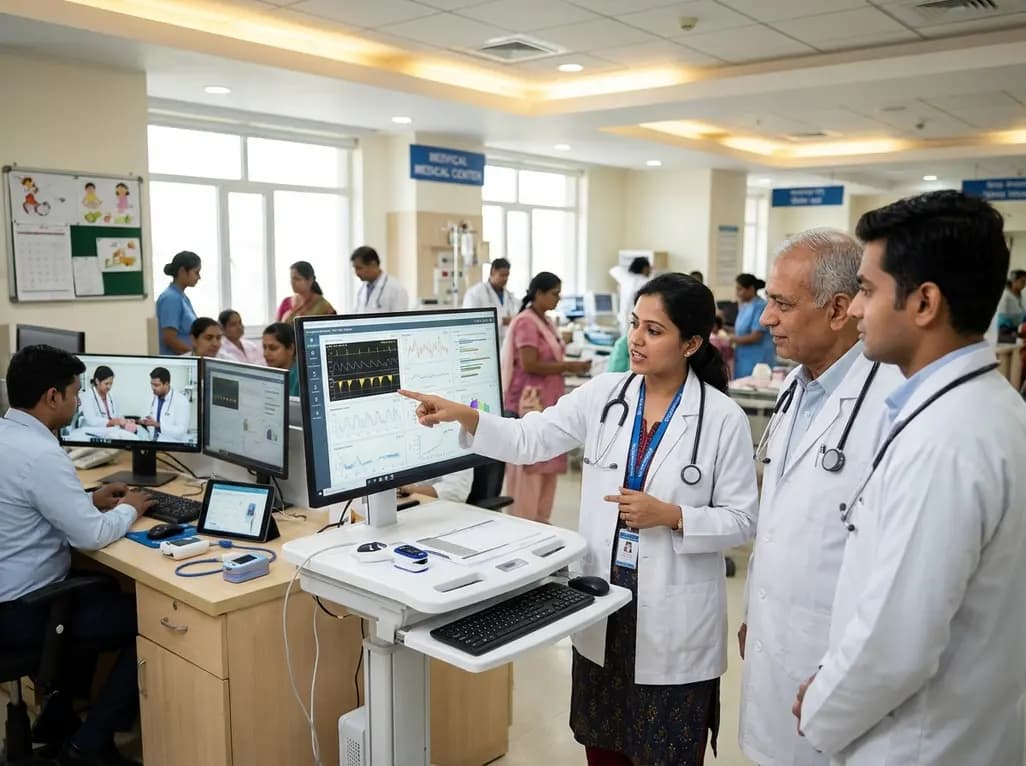
A landmark study details how an enterprise pediatric remote patient management model expanded from a single cardiology pilot to 16 diverse specialty programs by combining centralized digital operations with specialty clinical leadership.
Today
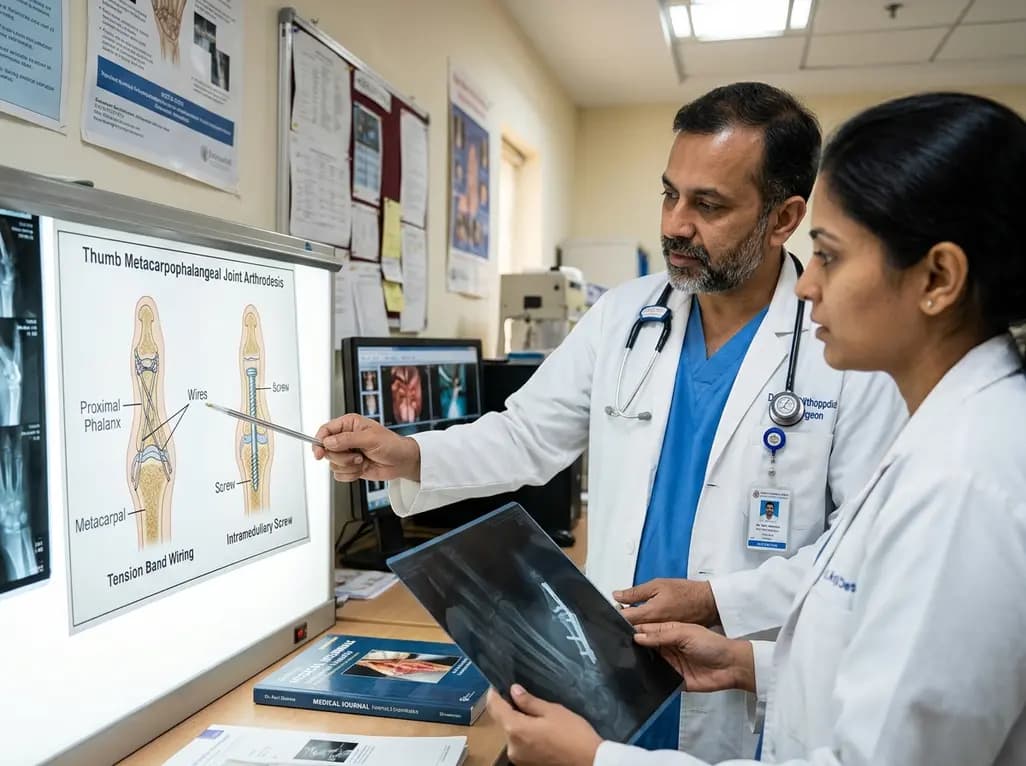
A comparative review of tension band wiring and intramedullary screw fixation in thumb metacarpophalangeal arthrodesis, evaluating union rates, hardware complications, and clinical outcomes.
Yesterday
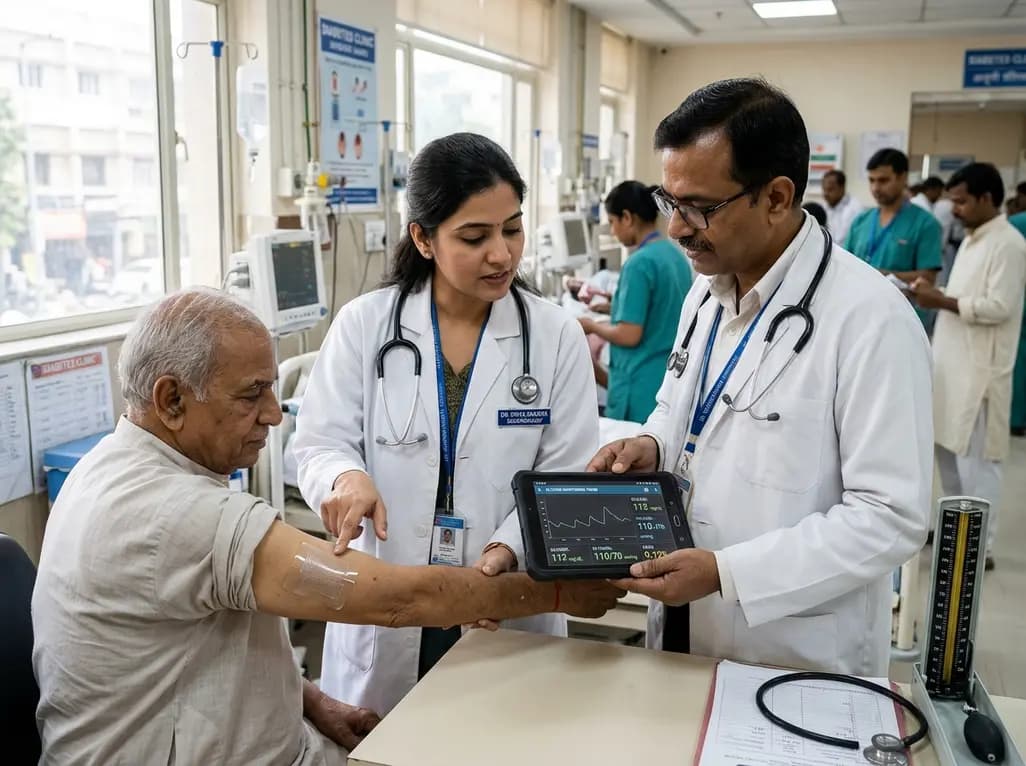
A breakthrough ultrathin multimodal sensor decouples physical hemodynamic monitoring from disposable electrochemical calibration, achieving long-term wearable glucose prediction with 81.36% accuracy and a 9.12% MARD. This offers a robust, drift-free solution for outpatient metabolic surveillance.
Yesterday
