

Loading, please wait...
Loading, please wait...

Primary care physicians frequently evaluate patients with non-specific lower gastrointestinal symptoms. Although faecal immunochemical testing (FIT) guides urgent referrals, fewer than 5% of patients with positive results actually have malignancy. Consequently, this testing pattern overwhelms endoscopy suites with negative investigations. To solve this clinical challenge, researchers developed the COLOFIT risk prediction model, which integrates faecal haemoglobin concentrations with routine demographic and haematological parameters. In a groundbreaking regional study, investigators evaluated whether this multivariable tool maintains diagnostic precision across an entire English healthcare system.
Clinicians worldwide face an escalating demand for diagnostic colonoscopy. In many healthcare systems, national guidelines advocate referring symptomatic patients when faecal haemoglobin reaches 10 micrograms per gram. However, this binary cut-off yields substantial false-positive referrals because hemorrhoids, inflammatory bowel disease, and diverticular bleeding elevate fecal occult blood. Furthermore, endoscopy suites experience extreme scheduling backlogs that delay urgent therapeutic procedures for confirmed malignancies. Therefore, primary care physicians require a more refined risk stratification instrument to prioritize endoscopic investigations safely. By combining FIT results with age, sex, platelets, and mean corpuscular volume, multivariable models capture biological complexity. Platelet elevation reflects systemic inflammatory signaling in colonic neoplasia. Similarly, microcytic alterations highlight occult, chronic intraluminal blood loss. Thus, integrating routine full blood counts provides a holistic evaluation of mucosal disease without ordering additional costly investigations. Ultimately, improving risk stratification safeguards endoscopy capacity while ensuring that high-risk individuals secure prompt diagnostic intervention.
To determine whether multivariable assessment performs reliably outside specialized centres, researchers conducted a massive cohort study across South Yorkshire and Bassetlaw. Specifically, the investigative team linked primary care FIT requests between 2022 and 2024 with complete blood count profiles from five distinct laboratory networks. Moreover, the investigators tracked definitive colorectal cancer diagnoses over a full one-year follow-up window. Clinicians applied the published COLOFIT risk prediction model equation directly without local statistical recalibration. Remarkably, the algorithm successfully generated valid risk predictions for 137,149 out of 151,429 requests, achieving a 90.6% calculation rate in real-world clinical practice. Within this comprehensive cohort, clinicians identified 1,253 colorectal cancer cases, establishing an overall disease prevalence of 0.9%. Additionally, the extensive sample size demonstrated the feasibility of extracting routine electronic health records across diverse primary care practices. Consequently, this rigorous study represents the largest population-scale validation of the predictive tool to date.
When evaluating diagnostic discrimination, the multivariable equation achieved a c-statistic of 0.90, which significantly exceeded the 0.88 c-statistic of FIT alone. Therefore, incorporating haematological and demographic variables provides a meaningful statistical enhancement over isolated faecal haemoglobin testing. Furthermore, decision curve analysis revealed that the model delivers higher clinical net benefit across pertinent decision thresholds. Specifically, using the model would reduce urgent colorectal cancer referrals by nearly one-fifth compared to standard referral criteria. In a health service experiencing severe staffing constraints, avoiding unnecessary lower endoscopy yields immense operational relief. Patients also avoid unnecessary colonoscopies, sedation risks, bowel preparation discomfort, and anxiety. Nevertheless, lowering referral volume inevitably requires clinical vigilance for missed or delayed diagnoses. The study quantified this trade-off precisely, demonstrating that the tool safely curtails referrals at a minimal cost in missed malignancies. As a result, secondary care services can deploy clinical resources toward patients with genuine oncologic danger.
Despite excellent discrimination, the statistical analysis identified meaningful calibration discrepancies. Specifically, the published formula over-predicted cancer risk, generating an observed-to-expected ratio lower than 1.0. For example, when test utilization expands to include lower-risk symptomatic cohorts, cancer prevalence drops, which skews baseline model assumptions. In addition, variation in primary care testing thresholds across health regions directly influences calibration accuracy. Consequently, deploying the model across divergent healthcare systems might require regional baseline adjustment to maintain precise absolute risk estimates. Furthermore, general practitioners must implement robust safety-netting protocols for patients who fall below referral cut-offs. If symptoms persist or worsen, clinicians must conduct repeat evaluations rather than assuming pathology is completely absent. For instance, intermittent bleeding from right-sided colonic lesions might elude solitary faecal sampling. Thus, structured re-assessment mechanisms ensure that false-negative cases receive timely follow-up. In summary, algorithmic risk prediction must supplement, rather than supplant, longitudinal clinical monitoring.
While this study validated the tool within the English National Health Service, its findings carry profound clinical implications globally. In countries like India, the incidence of colorectal cancer is rising among younger adults. However, access to high-quality diagnostic colonoscopy remains constrained, especially in semi-urban and rural centers. Implementing multivariable risk triage models can assist Indian internists and gastroenterologists in prioritizing urgent endoscopies for those at greatest danger. Moreover, complete blood count parameters, such as mean corpuscular volume and platelet counts, are routinely available and affordable. Therefore, combining quantitative faecal immunochemical testing with simple haematological markers provides a cost-effective triage algorithm. Nevertheless, health systems must validate and recalibrate these algorithms within their local populations before clinical deployment. Regional dietary habits, parasitic infections, and baseline hemoglobin distributions alter test baseline performance. In conclusion, multivariable risk stratification offers a powerful, accessible framework to optimize cancer detection while preserving scarce endoscopy capacity.
The model integrates quantitative faecal immunochemical test results with four standard clinical and laboratory parameters: patient age, sex, platelet count, and mean corpuscular volume. Age and male sex represent recognized demographic risk factors for colorectal malignancy. Furthermore, thrombocytosis reflects tumor-associated systemic inflammatory cascades, while reduced mean corpuscular volume reveals occult, chronic iron deficiency anemia. Consequently, this multivariable approach captures multifaceted biological indicators of lower gastrointestinal pathology.
The validation cohort demonstrated model over-prediction primarily because testing indications shifted toward lower-risk symptomatic populations across South Yorkshire and Bassetlaw. When primary care physicians test broader patient cohorts, overall colorectal cancer prevalence declines relative to earlier developmental cohorts. In addition, laboratory assay variations and localized referral thresholds influence calibration metrics. Therefore, clinicians must understand that while discrimination remains exceptionally high, absolute risk calculations benefit from regional recalibration before clinical application.
Primary care practitioners must establish structured safety-netting systems for all patients managed conservatively without immediate referral. For example, clinicians should schedule scheduled reassessments at six to twelve weeks to evaluate symptom trajectories. If red-flag symptoms such as persistent rectal bleeding, unexplained weight loss, or worsening anemia develop, doctors must arrange prompt diagnostic investigation. Consequently, algorithmic triage never replaces careful longitudinal clinical observation or individual physician judgment.
Disclaimer: This content is for informational and educational purposes only... Refer to the latest local and national guidelines for clinical practice.
References

Read summarized clinical updates, watch expert medical content, and earn CME certifications right from your smartphone.
Open your smartphone camera to scan and install.





A massive external validation cohort of 137,149 symptomatic patients confirms that the COLOFIT risk prediction model outperforms FIT alone (c-statistic 0.90 vs 0.88), reducing urgent colonoscopy referrals by nearly 20% while identifying high-risk colorectal cancers.
Today

A 20-year population study reveals a 45% decline in non-ambulatory cerebral palsy, driven largely by significant reductions in term hypoxic-ischaemic encephalopathy cases. Explore the causal pathways, perinatal advances, and clinical implications for maternal-neonatal healthcare.
Today
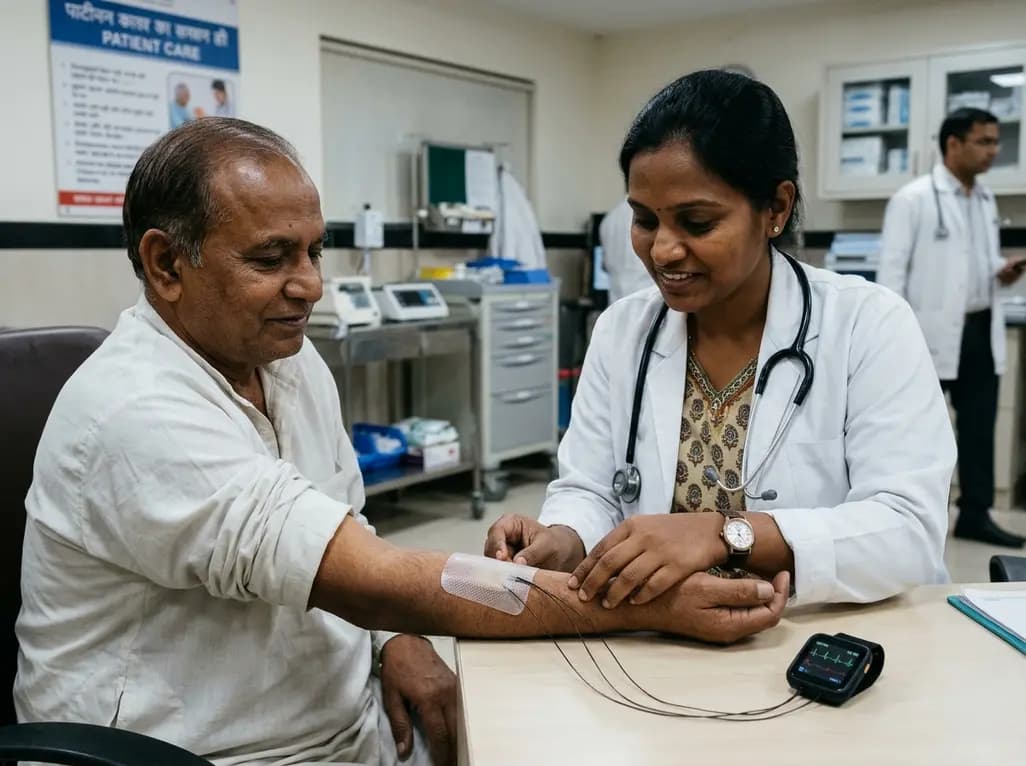
Researchers have engineered a gecko-inspired microfibrillar patch featuring embedded flexible conductors and a compliant terminating film. Under minimal preload, it provides robust, reusable skin adhesion without the epidermal trauma, pain, or dermatitis caused by traditional medical adhesives.
Today

A retrospective study identifies C6 canal diameter and C3 cord-canal ratio as key predictors of secondary single-door laminoplasty after anterior cervical surgery, with progressive adjacent segment disease as the primary cause.
Today

A critical appraisal using AMSTAR 2 reveals that meta-analyses on exercise interventions for gestational diabetes have critically low methodological quality, urging cautious clinical interpretation.
Today
