

Loading, please wait...
Loading, please wait...

The global demand for reliable, affordable antineoplastic medicines continues to rise significantly across emerging healthcare systems. Recently, Indian pharmaceutical manufacturer Beta Drugs Limited secured a milestone COFEPRIS oncology certification from Mexico's health regulatory commission. This major achievement encompasses 48 essential oncology formulations across diverse administration forms, including injectables, oral solids, and oral suspensions. In addition, this approval validates the manufacturer's strict adherence to international sanitary standards. For clinical oncologists and hospital procurement teams in India, this development highlights the advancing technological maturity of domestic cancer drug manufacturing. Consequently, it reflects a decisive shift where Indian companies evolve into globally credentialed partners producing high-standard antineoplastic regimens.
Achieving a comprehensive COFEPRIS oncology certification represents far more than an ordinary commercial market authorization. Mexico's Federal Commission for the Protection against Sanitary Risks operates as a World Health Organization Level IV National Regulatory Authority. Therefore, its technical evaluations mirror the rigorous quality oversight applied by agencies like the United States FDA and EMA. The clearance evaluates facility sterility, analytical validation, stability protocols, and finished dosage uniformity. Consequently, obtaining this certification proves that manufacturing facilities in northern India meet demanding international sanitary standards. Beta Drugs demonstrated compliance across its finished formulation plant in Baddi and its active ingredient subsidiary, Adley Lab Limited. Furthermore, this dual validation ensures complete control over synthetic pathways, sterile crystallization, and fill-finish operations. In contrast to fragmented manufacturing setups, integrated active ingredient production minimizes the risk of nitrosamine impurities and particulate contamination. Notably, regulatory authorities worldwide demand strict documentation for parenteral cytotoxic drugs. Because systemic antineoplastic treatments carry narrow therapeutic indices, any chemical deviation can compromise patient safety. Therefore, this milestone offers strong scientific reassurance regarding formulation reproducibility and batch consistency.
Latin America currently represents one of the fastest expanding healthcare markets for cancer treatments worldwide. Specifically, Mexico's oncology therapeutics sector is valued between 3.4 billion and 3.7 billion dollars, expanding at an annual rate exceeding 10 percent. Historically, public healthcare networks across Latin America have confronted substantial budgetary strains when acquiring branded cytotoxic agents. However, expedited reliance pathways and regulatory convergence have paved the way for certified generic equivalents. Beta Drugs has strategically assembled a regulatory footprint across Latin America's three most demanding authorities: ANVISA in Brazil, INVIMA in Colombia, and COFEPRIS in Mexico. Moreover, holding approvals across these agencies signals superior manufacturing robustness. By introducing 48 distinct formulations, the company prepares to address therapeutic gaps across solid tumors, hematological malignancies, and supportive oncological care. In addition, diversified dosage forms such as oral suspensions and high-potency oral solids address unique logistical and administration challenges. For example, pediatric patients and frail elderly cancer sufferers frequently require precise oral suspension titration rather than aggressive intravenous infusion. Consequently, expanding access to cost-effective, bioequivalent agents directly supports public health systems seeking sustainable cancer therapy options.
Global oncology practice frequently faces disruptions caused by systemic drug shortages, particularly among foundational generic chemotherapies. For instance, worldwide oncology centers have recently navigated critical shortages of cisplatin, carboplatin, methotrexate, and 5-fluorouracil. Such supply disruptions force oncologists to alter evidence-based regimens, ration doses, or substitute less optimal therapies. Therefore, building robust, backward-integrated manufacturing infrastructure serves as a vital safeguard against supply instability. Beta Drugs produces its active pharmaceutical ingredients internally through Adley Lab Limited in Derabassi, Punjab. As a result, the manufacturer avoids external reliance on third-party chemical suppliers who may face synthesis interruptions. Furthermore, holding PIC/S certification and Eurasian Economic Union compliance reinforces supply consistency across multiple international jurisdictions. When an oncology supplier maintains direct oversight over synthesis, solvent purities, and sterile packaging, it stabilizes production yields and release schedules. In addition, this structural resilience protects hospital procurement programs from unforeseen delivery gaps. For practicing oncologists and clinical pharmacists, partnering with reliable manufacturers ensures uninterrupted therapy cycles for patients undergoing curative or palliative treatment protocols. Ultimately, secure manufacturing pipelines directly translate into predictable, safe patient care.
Modern pharmaceutical globalization demands progressive business models beyond traditional spot-market commercial exports. In parallel with its Mexican regulatory clearance, Beta Drugs announced a major international joint venture in North Africa. Specifically, the company partnered with Algeria's IMGSA Groupe SPA to establish IMGSA Oncologie SPA. Under this agreement, the Indian manufacturer holds a 49 percent equity stake while investing 3 million dollars over three years. Crucially, Beta retains total operational and technological control over the manufacturing facility and product registrations. This operational architecture demonstrates how Indian pharmaceutical enterprises can transfer advanced manufacturing know-how to regional pharmaceutical hubs. Furthermore, local manufacturing hubs in North Africa provide strategic footholds across the Middle East and Africa regions. By managing production plants directly, the company ensures that local facilities observe the same quality standards as their Indian counterparts. In addition, this operational approach facilitates faster technology transfers, harmonized analytical validation, and streamlined regulatory filings. Consequently, the enterprise transitions from a contract manufacturing organization into a sophisticated, multi-regional oncology platform. This strategic evolution enhances institutional trust and establishes long-term sustainability across diverse geographic markets.
For oncologists practicing within Indian academic and private hospital networks, international regulatory milestones carry direct clinical significance. Beta Drugs currently supplies its anticancer medicines to roughly 85 percent of India's major corporate and government tertiary hospitals. In past years, domestic prescribers occasionally questioned whether generic formulations matched the therapeutic purity of multinational innovator agents. However, external audits conducted by demanding agencies like COFEPRIS and ANVISA substantiate that domestic production batches undergo uncompromising analytical evaluation. Moreover, backward integration into basic active substances reduces raw material variations that could alter pharmacokinetic profiles. When Indian oncology specialists prescribe domestic oral cytotoxic pills or administer sterile infusions, they can rely on proven bioequivalence and rigorous quality validation. Furthermore, the availability of high-quality domestic therapeutics maintains treatment affordability for patients lacking comprehensive health insurance. In clinical practice, affordable medications improve patient compliance, minimize therapy dropouts, and lower out-of-pocket financial toxicities. In addition, robust domestic manufacturing buffers hospital formularies against international currency fluctuations and global logistics bottlenecks. Therefore, the expansion of Indian manufacturers into stringent global markets directly validates and elevates the therapeutic standards available for domestic cancer care.
Q1: What does the COFEPRIS certification entail for Beta Drugs' oncology portfolio?
The COFEPRIS certification authorizes Beta Drugs to commercialize 48 distinct oncology drug formulations across Mexico. This approval encompasses sterile injectables, oral solids, and specialized oral suspensions. Because COFEPRIS operates as a WHO Level IV reference authority, this regulatory milestone confirms that the company's formulation and active pharmaceutical ingredient plants satisfy rigorous international standards for safety, stability, and Good Manufacturing Practice compliance.
Q2: Why is backward integration with Adley Lab Limited clinically significant?
Backward integration through its subsidiary Adley Lab Limited enables Beta Drugs to synthesize critical oncology active substances in-house under direct quality surveillance. Consequently, this manufacturing independence reduces batch variability, prevents global supply chain interruptions, and lowers reliance on third-party chemical vendors. For healthcare institutions, this structure guarantees consistent pharmacological purity, accurate therapeutic potency, and dependable distribution schedules for essential chemotherapy formulations.
Q3: How does this regulatory milestone benefit cancer care within India?
Beta Drugs supplies roughly 85 percent of India's major corporate and government tertiary hospitals. Stringent international accreditations from respected authorities like COFEPRIS and ANVISA offer clinical proof that domestically produced antineoplastic agents meet rigorous global quality benchmarks. Therefore, Indian oncologists can confidently prescribe these affordable generic formulations, knowing they provide equivalent therapeutic efficacy, predictable toxicity profiles, and uninterrupted therapeutic cycles.
Disclaimer: This content is for informational and educational purposes only. It does not constitute medical advice or replace professional judgment. Refer to the latest local and national guidelines for clinical practice.
References

Read summarized clinical updates, watch expert medical content, and earn CME certifications right from your smartphone.
Open your smartphone camera to scan and install.





Indian oncology manufacturer Beta Drugs has secured COFEPRIS approval in Mexico across 48 cancer formulations. Alongside recent Latin American clearances and North African expansion, this milestone confirms adherence to stringent international standards, bolstering global confidence in affordable antineoplastic therapies.
Today
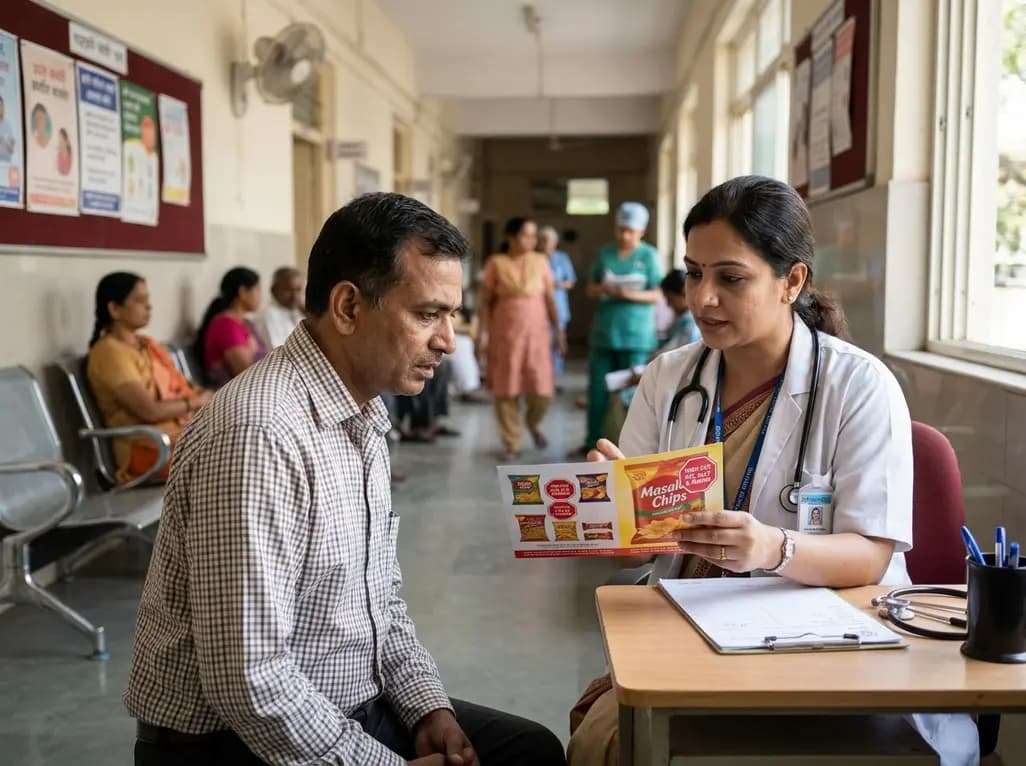
The Supreme Court of India has directed FSSAI to enforce distinct red hexagonal warnings on packaged foods for high salt, sugar, and saturated fat. This landmark public health ruling empowers consumers and supports physicians combating diabetes, obesity, hypertension, and cardiovascular diseases across the nation.
Today

A 20-year population study reveals a 45% decline in non-ambulatory cerebral palsy, driven largely by significant reductions in term hypoxic-ischaemic encephalopathy cases. Explore the causal pathways, perinatal advances, and clinical implications for maternal-neonatal healthcare.
Today
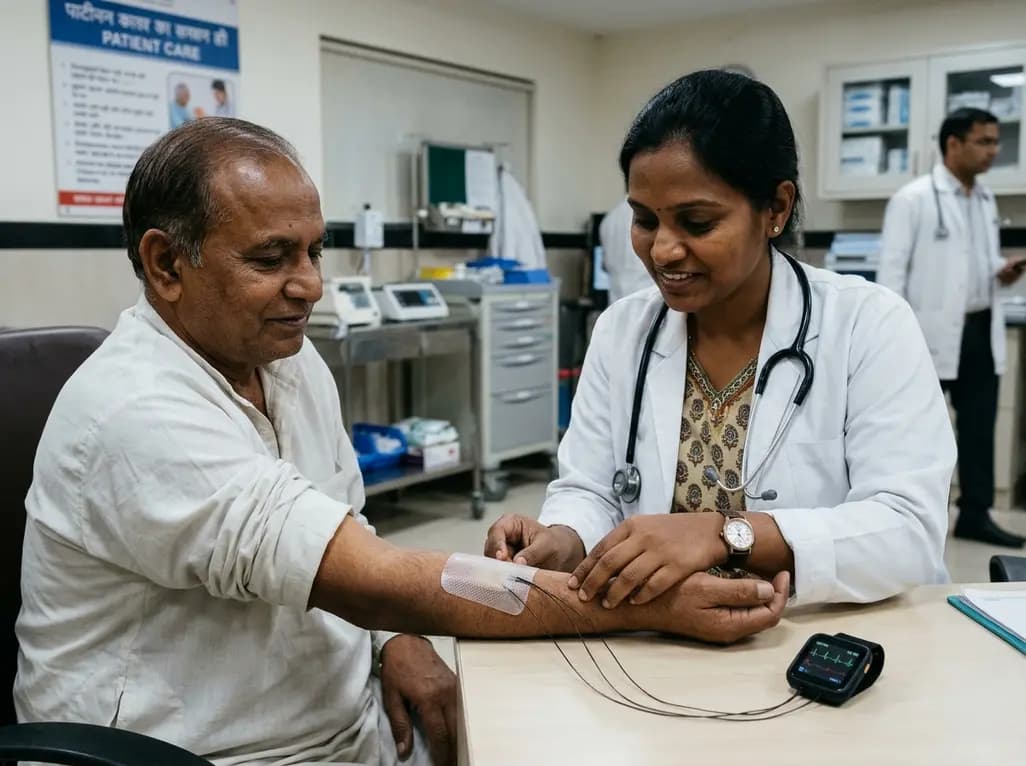
Researchers have engineered a gecko-inspired microfibrillar patch featuring embedded flexible conductors and a compliant terminating film. Under minimal preload, it provides robust, reusable skin adhesion without the epidermal trauma, pain, or dermatitis caused by traditional medical adhesives.
Today

A retrospective study identifies C6 canal diameter and C3 cord-canal ratio as key predictors of secondary single-door laminoplasty after anterior cervical surgery, with progressive adjacent segment disease as the primary cause.
Today
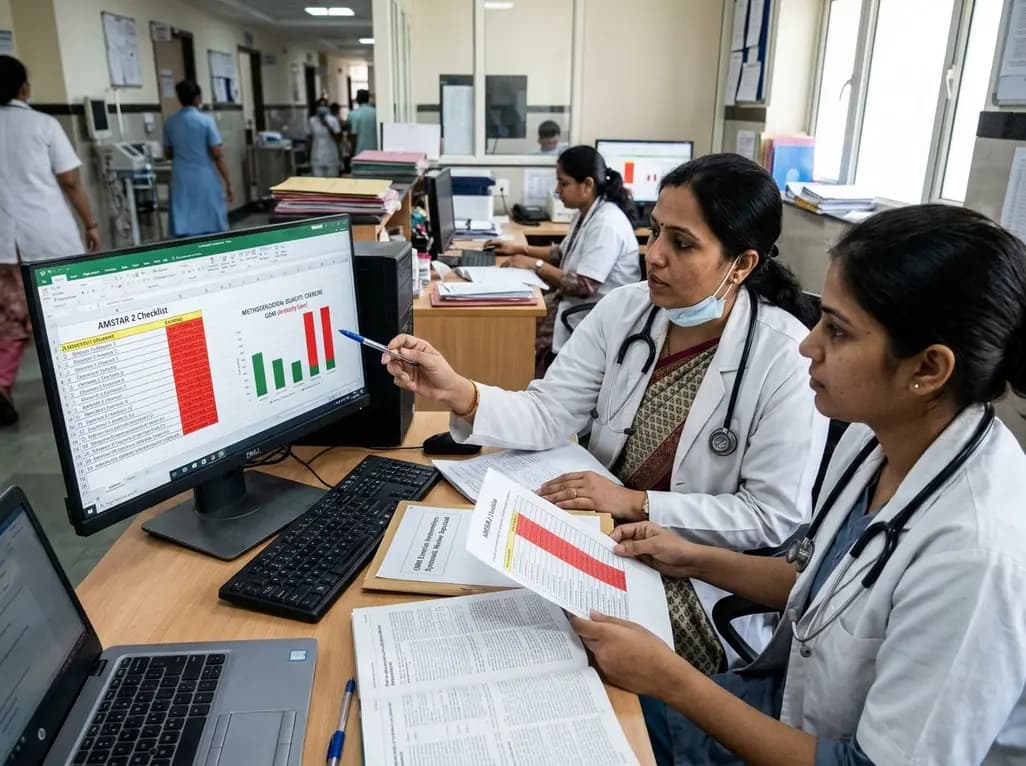
A critical appraisal using AMSTAR 2 reveals that meta-analyses on exercise interventions for gestational diabetes have critically low methodological quality, urging cautious clinical interpretation.
Today
