.webp&w=384&q=75)

Loading, please wait...
Loading, please wait...
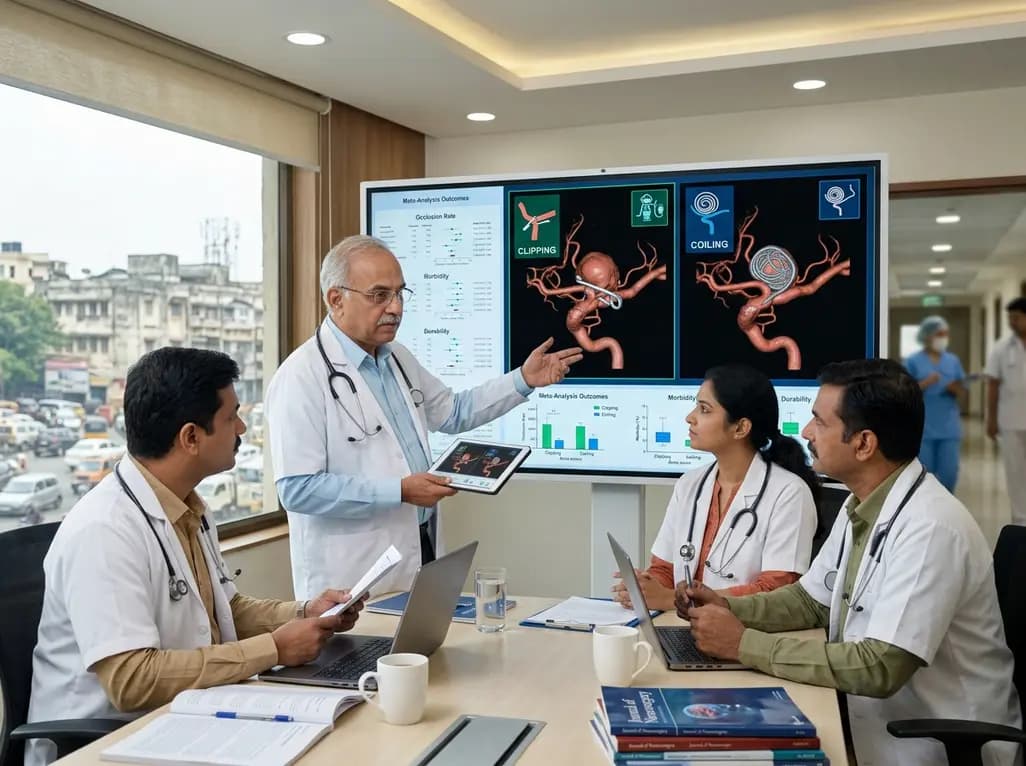
The optimal management of ruptured MCA aneurysms remains one of the most vigorously debated topics in contemporary neurovascular surgery. Historically, landmark randomized trials such as the International Subarachnoid Aneurysm Trial established the safety of endovascular intervention. However, middle cerebral artery bifurcations were markedly underrepresented in early cohorts. Because of complex anatomy, wide necks, and frequent association with intraparenchymal hematomas, managing ruptured MCA aneurysms demands nuanced clinical judgment. A comprehensive meta-analysis has synthesized contemporary data across 12 clinical studies comprising 1,309 patients to provide updated clarity on microsurgical clipping versus endovascular coiling.
Microsurgical clipping has long served as the foundational standard for middle cerebral artery lesions due to favorable anatomical accessibility. In contrast, endovascular coiling offers a minimally invasive alternative that avoids open craniotomy and brain retraction. Nevertheless, clinical decision-making often becomes complicated when patients present with acute subarachnoid hemorrhage. The recent meta-analysis demonstrated that baseline severity was well balanced across both treatment cohorts. For instance, high World Federation of Neurosurgical Societies grades (IV–V) showed comparable odds between clipping and coiling (OR = 1.32, 95% CI = 0.74–2.37). Similarly, modified Fisher grade IV presentation displayed no statistically significant divergence (OR = 1.17, 95% CI = 0.70–1.95). Consequently, post-treatment disparities reflect procedural efficacy rather than underlying baseline discrepancies.
Complete radiographic occlusion represents a critical benchmark for preventing catastrophic recurrent subarachnoid hemorrhage. The meta-analysis revealed that microsurgical clipping achieved significantly superior complete occlusion rates compared to endovascular coiling. Specifically, clipping demonstrated a 45% higher relative probability of achieving Raymond-Roy Grade I complete obliteration (RR = 1.45, 95% CI = 1.25–1.68, p < 0.0001). Furthermore, incomplete occlusion after coiling frequently necessitates vigilant long-term angiographic surveillance and potential secondary intervention. Because residual aneurysm necks carry persistent rupture risks, surgical reconstruction provides greater initial durability. Therefore, when anatomical factors permit safe surgical access, direct clip ligation delivers distinct long-term structural security.
Although microsurgical intervention delivers superior obliteration, clinicians must carefully weigh surgical invasiveness against ischemic risks. Middle cerebral artery bifurcations give rise to vital lenticulostriate and cortical branches that require meticulous preservation. Consequently, temporary arterial occlusion and parenchymal manipulation during craniotomy can lead to localized cerebral ischemia. Conversely, endovascular coiling carries procedural thromboembolism risks and potential coil herniation into parent vessels. The pooled evidence underscores that overall favorable neurological outcomes remain achievable with both modalities when deployed by experienced multidisciplinary teams. Thus, individualized assessment of collateral circulation, branch vessel incorporation, and patient age must guide therapeutic selection.
Aneurysm morphology plays a decisive role in determining the ideal interventional modality for middle cerebral artery lesions. Wide neck diameters, unfavorable dome-to-neck ratios, and branch vessels emerging directly from the aneurysm sac substantially challenge endovascular techniques. Moreover, ruptured lesions frequently produce large space-occupying Sylvian hematomas causing severe mass effect and impending herniation. In such urgent scenarios, microsurgical clipping provides the unmatched advantage of simultaneous aneurysm occlusion and immediate hematoma evacuation. As a result, neurosurgeons can rapidly alleviate elevated intracranial pressure during the primary procedure, whereas endovascular approaches require secondary surgical decompression.
Modern neurovascular care requires a tailored, patient-centric algorithm rather than a rigid universal modality. Multidisciplinary neurovascular boards comprising cerebrovascular surgeons and interventional neuroradiologists optimize patient selection. For elderly or medically fragile patients without significant mass effect, endovascular coiling minimizes physiological stress and shortens initial recovery time. Meanwhile, young patients with complex bifurcation geometry or associated intracerebral hematoma derive maximal benefit from definitive microsurgical clipping. Therefore, institutional protocols should emphasize rapid multimodal neuroimaging, including high-resolution CT angiography and digital subtraction angiography, to guide treatment choice.
In developing healthcare environments, including diverse tertiary centers across India, resource availability and technical expertise significantly shape neurovascular outcomes. Microsurgical clipping remains highly cost-effective and widely accessible across resource-constrained public institutions. Conversely, advanced endovascular consumables, flow diverters, and specialized coils impose considerable financial burdens on self-paying populations. Strengthening hybrid operating capabilities and neurocritical care infrastructure will ensure balanced access to both surgical and endovascular solutions. Ultimately, rigorous training across both microsurgical and endovascular disciplines will equip next-generation clinicians to manage complex intracranial ruptures effectively.
Microsurgical clipping provides significantly higher rates of complete anatomical occlusion (Raymond-Roy Grade I) compared to coiling. Furthermore, clipping allows concurrent evacuation of life-threatening space-occupying hematomas during the same operative intervention, effectively reducing intracranial pressure and minimizing recurrence risks.
Endovascular coiling is generally favored for elderly patients, medically unstable individuals with severe comorbidities, or those with narrow-necked aneurysms without significant mass effect. Coiling avoids craniotomy, minimizes surgical invasiveness, and reduces initial perioperative physiological stress.
Complex middle cerebral artery bifurcations, broad aneurysm necks, and incorporated branching vessels often preclude successful coil placement without stent assistance. In such anatomically challenging lesions, direct microsurgical reconstruction with clips offers superior structural stability and durable vessel preservation.
Disclaimer: This content is for informational and educational purposes only. It is not intended to be a substitute for professional medical advice, diagnosis, or treatment. Always seek the advice of your physician or other qualified health provider with any questions you may have regarding a medical condition. Refer to the latest local and national guidelines for clinical practice.
References

Read summarized clinical updates, watch expert medical content, and earn CME certifications right from your smartphone.
Open your smartphone camera to scan and install.





A comprehensive meta-analysis of 1,309 patients evaluates microsurgical clipping versus endovascular coiling for ruptured middle cerebral artery aneurysms, highlighting significant differences in complete occlusion rates, neurological morbidity, and long-term treatment durability.
last month

A recent clinical report details an atypical presentation of bilateral proptosis as the primary manifestation of aggressive multiple myeloma. Explore the diagnostic pathway, imaging findings, and critical multidisciplinary management strategies essential for handling extramedullary plasma cell dyscrasias.
Today

Prenatal evaluation of fetal growth restriction requires an integrated diagnostic approach. While chromosomal microarray remains fundamental, exome sequencing offers significant diagnostic yield in isolated and syndromic cases, especially when ultrasound shows skeletal anomalies or normal placental function.
Today
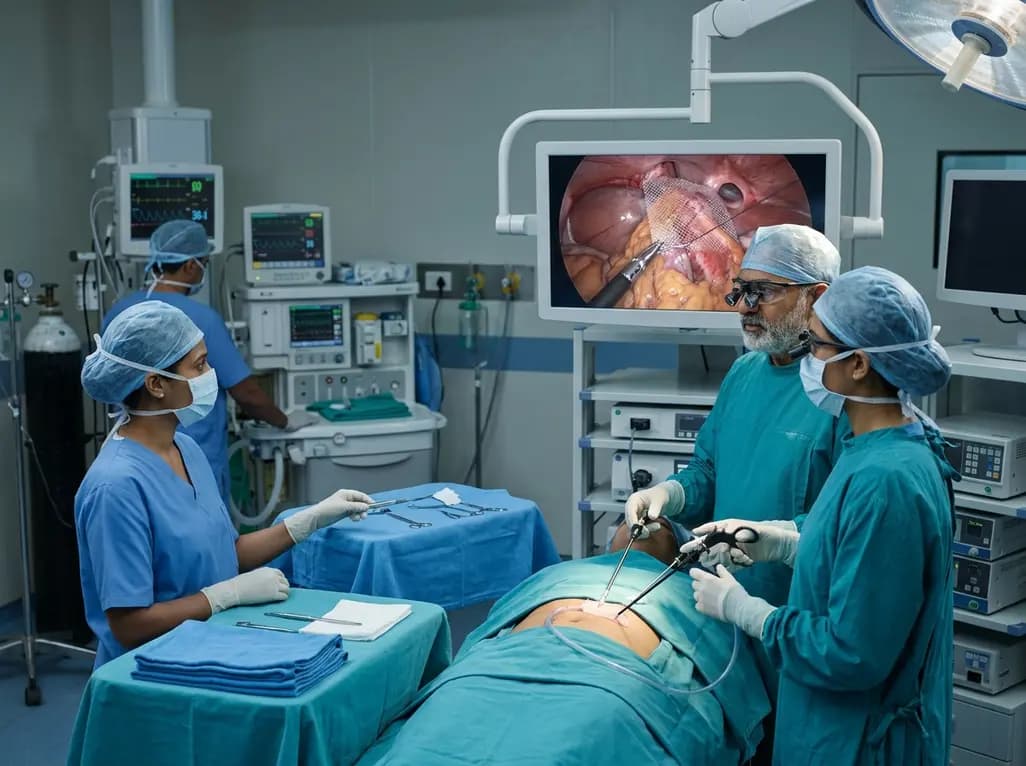
Discover a novel laparoscopic approach for iatrogenic diaphragmatic hernia repair following pedicled omentoplasty. This modified Sugarbaker technique integrates dorsal pedicle lateralization and round ligament reinforcement to secure the diaphragmatic defect while preserving vital omental vascularity.
Today

High-grade trochlear dysplasia disrupts patellofemoral stability. Although the patellotrochlear index measures cartilage overlap on MRI, cartilage contact does not ensure osseous containment. Relying solely on two-dimensional metrics may lead surgeons to overlook necessary tibial tubercle osteotomy procedures.
Today

New research reveals that M1 macrophage-derived exosomes aggravate diabetic nephropathy by transferring WTAP to stabilize S1PR2 mRNA. Silencing WTAP in these vesicles attenuates endothelial injury and renal fibrosis, pointing toward innovative nanomedicine therapies.
Today
