.webp&w=384&q=75)

Loading, please wait...
Loading, please wait...

Minimizing postural risk in dentistry is a critical challenge for clinicians who want to ensure long-term career health. Recent research highlights how targeted ergonomic education combined with magnification tools can drastically improve clinician posture. Specifically, a study involving endodontic residents explored how various visual aids like loupes and microscopes impact musculoskeletal strain.
Initially, researchers utilized the Rapid Upper Limb Assessment (RULA) to score the posture of residents during molar treatments. The results clearly showed that working without magnification leads to higher RULA scores compared to using ergonomic loupes or operating microscopes. This data indicates that magnification naturally promotes a more upright and neutral seated position. Consequently, the operating microscope emerged as the most ergonomic option even before participants received any formal training.
Educational interventions play a pivotal role in professional habit formation. In this study, a 90-minute lecture on clinical ergonomics significantly improved postural scores for those working with no magnification or loupes. Interestingly, the lecture did not significantly change scores for microscope users. This suggests that the device inherently enforces better posture, leaving less room for ergonomic error. However, for most practitioners, the combination of education and the right tools provides the best protection.
Furthermore, the prevalence of musculoskeletal disorders (MSDs) among dental professionals in India is alarmingly high. Recent surveys suggest that over 80% of Indian dentists experience chronic pain, particularly in the neck and lower back. Factors such as long working hours and repetitive movements often exacerbate these issues. Therefore, adopting ergonomic tools and attending regular workshops can help Indian dentists avoid premature career termination. Additionally, consistent self-assessment using tools like RULA can help identify risk before symptoms become debilitating.
In conclusion, while loupes offer mobility and cost-effectiveness, the dental microscope provides superior postural support. Regardless of the tool chosen, practitioners must remain mindful of their seated position and wrist alignment. By integrating these strategies, dentists can significantly decrease postural risk in dentistry and improve their overall quality of life.
Magnification tools allow dentists to see the operating field clearly from a healthy distance. This prevents the habit of leaning forward or hunching over the patient, which reduces strain on the neck and spine.
The Rapid Upper Limb Assessment (RULA) is a tool used to evaluate ergonomic risk. A score of 1 or 2 is generally acceptable, while higher scores indicate a need for immediate postural changes to prevent injury.
Yes, targeted educational interventions can significantly improve ergonomic awareness and initial posture. However, long-term sustainability usually requires the use of supportive tools like microscopes or ergonomic loupes.
Disclaimer: This content is for informational and educational purposes only. It does not constitute medical advice or establish a doctor-patient relationship. Professional ergonomics and clinical techniques should be practiced under appropriate supervision. Refer to the latest local and national guidelines for clinical practice.
References
García Alcaide A et al. Effect of an Educational Intervention on Postural Risk Among Endodontic Residents Under Different Magnification Conditions. Eur J Dent Educ. 2026 May 31. doi: 10.1111/eje.70203. PMID: 42218628.
Peedikayil FC et al. Prevalence of musculoskeletal disorders and associated occupational factors among pediatric dentists in India: A cross-sectional study. J Oral Res Rev. 2026;18(1):21-26.
Bhagwat S et al. Prevalence of Musculoskeletal Disorders among Indian Dentists: A Pilot Survey with Assessment by Rapid Entire Body Assessment. World J Dent. 2015;6(1):39-44.
"
Read summarized clinical updates, watch expert medical content, and earn CME certifications right from your smartphone.
Open your smartphone camera to scan and install.





A new study reveals how 90 minutes of ergonomic training and the use of dental microscopes or loupes can significantly lower postural risk for endodontists....
4 months ago

A retrospective cohort study of 7,716 ICU patients from the MIMIC-IV database demonstrates that Gradient Boosting Decision Trees significantly outperform traditional SOFA scores in predicting in-hospital mortality among patients with sepsis and diabetes, with SHAP analysis providing clinical interpretability.
Today
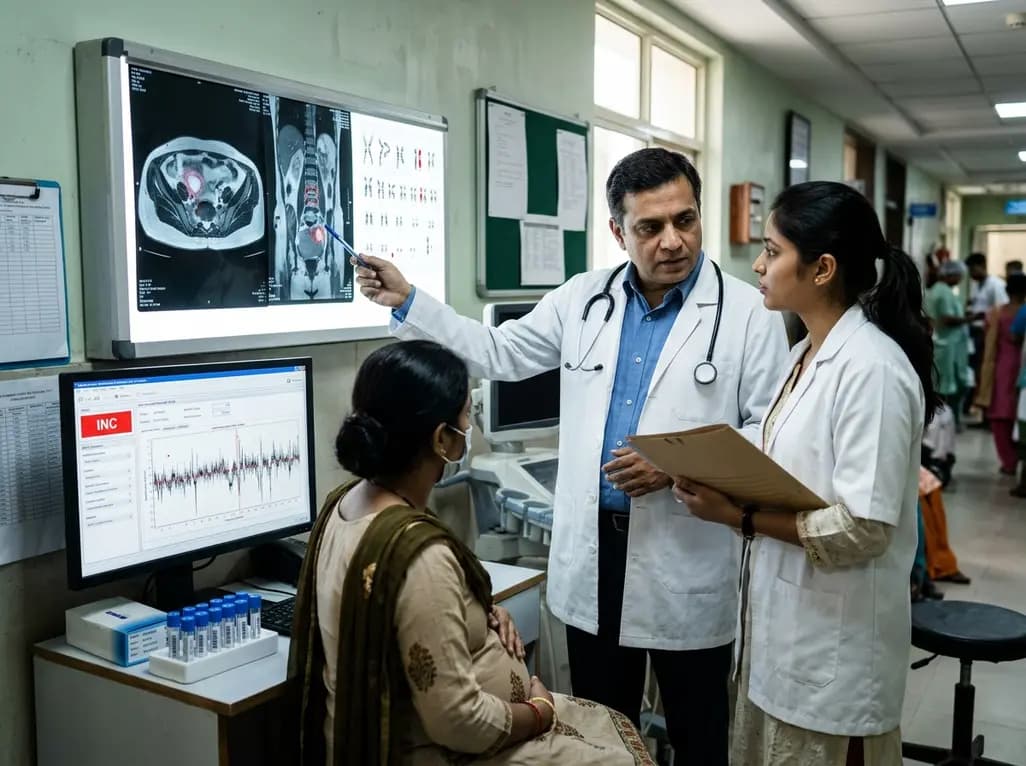
Occult maternal malignancy accounts for 3.82% of persistent unreportable NIPT results with genomic noise. Multiple chromosomal aberrations, notably on chromosome 18, warrant thorough oncological evaluation and whole-body MRI to ensure timely maternal diagnosis while preserving fetal care.
Today
This article reviews the forensic and clinical complexities of acute myocarditis arising on left ventricular hypertrophy in children, highlighting early diagnostic red flags and multidisciplinary postmortem autopsy protocols.
Today

This comparative study evaluates posterior labral tears with and without glenohumeral instability, highlighting distinct demographic patterns, MRI underestimation in stable shoulders, and successful arthroscopic repair outcomes.
Yesterday

A clinical study demonstrates that early intervention with tocilizumab, either as monotherapy or bridged with corticosteroids, achieves significant proptosis reduction and resolves active inflammation in treatment-naive thyroid eye disease.
Yesterday
