.webp&w=384&q=75)

Loading, please wait...
Loading, please wait...

India currently faces a significant economic and healthcare challenge due to rising environmental temperatures. These climate change health risks manifest as increased cardiovascular mortality and adverse maternal outcomes across the country. In 2021 alone, the nation lost an estimated 160 billion labour hours to heat exposure. This loss represents approximately 5.4 per cent of the national GDP. Consequently, the medical community must prepare for a surge in heat-related pathologies.
Heart disease already accounts for nearly 28 to 30 per cent of all deaths in India. However, recent data from the ClimateRISE Alliance report indicates that heatwaves further exacerbate this burden. Researchers found that extreme heat exposure links to an 11.7 per cent increase in cardiovascular-related death risks. Therefore, clinicians should monitor vulnerable patients more closely during peak summer months. Heat acts as a physiological stressor that triggers acute cardiac events in predisposed individuals. Furthermore, rising temperatures often worsen existing chronic conditions.
Rising heat is also emerging as a critical concern for maternal and child health. Over the last five years, pregnant women in India experienced six additional days of dangerously high temperatures annually. Specifically, heatwaves associate with a 16 per cent increase in the odds of preterm birth. In addition, extreme temperatures correlate with higher rates of stillbirths and increased newborn hospitalisations. Thus, obstetricians must incorporate heat awareness into prenatal counseling to protect both mothers and infants from environmental stressors.
Climate impacts often interact with existing socioeconomic inequities. As a result, heat stress disproportionately affects informal workers, rural communities, and those with limited healthcare access. The analysis suggests that climate change acts as a multiplier that deepens existing health burdens rather than creating separate ones. To mitigate these climate change health risks, India requires an integrated approach. This strategy should combine public health preparedness, community resilience, and active climate action. Such synergy can improve health outcomes while simultaneously strengthening national productivity and preparedness.
Q1: How does heat exposure impact the Indian economy?
India lost approximately 160 billion labour hours in 2021 due to heat, which is equivalent to 5.4 per cent of its total GDP.
Q2: What is the specific risk of heatwaves for pregnant women?
Heatwaves are associated with a 16 per cent increase in the risk of preterm births and are also linked to stillbirths and newborn hospitalisations.
Q3: Which patient populations are most vulnerable to climate-related health issues?
Vulnerable groups include women, children, informal workers, rural communities, and individuals with limited access to medical care.
Disclaimer: This content is for informational and educational purposes only. It does not constitute medical advice or replace professional judgment. Refer to the latest local and national guidelines for clinical practice.
References

Read summarized clinical updates, watch expert medical content, and earn CME certifications right from your smartphone.
Open your smartphone camera to scan and install.





A report highlights how heat exposure in India increases cardiovascular risks and preterm births, impacting the economy and vulnerable populations....
6 months ago

A retrospective cohort study of 7,716 ICU patients from the MIMIC-IV database demonstrates that Gradient Boosting Decision Trees significantly outperform traditional SOFA scores in predicting in-hospital mortality among patients with sepsis and diabetes, with SHAP analysis providing clinical interpretability.
Today
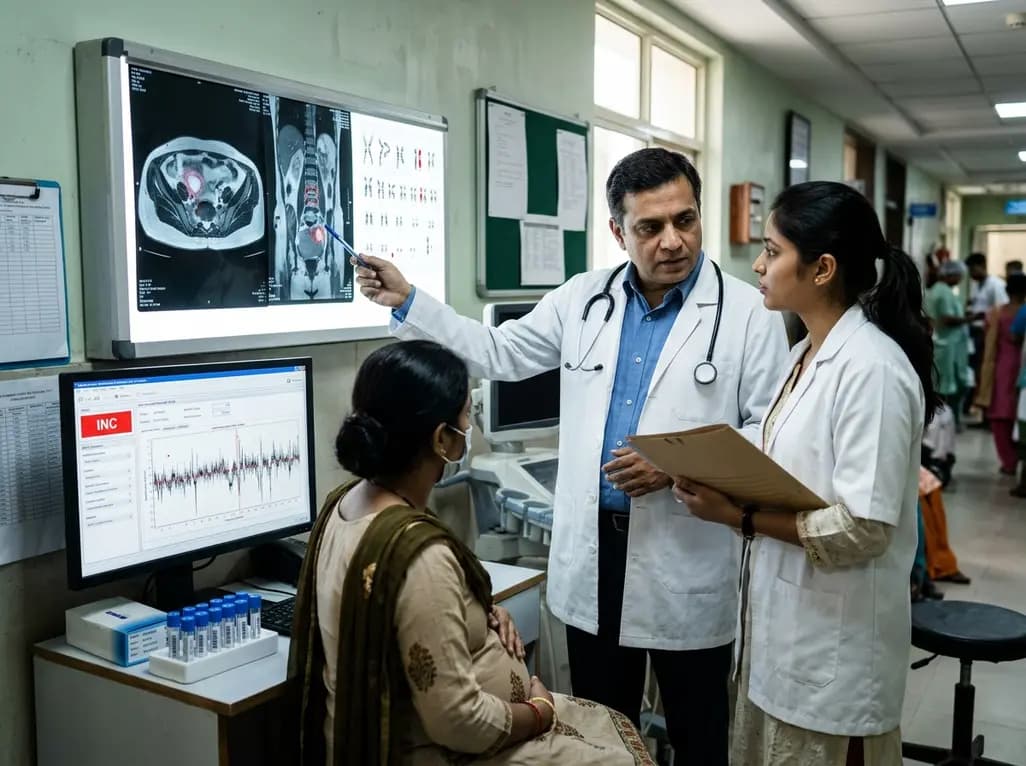
Occult maternal malignancy accounts for 3.82% of persistent unreportable NIPT results with genomic noise. Multiple chromosomal aberrations, notably on chromosome 18, warrant thorough oncological evaluation and whole-body MRI to ensure timely maternal diagnosis while preserving fetal care.
Today
This article reviews the forensic and clinical complexities of acute myocarditis arising on left ventricular hypertrophy in children, highlighting early diagnostic red flags and multidisciplinary postmortem autopsy protocols.
Today

This comparative study evaluates posterior labral tears with and without glenohumeral instability, highlighting distinct demographic patterns, MRI underestimation in stable shoulders, and successful arthroscopic repair outcomes.
Yesterday

A clinical study demonstrates that early intervention with tocilizumab, either as monotherapy or bridged with corticosteroids, achieves significant proptosis reduction and resolves active inflammation in treatment-naive thyroid eye disease.
Yesterday
