.webp&w=384&q=75)

Loading, please wait...
Loading, please wait...

Managing chronic carotid artery occlusion poses significant clinical dilemmas for vascular surgeons and neurologists worldwide. Patients diagnosed with this challenging occlusive condition face a persistent annual risk of recurrent stroke reaching nearly 20%. While conservative medical therapy remains standard, hybrid surgical revascularization has emerged as an alternative approach to restore flow and preserve cognitive performance. A recent clinical study provides valuable real-world evidence assessing the long-term efficacy and safety profiles of both treatment strategies.
Chronic internal carotid artery occlusion develops primarily from advanced atherosclerotic plaque formation and subsequent secondary in situ thrombosis. Consequently, prolonged luminal occlusion triggers progressive collateral vessel remodelling across the circle of Willis and external carotid anastomoses. However, collateral compensation often fails to maintain adequate perfusion pressure during systemic hypotension. Therefore, affected patients remain vulnerable to low-flow hemodynamic transient ischemic attacks and watershed infarctions. Furthermore, chronic thrombi can generate microemboli that travel distally into the cerebral circulation. In addition, persistent cerebral hypoperfusion frequently impairs baseline cognitive function over time. Clinicians must therefore differentiate between stable asymptomatic occlusions and hemodynamically compromised states requiring active intervention. Accurate hemodynamic stratification enables teams to select candidates who might benefit from revascularization rather than standard therapy alone. Ultimately, understanding these pathological mechanisms allows clinicians to tailor stroke prevention strategies effectively.
A specialized neurosurgical cohort at Beijing Tiantan Hospital evaluated 62 patients diagnosed with symptomatic chronic internal carotid artery occlusion between 2016 and 2019. The investigators observed patients over an extensive mean follow-up period of 81 months. Within this cohort, 37 patients underwent hybrid surgical revascularization combining carotid endarterectomy with concurrent endovascular recanalization. Meanwhile, 25 patients received standardized conservative medical therapy consisting of dual antiplatelet agents and high-intensity statins. Because treatment allocation was non-randomized, investigators transparently documented baseline vascular anatomy and clinical imbalances. The hybrid approach addressed long-segment occlusions by surgically clearing the carotid bifurcation and navigating tortuous distal segments endovascularly. Conversely, conservative medical therapy aimed to stabilize atherosclerotic plaques and maintain microvascular collateral patency. Thus, this single-center experience presents rare, detailed longitudinal data comparing invasive recanalization against guideline-directed medical management in high-risk patients.
During the seven-year follow-up, the primary outcome analysis demonstrated a lower crude annual rate of recurrent cerebral infarction among surgically treated patients. Specifically, the hybrid surgery group recorded an annual recurrent infarction rate of 3.6%, whereas the medical therapy cohort reached 7.6%. Furthermore, Kaplan-Meier survival curves revealed a distinct divergence in cumulative ischemic events between the two groups. However, multivariable Cox proportional hazards regression adjusting for confounders yielded an adjusted hazard ratio of 0.49 with a p-value of 0.16. Therefore, the numerical risk reduction did not reach statistical significance after rigorous adjustment. Regarding overall mortality, no deaths occurred in the surgical cohort, rendering mortality models statistically unstable. Consequently, while crude numbers favored surgery, adjusted findings emphasize that hybrid revascularization cannot yet be declared superior. These outcome observations remain hypothesis-generating and warrant prospective randomized confirmation.
Subgroup analyses from this cohort revealed notable clinical heterogeneity based on post-procedural angiographic recanalization success. Interestingly, patients who achieved hemodynamic augmentation experienced favorable secondary stroke protection even without complete anatomical reconstitution. Complete lumen restoration remains technically difficult in long-segment chronic occlusions due to severe vascular fibrosis and distal collapse. Therefore, partial recanalization that restores functional flow into the middle cerebral artery territory often suffices to stabilize cerebral hemodynamics. Moreover, restoring physiological perfusion pressure significantly reduces the ongoing threat of watershed ischemia. Hybrid surgical techniques uniquely facilitate this objective by removing dense proximal calcification before stent deployment. Nevertheless, procedural risks such as hyperperfusion syndrome and distal embolization require vigilant perioperative monitoring. Clinicians should consequently prioritize cerebral perfusion improvement over cosmetic angiographic perfection when planning invasive interventions. Thus, physiological hemodynamic gain remains the critical determinant of lasting clinical success.
These long-term findings offer pragmatic guidance for multidisciplinary stroke teams managing complex cerebrovascular disease. First, conservative medical therapy with antiplatelets and statins continues to serve as the foundational cornerstone for every patient. Second, clinicians should reserve invasive hybrid revascularization for carefully selected individuals exhibiting recurrent symptoms despite optimal medication. In such cases, advanced perfusion neuroimaging should verify objective cerebral hemodynamic failure before operating. Additionally, surgical centers must maintain high technical proficiency to avoid perioperative morbidity. Because observational data can introduce selection bias, physicians must interpret the apparent benefits of hybrid surgery cautiously. Future multicenter randomized trials must evaluate functional independence, cognitive changes, and hard stroke endpoints. Until definitive evidence emerges, individualized risk stratification remains paramount. Clinicians should balance procedural hazards against ischemic risks when advising patients with chronically occluded carotid arteries.
Chronic internal carotid artery occlusion is a complete blockage of the internal carotid artery lasting more than four weeks. It stems predominantly from atherosclerosis and thrombus organization, significantly reducing cerebral blood flow and elevating long-term ischemic stroke risks.
Hybrid surgical revascularization combines open carotid endarterectomy with catheter-based endovascular techniques during a single operation. Surgeons clear proximal bifurcation plaque directly and navigate endovascular microcatheters through distal occluded segments to deploy stents and re-establish downstream cerebral circulation.
Hybrid surgery showed a lower crude annual recurrence rate of 3.6% compared to 7.6% with medical therapy. However, multivariable statistical adjustments showed no significant difference. Consequently, larger randomized clinical trials are necessary to confirm true superior clinical efficacy.
Disclaimer: This content is for informational and educational purposes only. It is not intended to provide medical advice, diagnosis, or treatment guidelines. Healthcare professionals should make clinical decisions based on their independent medical judgment and patient assessments. Refer to the latest local and national guidelines for clinical practice.
References
Zhang Q et al. Mid- to long-term outcomes of different treatment strategies for chronic carotid artery occlusion: a single-center cohort study. Neurosurg Rev. 2026 May 22. doi: 10.1007/s10143-026-04337-3. PMID: 42171792.
Powers WJ, Rabinstein AA, Ackerson T, et al. Guidelines for the Early Management of Patients With Acute Ischemic Stroke: 2019 Update to the 2018 Guidelines for the Early Management of Acute Ischemic Stroke. Stroke. 2019;50(12):e344-e418.
Yuan HW, Sun Y, Wang XH. Improved Hybrid Surgery for Chronic Carotid Artery Occlusion: A Technical Note. World Neurosurg. 2021;149:1-6.

Read summarized clinical updates, watch expert medical content, and earn CME certifications right from your smartphone.
Open your smartphone camera to scan and install.





A long-term cohort study evaluates hybrid surgical revascularization against conservative medical therapy for chronic internal carotid artery occlusion, analyzing recurrent stroke rates, survival, and hemodynamic implications over an 81-month follow-up.
last month
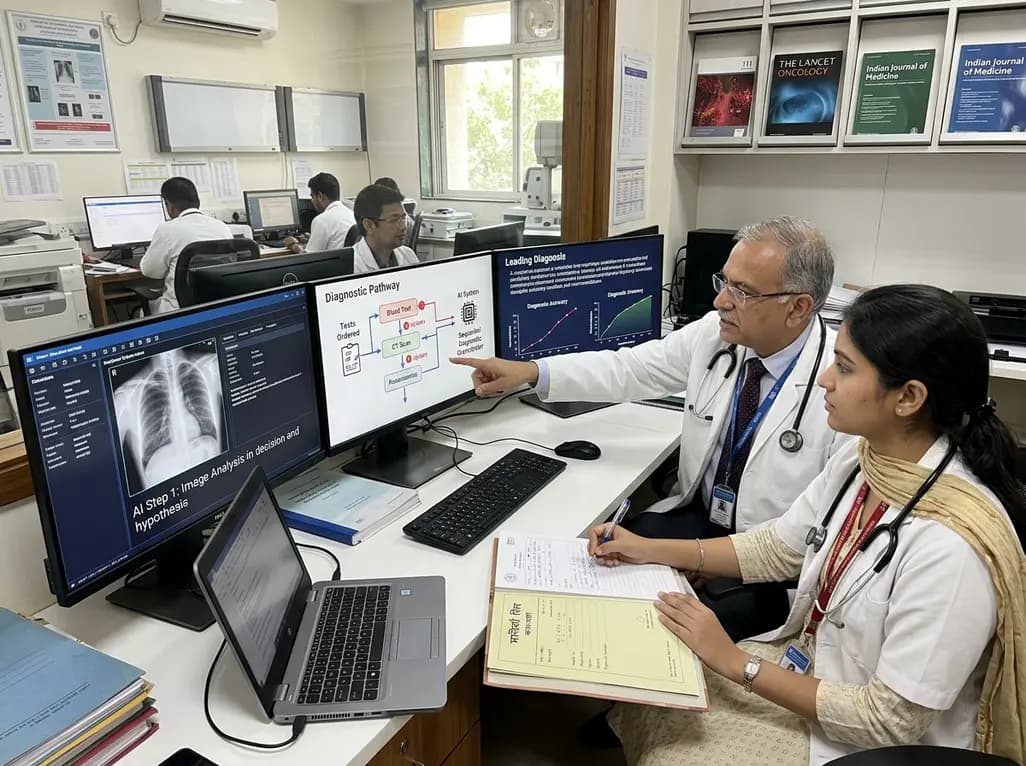
A breakthrough peer-reviewed study demonstrates that a sequential AI diagnosis system can mirror real-world clinical reasoning. By ordering stepwise tests and updating hypotheses dynamically, this multi-agent orchestrator achieved superior diagnostic accuracy while reducing investigative costs.
Today

A prenatal case highlights severe glutaric acidemia type II presenting as bilateral hyperechoic cystic kidneys at 18 weeks. Whole-exome sequencing revealed a novel homozygous ETFDH frameshift variant, demonstrating the power of rapid genetic testing in fetal renal anomalies.
Today

Review how tailored exercise programs benefit frail older patients with heart failure. Explore pathophysiological mechanisms, individualized training prescriptions, and strategies to overcome adherence barriers in clinical practice.
Yesterday

This comparative study evaluates posterior labral tears with and without glenohumeral instability, highlighting distinct demographic patterns, MRI underestimation in stable shoulders, and successful arthroscopic repair outcomes.
Yesterday

A clinical study demonstrates that early intervention with tocilizumab, either as monotherapy or bridged with corticosteroids, achieves significant proptosis reduction and resolves active inflammation in treatment-naive thyroid eye disease.
Yesterday
