.webp&w=384&q=75)

Loading, please wait...
Loading, please wait...
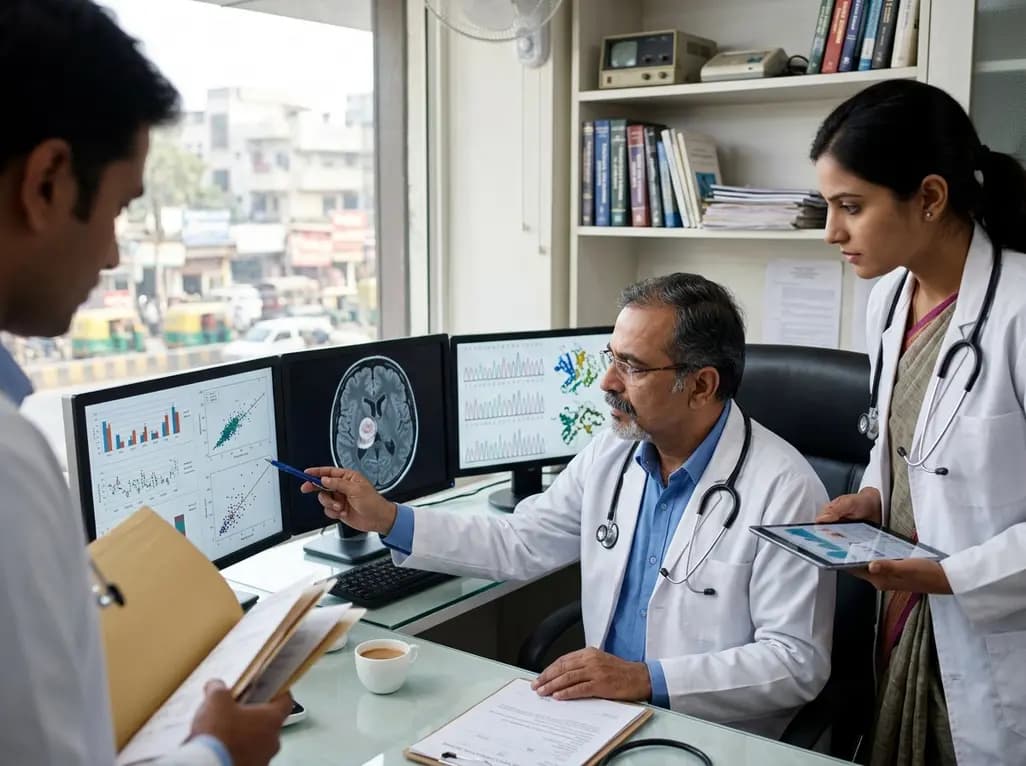
Chordoid gliomas represent a exceptionally rare subset of central nervous system tumors, officially classified as World Health Organization (WHO) Grade II neoplasms. These tumors typically arise from the anterior wall or roof of the third ventricle, often exhibiting a slow but persistent growth pattern. Because of their central location, they present a significant challenge for neurosurgeons and oncologists alike. Effective chordoid glioma surgical management requires a nuanced understanding of the tumor's relationship with surrounding neuroanatomical structures, particularly the hypothalamus and the optic apparatus. Recent evidence from the largest systematic review to date has shed new light on the long-term survival outcomes associated with different surgical approaches. This study analyzed nearly 200 cases to bridge the existing evidence gap, providing a clinical algorithm intended to optimize patient outcomes while minimizing treatment-related morbidity. While historically rare, the increasing identification of these lesions through advanced neuroimaging necessitates a standardized approach to their diagnosis and therapeutic intervention. Understanding the molecular drivers and survival characteristics of these tumors is essential for clinicians managing this complex patient population, especially in specialized neurosurgical centers across India and globally.
Patients with chordoid gliomas often experience a variety of non-specific neurological symptoms that can complicate early diagnosis. The most prevalent clinical manifestation is persistent headache, reported by over 50% of patients, which often results from obstructive hydrocephalus as the tumor occludes the third ventricle. Visual disturbances are also common, occurring in approximately 37.5% of cases due to the tumor's proximity to the optic chiasm. Furthermore, cognitive deficits and memory impairment affect nearly a quarter of the patient cohort, reflecting the impact on the limbic system and periventricular structures. Radiological diagnosis relies heavily on high-resolution Magnetic Resonance Imaging (MRI). These tumors typically appear as well-circumscribed, solid masses that are isointense to gray matter on T1-weighted images and slightly hyperintense on T2-weighted sequences. One of the hallmark features is intense, homogeneous contrast enhancement, which helps distinguish them from other third ventricular lesions like craniopharyngiomas or colloid cysts. Clinicians must also assess for radiological phenotypes that suggest hypothalamic involvement, as this significantly influences the feasibility of surgical resection. Identifying these features early allows for better preoperative planning and realistic discussions with patients regarding the potential risks and benefits of aggressive surgical intervention.
The primary therapeutic objective in the management of chordoid gliomas has traditionally been Gross Total Resection (GTR). The recent systematic review involving 198 patients confirmed that GTR remains the gold standard for achieving superior long-term survival. Specifically, Kaplan-Meier analysis revealed a stable 5-year survival rate of 91.9% for patients who underwent GTR. In stark contrast, those who received Subtotal Resection (STR) faced a significantly lower 5-year survival rate of 54.7%. This statistical difference underscores the oncological advantage of complete tumor removal whenever anatomically possible. However, the decision to pursue GTR is often complicated by the tumor's intimate adherence to vital structures. Surgeons achieved GTR in 56% of the studied cohort, while 32% underwent STR and 10% received only a biopsy. The choice of surgical corridor—whether via a transcallosal, transventricular, or endoscopic approach—must be tailored to the individual patient's anatomy. While aggressive resection improves survival, it also increases the risk of damaging the hypothalamus, which can lead to permanent endocrine and cognitive deficits. Therefore, chordoid glioma surgical management must involve a meticulous balance between maximizing tumor removal and preserving the patient's quality of life through the avoidance of severe neurological injury.
Advances in molecular profiling have revolutionized our understanding of the biological underpinnings of chordoid gliomas. Researchers have identified the PRKCA D463H mutation as the predominant driver in the vast majority of these cases. This specific missense mutation affects the kinase domain of protein kinase C alpha (PKCα), functioning as a kinase-inactive, gain-of-function allele. Its presence serves as a highly specific biomarker, aiding in the definitive histopathological diagnosis of these tumors. Furthermore, some cases exhibit the BRAF V600E mutation, though this is significantly less common. The identification of these genetic markers opens potential pathways for targeted therapies in patients where surgical resection is limited by tumor adherence or recurrence. While surgery remains the first-line treatment, understanding the molecular landscape provides a foundation for future precision medicine strategies. In cases where residual tumor remains after STR, the presence of specific mutations might one day guide the use of small-molecule inhibitors or targeted radiation techniques. Currently, the role of adjuvant therapy remains somewhat controversial, but molecular insights are increasingly used to stratify patient risk and predict long-term clinical behavior, ensuring a more comprehensive approach to neuro-oncological care.
One of the most daunting challenges in the postoperative phase is managing the endocrine and neurological complications arising from surgery in the third ventricle. Because these tumors are often tethered to the hypothalamic walls, even careful dissection can lead to significant morbidity. Common issues include diabetes insipidus, electrolyte imbalances, and thermoregulation disturbances. In the long term, patients may suffer from significant weight gain, sleep disorders, and emotional volatility. Consequently, a multidisciplinary team including endocrinologists and neuro-rehabilitation specialists is vital for effective management. Frequent monitoring of pituitary-adrenal and thyroid function is necessary to address any hormonal deficiencies promptly. Additionally, cognitive rehabilitation may be required for those experiencing memory deficits or executive dysfunction. The high survival rates seen with GTR are a major achievement, but they must be viewed alongside these potential life-altering complications. Surgeons must communicate these risks clearly during the preoperative period, emphasizing that survival and functional independence are both critical goals. Implementing a standardized follow-up protocol allows clinicians to detect recurrences early while providing the necessary support to manage the complex physiological changes that often follow radical resection of these rare ventricular neoplasms.
The management of third ventricle chordoid gliomas is evolving toward a more individualized and evidence-based framework. The 2026 systematic review provides a robust clinical algorithm that emphasizes the importance of balancing oncological control with functional outcomes. While GTR is associated with the best survival data, it is not always feasible or safe. The proposed algorithm suggests that surgical strategies should be strictly individualized, taking into account the tumor's adherence to the hypothalamus as observed on preoperative imaging and during the initial stages of surgery. If a safe GTR cannot be achieved, STR followed by vigilant surveillance or adjuvant radiotherapy may be the more prudent course of action. This strategic flexibility is essential for minimizing the risk of permanent hypothalamic damage. As neurosurgical techniques and molecular insights continue to advance, the integration of targeted therapies and refined microsurgical approaches will likely further improve the prognosis for these patients. For medical practitioners in India and abroad, staying informed about these survival statistics and molecular biomarkers is key to delivering high-quality, patient-centered care. Ultimately, the goal is to refine our chordoid glioma surgical management to ensure that every patient benefits from both high survival rates and a preserved quality of life.
Patients typically present with symptoms related to obstructive hydrocephalus or local mass effect. Common signs include persistent headaches, visual field disturbances, and significant cognitive deficits. Furthermore, endocrine dysfunction may occur due to the tumor’s proximity to the hypothalamus, leading to weight changes or menstrual irregularities in female patients.
Achieving gross total resection (GTR) significantly improves long-term outcomes compared to subtotal resection. Data indicates a 5-year survival rate of 91.9% for GTR, whereas subtotal resection shows a lower rate of 54.7%. Consequently, surgeons aim for GTR when anatomically feasible to ensure better oncological control and patient survival.
Molecular profiling identifies key driver mutations like PRKCA D463H, which characterizes most chordoid gliomas. Although direct targeted therapies are still emerging, understanding these genetic markers assists in definitive diagnosis. Additionally, identifying mutations like BRAF V600E can occasionally offer alternative therapeutic pathways if traditional surgical approaches carry excessive risk.
Disclaimer: This content is for informational and educational purposes only and does not constitute medical advice or a professional relationship. Always seek the advice of a qualified healthcare provider for any questions regarding a medical condition. Refer to the latest local and national guidelines for clinical practice.
References
Alomari O et al. Surgical strategies and long-term survival for third ventricle chordoid gliomas: a systematic review and clinical algorithm. Neurosurg Rev. 2026 Jun 25. doi: 10.1007/s10143-026-04375-x. PMID: 42342947.
Bielle F et al. Chordoid glioma of the third ventricle: a PRKCA-mutant tumor. Nat Commun. 2017 Nov 10;8(1):1456. doi: 10.1038/s41467-017-01711-2. PMID: 29127329.
Ampie L et al. Prognostic factors for recurrence and complications in the surgical management of primary chordoid gliomas: a systematic review of literature. Clin Neurol Neurosurg. 2015 Nov;138:129-36. doi: 10.1016/j.clineuro.2015.08.011. PMID: 26322521.

Read summarized clinical updates, watch expert medical content, and earn CME certifications right from your smartphone.
Open your smartphone camera to scan and install.





This systematic review analyzes clinical outcomes for 198 chordoid glioma patients, finding a 91.9% 5-year survival for gross total resection and identifying PRKCA D463H as a key driver mutation.
3 months ago

Review how tailored exercise programs benefit frail older patients with heart failure. Explore pathophysiological mechanisms, individualized training prescriptions, and strategies to overcome adherence barriers in clinical practice.
Today

Leucine Rich Bio has introduced South Asia's first comprehensive vaginal microbiome test, BugSpeaks. By profiling microbial dysbiosis, pathogens, and antimicrobial resistance, this next-generation diagnostic platform provides clinicians with deeper insights into recurrent infections, fertility, and reproductive health.
Today

In high-risk pulmonary embolism complicated by severe anemia and active uterine bleeding, systemic thrombolysis is contraindicated. Large-bore aspiration thrombectomy provides rapid hemodynamic rescue without fibrinolysis, supported by inferior vena cava filter placement and multidisciplinary critical care.
Today

This comparative study evaluates posterior labral tears with and without glenohumeral instability, highlighting distinct demographic patterns, MRI underestimation in stable shoulders, and successful arthroscopic repair outcomes.
Today

A clinical study demonstrates that early intervention with tocilizumab, either as monotherapy or bridged with corticosteroids, achieves significant proptosis reduction and resolves active inflammation in treatment-naive thyroid eye disease.
Today
