.webp&w=384&q=75)

Loading, please wait...
Loading, please wait...

Cardiovascular diseases (CVDs) cause nearly 18 million deaths globally each year. In India, this burden is rising rapidly among younger populations. Therefore, effective cholesterol management is now more critical than ever for long-term survival. High LDL cholesterol (LDL-C) remains a major modifiable risk factor. However, many people remain undiagnosed until a major cardiac event occurs because the condition is often asymptomatic.
Consistency remains the biggest hurdle in treating elevated LDL-C levels today. Global studies show that nearly half of patients stop their statin therapy within the first year. This drop in adherence occurs because high cholesterol is a silent killer. Patients do not feel sick, so they may forget or skip their daily doses. Additionally, a busy lifestyle or pill fatigue often leads to inconsistent medication use. Consequently, the risk of heart attacks and strokes increases by up to 30% for those who stop treatment.
Many patients believe they can handle their heart health through diet and exercise alone. While these modifications are foundational, they are frequently insufficient for high-risk individuals. Specifically, genetic and metabolic factors often dictate baseline LDL-C levels regardless of exercise. Clinical evidence suggests that lifestyle changes alone rarely achieve the strict targets required for secondary prevention. Therefore, pharmacological therapy is essential for moderate to high-risk patients. Sustained adherence to these prescribed treatments is the only way to ensure long-term cardiovascular protection.
New medical developments offer hope for improving patient adherence and outcomes. Long-acting therapies can reduce the burden of daily pill-taking by using less frequent dosing schedules. By decreasing the frequency of intervention, these options help address the behavioral barriers associated with forgetfulness. Doctors emphasize that managing lipids is a lifelong commitment rather than a short-term fix. Furthermore, awareness must increase at the primary care level to catch risks early. Proactive education remains the best tool to combat the rising CVD rates across India.
Q1: Why is it difficult to stay on cholesterol medication?
Many patients stop medication because they do not feel physical symptoms of high cholesterol. This lack of urgency, combined with the burden of daily pills, often leads to non-adherence within the first year of treatment.
Q2: Can I manage high LDL-C with just diet and exercise?
Lifestyle changes are vital but often insufficient for high-risk patients. Genetic and metabolic factors frequently require pharmacological intervention to reach target LDL-C levels effectively.
Q3: What are the risks of stopping statin therapy?
Non-adherence to lipid-lowering therapy is strongly associated with adverse outcomes. Stopping medication can lead to a 25-30% increased risk of cardiovascular events and higher rates of hospitalization.
Disclaimer: This content is for informational and educational purposes only. It does not constitute medical advice or replace professional judgment. Refer to the latest local and national guidelines for clinical practice.
References

Read summarized clinical updates, watch expert medical content, and earn CME certifications right from your smartphone.
Open your smartphone camera to scan and install.





Discover why lifestyle changes aren't always enough for LDL-C control. Learn about lifelong cholesterol management and improving medication adherence in Ind...
5 months ago
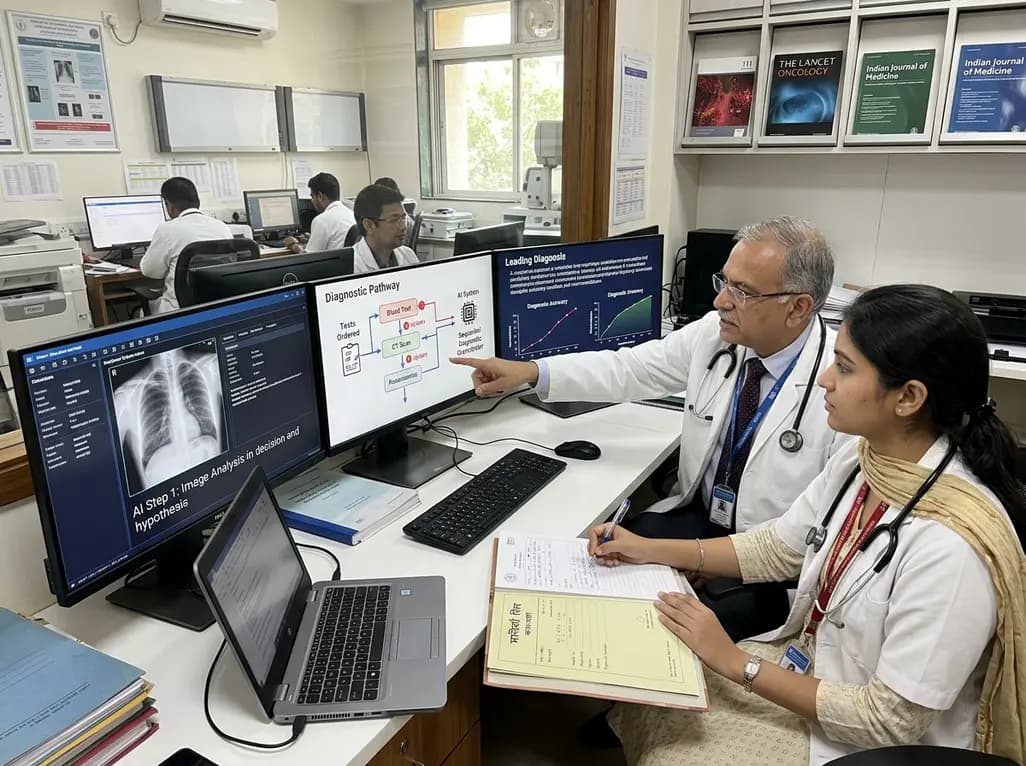
A breakthrough peer-reviewed study demonstrates that a sequential AI diagnosis system can mirror real-world clinical reasoning. By ordering stepwise tests and updating hypotheses dynamically, this multi-agent orchestrator achieved superior diagnostic accuracy while reducing investigative costs.
Today

A prenatal case highlights severe glutaric acidemia type II presenting as bilateral hyperechoic cystic kidneys at 18 weeks. Whole-exome sequencing revealed a novel homozygous ETFDH frameshift variant, demonstrating the power of rapid genetic testing in fetal renal anomalies.
Today

Review how tailored exercise programs benefit frail older patients with heart failure. Explore pathophysiological mechanisms, individualized training prescriptions, and strategies to overcome adherence barriers in clinical practice.
Yesterday

This comparative study evaluates posterior labral tears with and without glenohumeral instability, highlighting distinct demographic patterns, MRI underestimation in stable shoulders, and successful arthroscopic repair outcomes.
Yesterday

A clinical study demonstrates that early intervention with tocilizumab, either as monotherapy or bridged with corticosteroids, achieves significant proptosis reduction and resolves active inflammation in treatment-naive thyroid eye disease.
Yesterday
