.webp&w=384&q=75)

Loading, please wait...
Loading, please wait...

The surgical management of thoracolumbar kyphosis in patients with ankylosing spondylitis (AS) requires precise planning to restore horizontal gaze. Traditionally, surgeons rely on the chin-brow vertical angle (CBVA) as a primary metric for determining the necessary correction. However, a recent retrospective study highlights that cervical range of motion (CROM) significantly influences the reliability of this parameter.
Researchers analyzed patients undergoing pedicle subtraction osteotomy (PSO) to understand the correlation between CBVA and the osteotomized vertebra angle (OVA). They categorized patients into three groups based on their CROM: rigid (≤ 10°), moderate (10°–30°), and flexible (≥ 30°). The findings suggest that while CBVA is highly reliable in rigid cervical spines, its accuracy diminishes as mobility increases.
In patients with high cervical flexibility, the neck can compensate for spinal malalignment. Consequently, the preoperative CBVA may not reflect the true deformity of the thoracolumbar segment. Therefore, surgeons must account for this compensatory capacity to avoid overcorrection. Specifically, the study indicates that OVA calculations based strictly on CBVA are most consistent in patients with a fused cervical spine. Furthermore, individuals with a mobile neck often exhibit a \"pseudo-improvement\" in gaze, which can mislead surgical planning.
Moreover, the study emphasizes that a single-level PSO is often sufficient for most cases. However, the degree of resection must be tailored to the individual’s CROM. For instance, patients in the high-mobility group required more nuanced adjustments to achieve optimal postoperative outcomes. These insights are crucial for orthopedic surgeons in India who frequently manage advanced AS cases with varied degrees of spinal fusion.
Clinicians should integrate CROM assessments into their preoperative workflow. If a patient possesses a flexible cervical spine, the chin-brow vertical angle should not be the sole determinant of the osteotomy angle. Instead, combining CBVA with other sagittal parameters ensures a more balanced correction. Ultimately, this approach reduces the risk of postoperative complications and improves long-term patient satisfaction.
Most experts suggest a postoperative CBVA between 10° and 20° is ideal. This range balances horizontal gaze with the ability to perform downward-facing tasks like eating or walking down stairs.
A flexible cervical spine allows the patient to tilt their head to compensate for kyphosis. This mobility masks the true severity of the thoracolumbar curve, making the CBVA a less reliable predictor of the needed bone resection.
Disclaimer: This content is for informational and educational purposes only. It does not constitute medical advice or establish a doctor-patient relationship. Always seek the advice of a qualified healthcare provider regarding a medical condition. Refer to the latest local and national guidelines for clinical practice.
References
Chang MH et al. Is the chin-brow vertical angle always a reliable parameter for surgical planning in the correction of thoracolumbar kyphosis secondary to ankylosing spondylitis? J Neurosurg Spine. 2026 Mar 27. doi: 10.3171/2025.10.SPINE25193. PMID: 41894803.
Song K et al. Optimal chin-brow vertical angle for sagittal visual fields in ankylosing spondylitis kyphosis. Eur Spine J. 2016 Aug;25(8):2596-604.
Suk KS et al. Significance of chin-brow vertical angle in correction of kyphotic deformity of ankylosing spondylitis patients. Spine (Phila Pa 1976). 2003 Sep 1;28(17):2001-5.

Read summarized clinical updates, watch expert medical content, and earn CME certifications right from your smartphone.
Open your smartphone camera to scan and install.





A study explores the reliability of the chin-brow vertical angle in planning surgical corrections for AS patients with varying cervical mobility....
6 months ago

Explore why official drug package inserts fail to reflect modern evidence for clozapine prescribing. Learn how legal standards of care, case law, slow titration, and vital adverse event monitoring empower clinicians to prioritize evidence-based medical practice over outdated manufacturer labeling.
Today
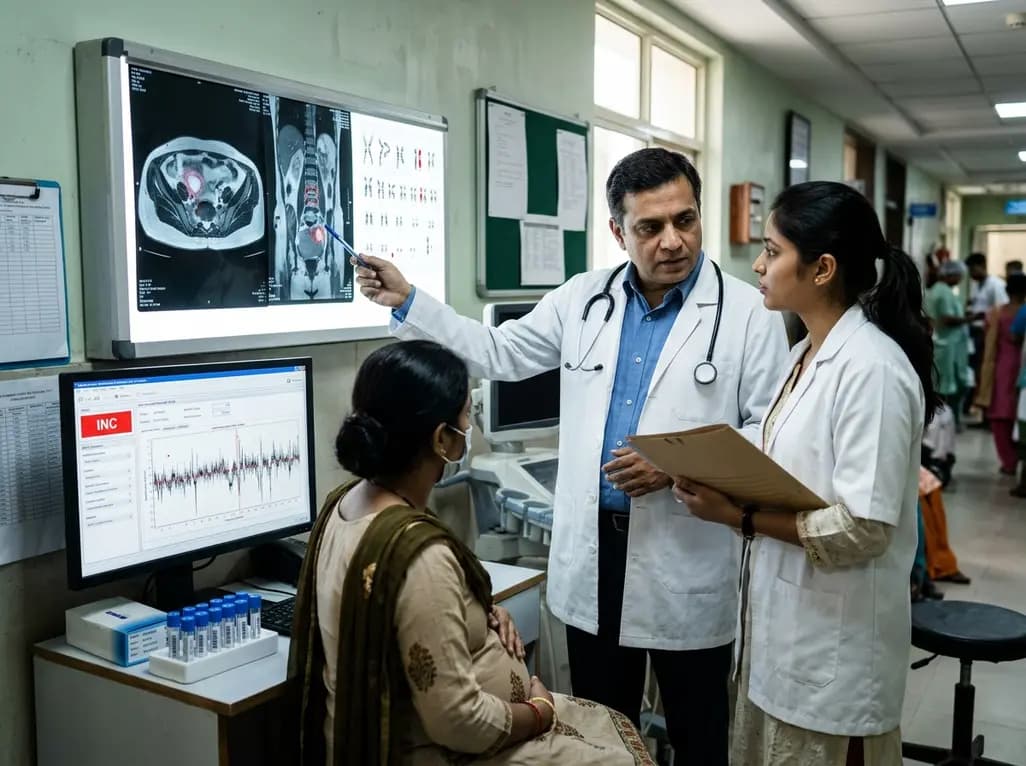
Occult maternal malignancy accounts for 3.82% of persistent unreportable NIPT results with genomic noise. Multiple chromosomal aberrations, notably on chromosome 18, warrant thorough oncological evaluation and whole-body MRI to ensure timely maternal diagnosis while preserving fetal care.
Today

This article reviews the forensic and clinical complexities of acute myocarditis arising on left ventricular hypertrophy in children, highlighting early diagnostic red flags and multidisciplinary postmortem autopsy protocols.
Today
A randomized controlled trial demonstrates that an eight-week dual-task training intervention significantly improves static and dynamic postural control over standard balance exercises in individuals with chronic ankle instability, addressing critical neurocognitive deficits during athletic and daily activities.
Today

A retrospective cohort study of 7,716 ICU patients from the MIMIC-IV database demonstrates that Gradient Boosting Decision Trees significantly outperform traditional SOFA scores in predicting in-hospital mortality among patients with sepsis and diabetes, with SHAP analysis providing clinical interpretability.
Today
