.webp&w=384&q=75)

Loading, please wait...
Loading, please wait...
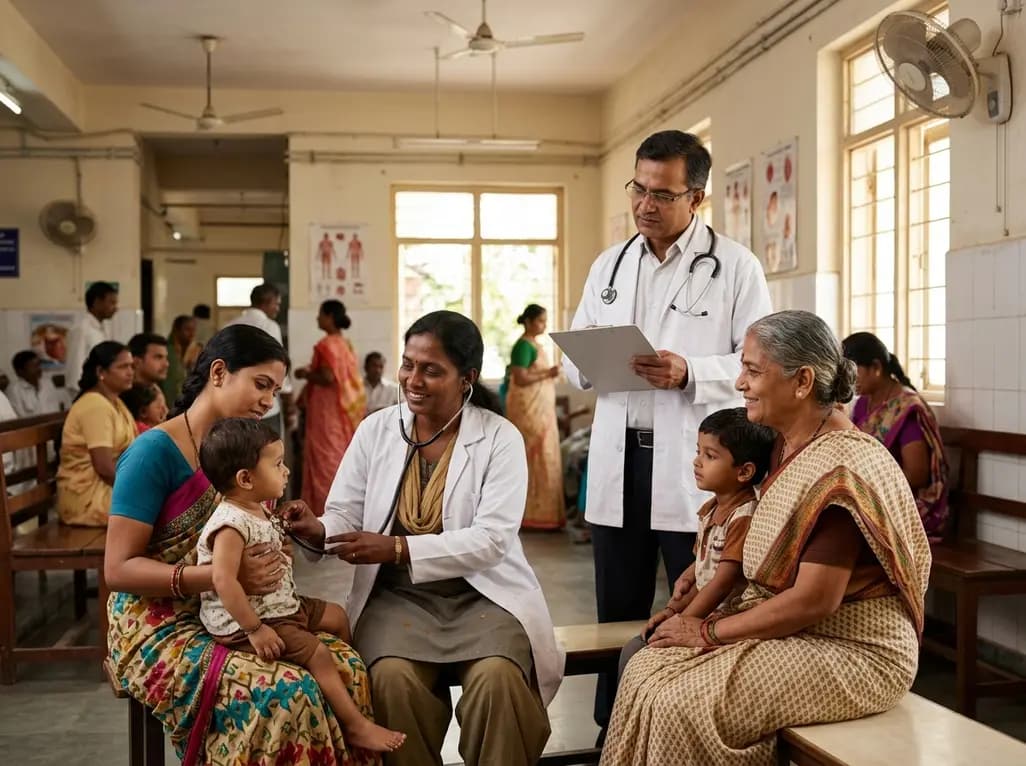
For decades, developmental science has primarily relied on data from Western, Educated, Industrialized, Rich, and Democratic (WEIRD) populations. However, these societies represent only a small fraction of the global population. Consequently, the universal applicability of established psychological theories has come under intense scrutiny. To address this gap, the WILD agenda—standing for World-spanning, Inclusive, Local, and Developmental—aims to broaden the scope of research. This movement is particularly critical when examining child development in non-WEIRD societies, where family structures and caregiving norms differ significantly from Western models. In countries like India, rapid industrialization and globalization are reshaping traditional practices. Understanding these shifts requires a framework that respects local cultural values while acknowledging modern societal demands. By focusing on non-WEIRD contexts, researchers can better understand the functional plasticity of the human developmental system. This approach ensures that clinical interventions and educational policies are grounded in the actual lived experiences of diverse populations. Moreover, it challenges the long-held assumption that Western developmental milestones are the gold standard for all children globally.
Attachment theory, pioneered by John Bowlby and Mary Ainsworth, posits that a secure bond with a single primary caregiver is essential for healthy emotional growth. This model was largely developed through observations in Western nuclear families, where the mother is often the central figure. Nevertheless, this dyadic focus frequently fails to account for the diverse caregiving ecologies found in the Global South. In many non-WEIRD cultures, child-rearing is a communal responsibility rather than an individual one. Alloparenting, where extended kin and even non-kin members provide significant care, is the norm rather than the exception. Therefore, applying the "Strange Situation" or other standardized metrics to these populations can lead to misleading conclusions. Specifically, children in collectivist societies may show behaviors that Western metrics classify as insecure, yet these children are often well-adjusted within their own cultural contexts. This discrepancy highlights the necessity of decolonizing developmental science. By recognizing that multiple pathways lead to secure attachment, we can avoid pathologizing culturally distinct parenting practices. Ultimately, a more inclusive theory must account for how children adapt to various caregivers simultaneously.
Research into child development in non-WEIRD societies reveals a remarkable degree of functional plasticity. Children in these environments often form close, meaningful attachments to multiple family members, including grandparents, aunts, and older siblings. Furthermore, these attachments are not merely secondary to the parental bond but are integral to the child's social and emotional survival. In the context of globalizing societies, these traditional networks are evolving to meet new economic pressures. For instance, as more parents enter the industrial workforce, the role of extended family in daily caregiving becomes even more vital. Accordingly, the human developmental system demonstrates an ability to thrive across a wide range of ecological settings. This plasticity allows children to internalize local cultural values of interdependence and social cohesion while navigating the demands of a globalized economy. Importantly, these caregiving ecologies provide a safety net that protects children during periods of transition. By studying these systems, we gain insight into the resilience of human development. We also learn that the definition of a "secure base" must be expanded to include the entire community or kinship group.
Globalization acts as a powerful catalyst for change in non-WEIRD societies, often creating a unique blend of modern and traditional influences. While industrialization might suggest a shift toward nuclear family models, many cultures maintain strong ties to extended kin through technology and urban migration patterns. Subsequently, children today may grow up in households that look Western in structure but function through collectivist values. This hybridity creates a complex environment for child development. For example, a child might attend a modern preschool during the day but return to a home where three generations reside together. Such environments demand high levels of cognitive and social flexibility from the developing child. Interestingly, these globalizing demands do not necessarily erode local values; instead, they often lead to new, adaptive caregiving strategies. Researchers must therefore observe how these societies anchor developmental science in their own local realities. Failure to do so results in a scientific blind spot that ignores the experiences of billions of people. Consequently, the WILD framework emphasizes the importance of local expertise in defining developmental success.
For pediatricians and mental health professionals in India, the shift toward a WILD-informed perspective is highly relevant. Clinical assessments often use tools translated from Western contexts without considering cultural nuances in attachment and social behavior. For instance, a child’s lack of intense distress during separation from a parent might be viewed as avoidant behavior in the West. Conversely, in a community where children are accustomed to multiple caregivers, this might simply reflect a healthy adaptation to alloparenting. Healthcare providers must, therefore, be cautious when applying standardized developmental screening tools. Instead, they should incorporate culturally sensitive observations that value extended family involvement. Moreover, counseling for parents should support traditional strengths, such as intergenerational support, while addressing the stressors of modern urban living. By acknowledging the functional plasticity of development, clinicians can offer more effective and empathetic care. This approach also helps in reducing the stigma often associated with non-nuclear family structures. Ultimately, centering the local context allows for a more accurate diagnosis and a more supportive therapeutic environment for the child and the family.
Moving forward, the goal of developmental science must be the integration of diverse global perspectives into a unified yet flexible framework. This requires a fundamental shift in how research is conducted and who is involved in the process. Specifically, researchers from non-WEIRD societies must lead the way in defining the variables and outcomes that matter most in their own cultures. The WILD agenda is not just about adding more diverse participants; it is about rethinking the core assumptions of human growth. As globalization continues to bridge cultures, the science of development must evolve to stay relevant. By studying child development through a lens of cultural plasticity, we can better appreciate the diverse ways in which humans grow and thrive. This evolution will lead to more robust theories that reflect the true complexity of the human species. Furthermore, it will empower communities to maintain their cultural heritage while embracing the opportunities of a modern world. Notably, an inclusive science is a more accurate science, providing benefits for policy, practice, and the well-being of children worldwide.
The WILD framework—standing for World-spanning, Inclusive, Local, and Developmental—diverges from traditional models by actively rejecting the Western-centric bias that has long dominated the field. While traditional developmental science often treats WEIRD populations as the universal standard, the WILD agenda emphasizes that human development is deeply embedded in local ecological and cultural contexts. It prioritizes local expertise and cross-cultural diversity to create more accurate and globally relevant scientific theories and interventions.
Alloparenting refers to the provision of care to children by individuals other than their biological parents, such as grandparents, siblings, or community members. In most non-WEIRD societies, this is a foundational practice that ensures the child’s survival and social integration. It challenges the Western dyadic model of attachment, showing that children can form multiple secure bonds simultaneously. This communal approach provides a broader support system and fosters social flexibility, which is essential in interdependent cultures.
Cultural plasticity suggests that children can adapt their social and emotional development to fit various caregiving environments. For Indian clinicians, this means recognizing that traditional kinship-based care is a healthy and functional developmental pathway, even when it differs from Western norms. Practitioners should avoid using Western-normed screening tools in isolation. Instead, they must evaluate children within their specific cultural contexts, acknowledging the strengths of extended family support systems and the resilience these systems provide during rapid societal changes.
Disclaimer: This content is for informational and educational purposes only. It does not constitute professional medical advice, diagnosis, or treatment. Always seek the advice of your physician or other qualified healthcare provider with any questions you may have regarding a medical condition. Refer to the latest local and national guidelines for clinical practice.
References
Ma S et al. The missing link in the WILD agenda: Anchoring developmental science in globalizing non-WEIRD societies. Behav Brain Sci. 2026 Jul 03. doi: 10.1017/S0140525X25104068. PMID: 42396708.
Keller H. Challenging Attachment Theory: Ethnocentrism, Science, and Child Development. Routledge; 2017.
Mesman J, van IJzendoorn MH, Sagi-Schwartz A. Cross-cultural patterns of attachment: Universal and contextual determinants. In: Cassidy J, Shaver PR, editors. Handbook of Attachment: Theory, Research, and Clinical Applications. 3rd ed. New York: Guilford Press; 2016. p. 790-815.
"
Read summarized clinical updates, watch expert medical content, and earn CME certifications right from your smartphone.
Open your smartphone camera to scan and install.





This article examines the WILD agenda and its application to developmental science in non-WEIRD societies. It highlights how children in industrializing nations like India form diverse attachments, showcasing the functional plasticity of human growth and the limitations of Western-centric theories.
3 months ago

A retrospective cohort study of 7,716 ICU patients from the MIMIC-IV database demonstrates that Gradient Boosting Decision Trees significantly outperform traditional SOFA scores in predicting in-hospital mortality among patients with sepsis and diabetes, with SHAP analysis providing clinical interpretability.
Today

A prenatal case highlights severe glutaric acidemia type II presenting as bilateral hyperechoic cystic kidneys at 18 weeks. Whole-exome sequencing revealed a novel homozygous ETFDH frameshift variant, demonstrating the power of rapid genetic testing in fetal renal anomalies.
Today
This article reviews the forensic and clinical complexities of acute myocarditis arising on left ventricular hypertrophy in children, highlighting early diagnostic red flags and multidisciplinary postmortem autopsy protocols.
Today

This comparative study evaluates posterior labral tears with and without glenohumeral instability, highlighting distinct demographic patterns, MRI underestimation in stable shoulders, and successful arthroscopic repair outcomes.
Yesterday

A clinical study demonstrates that early intervention with tocilizumab, either as monotherapy or bridged with corticosteroids, achieves significant proptosis reduction and resolves active inflammation in treatment-naive thyroid eye disease.
Yesterday
