.webp&w=384&q=75)

Loading, please wait...
Loading, please wait...
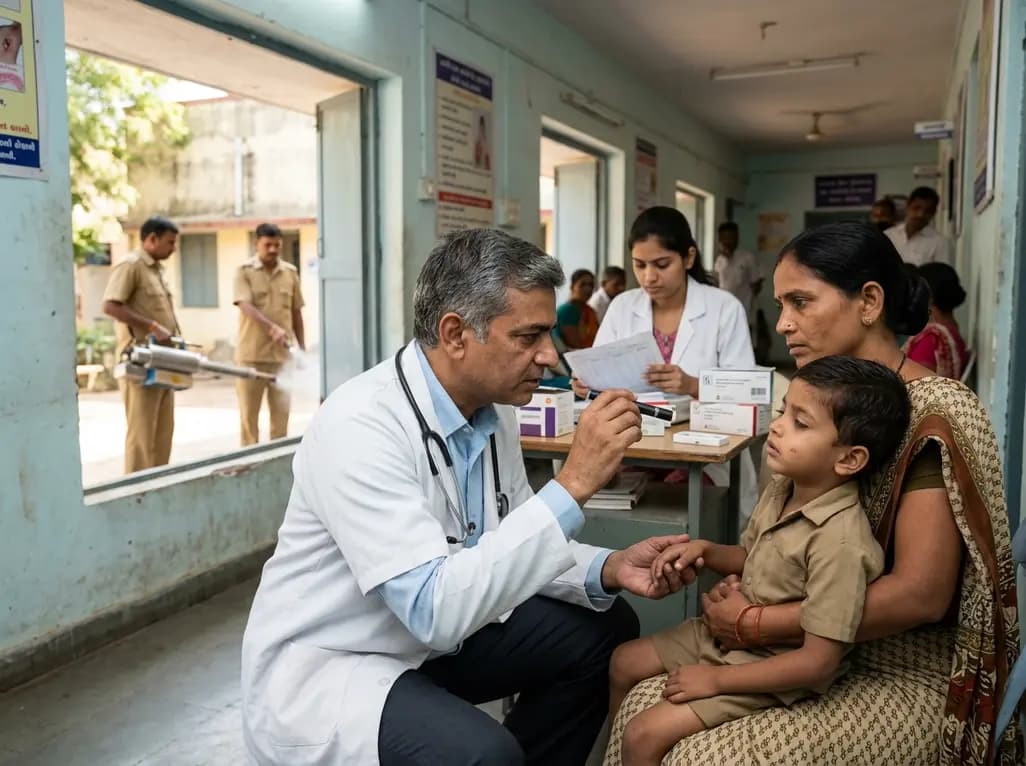
The recent Chandipura virus outbreak in Gujarat highlights the persistent threat of emerging infectious pathogens in India. Specifically, health authorities have confirmed multiple pediatric fatalities in early July 2026. Therefore, understanding the clinical presentation, transmission dynamics, and public health response is critical for medical professionals.
The health department recently detected several cases of Chandipura virus in Gujarat, triggering statewide alarm. Specifically, health officials confirmed three tragic pediatric deaths from this pathogen. Therefore, State Health Minister Praful Pansheriya convened an urgent meeting in Gandhinagar to address the crisis. He instructed medical teams to accelerate virus control measures and surveillance activities. Consequently, local authorities have intensified active search operations for new cases. However, accurate diagnosis remains a challenge because early symptoms mimic other viral illnesses. Thus, rapid laboratory testing is vital to confirm suspected infections. Currently, labs are analyzing twenty-seven suspected samples. Nineteen results have already arrived, showing seven positive cases. Meanwhile, authorities await results for the remaining eight samples. Doctors expect these reports by tonight. Indeed, this outbreak requires immediate public health intervention to prevent further transmission. Clinicians must stay vigilant and monitor pediatric patients closely. Additionally, pediatricians should report any unusual neurological symptoms immediately. Early recognition can save lives during this critical period. Furthermore, municipal workers have started fogging campaigns in affected neighborhoods to reduce vector populations. Ultimately, community awareness will play a key role.
Infectious disease experts highlight sandflies as the primary vector transmitting Chandipura virus to humans. Specifically, females of the Phlebotomus species carry this dangerous pathogen. Additionally, ticks and mosquitoes can sometimes harbor the virus. Therefore, rural areas present the highest risk of transmission due to environmental factors. For instance, mud houses and cattle sheds provide ideal breeding grounds for sandflies. Consequently, children living in these settings face the greatest exposure. Moreover, the monsoon season typically exacerbates vector breeding. Subsequently, cases rise rapidly during humid summer months. Clinicians must recognize these environmental risks during patient evaluations. Indeed, knowing the patient's living conditions helps in early risk assessment. In contrast, urban areas rarely report sandfly-borne illnesses. However, travel history remains a critical piece of diagnostic information. Thus, doctors must ask families about recent rural travel. Furthermore, climate change might expand the geographic range of these vectors. Therefore, surveillance efforts must adapt to new vector distribution patterns. Ultimately, controlling the vector population remains our most effective preventive measure. For example, spraying insecticides in homes significantly lowers transmission rates. Consequently, health departments emphasize vector eradication campaigns.
The clinical progression of Chandipura virus in pediatric patients is notoriously aggressive. Specifically, patients often present with sudden-onset high fever and severe vomiting. Additionally, diarrhea, headaches, and altered sensorium frequently occur. Consequently, the child's neurological state can deteriorate within twenty-four to forty-eight hours. Indeed, many cases progress rapidly to acute encephalitis, seizures, and coma. Therefore, clinicians must treat any pediatric febrile illness with neurological symptoms as a potential emergency. In contrast, mild cases are extremely rare in symptomatic presentations. However, early symptoms can initially resemble common childhood infections. Thus, pediatricians must maintain a high index of suspicion during an active outbreak. Subsequently, physical examination should look for signs of meningeal irritation or focal neurological deficits. Furthermore, clinical deterioration often leads to multiorgan dysfunction in severe cases. For example, liver enzymes and serum creatinine levels can rise significantly. Ultimately, supportive care remains the cornerstone of clinical management because no specific antiviral drug exists. Consequently, prompt fluid management and airway protection are vital. Doctors must monitor vital signs continuously to prevent sudden circulatory collapse. In addition, aggressive fever control helps reduce the risk of seizure onset. Therefore, healthcare providers must react instantly to any clinical changes.
The health department recently established strict diagnostic and referral protocols for the Chandipura virus outbreak. Specifically, primary clinics and small centers must avoid delaying patient referral to tertiary hospitals. If doctors detect a suspected case, they should immediately administer primary stabilizing treatment. Subsequently, they must transfer the child to a larger facility equipped with oxygen and ventilator support. Indeed, delays in transfer drastically increase mortality rates in these pediatric patients. Therefore, the Indian Medical Association works closely with the health department to educate pediatric specialists. Together, they have distributed clear referral guidelines to all private and public clinics. Additionally, laboratories must process blood and cerebrospinal fluid samples rapidly. For instance, polymerase chain reaction assays can confirm the presence of viral RNA. However, clinicians should not wait for laboratory confirmation before initiating supportive therapy. Thus, management must begin based on clinical suspicion alone during this crisis. Furthermore, state health headquarters in Gandhinagar require daily reporting of all suspected cases. Consequently, this coordination ensures proper bed allocation in intensive care units. Ultimately, a streamlined referral pathway saves valuable time and improves patient outcomes.
The Gujarat health department has intensified surveillance to control the Chandipura virus outbreak effectively. Specifically, multi-disciplinary teams are conducting active door-to-door screenings in high-risk zones. Additionally, public health workers are performing extensive sanitization and insecticidal dusting in rural sectors. Therefore, these combined actions aim to interrupt the sandfly vector lifecycle completely. Furthermore, local clinics are maintaining adequate stocks of essential medicines and pediatric ventilation supplies. Consequently, state hospitals remain fully prepared to handle any surge in pediatric intensive care admissions. Moreover, medical staff receive regular training on the latest clinical management protocols. In contrast, prior outbreaks faced delayed vector-control interventions. However, the government has preempted similar challenges by mobilizing extensive emergency resources. Thus, the current public health response demonstrates high efficiency and coordination. Indeed, the integration of private practitioners with government portals has streamlined case detection. Moving forward, health officials must sustain these intense surveillance efforts throughout the monsoon period. Ultimately, continuous community engagement and vector control represent the most reliable methods to prevent future epidemics. Consequently, local leaders are educating families about vector-borne illnesses. Therefore, active cooperation between citizens and state departments will yield positive long-term benefits.
Q1: What is the transmission route of the Chandipura virus?
Female sandflies, particularly the Phlebotomus species, transmit the dangerous Chandipura virus to humans through insect bites. Additionally, ticks and mosquitoes can occasionally serve as secondary vectors. Therefore, transmission occurs primarily in rural or semi-urban areas with high vector density. Consequently, protecting vulnerable children from insect bites during the monsoon season represents a critical preventive measure that health departments highly recommend today.
Q2: What are the key clinical symptoms to watch for?
The infection begins abruptly with sudden-onset high fever and severe vomiting. Additionally, pediatric patients may experience diarrhea, intense headaches, and rapid altered sensorium. Subsequently, severe cases progress to acute encephalitis, convulsions, and even coma within forty-eight hours of symptom onset. Therefore, pediatricians must carefully monitor any febrile child showing these neurological symptoms during an active outbreak to ensure rapid supportive management.
Q3: How should medical practitioners manage suspected cases?
Clinicians must immediately administer primary stabilizing care when they suspect a Chandipura infection. Specifically, they should focus on managing airway patency, temperature, and patient hydration. Subsequently, they must refer the child without any delay to a tertiary hospital equipped with oxygen and ventilator facilities. Indeed, early supportive therapy and rapid transport represent the most effective clinical interventions to reduce pediatric mortality rates.
Disclaimer: This content is for informational and educational purposes only. It does not constitute medical advice or replace professional judgment. Refer to the latest local and national guidelines for clinical practice.
References

Read summarized clinical updates, watch expert medical content, and earn CME certifications right from your smartphone.
Open your smartphone camera to scan and install.





Gujarat's health minister has ordered urgent measures to control a pediatric Chandipura virus outbreak. With multiple confirmed cases and tragic deaths, authorities are implementing rapid lab testing, extensive vector surveillance, and strict clinical guidelines to ensure immediate referral of suspected cases.
3 months ago

Novel diimide and hydrazone scaffolds, particularly compound #C4, synergistically reactivate latent HIV-1 when combined with JQ1 or PKC activators. Demonstrating donor-matched proviral transcription ex vivo and non-canonical signaling, these findings advance shock and kill strategies toward reservoir eradication.
Today

A cross-sectional study reveals that maternal RSV vaccination coverage reached only 43.7% in Argentina, with maternal vaccine knowledge being the sole independent predictor of uptake. Clinicians play a crucial role in eliminating informational and structural barriers to optimize infant health.
Today

Review how tailored exercise programs benefit frail older patients with heart failure. Explore pathophysiological mechanisms, individualized training prescriptions, and strategies to overcome adherence barriers in clinical practice.
Yesterday

This comparative study evaluates posterior labral tears with and without glenohumeral instability, highlighting distinct demographic patterns, MRI underestimation in stable shoulders, and successful arthroscopic repair outcomes.
Yesterday

A clinical study demonstrates that early intervention with tocilizumab, either as monotherapy or bridged with corticosteroids, achieves significant proptosis reduction and resolves active inflammation in treatment-naive thyroid eye disease.
Yesterday
