.webp&w=384&q=75)

Loading, please wait...
Loading, please wait...
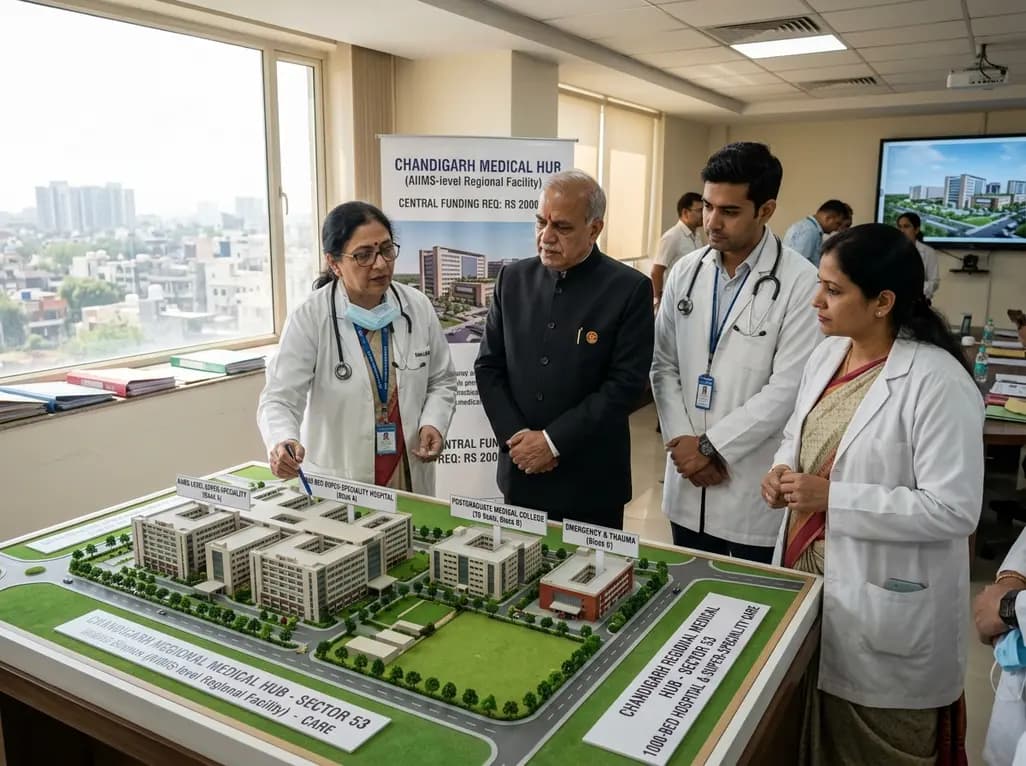
The Chandigarh administration has requested central budgetary support to build an advanced tertiary care medical complex. UT Administrator Gulab Chand Kataria met Union Health Minister JP Nadda in New Delhi on Tuesday. Specifically, Kataria sought Rs 2,000 crore in central assistance for the proposed Chandigarh medical hub. In addition, the administration requested 36 new postgraduate medical seats. This crucial initiative aims to expand clinical capacity and upgrade regional healthcare delivery.
Healthcare delivery in northern India faces mounting pressure due to rising patient footfalls across tertiary hospitals. Currently, premier institutions like PGIMER and GMCH-32 experience massive patient inflows from Punjab, Haryana, Himachal Pradesh, and Jammu. Therefore, establishing an AIIMS-level institute in Sector 53 addresses a critical capacity gap in the regional medical ecosystem.
Earlier, the Union Health Ministry advised the UT administration to explore self-financing mechanisms for the facility. However, local municipal budgets cannot sustain an enterprise of this unprecedented magnitude without substantial central assistance. Kataria consequently emphasized that full central funding remains vital for timely execution and clinical commissioning.
Moreover, the new healthcare complex will function as a vital tertiary referral centre. It will deliver modern super-speciality care while relieving severe clinical strain on existing institutions. Consequently, patient waiting times for critical elective and emergency interventions will decrease noticeably. Furthermore, the strategic site along Vikas Marg ensures prompt access for emergency ambulance transfers from adjoining states. As a result, acute care clinicians can initiate life-saving interventions without suffering dense urban traffic delays. Additionally, regional referral pathways will streamline patient transfers across state boundaries.
The proposed medical hub occupies a dedicated 10-acre site along Vikas Marg in Sector 53. Additionally, authorities earmarked four adjacent acres for administrative blocks and staff residential quarters. The comprehensive project requires an estimated investment of Rs 2,154 crore. Specifically, civil infrastructure requires Rs 1,704 crore, while advanced medical equipment accounts for Rs 450 crore.
Architecturally, planners divided the institution into two distinct 500-bed operational wings. The first wing houses the Women and Child Health Care Centre. This specialized division integrates comprehensive obstetrics, gynaecology, neonatology, and paediatric surgical services under one roof. Consequently, maternal and neonatal critical care teams can collaborate seamlessly to treat high-risk deliveries and congenital disorders.
Meanwhile, the second 500-bed wing establishes an advanced Super-Speciality Care Centre. This high-dependency facility integrates specialized departments, including cardiology, neurology, gastroenterology, nephrology, and surgical oncology. Furthermore, the master plan features a dedicated trauma unit equipped with modern triage bays and surgical theatres. Hence, multidisciplinary emergency teams can manage severe trauma cases around the clock. In addition, the integrated design incorporates advanced imaging suites, automated blood banks, and clinical pathology laboratories. Moreover, modern central sterile supply departments guarantee stringent infection prevention protocols throughout the hospital.
Beyond immediate patient care, modern medical institutions depend heavily on continuous academic progression. Therefore, Kataria highlighted the urgent necessity of expanding postgraduate medical education during his discussions with JP Nadda. Specifically, he requested 36 additional postgraduate medical seats for Chandigarh's government medical college.
This academic expansion addresses critical specialist shortages across several vital clinical departments. Furthermore, expanding residency quotas directly bolsters hospital wards with competent resident physicians. Junior doctors provide essential round-the-clock clinical monitoring, emergency triage, and bedside patient care. Consequently, higher postgraduate seat counts correlate directly with improved clinical outcomes and reduced hospital complications.
Moreover, the Sector 53 institution aims to foster medical research matching AIIMS standards. Modern tertiary facilities generate extensive data that fuel epidemiological studies and clinical research trials. Therefore, medical faculty can study disease patterns unique to northern Indian populations. In addition, the administration intends to foster interdisciplinary research partnerships with regional academic bodies. As a result, postgraduate residents will gain valuable exposure to translational medicine, robotic surgery, and advanced diagnostics. Consequently, institutional academic growth directly elevates local clinical standards and patient safety. Ultimately, this academic environment will nurture skilled specialists capable of leading major healthcare centres.
Tertiary healthcare hubs in Chandigarh currently absorb immense clinical pressure from neighbouring states. Thousands of critical patients travel long distances seeking advanced treatment unavailable in rural community hospitals. As a result, premier regional centres frequently operate beyond bed capacity, causing delayed admissions and crowded emergency departments.
Consequently, the planned Sector 53 complex provides indispensable relief for northern healthcare systems. By introducing 1,000 new tertiary beds, the hub will distribute severe clinical caseloads more effectively. Moreover, dedicated cardiology and neurology suites will expedite emergency thrombolysis and percutaneous coronary interventions. Prompt access to these interventions significantly reduces mortality in acute stroke and myocardial infarction cases.
Furthermore, dedicated maternal and neonatal units will provide essential care for high-risk pregnancies and premature infants. Many peripheral facilities lack advanced neonatal intensive care equipment and trained paediatric specialists. Therefore, this specialized wing will reduce preventable infant mortality across surrounding districts. Similarly, dedicated critical care beds will reduce emergency divert status during seasonal epidemic surges. In addition, central government funding ensures affordable tertiary treatment for economically vulnerable patient groups. Thus, the new facility reinforces equitable healthcare access while maintaining high clinical quality.
During his official visit to the national capital, Kataria engaged with several Union ministers to advance regional welfare. Most notably, he met Union Home Minister Amit Shah to discuss comprehensive strategies against substance abuse. Kataria requested substantial central support to establish integrated de-addiction and rehabilitation programs across the union territory.
Substance use disorder represents a severe public health challenge that damages physical and mental health. Therefore, effective medical intervention requires evidence-based detoxification combined with structured psychosocial rehabilitation. Kataria proposed establishing rehabilitation centres that combine clinical care with vocational skill training. Consequently, recovering individuals can reintegrate successfully into the community and achieve long-term recovery.
Additionally, Kataria met Union Education Minister Pralhad Joshi regarding institutional upgrades for Punjab Engineering College. He requested Centrally Funded Technical Institution status and the formal appointment of a regular vice-chancellor. Meanwhile, discussions with Vice-President C P Radhakrishnan prioritized establishing an Artificial Intelligence centre at Panjab University. In addition, the central government sanctioned Rs 19 crore for an architectural digital museum at the Le Corbusier Centre. Furthermore, inter-agency collaboration will guarantee sustained social support for vulnerable recovered patients. Together, these multifaceted initiatives reflect a holistic commitment to regional infrastructure, scientific progress, and community health.
Q1: What are the primary clinical components planned for the Chandigarh Regional Medical Hub?
The proposed medical hub features two distinct 500-bed wings to address complex medical conditions. One wing forms a comprehensive Centre for Women and Child Health Care, delivering advanced obstetrics, neonatology, and paediatric surgery. The second wing establishes an advanced Super-Speciality Care Centre focusing on emergency trauma, cardiology, cardiac surgery, neurology, neurosurgery, gastroenterology, and nephrology. Together, these specialized wings will deliver integrated tertiary healthcare to thousands of patients across northern India.
Q2: Why is the Chandigarh administration seeking direct central funding for this healthcare project?
The total project cost is estimated at Rs 2,154 crore, which includes Rs 1,704 crore for civil infrastructure and Rs 450 crore for modern medical equipment. Local municipal and union territory budgets cannot easily absorb such an enormous capital outlay without diverting funds from other essential public programs. Therefore, securing direct central financial assistance ensures uninterrupted hospital construction, timely procurement of cutting-edge biomedical equipment, and seamless long-term operation as a premier national medical institution.
Q3: How will additional postgraduate medical seats benefit regional healthcare delivery?
Adding 36 postgraduate medical seats directly increases the availability of highly skilled resident doctors within clinical departments. Postgraduate residents provide frontline clinical care, manage emergency admissions, and perform vital inpatient monitoring around the clock. Furthermore, this educational expansion trains specialized clinical talent to address critical healthcare shortages across northern India. Consequently, expanding medical residency opportunities enhances tertiary hospital capacity, elevates the quality of patient management, and fosters valuable clinical research initiatives.
Disclaimer: This content is for informational and educational purposes only. It does not constitute medical advice or replace professional judgment. Refer to the latest local and national guidelines for clinical practice.
References

Read summarized clinical updates, watch expert medical content, and earn CME certifications right from your smartphone.
Open your smartphone camera to scan and install.





UT Administrator Gulab Chand Kataria has appealed to Union Health Minister JP Nadda for Rs 2,000 crore in central funding to establish a 1,000-bed AIIMS-level regional medical facility in Sector 53. The proposal incorporates dedicated super-speciality care wings and 36 additional postgraduate medical seats.
Today
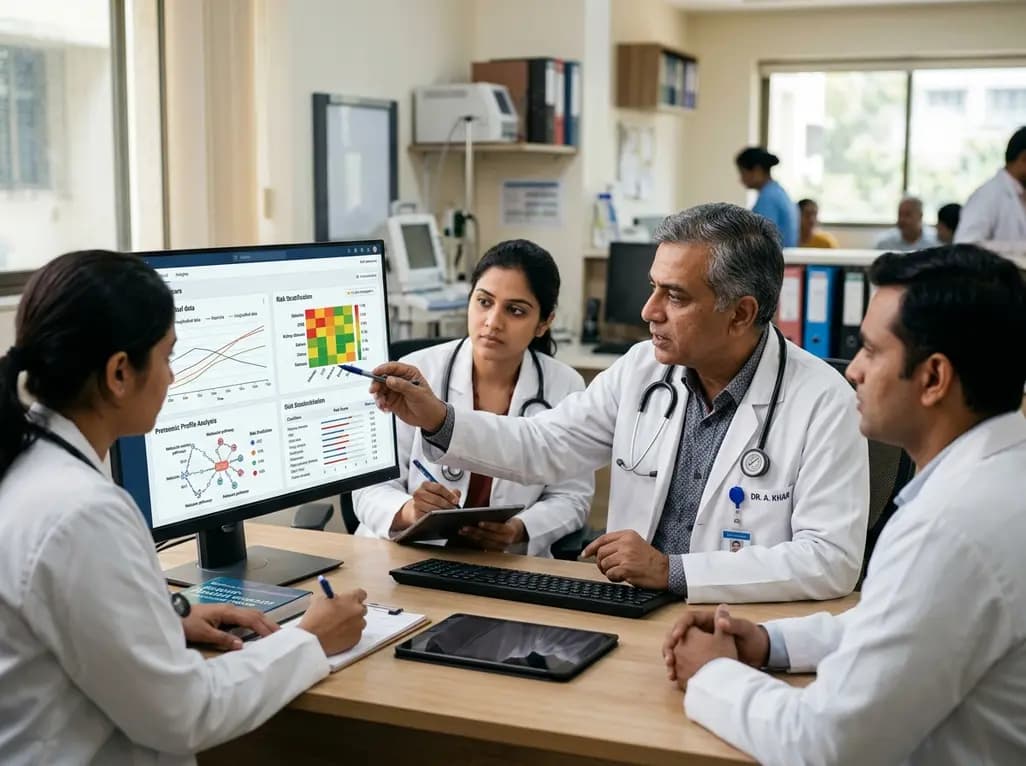
Artificial intelligence is transitioning healthcare from reactive diagnosis to proactive forecasting. By evaluating plasma proteomic profiles and longitudinal health trajectories, clinicians can identify early systemic decline, stratify multimorbidity risk, and personalize preventive interventions effectively.
Today

Scandinavian register evidence reveals that neonatal birth length strongly predicts adult health and mortality, whereas birth weight dictates cognitive capacity. Symmetric growth restriction causes far more severe long-term deficits than asymmetric restriction, underscoring the need for comprehensive anthropometry.
Today
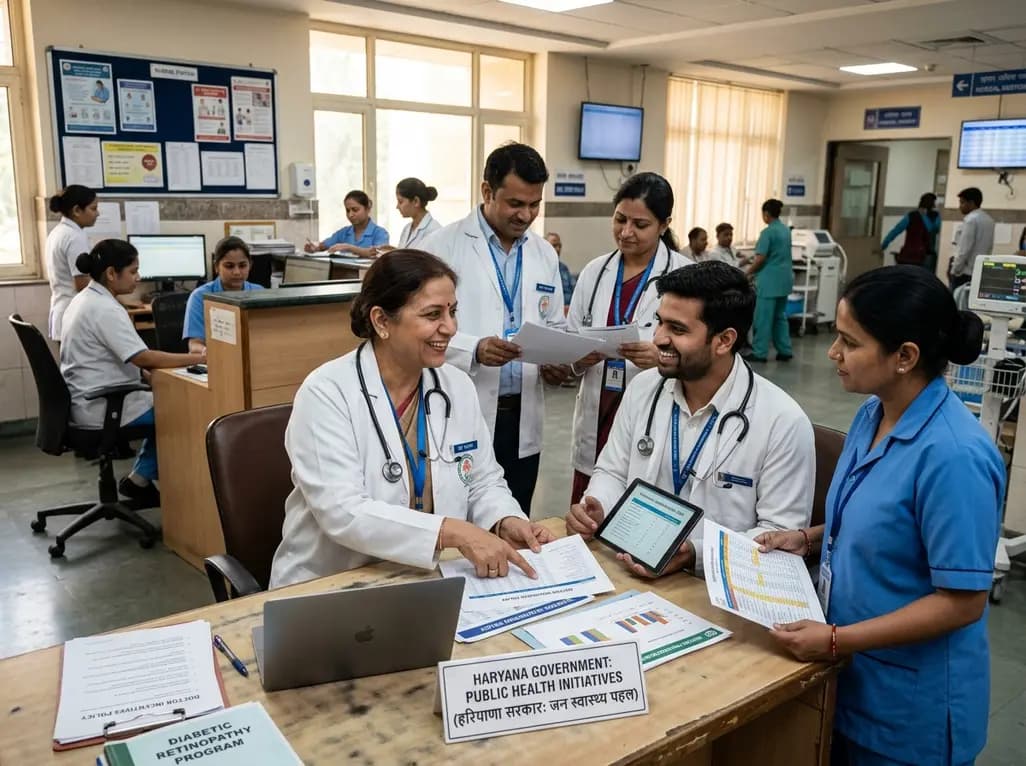
Haryana Chief Minister Nayab Singh Saini has rolled out landmark performance-linked financial incentives for public sector clinicians and allied staff. The comprehensive reform introduces free intravitreal diabetic retinopathy management, flexible empanelment for private specialists, and digital infrastructure upgrades.
Today
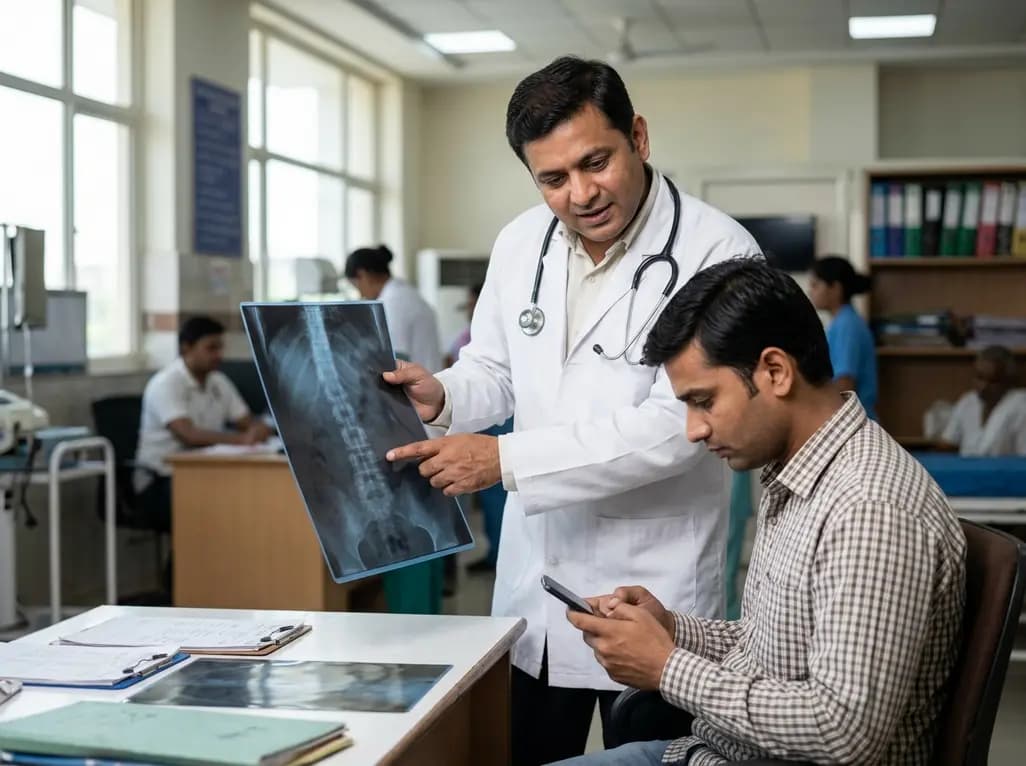
A cross-sectional study reveals a strong positive correlation between problematic internet use and kinesiophobia in adults aged 18-45 with non-specific low back pain, highlighting how digital overuse reinforces movement fear and complicates musculoskeletal recovery.
Today
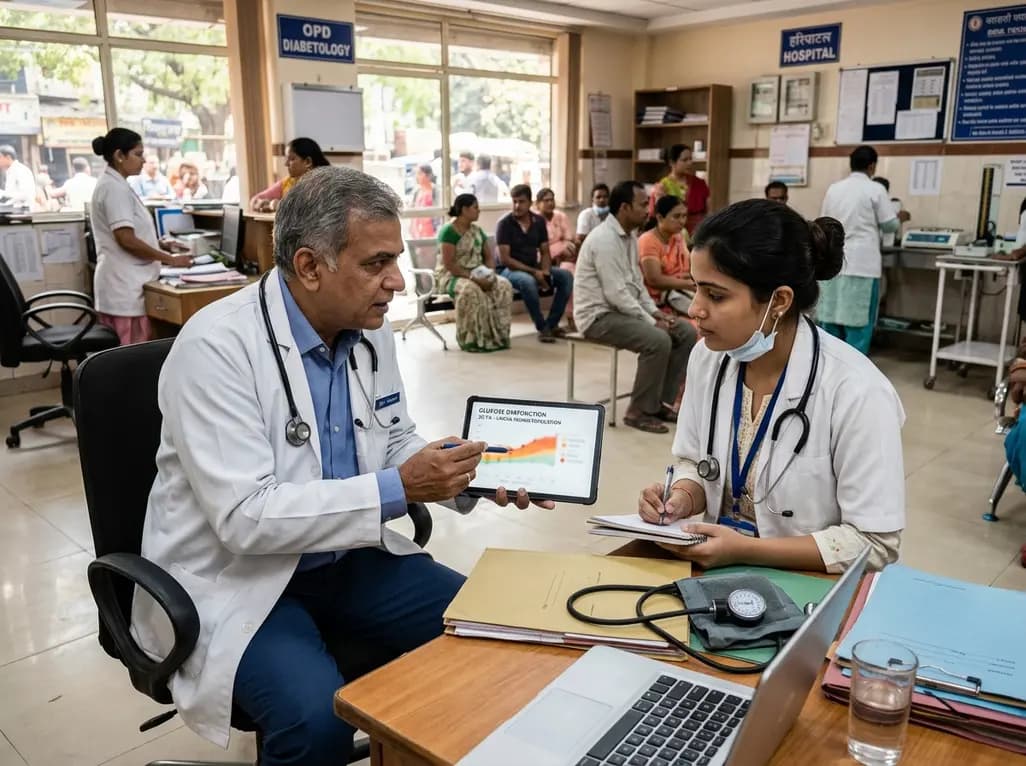
Data from the 2026 Workforce Health Index reveals that 38.7% of urban employees and dependents exhibit abnormal glycemic control. Emerging at increasingly younger ages, this metabolic shift intersects with severe vitamin deficiencies, highlighting the urgent need for early workplace screenings and targeted clinical care.
Today
