.webp&w=384&q=75)

Loading, please wait...
Loading, please wait...
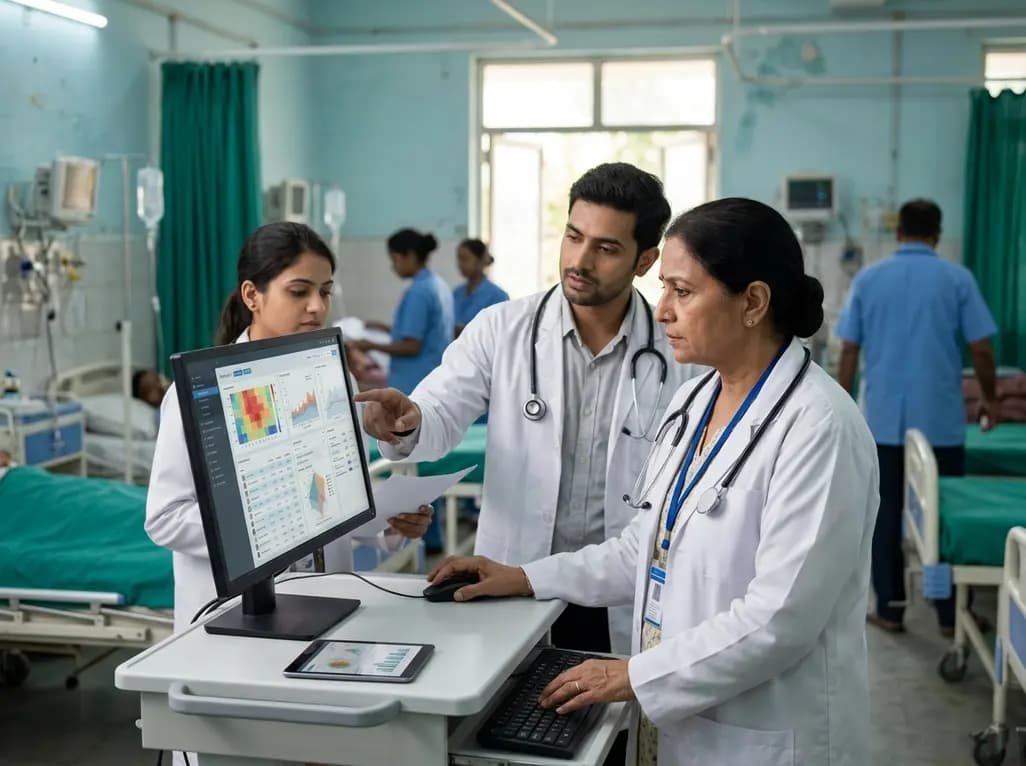
Modern healthcare systems rapidly integrate artificial intelligence to optimize clinical workflows, reduce administrative burdens, and enhance diagnostic accuracy. Consequently, the expanding role of AI in healthcare fundamentally alters traditional clinical paradigms and practitioner experiences. However, rapid technical adoption often outpaces organizational readiness, leading to critical operational challenges. Recent qualitative research highlights that clinicians recognize the vast efficiency of machine learning yet encounter substantial friction during routine implementation. Specifically, healthcare providers frequently balance automated diagnostic speed against the necessity for deliberate clinical evaluation. In addition, real-world deployment reveals unexpected discrepancies between algorithmic promises and daily bedside practice. Therefore, medical leaders must investigate how frontline clinicians interact with digital tools across varied specialties. Furthermore, understanding these practical dynamics allows healthcare organizations to design smarter digital solutions that genuinely support medical staff. Ultimately, successful technological transformation requires addressing user concerns, cognitive impacts, and operational obstacles from the perspective of active clinicians.
Trust remains the cornerstone of any successful clinical adoption of automated technology. Healthcare professionals frequently express skepticism when algorithmic tools function as opaque black boxes without clear rationale. For this reason, clinicians demand explainable outputs that detail the underlying clinical evidence and data inputs. When digital systems fail to provide transparent reasoning, practitioners understandably hesitate to act upon machine recommendations. Moreover, inconsistent diagnostic suggestions can erode professional confidence in digital platforms. To address this friction, software developers must prioritize algorithmic interpretability and intuitive user interfaces. Furthermore, healthcare institutions need to establish structured trust frameworks that help practitioners develop rational expectations. Clinicians should not view algorithms as infallible authorities or completely dismiss their utility. Instead, balanced calibration allows providers to assess computational outputs critically while maintaining final clinical responsibility. Consequently, transparent communication between software engineers and medical teams fosters long-term institutional trust.
Collaborative decision-making represents another vital domain where machine learning intersects with multidisciplinary clinical practice. In routine care, computerized tools offer real-time assistance during patient triage, image analysis, and complex medication ordering. However, integrating automated recommendations into established team dynamics requires careful structural adjustment. For instance, junior medical staff may feel uncertain when algorithmic recommendations conflict with attending physician guidance. Similarly, interdisciplinary communication can suffer if team members rely on disparate computational platforms. Therefore, medical facilities must define clear protocols that delineate clinical roles and computational authority. In addition, digital systems should support collaborative discussions rather than replace nuanced bedside dialogues. When technology enhances peer-to-peer consultation, patient care pathways become significantly safer and more efficient. As a result, clinical teams can leverage computational precision while preserving the holistic human perspectives essential for comprehensive care.
Technical shortcomings and usability issues represent substantial barriers to widespread clinical implementation. Many healthcare facilities struggle with fragmented software ecosystems that lack standardized communication protocols. Consequently, automated algorithms often operate in data silos, unable to communicate seamlessly with existing electronic medical records. Furthermore, poorly designed user interfaces increase cognitive fatigue and add extra administrative steps to busy shifts. Clinicians frequently encounter software lag, repeated data entry requirements, and cumbersome alert systems during patient encounters. Because of these usability hurdles, frustrated providers may bypass automated systems entirely to maintain workflow momentum. To resolve these operational challenges, healthcare administrators must prioritize interoperability across all departmental software. Moreover, technology vendors should engage frontline clinicians in user-centered interface design before deploying software in live wards. Consequently, seamless workflow integration minimizes administrative friction and promotes reliable technological adoption.
The potential erosion of fundamental diagnostic skills represents one of the most serious long-term concerns surrounding algorithmic assistance. When clinicians rely continuously on automated systems for basic differential diagnoses, independent analytical acumen may decline over time. Furthermore, emerging trainees face the distinct risk of developing cognitive complacency if they bypass foundational problem-solving exercises. Therefore, academic medical institutions must adapt educational curricula to emphasize rigorous critical thinking alongside technical proficiency. Trainees must learn how to audit algorithmic recommendations, identify systematic errors, and formulate independent diagnostic plans. In addition, healthcare organizations should promote tools designed to augment human intelligence rather than replace clinical judgment. Technology should serve as a secondary safety net rather than the sole decision-maker. Ultimately, preserving the core art of medical practice ensures that patient safety remains paramount across all clinical specialties.
Establishing sustainable algorithmic healthcare requires comprehensive regulatory oversight and continuous professional training. Policy makers and hospital administrators must formulate unambiguous guidelines regarding legal liability and ethical data governance. When diagnostic errors occur involving automated tools, clear legal frameworks must determine accountability without discouraging innovation. Moreover, healthcare organizations must implement recurring training programs that keep clinical staff updated on algorithmic updates and limitations. Ongoing workshops should train healthcare workers to recognize potential algorithmic biases and cybersecurity vulnerabilities. Meanwhile, interdisciplinary oversight committees should continuously monitor algorithm performance in real-world patient populations. By establishing rigorous quality assurance measures, hospitals can identify calibration drift before it harms patient outcomes. Consequently, proactive governance safeguards institutional integrity while maximizing technological benefits. Ultimately, ethical governance and structured education provide the necessary foundation for safe, patient-centered digital health transformation.
Continuous reliance on automated diagnostic systems creates significant risks of cognitive complacency and diagnostic skill atrophy. When clinicians routinely accept algorithmic outputs without independent verification, their critical thinking abilities can deteriorate over time. Consequently, medical trainees may fail to develop robust diagnostic reasoning if automated tools preempt foundational decision-making. Therefore, medical educators must ensure clinicians maintain rigorous analytical scrutiny during patient evaluations.
Disjointed electronic health records and unstandardized data architectures prevent algorithmic tools from exchanging vital patient information smoothly across clinical departments. When software systems operate in isolated silos, clinicians face repetitive data entry, frequent interface lag, and excessive alert fatigue. Consequently, these workflow disruptions increase cognitive exhaustion, prompting frustrated providers to abandon automated tools entirely in favor of manual charting methods.
Algorithms analyze statistical patterns across past data but lack contextual empathy, nuanced clinical instinct, and holistic bedside judgment. Furthermore, automated systems cannot understand complex socioeconomic nuances or subtle patient cues during physical examinations. Human oversight ensures that experienced clinicians validate computational outputs against patient preferences and distinct presentations. Consequently, maintaining a human-in-the-loop framework protects clinical safety, diagnostic integrity, and core professional ethics.
Disclaimer: This content is for informational and educational purposes only. It is not intended to provide medical advice, clinical guidance, or replace the independent judgement of a licensed healthcare professional. Healthcare providers should make clinical decisions based on each patient’s unique presentation, institutional protocols, and current medical evidence. The perspectives, potential risks, and recommendations discussed reflect findings from recent qualitative research on clinical artificial intelligence adoption and do not represent a universal consensus or binding regulatory standard. Clinicians must exercise due diligence, ensure appropriate patient privacy protections, and maintain human oversight when utilizing automated tools. Refer to the latest local and national guidelines for clinical practice.
References

Read summarized clinical updates, watch expert medical content, and earn CME certifications right from your smartphone.
Open your smartphone camera to scan and install.





A qualitative study highlights key challenges of AI in healthcare, including algorithmic trust, cognitive complacency, usability hurdles, and the preservation of core clinical reasoning among frontline healthcare professionals.
last month

Pancreatic cancer cachexia affects over 80% of patients, driving severe muscle wasting, systemic inflammation, and treatment intolerance. This review highlights key pathophysiological drivers, exocrine insufficiency, objective CT imaging, and emerging therapies like GDF-15 inhibitors to improve clinical outcomes.
Today

A scoping review reveals how pregnancy affects phonation through laryngeal edema and reduced phonation time rather than major acoustic pitch alterations. Learn how to identify, evaluate, and manage vocal symptoms in expectant mothers.
Today

According to WHO data, average lifespan reached 73.3 years in 2023, recovering from pandemic lows. However, healthy life expectancy lags at 62.8 years due to surging noncommunicable conditions like cardiovascular disease and dementia, demanding proactive primary screening and sustained chronic care.
Today

Researchers have engineered an artificial sensory-pain integrated receptor using a multi-threshold organic synaptic transistor. The system distinguishes benign touch from noxious stimuli, enabling safer, more responsive prosthetic limbs with built-in memory and simplified hardware architecture.
Today
Medical robotics is transitioning beyond operative suites into diagnostics, cardiology, and endocrinology. Explore how innovations in tele-robotics, AI integration, and nanomedicine are overcoming geographical barriers and transforming precision healthcare delivery across India's evolving disease landscape.
Today
