

Loading, please wait...
Loading, please wait...

Degenerative cervical spine conditions affect millions of individuals, leading to persistent neck pain, radiculopathy, and significant functional limitation. Clinicians frequently rely on radiological imaging to gauge structural deterioration; however, standard scans often correlate poorly with ongoing soft tissue inflammation and symptom fluctuation. Consequently, researchers have sought reliable molecular markers to track biological activity in real time. Recent developments in cervical spondylosis microRNA monitoring provide an objective pathway to assess disease severity and evaluate therapeutic response. By measuring specific non-coding RNA signatures, medical practitioners can identify subtle inflammatory cascades before severe neurocompression occurs.
Intervertebral disc degeneration involves complex biological events, including extracellular matrix degradation, cellular senescence, and chronic neurovascular inflammation. MicroRNAs represent small non-coding RNA molecules that post-transcriptionally regulate gene expression across various musculoskeletal tissues. In particular, clinicians recognize microRNA-146a as a crucial regulator of innate immune responses and nuclear factor kappa B signaling. Dysregulation of this molecule frequently accelerates catabolic enzyme production within cervical chondrocytes. Furthermore, microRNA-221 actively influences vascular endothelial proliferation, chondrocyte apoptosis, and osteogenic differentiation. When both biomarkers exhibit abnormal expression, they indicate heightened localized disc degeneration and facet joint stress. Therefore, detecting circulating levels of these non-coding sequences offers vital prognostic insight into spinal pathology. Traditional diagnostic modalities like magnetic resonance imaging reveal anatomical narrowing but cannot quantify immediate molecular activity. In contrast, liquid biopsy through blood sampling captures dynamic shifts in systemic and regional inflammation. Because circulating RNAs remain relatively stable in serum, they serve as excellent surrogate indicators of tissue turnover. Consequently, evaluating dual microRNA profiles allows spine specialists to anticipate disease progression with superior clinical confidence.
Conventional molecular diagnostics typically require high-end laboratory instrumentation and intricate thermal cycling steps. To overcome these logistical barriers, biomedical engineers created an ingenious AND-gate CRISPR/Cas13a biosensing platform. The diagnostic system functions through a rigorous dual-input logic control mechanism. Specifically, the reaction cascade initiates only when both target biomarkers—miRNA-221 and miRNA-146a—are concurrently present in the biological specimen. The underlying architecture integrates target-recycling strand displacement amplification with enzymatic cleavage. Once the dual microRNA targets hybridize with designed hairpin DNA strands, they initiate self-priming cyclic amplification. Subsequently, this molecular recognition event activates the CRISPR-associated Cas13a endonuclease via specific guide RNAs. The activated Cas13a enzyme demonstrates collateral cleavage activity, rapidly degrading surrounding ribonucleic acid sequences. As a direct consequence, the enzymatic cascade generates double-stranded DNA amplicons that facilitate downstream signaling. SYBR Green I then catalyzes the oxidation of tetramethylbenzidine to generate a vivid visual chromogenic response. Hence, this logical AND-gate architecture eliminates false-positive signals from single-target cross-reactions. Medical professionals gain a highly dependable analytical tool that operates seamlessly without complex thermal cyclers or expensive fluorometers.
Analytical performance dictates whether any novel biosensor can transition successfully into routine clinical pathology. In rigorous validation experiments, this logic-gated CRISPR assay demonstrated outstanding analytical sensitivity and a remarkably broad dynamic range. Specifically, the platform exhibited linear detection spanning from 10 femtomolar to 500 picomolar concentrations. Furthermore, the calculated limit of detection reached 2.12 femtomolar, allowing detection of trace circulating molecules. The colorimetric assay yields a distinct blue coloration visible to the naked eye upon successful target recognition. Thus, healthcare providers can interpret results rapidly at the point of care without specialized spectrophotometers. Moreover, the test showed exceptional selectivity when challenged against structurally homologous non-target sequences. Good repeatability across multiple sample runs reinforces its potential as a dependable diagnostic asset in decentralized medical settings. Because sample processing demands minimal technical manipulation, rural health clinics and community health centers can easily deploy this methodology. Consequently, this innovation bridges the critical gap between sophisticated molecular biology and practical primary care diagnostics. Clinicians can rapidly verify molecular status while minimizing turnaround time and laboratory overhead.
The clinical utility of cervical spondylosis microRNA monitoring extends far beyond initial diagnostic screening. In clinical practice, spine specialists frequently struggle to quantify therapeutic efficacy using subjective visual analog scales alone. Pain scores fluctuate based on psychological perception, making objective outcome assessment notably difficult. By integrating dual microRNA quantification into follow-up protocols, physicians establish an objective biological baseline for every patient. In a clinical trial involving twenty patients, researchers monitored miRNA-221 and miRNA-146a levels across four weeks. Patients undergoing targeted therapeutic interventions demonstrated pronounced downregulation in both microRNA concentrations compared to baseline measurements. In stark contrast, untreated control cohorts showed no meaningful alterations in circulating biomarker profiles. Additionally, the experimental findings demonstrated exceptional correlation with gold-standard reverse transcription quantitative real-time PCR testing. This strict concordance confirms that colorimetric biosensing matches conventional laboratory accuracy. Therefore, clinicians can confidently track biological disease stabilization throughout conservative management regimens. Regular monitoring enables spine practitioners to modify physical therapies before irreversible structural neurological deficits manifest.
Auricular point pressing, a traditional reflexology and acupressure intervention, stimulates specific somatotopic ear zones to alleviate musculoskeletal pain. In modern integrative medicine, practitioners frequently utilize this conservative therapy alongside physical exercise and postural correction. However, conventional medical literature often questions the scientific validity of acupuncture-related modalities due to lacking biomolecular markers. This new CRISPR-enabled evaluation provides robust biological evidence validating the therapeutic impact of auricular point pressing. Specifically, patients receiving 4 weeks of ear acupressure exhibited substantial decreases in pro-inflammatory miRNA-146a and angiogenic miRNA-221. These molecular reductions directly parallel clinical pain relief and improved cervical range of motion. Furthermore, the non-invasive nature of both the therapy and the biosensor offers an attractive conservative option for elderly patients. In Indian healthcare systems, integrating validated complementary therapies can reduce reliance on non-steroidal anti-inflammatory drugs. Consequently, patients avoid common gastrointestinal and renal adverse effects associated with prolonged analgesic consumption. By pairing ancient therapeutic concepts with cutting-edge CRISPR diagnostics, clinicians can practice evidence-based integrative pain management with verifiable therapeutic success.
MicroRNA-146a and microRNA-221 play essential regulatory roles in musculoskeletal inflammation and degenerative disc disease. Specifically, microRNA-146a modulates inflammatory mediator release and catabolic cartilage destruction via the nuclear factor kappa B pathway. Concurrently, microRNA-221 regulates angiogenesis, facet joint vascularization, and chondrocyte apoptosis. When spinal tissues degenerate, circulating levels of both biomarkers increase noticeably. Therefore, measuring their combined serum expression delivers accurate prognostic information regarding active tissue inflammation and ongoing spinal degeneration.
The AND-gate biosensor utilizes a biological logic circuit that requires the presence of two distinct inputs to trigger a reaction. Specifically, the CRISPR-associated Cas13a endonuclease activates only when it identifies both miRNA-146a and miRNA-221 within the patient sample. Upon dual recognition, Cas13a executes non-specific collateral cleavage that initiates downstream DNA amplification. This enzymatic process oxidizes tetramethylbenzidine, producing an immediate naked-eye blue color that reliably confirms biomarker presence without specialized diagnostic machinery.
Auricular point pressing represents a non-invasive complementary therapy that stimulates specific nerve endings on the external ear. In patients with cervical spondylosis, this physical stimulation modulates neuroinflammatory cascades and promotes muscular relaxation around the cervical vertebrae. Furthermore, clinical trials confirm that regular treatment significantly downregulates circulating inflammatory microRNAs. Consequently, incorporating ear acupressure into multimodal conservative protocols provides safe pain relief while reducing reliance on conventional anti-inflammatory drugs and oral analgesics.
Disclaimer: This content is for informational and educational purposes only... Refer to the latest local and national guidelines for clinical practice.
References
Wang Y et al. AND-gate CRISPR/Cas13a-assisted colorimetric assay for dual microRNA monitoring of cervical spondylosis prognosis and auricular point pressing therapy evaluation. Anal Methods. 2026 Oct 30. doi: 10.1039/d6ay01471b. PMID: 42961320.
Agarwal N, et al. Fluid biomarkers for cervical spondylotic myelopathy. Neurosurg Rev. 2025;48(1):150.
Dincer C, et al. CRISPR/Cas13a powered electrochemical microfluidic biosensor for nucleic acid amplification-free miRNA diagnostics. Adv Mater. 2019;31(51):e1905311.
Tang Y, et al. MiRNA-146a—A Key Player in Immunity and Diseases. Int J Mol Sci. 2023;24(16):12780.

Read summarized clinical updates, watch expert medical content, and earn CME certifications right from your smartphone.
Open your smartphone camera to scan and install.





A breakthrough AND-gate CRISPR/Cas13a colorimetric assay enables ultrasensitive dual microRNA monitoring in cervical spondylosis, providing equipment-free prognosis and objective evaluation of auricular acupressure therapy.
Today
A study shows that evaluating inner speech and error patterns reveals treatment-based learning in post-stroke aphasia, even when binary accuracy fails to detect gains. Tracking qualitative linguistic transitions enables personalized speech rehabilitation and improves neurological recovery assessment.
Today

A prospective study reveals significant first-trimester trace-element alterations in pregnant women with epilepsy. Lower serum selenium independently predicted subsequent seizure recurrence despite prior remission, highlighting the vital clinical role of micronutrient profiling during antenatal care.
Today
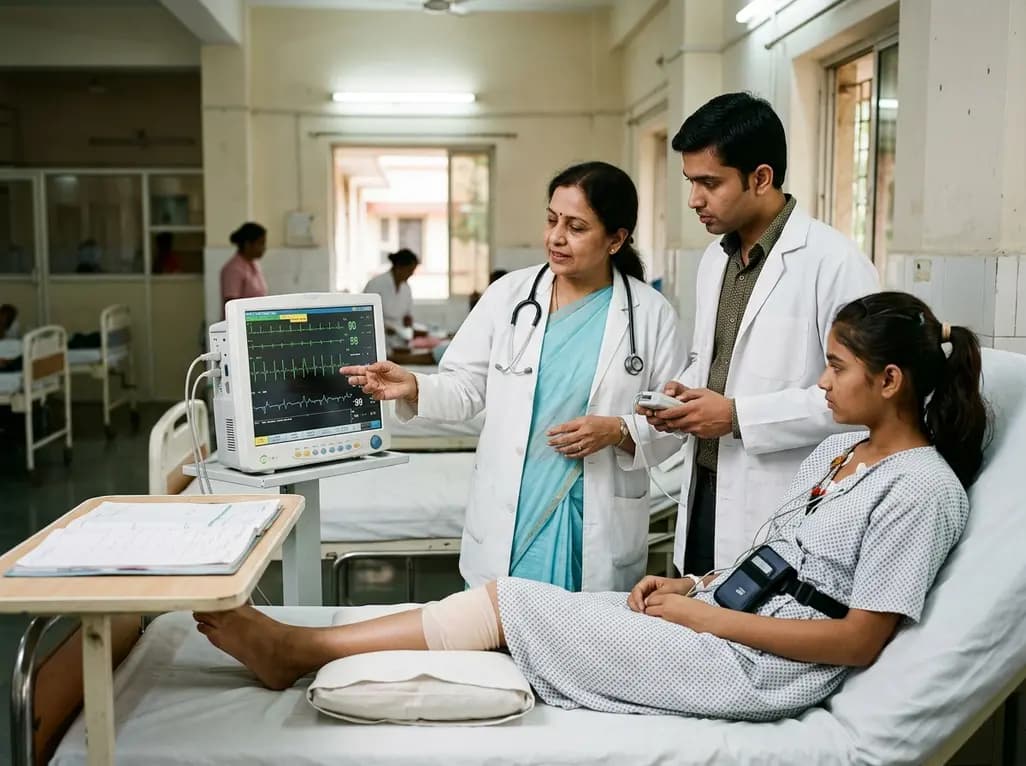
A 15-year-old patient presented with knee arthralgia and acute rheumatic fever, exhibiting complex arrhythmias including AV blocks and non-sustained ventricular tachycardia despite lacking severe valvulitis. This highlights the importance of extended Holter monitoring in pediatric rheumatic carditis.
Today

Discover essential clinical insights into AGLP1-type amyloidosis, a rare localized complication of glucagon-like peptide-1 analog injections. Learn how histopathology and mass spectrometry differentiate benign iatrogenic amyloidomas from systemic disease, preventing misdiagnosis and unwarranted therapies.
Today
