.webp&w=384&q=75)

Loading, please wait...
Loading, please wait...
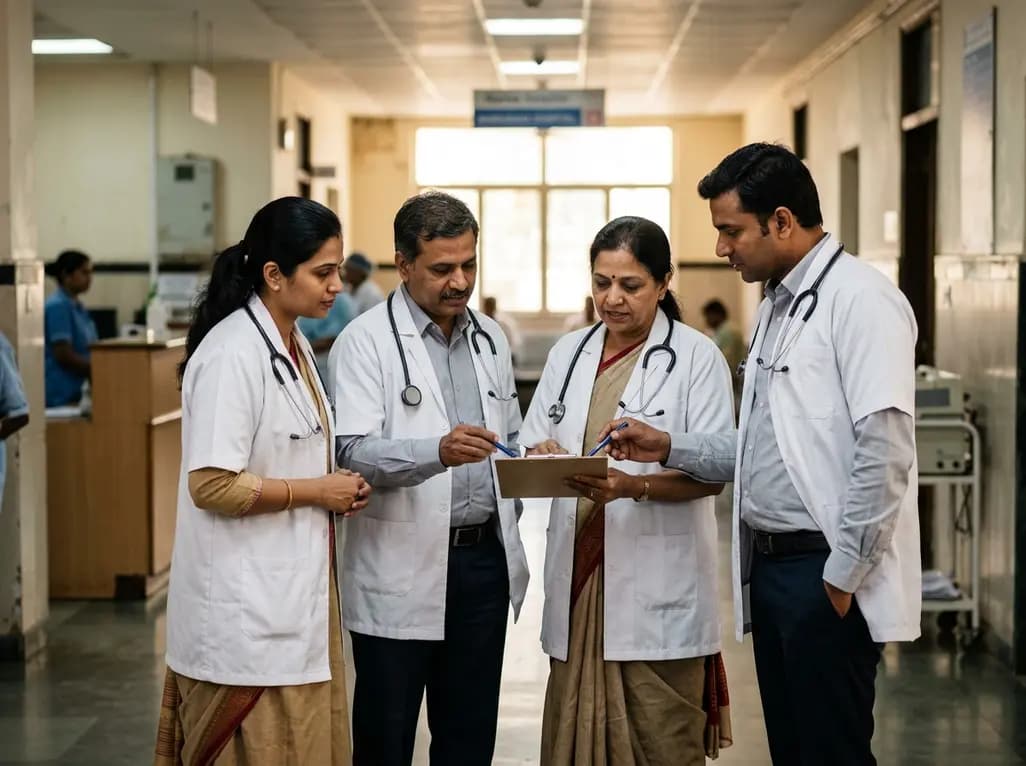
Cervical cancer represents a profound public health challenge, particularly within resource-limited settings like South Africa and India. Despite being largely preventable through vaccination and early detection, it remains the second most common malignancy among South African women. Consequently, healthcare providers and policymakers must urgently address the suboptimal uptake of Papanicolaou (Pap) screening. This article examines the multifaceted cervical cancer screening determinants identified in a recent analysis of the 2016 South African Demographic and Health Survey. By understanding these factors, clinicians can better advocate for their patients and help bridge the gap in preventive care. Furthermore, the interplay between sociodemographic characteristics and lifestyle behaviors provides a roadmap for future health interventions. Notably, the study reveals that systemic barriers continue to hinder progress toward the World Health Organization’s global elimination targets. Therefore, a deep dive into the specific drivers of screening participation is essential for improving clinical outcomes. For instance, addressing disparities in education and healthcare access could significantly boost screening rates. Ultimately, this evidence-based approach allows for the development of more effective, culturally sensitive screening programs tailored to at-risk populations.
One of the most striking cervical cancer screening determinants identified in the study is the strong association with HIV testing. Women who had undergone HIV testing were significantly more likely to participate in cervical cancer screening. Specifically, the data showed an adjusted prevalence ratio of 1.79, indicating a robust synergy between these two health services. This connection is likely due to the integration of cervical screening into broader HIV care and reproductive health frameworks. Consequently, women already engaged with the healthcare system for HIV services benefit from frequent contact with providers who can recommend Pap smears. Furthermore, healthcare facilities that offer integrated services streamline the patient experience, making it easier for women to access multiple preventive checks in a single visit. Moreover, this finding underscores the importance of the “one-stop-shop” model in primary healthcare. In contrast, women who remain outside the HIV testing network often miss out on these critical screening opportunities. Therefore, leveraging HIV programs as a gateway for cervical cancer prevention remains a vital strategy. Overall, this integrated approach not only improves screening rates but also ensures that the most vulnerable women receive timely care.
Socioeconomic factors, including wealth and education, serve as powerful cervical cancer screening determinants. According to the research, women from wealthier households and those with higher educational attainment demonstrated much higher screening participation. Higher education often correlates with increased health literacy, empowering women to understand the importance of early detection and the risks of cervical cancer. Additionally, financial stability allows individuals to afford the indirect costs of screening, such as transportation and time off work. Furthermore, the study highlights that being in the “rich” category significantly increased the likelihood of uptake. Conversely, those in lower socioeconomic brackets face substantial barriers, including limited access to well-equipped facilities. Notably, education acts as a bridge, enabling women to navigate complex healthcare systems more effectively. In addition, better-educated women are more likely to be aware of the availability of free screening services in public clinics. Therefore, educational campaigns must target those with lower literacy levels to ensure equitable access. By addressing these economic and educational gaps, health systems can move closer to achieving universal screening coverage for all women, regardless of their background.
Demographic characteristics, particularly population group identity, play a significant role in determining health behaviors in South Africa. The study found that being Black was associated with lower screening uptake compared to other population groups. Specifically, the adjusted prevalence ratio for Black women was 0.75, suggesting that significant racial disparities persist in the healthcare landscape. These findings reflect historical and systemic challenges that continue to affect access to quality medical services. Furthermore, rural residence often compounds these issues, as many Black women live in areas with fewer specialized clinics. Consequently, there is an urgent need for interventions that specifically address the unique barriers faced by these communities. Moreover, cultural nuances and varying levels of trust in the medical system may influence a woman’s decision to seek screening. Therefore, healthcare providers must employ culturally sensitive communication strategies to build trust and encourage participation. By focusing on the specific needs of marginalized demographic groups, policymakers can design more inclusive health policies. Ultimately, closing the gap in screening rates among different population groups is essential for reducing the overall burden of cervical cancer.
Beyond traditional sociodemographic factors, women’s empowerment and lifestyle behaviors also emerged as cervical cancer screening determinants. Interestingly, the study noted that alcohol misuse was a minor but present factor associated with screening uptake. Furthermore, disempowerment, often measured by a woman’s lack of decision-making power in the household, was identified as a barrier to health-seeking behavior. When women lack autonomy, they may struggle to prioritize their own health or access medical services without permission. Additionally, having health insurance was positively linked to screening, highlighting the role of financial protection in facilitating preventive care. However, the influence of these factors was less pronounced than that of HIV testing and wealth. Specifically, empowerment metrics suggest that social status within the family significantly impacts a woman’s ability to seek a Pap smear. Therefore, public health initiatives should incorporate elements of women’s empowerment to bolster health outcomes. In addition, addressing risky lifestyle behaviors through comprehensive counseling can further encourage participation in screening programs. Overall, a holistic view of a woman’s life, including her social and economic environment, is necessary for understanding screening behavior.
The suboptimal levels of Pap smear uptake highlighted in this study necessitate innovative strategies for future outreach. Specifically, the findings suggest that traditional facility-based screening may not be sufficient to reach the most underserved women. Consequently, community-based screening programs, such as mobile health clinics and home-based self-sampling for HPV, could prove highly effective. Furthermore, enhanced awareness campaigns that utilize radio, social media, and community leaders can help demystify the screening process. Notably, the success of HIV programs in South Africa offers a potential model for scaling up cervical cancer prevention. By integrating Pap smears into every routine healthcare contact, providers can capitalize on existing patient-provider interactions. Moreover, training mid-level healthcare workers to perform screenings can alleviate the burden on specialists and expand access in rural areas. Therefore, a multidisciplinary approach involving government agencies, non-profits, and local communities is crucial. In conclusion, while the challenges are significant, the identification of key cervical cancer screening determinants provides a clear path forward. Through targeted interventions and sustained political will, the goal of eliminating cervical cancer can become a reality for all women.
HIV testing serves as a significant determinant because it often acts as a woman's primary entry point into the formal healthcare system. In South Africa and other high-burden regions, HIV clinics are well-integrated into primary care. Consequently, women who visit these clinics for testing or antiretroviral therapy are frequently offered cervical screening as part of a comprehensive care package, thereby increasing overall uptake among this specific group.
Socioeconomic status, encompassing wealth and education, heavily dictates access to preventive services. Wealthier women often have the financial means for private insurance or transportation to specialized clinics. Meanwhile, higher education enhances health literacy, allowing women to better understand the clinical importance of early cancer detection. Consequently, these factors combine to create a significant advantage in screening participation compared to women in lower socioeconomic brackets.
Improving screening rates requires a multifaceted approach, including the decentralization of services through community-based programs and mobile health units. Furthermore, education initiatives should focus on demystifying the Pap smear procedure and addressing cultural stigmas. Notably, integrating cervical screening with other health services, like immunization or family planning, can maximize opportunities for detection. Ultimately, empowering women with information and reducing financial barriers are essential steps toward equitable healthcare access.
Disclaimer: This content is for informational and educational purposes only and does not constitute medical advice. Always seek the advice of a qualified healthcare provider with any questions regarding a medical condition. Refer to the latest local and national guidelines for clinical practice.
References
Singini MG et al. Factors associated with cervical cancer screening in the South African demographic and health survey. Cancer Causes Control. 2026 Jun 30. doi: undefined. PMID: 42380372.
World Health Organization. (2025). Cervical cancer: Global strategy to accelerate the elimination of cervical cancer. Geneva: WHO Press.
Ndwandwe S, et al. Determinants of cervical cancer screening uptake among women in sub-Saharan Africa: a systematic review. BMC Public Health. 2024; 24:1120.
"
Read summarized clinical updates, watch expert medical content, and earn CME certifications right from your smartphone.
Open your smartphone camera to scan and install.





Cervical cancer remains a major health challenge in South Africa. This study identifies HIV testing, education, and wealth as primary cervical cancer screening determinants. Findings suggest that targeted community-based initiatives are essential to improve Pap smear uptake among vulnerable populations.
3 months ago

A retrospective cohort study of 7,716 ICU patients from the MIMIC-IV database demonstrates that Gradient Boosting Decision Trees significantly outperform traditional SOFA scores in predicting in-hospital mortality among patients with sepsis and diabetes, with SHAP analysis providing clinical interpretability.
Today

A prenatal case highlights severe glutaric acidemia type II presenting as bilateral hyperechoic cystic kidneys at 18 weeks. Whole-exome sequencing revealed a novel homozygous ETFDH frameshift variant, demonstrating the power of rapid genetic testing in fetal renal anomalies.
Today
This article reviews the forensic and clinical complexities of acute myocarditis arising on left ventricular hypertrophy in children, highlighting early diagnostic red flags and multidisciplinary postmortem autopsy protocols.
Today

This comparative study evaluates posterior labral tears with and without glenohumeral instability, highlighting distinct demographic patterns, MRI underestimation in stable shoulders, and successful arthroscopic repair outcomes.
Yesterday

A clinical study demonstrates that early intervention with tocilizumab, either as monotherapy or bridged with corticosteroids, achieves significant proptosis reduction and resolves active inflammation in treatment-naive thyroid eye disease.
Yesterday
