.webp&w=384&q=75)

Loading, please wait...
Loading, please wait...
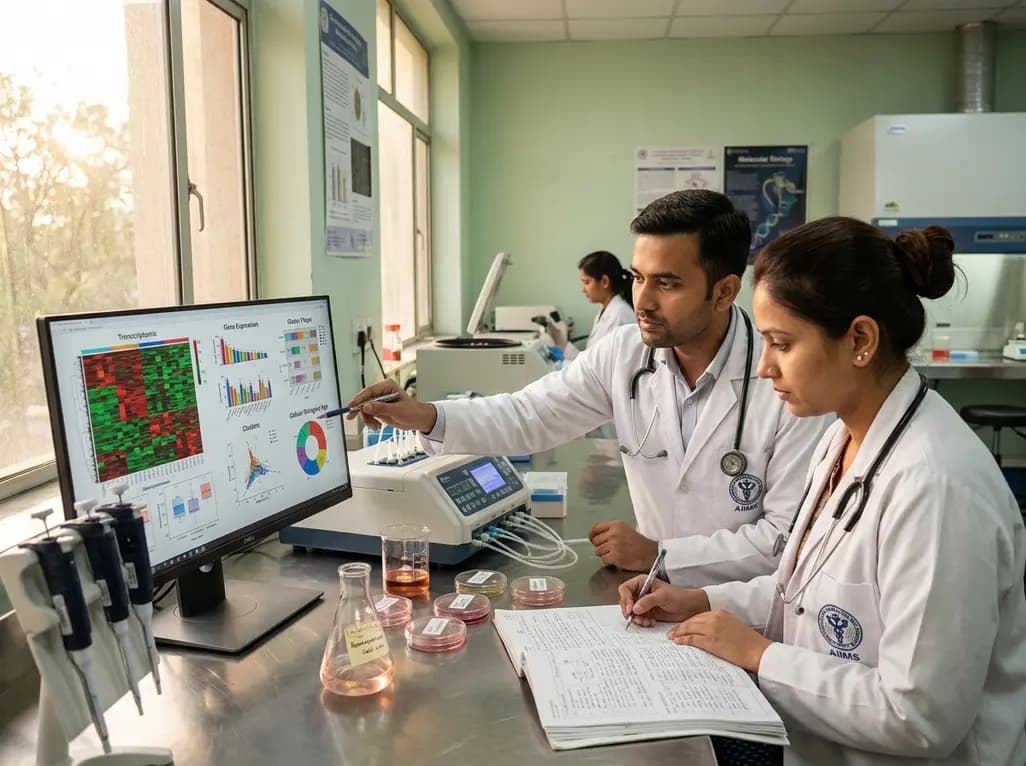
Biological aging represents a primary risk factor for numerous non-communicable disorders, including cardiovascular disease, cancer, and neurodegenerative conditions. Although chronological age counts chronological years, individual tissues often deteriorate at disparate rates. Consequently, measuring cellular biological age has become a vital objective in modern geroscience. Investigators from Karolinska Institutet and Stockholm University recently unveiled an innovative computational platform named Pasta in the journal Advanced Science. This open-access transcriptomic clock accurately predicts cellular age across diverse tissues by evaluating gene activity patterns. Furthermore, the platform empowers researchers to screen thousands of therapeutic molecules capable of either driving cellular senescence or fostering youthful cellular phenotypes.
Traditional aging clocks primarily rely on DNA methylation patterns or single-tissue transcriptomic profiles. Consequently, many legacy algorithms exhibit limited versatility across diverse laboratory techniques and cell lineages. To overcome these constraints, the research team engineered Pasta as an adaptable transcriptomic framework. Specifically, the scientists trained the model on comprehensive gene expression profiles derived from more than 17,000 healthy human tissue samples. Therefore, the algorithm captures universal signatures of cellular wear without suffering from platform-dependent artifacts.
In addition, the developers systematically validated Pasta across multiple independent external transcriptomic datasets. The software successfully classifies subtle shifts in cellular health and metabolic integrity. Because the platform remains freely available, research groups worldwide can apply the model directly to existing RNA-sequencing data. Consequently, scientists do not need to invest in expensive new measurement assays to assess physiological decline. As a result, this flexible architecture accelerates collaborative longevity research across basic science and clinical oncology.
When measuring cellular biological age, Pasta analyzes whether specific gene networks are actively transcribed or suppressed. The researchers observed that cells exhibiting elevated biological age consistently display heightened activity in pathways governing DNA damage responses. Furthermore, these older cells show pronounced cellular stress signatures and altered mitochondrial metabolic activity. In contrast, younger cells maintain high expression of pathways involved in efficient proteostasis and tissue repair.
Importantly, the computational tool readily distinguishes between irreversible senescent states and quiescent, stem cell-like populations. Senescent cells secrete inflammatory cytokines that degrade tissue architecture over time. Therefore, identifying these distinct cellular subsets provides crucial insights into the fundamental drivers of functional decline. By quantifying transcriptomic drift, clinicians and scientists can monitor how targeted lifestyle interventions or experimental therapies alter the cellular trajectory. Ultimately, tracking these transcriptomic shifts offers an objective metric to benchmark physiological resilience.
Beyond baseline age prediction, researchers utilized Pasta to examine over three million transcriptomic profiles from public perturbation repositories. These large-scale libraries cataloged cellular responses to thousands of pharmacologic agents and genetic alterations. As a result, the computational pipeline mapped specific molecular signaling pathways that either accelerate cellular senescence or stimulate cellular rejuvenation. This high-throughput computational approach rapidly pinpoints prospective candidates for age-related therapeutics.
Subsequently, the researchers performed laboratory experiments on cultured human cells to validate top computational hits. For instance, the analysis highlighted pralatrexate, an antifolate chemotherapy agent, which significantly accelerated cellular aging markers in experimental assays. Conversely, piperlongumine, a natural alkaloid, promoted youthful gene expression patterns and reduced senescent characteristics. Therefore, these experimental validations confirm that the algorithm accurately predicts the biological consequences of pharmacological interventions on human cellular physiology.
The ability to map cellular senescence holds profound clinical value for managing chronic multimorbidity. Age-related pathologies frequently arise from accumulated cellular damage and chronic low-grade sterile inflammation. Consequently, identifying molecules that modulate cellular lifespan could transform preventive medicine and oncology care. For example, oncologists could optimize chemotherapy regimens to avoid excessive pro-senescent damage in healthy host organs.
Moreover, gerontologists could leverage transcriptomic age estimators to evaluate novel senolytic and senomorphic therapies. Senolytics selectively eliminate senescent cells, whereas senomorphics suppress harmful secretory phenotypes without inducing apoptosis. Because Pasta evaluates multiple tissue types reliably, researchers can track systemic drug responses across various organ systems simultaneously. Thus, transcriptomic profiling provides a standardized biomarker to determine whether therapeutic interventions genuinely improve healthspan.
Although these computational and in vitro breakthroughs show immense promise, significant translational challenges remain. Most experimental findings currently derive from cell culture models and computational databases. Therefore, extensive in vivo studies and human clinical trials are essential before implementing these findings into patient care. Additionally, researchers must determine whether reversing cellular transcriptomic age translates into tangible clinical recovery and functional improvements.
Nevertheless, the Pasta model establishes a solid foundation for precision geroscience. Future research will explore how environmental factors, nutritional patterns, and metabolic stressors alter cellular clocks across diverse populations. Furthermore, integrating single-cell transcriptomics with machine-learning algorithms will enhance spatial resolution within diseased organs. Ultimately, these ongoing advances will bring clinicians closer to personalized, longevity-focused therapeutic strategies that delay chronic disease onset.
Q1: What is the primary purpose of the newly developed Pasta tool?
The Pasta tool is an open-access transcriptomic aging clock designed to calculate the biological age of cells. By analyzing active and inactive gene expression patterns across diverse tissue types, Pasta measures cellular stress, identifies senescent cells, and screens pharmacological substances that either accelerate or reverse cellular aging processes.
Q2: How does biological age differ from chronological age in human cells?
Chronological age simply measures the total elapsed time since birth. In contrast, biological age reflects the true physiological condition, functional integrity, and accumulated molecular damage of cells. Consequently, two individuals of identical chronological age may exhibit markedly different biological ages due to genetic factors, environmental exposures, and lifestyle habits.
Q3: Can compounds identified by the Pasta tool be immediately used as anti-aging therapies?
No, these findings cannot be immediately translated into clinical therapies. While compounds like piperlongumine showed rejuvenating effects in laboratory experiments, these tests occurred in cell-based models. Comprehensive preclinical toxicology studies and rigorous human clinical trials remain necessary to evaluate overall efficacy and clinical safety in patients.
Disclaimer: This content is for informational and educational purposes only. It does not constitute medical advice or replace professional judgment. Refer to the latest local and national guidelines for clinical practice.
References

Read summarized clinical updates, watch expert medical content, and earn CME certifications right from your smartphone.
Open your smartphone camera to scan and install.





Researchers at Karolinska Institutet and Stockholm University have developed Pasta, an innovative transcriptomic tool that accurately estimates cellular biological age across diverse tissues and screens for compounds that influence longevity and cellular rejuvenation.
last month

A landmark study demonstrates that RIPK1 activation in the subacute phase of intracerebral hemorrhage drives inflammation, blood-brain barrier leakage, and cognitive impairment in males but not females, highlighting essential sex differences for precision neuroprotective clinical trials.
Today

A pharmacometric and machine learning study reveals that specific vaginal bacteria alter cervical antiretroviral exposure, highlighting the need for precision HIV PrEP strategies.
Today

New clinical evidence demonstrates a shift away from strict exercise restrictions in genetic heart disease. While patients with channelopathies engage in more vigorous activity than those with cardiomyopathies, shared decision-making and individualized risk assessments ensure safe, beneficial exercise participation.
Today

Sarcopenia significantly impairs functional independence and amplifies fracture risks in patients with osteoarthritis and osteoporosis. Learn about modern diagnostic strategies, GLP-1 therapy considerations, and evidence-based non-pharmacological management across multidisciplinary clinical settings.
Today

Recent research defines ferro-aging as a conserved iron-lipid axis driving organ decline across primates. Age-related iron dyshomeostasis stimulates ACSL4-mediated lipid peroxidation, promoting cellular senescence. Notably, vitamin C directly inhibits ACSL4, suppressing phospholipid oxidation and multi-organ decay.
Today
