.webp&w=384&q=75)

Loading, please wait...
Loading, please wait...

Clinicians performing rapid sequence intubation (RSI) with rocuronium often face the challenge of RSI sedation gaps. Because rocuronium has a prolonged duration of action, patients may remain paralyzed while their initial induction agent wears off. To address this safety concern, a recent multicenter study investigated how clinical decision support (CDS) updates influence sedation practices. Consequently, the research demonstrated that linking sedation guidance to rocuronium orders significantly improves patient care.
The retrospective study analyzed 713 adult patients across multiple centers. Researchers compared a preimplementation cohort to a postimplementation group after the CDS update. Notably, the implementation led to a substantial increase in propofol use, rising from 56.8% to 73.1%. Furthermore, the median initial propofol dose increased from 1.1 mg/kg to 1.4 mg/kg. These findings suggest that electronic alerts effectively prompt clinicians to provide more robust sedation immediately following the procedure.
In addition to better agent selection, the CDS update notably shortened the time to sedative initiation. Specifically, the median time to adequate sedation dropped from 52 minutes to 36 minutes. This reduction is critical because it minimizes the duration during which a patient might experience awareness with paralysis. Moreover, the study found no significant increase in hypotension requiring vasopressors despite the higher sedative doses. Therefore, CDS serves as a safe and effective tool for optimizing airway management protocols in high-pressure environments.
Rocuronium typically causes paralysis for 30 to 90 minutes, which far exceeds the duration of common induction agents like etomidate or ketamine. Without a plan for ongoing sedation, the patient may wake up while still unable to move, leading to significant psychological trauma.
The update provided specific sedation guidance linked directly to rocuronium orders within the electronic health record. As a result, clinicians increased their use of propofol and administered higher initial doses, leading to faster achievement of adequate sedation depth without compromising hemodynamic stability.
Disclaimer: This content is for informational and educational purposes only and does not constitute medical advice or a professional endorsement. Readers should consult with a qualified healthcare professional for specific medical concerns. Refer to the latest local and national guidelines for clinical practice.
References
Fielding M et al. Leveraging clinical decision support to minimize sedation gaps in patients receiving rocuronium for rapid sequence intubation. Am J Health Syst Pharm. 2026 Jun 09. doi: undefined. PMID: 42262839.
Carlson RT et al. Post-intubation analgesia and sedation following succinylcholine vs. rocuronium in the emergency department. Am J Emerg Med. 2023;71:99-103. doi: 10.1016/j.ajem.2023.06.017.

Read summarized clinical updates, watch expert medical content, and earn CME certifications right from your smartphone.
Open your smartphone camera to scan and install.





Multicenter research shows CDS implementation significantly improves sedation practices and reduces the risk of awareness with paralysis after RSI with rocu...
4 months ago
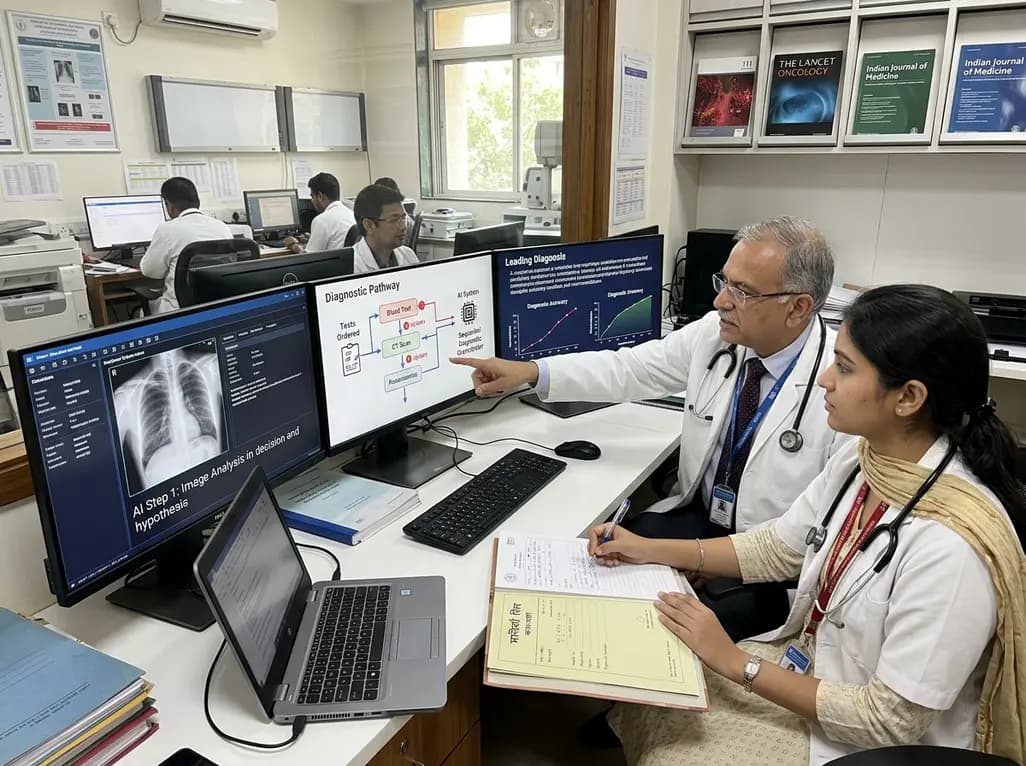
A breakthrough peer-reviewed study demonstrates that a sequential AI diagnosis system can mirror real-world clinical reasoning. By ordering stepwise tests and updating hypotheses dynamically, this multi-agent orchestrator achieved superior diagnostic accuracy while reducing investigative costs.
Today

A prenatal case highlights severe glutaric acidemia type II presenting as bilateral hyperechoic cystic kidneys at 18 weeks. Whole-exome sequencing revealed a novel homozygous ETFDH frameshift variant, demonstrating the power of rapid genetic testing in fetal renal anomalies.
Today

Review how tailored exercise programs benefit frail older patients with heart failure. Explore pathophysiological mechanisms, individualized training prescriptions, and strategies to overcome adherence barriers in clinical practice.
Yesterday

This comparative study evaluates posterior labral tears with and without glenohumeral instability, highlighting distinct demographic patterns, MRI underestimation in stable shoulders, and successful arthroscopic repair outcomes.
Yesterday

A clinical study demonstrates that early intervention with tocilizumab, either as monotherapy or bridged with corticosteroids, achieves significant proptosis reduction and resolves active inflammation in treatment-naive thyroid eye disease.
Yesterday
