

Loading, please wait...
Loading, please wait...
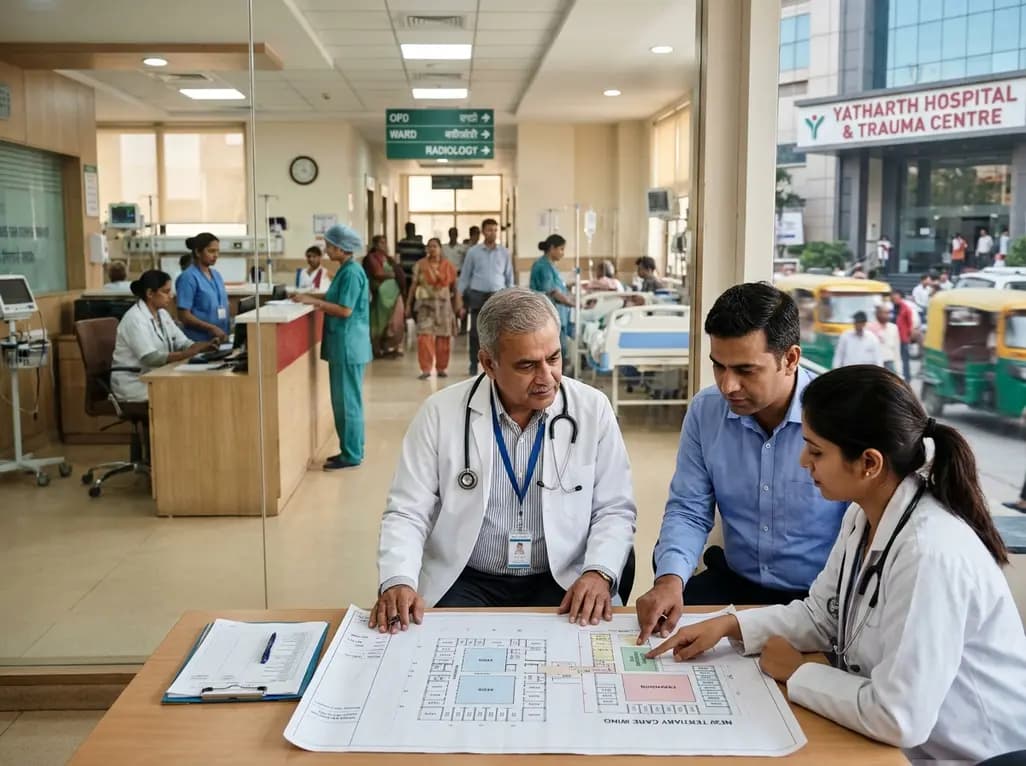
The Indian healthcare landscape continues to attract unprecedented capital from global private equity investors. In a major development, the Competition Commission of India has approved the proposed Yatharth Hospital investment by global private equity firm Advent International. This transaction represents an infusion of primary growth capital totaling Rs 3,150 crore. The deal will significantly strengthen tertiary healthcare delivery across northern India.
The anti-trust regulator announced its formal approval on social media platforms, removing regulatory hurdles for the transaction. Advent International will execute the equity acquisition through its investment affiliate, Rasmalai Limited. Consequently, the transaction grants Advent a significant minority equity stake of approximately 24.9 percent in the listed hospital chain. Meanwhile, the founding Tyagi family will retain controlling leadership as the primary promoter group.
Furthermore, this financial arrangement represents direct primary capital rather than a secondary share buyout. Therefore, the total funds will flow directly onto the hospital's balance sheet to finance long-term operational priorities. The Competition Commission evaluated the deal to prevent anti-competitive concentrations in urban clinical service markets. As a result, the regulatory body verified that the deal preserves fair market competition across corporate healthcare delivery. This milestone provides substantial financial liquidity to support extensive hospital expansion plans.
The significant Yatharth Hospital investment highlights sustained investor confidence in India’s expanding private hospital ecosystem. Advent International brings extensive institutional healthcare experience alongside its substantial capital reserves. In addition, global private equity backing introduces sophisticated operational governance and international procurement benchmarks. Consequently, hospital administrators can optimize clinical supply chains and standardize administrative protocols across tertiary care units.
Moreover, the influx of primary capital creates a durable cushion against escalating operational expenditures in private healthcare. Tertiary medical institutions require ongoing reinvestment to maintain advanced diagnostic instrumentation and modular intensive care wards. Therefore, this strategic partnership enhances institutional stability while insulating clinical operations from short-term financial headwinds. In contrast to high-interest debt instruments, equity capital empowers hospital leadership to pursue sustainable clinical excellence. Ultimately, this collaboration provides the necessary resources to accelerate medical talent recruitment and departmental development.
Founded in 2008, Yatharth Hospital and Trauma Care Services has emerged as a premier healthcare provider in North India. Currently, the organization operates nine multi-speciality hospitals accounting for approximately 2,800 operational inpatient beds. Furthermore, previous capital allocations positioned the company toward an announced capacity goal of 3,250 beds across its core clusters. However, this newly authorized capital infusion enables the chain to scale toward more than 5,000 operational beds.
Additionally, modern bed expansion requires balanced growth across intensive care units and specialized isolation suites. Hospital networks often struggle to maintain adequate bed density in tier-two and underserved peripheral urban centers. Therefore, Yatharth intends to deploy capital into high-growth corridors where tertiary care deficits remain acute. Expanding infrastructure relieves acute bed shortages and shortens diagnostic wait times for critically ill patients. Thus, regional healthcare access improves markedly as modern emergency and operative suites become available to broader demographics.
Modern hospital networks must look beyond simple bed volume to achieve meaningful clinical impact. Consequently, Yatharth plans to channel substantial capital into robotic surgical systems and hybrid catheterization laboratories. Advanced oncology centers also require high-energy linear accelerators and modern molecular pathology platforms. Therefore, these clinical investments will elevate diagnostic accuracy and reduce complication rates across complex surgical subspecialties.
Furthermore, medical teams require cutting-edge digital infrastructure to deliver seamless collaborative patient management. Electronic health records and automated bedside telemetry streamline communication among critical care specialists. As a result, clinicians can monitor complex post-operative trends without unnecessary clerical burdens. Additionally, investing in modular operating suites allows surgeons to perform minimally invasive procedures with superior visualization. In conclusion, combining top-tier medical hardware with specialized clinical expertise directly upgrades local therapeutic outcomes across multidisciplinary specialties.
The clearance follows strong quarterly financial performance across Yatharth’s hospital operations. For example, the healthcare provider reported a 17.45 percent rise in consolidated net profit to Rs 48.45 crore during the September quarter. Meanwhile, operational revenues expanded dramatically to Rs 431.42 crore compared to the prior fiscal period. These robust fiscal indicators reflect high bed occupancy and growing clinical procedural throughput across hospital campuses.
Consequently, international private equity firms view Indian multispecialty networks as resilient vehicles for sustainable capital deployment. Rising domestic medical insurance coverage and escalating chronic disease burdens drive consistent demand for tertiary medical care. Therefore, institutional private equity bridges the gap between public healthcare expenditures and patient demand for advanced hospital treatments. Moreover, disciplined financial backing enforces clinical credentialing standards and transparent billing structures. This economic environment fosters sustainable institutional growth while maintaining quality benchmarks across complex clinical departments.
Q1: What did the Competition Commission of India approve regarding Yatharth Hospitals?
The Competition Commission of India granted official regulatory clearance for private equity firm Advent International to acquire a 24.9 percent minority stake in Yatharth Hospital and Trauma Care Services. The transaction involves Rs 3,150 crore of primary capital infused through Advent's offshore investment affiliate, Rasmalai Limited, ensuring full compliance with national antitrust standards.
Q2: How will the hospital chain utilize the primary capital infusion?
Yatharth Hospitals will utilize the Rs 3,150 crore infusion to accelerate infrastructure expansion across North India. Key strategic priorities include expanding bed capacity beyond 5,000 units, establishing advanced robotic surgery programs, upgrading oncology platforms, modernizing trauma wards, and deploying integrated digital healthcare records across its growing multispecialty network.
Q3: Will the current promoters retain management control of Yatharth Hospitals?
Yes, the founding Tyagi family will continue to serve as the largest shareholder and maintain primary operational leadership of the healthcare network. Advent International will act as an institutional minority financial partner, contributing strategic capital, global procurement insights, and clinical governance assistance without displacing executive hospital administration.
Disclaimer: This content is for informational and educational purposes only. It does not constitute medical advice or replace professional judgment. Refer to the latest local and national guidelines for clinical practice.
References

Read summarized clinical updates, watch expert medical content, and earn CME certifications right from your smartphone.
Open your smartphone camera to scan and install.





The Competition Commission of India has approved private equity giant Advent International’s capital infusion into Yatharth Hospital via Rasmalai Ltd. The landmark transaction will accelerate tertiary care capacity, clinical technology adoption, and bed expansion across key multi-speciality centers in North India.
Today

Confirmed multiple drug hypersensitivity syndrome is rare, affecting only 1.4% of evaluated patients. A recent study highlights culprit patterns, diagnostic testing realities, and the danger of unnecessary drug avoidance, underscoring the vital need for systematic drug challenge testing and delabeling.
Today

A new quality-improvement initiative reveals that universal maternal mental health screening in the NICU increased screening rates from 29.5% to 95.0%, with nearly 60% of screened mothers requiring psychosocial referrals, highlighting the urgent need for embedded mental health resources.
Today
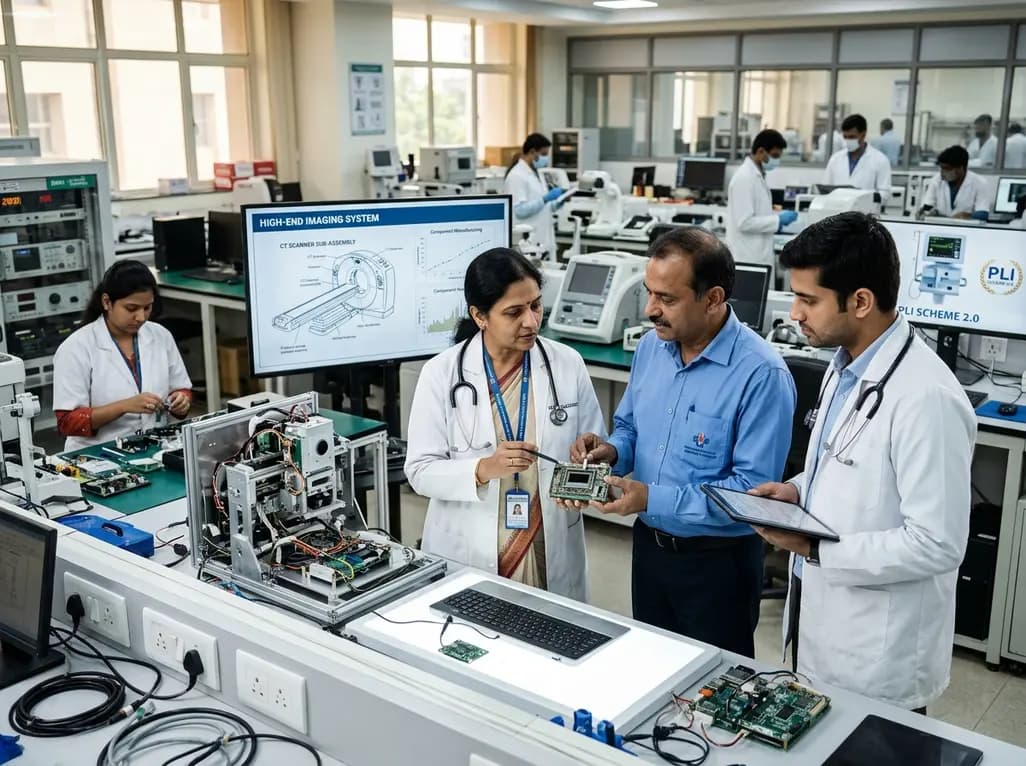
The Department of Pharmaceuticals has extended the medical devices PLI scheme to 2035-36 with a Rs 2,700 crore outlay. Featuring relaxed investment barriers and eliminated sales thresholds, the revised framework targets deep manufacturing, high-end diagnostics, critical MedTech components, and supply resilience.
Today

A metabolomic study reveals that aging delays glutathione synthesis and gamma-glutamylcysteine accumulation following muscle injury. Although precursor supplementation targets this enzymatic bottleneck, in vitro tests show no immediate effect on myogenesis, highlighting the complexity of muscle repair in older adults.
Today
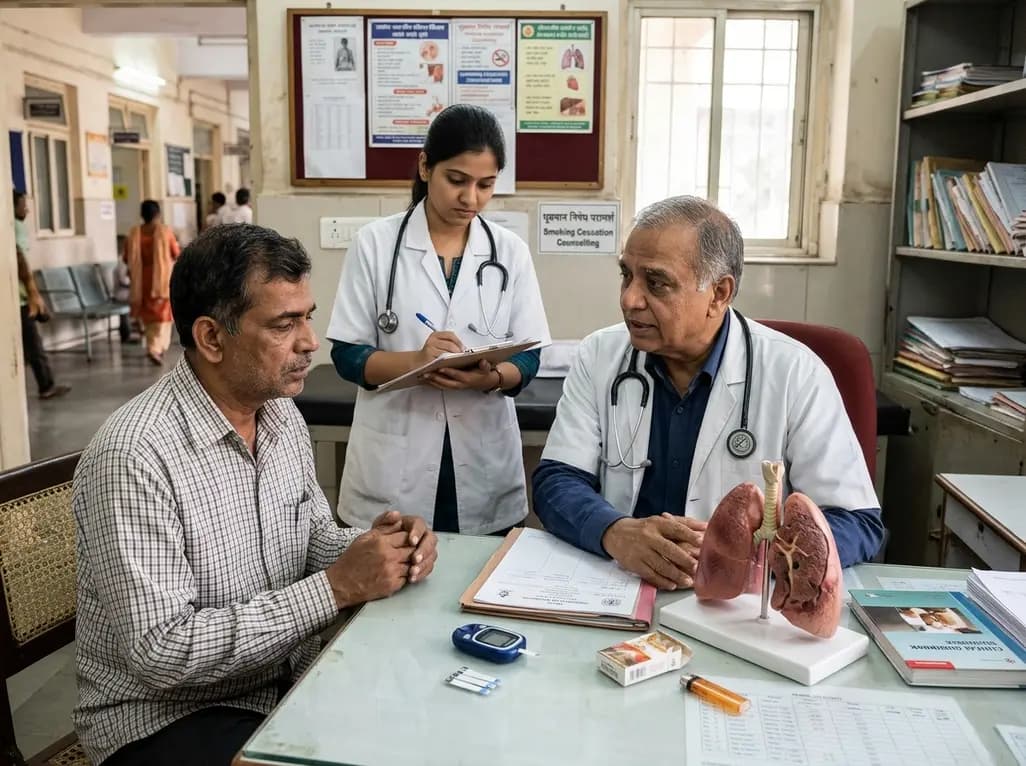
A systematic review evaluates psychological interventions for smoking cessation in diabetes, showing short-term success but highlighting challenges in long-term abstinence.
Today
