.webp&w=384&q=75)

Loading, please wait...
Loading, please wait...

Functioning pituitary adenomas require both cytoreduction and durable hormonal control to prevent systemic complications. However, occult invasion into the parasellar dura frequently prevents complete tumor clearance during standard transsphenoidal approaches. To solve this clinical challenge, skull base teams increasingly utilize selective cavernous sinus wall resection. This targeted surgical maneuver removes the fibrous dural boundary that separates the pituitary fossa from the cavernous sinus compartment. Consequently, neurosurgeons can excise microscopic tumor nests that standard curettage often misses. A recent systematic review and meta-analysis by Vargas and colleagues synthesizes evidence on this specialized technique across international centers. The investigators evaluated 13 clinical studies involving 493 adult patients presenting with growth hormone, adrenocorticotropic hormone, and prolactin-secreting tumors. Furthermore, they pooled data to evaluate gross total resection, biochemical normalization, recurrence rates, and cranial nerve complications. In typical neurosurgical practice, leaving persistent microscopic dural disease leads to treatment failure and lifelong medication dependency. Therefore, intentional resection of this anatomical wall offers a proactive strategy to optimize endocrine remission. As endoscopic visualization improves, specialized skull base teams can identify subtle dural infiltration with greater accuracy. This anatomical precision provides endocrinologists with renewed optimism for difficult parasellar cases.
The meta-analysis highlights compelling biochemical outcomes across different functioning adenoma subtypes. Among 344 patients with documented endocrine follow-up, the pooled endocrinological remission reached 85%. In addition, surgeons achieved gross total resection in 92% of cases, while tumor recurrence occurred in only 6% over follow-up periods. When analyzing specific adenoma lineages, somatotroph tumors exhibited an impressive 87% remission rate and a 95% total resection rate. Similarly, patients with corticotroph adenomas causing Cushing's disease achieved an 89% remission rate alongside a 91% resection rate. These high remission figures demonstrate that radical dural excision effectively clears hormonally active tissue in biologically aggressive secretors. In contrast, prolactinoma cohorts demonstrated slightly lower rates, achieving 78% biochemical remission and 80% total resection. Clinicians frequently manage prolactinomas with dopamine agonist medical therapy initially; thus, surgical cohorts often represent refractory or highly invasive variants. Furthermore, the overall low recurrence rate of 6% reinforces the long-term utility of microscopic dural clearance. By eliminating the dural sanctuary where functional cells persist, this approach reduces postoperative reliance on costly medical management. Consequently, patients experience durable biochemical cure without requiring early secondary interventions.
Operating near the internal carotid artery and parasellar cranial nerves naturally raises safety concerns. Nevertheless, the pooled analysis demonstrates a reassuring safety profile when experienced surgical teams perform the procedure. Specifically, internal carotid artery injury occurred in 0% of reported cases across all 13 included cohorts. Furthermore, cranial nerve III and cranial nerve VI palsies each occurred in only 3% of patients. Most of these nerve deficits resolved spontaneously or improved significantly during outpatient rehabilitation. Additionally, postoperative cerebrospinal fluid leaks developed in 4% of individuals, which teams managed successfully using vascularized mucosal flaps. Although the cavernous sinus contains complex venous channels and crucial neurovascular bundles, precise microsurgical dissection minimizes permanent morbidity. Surgeons systematically identify the abducens nerve and carotid siphon before dissecting the invaded dural sheath. Therefore, surgeons avoid blind tearing of adjacent venous structures. In high-volume skull base centers, real-time neuronavigation and high-definition endoscopy provide critical guidance during bone removal and dural peeling. Consequently, the procedure delivers superior oncological margins without imposing an unacceptable rate of neurological deficits.
While these pooled findings show great clinical promise, critical caveats warrant careful consideration. The authors noted that most analyzed studies carried a serious or critical risk of bias. Specifically, 11 of the 13 included studies were retrospective cohorts, while only 2 used prospective designs. Confounding variables, lack of randomized controls, and single-arm reporting limit the certainty of the pooled estimates. Furthermore, patient follow-up ranged widely between 9 and 30 months across cohorts, with some earlier series tracking patients for only one month. Pituitary adenomas can recur many years after initial surgical intervention. Therefore, short surveillance intervals might underestimate actual long-term recurrence rates. Additionally, publication bias likely influences these impressive results, as high-volume centers with extensive skull base experience publish most successful series. Smaller community hospitals may encounter higher rates of neurovascular injury and lower remission rates during early adoption. Moreover, diagnostic criteria for endocrine remission varied slightly between individual institutions. Standardized biochemical assays and uniform biochemical thresholds are necessary to confirm these conclusions across broader populations. Thus, clinicians must interpret the current evidence base as promising yet preliminary.
Integrating cavernous sinus wall resection into routine practice requires careful patient selection and comprehensive multidisciplinary evaluation. Neurosurgeons, endocrinologists, and neuroradiologists must collaborate closely to evaluate parasellar invasion before taking patients to the operating theater. Preoperative magnetic resonance imaging often utilizes the Knosp grading scale to predict cavernous sinus involvement. However, recent evidence suggests that imaging frequently underestimates subtle medial wall infiltration. Direct endoscopic inspection provides superior diagnostic accuracy compared with preoperative radiological grading alone. Consequently, skull base teams must remain prepared to resect the wall whenever intraoperative inspection confirms microscopic extension. Furthermore, histopathological validation of resected dural specimens remains essential to verify true tumor infiltration. Multidisciplinary pituitary boards should reserve this extensive resection for functioning tumors where biochemical cure significantly alters long-term prognosis. In acromegaly and Cushing's disease, persistent hypersecretion drives severe cardiovascular and metabolic morbidity. Therefore, pursuing complete surgical remission through targeted dural resection provides tangible systemic health benefits. Conversely, non-functioning tumors may not require aggressive dural resection unless decompression of visual pathways demands extensive debulking.
To establish definitive evidence, the skull base community must launch prospective, multicenter registries with standardized protocols. Researchers must incorporate uniform endocrine remission criteria based on current international consensus guidelines. In addition, future investigations should correlate precise intraoperative findings with routine immunohistochemical and molecular pathology. Long-term endocrine follow-up extending beyond five years will clarify whether dural resection permanently prevents late adenoma recurrences. Moreover, comparative trials evaluating dural resection against standard transsphenoidal pseudocapsule resection will delineate the true incremental benefit. Technological innovations will also enhance surgical safety during cavernous sinus exploration. Real-time intraoperative Doppler ultrasonography, high-resolution endoscopes, and robotic assistance may further decrease vascular risks. Advanced skull base training programs must also provide structured simulation models for trainees. Because dissecting the medial wall demands exceptional anatomical mastery, surgical education will determine how safely centers adopt these maneuvers. Ultimately, refining these surgical techniques will empower clinical teams to achieve durable cures in patients with challenging pituitary tumors. Collaborative registries between endocrinology and neurosurgery societies will play a pivotal role in establishing evidence-based surgical thresholds.
Endocrinological remission requires normalization of circulating hormone levels and suppression during dynamic testing. For acromegaly, criteria include normal age-adjusted IGF-1 and suppressed growth hormone below 1.0 mcg/L after oral glucose loading. In Cushing's disease, clinicians require low postoperative morning cortisol levels below 2 mcg/dL, alongside durable clinical resolution of hypercortisolemia.
The main surgical risks involve injury to the internal carotid artery, cranial nerves III and VI, and postoperative cerebrospinal fluid leaks. While internal carotid injury is exceptionally rare, transient oculomotor or abducens neuropraxia occurs in approximately 3% of patients. Vascularized nasoseptal flaps effectively prevent and repair persistent cerebrospinal fluid leakage.
Preoperative MRI Knosp grading frequently underestimates occult medial cavernous sinus wall invasion in functioning tumors. Direct endoscopic inspection offers superior sensitivity exceeding 95% for identifying microscopic dural infiltration. Consequently, real-time visualization guides the decision for wall resection far more reliably than radiological imaging alone, ensuring optimal resection and endocrine remission.
Disclaimer: This content is for informational and educational purposes only and does not constitute medical advice. Healthcare professionals must exercise independent clinical judgment. Refer to the latest local and national guidelines for clinical practice.
References

Read summarized clinical updates, watch expert medical content, and earn CME certifications right from your smartphone.
Open your smartphone camera to scan and install.





A meta-analysis of 493 patients reveals that selective medial cavernous sinus wall resection achieves an 85% endocrine remission and a 92% gross total resection for functioning pituitary adenomas. Somatotroph and corticotroph adenomas showed the highest remission rates with rare complications.
Today

Survival analyses often report hazard ratios, but mathematical non-collapsibility creates crucial differences between conditional and marginal estimates. Clinicians must account for unmeasured confounding and model selection when interpreting trial endpoints and real-world cardiovascular outcomes.
Today

A cross-sectional study of 700 college students highlights significant contraceptive knowledge disparities between sexually active and inactive young adults. The findings demonstrate a critical need for proactive, comprehensive sexual health counseling before sexual debut.
Yesterday
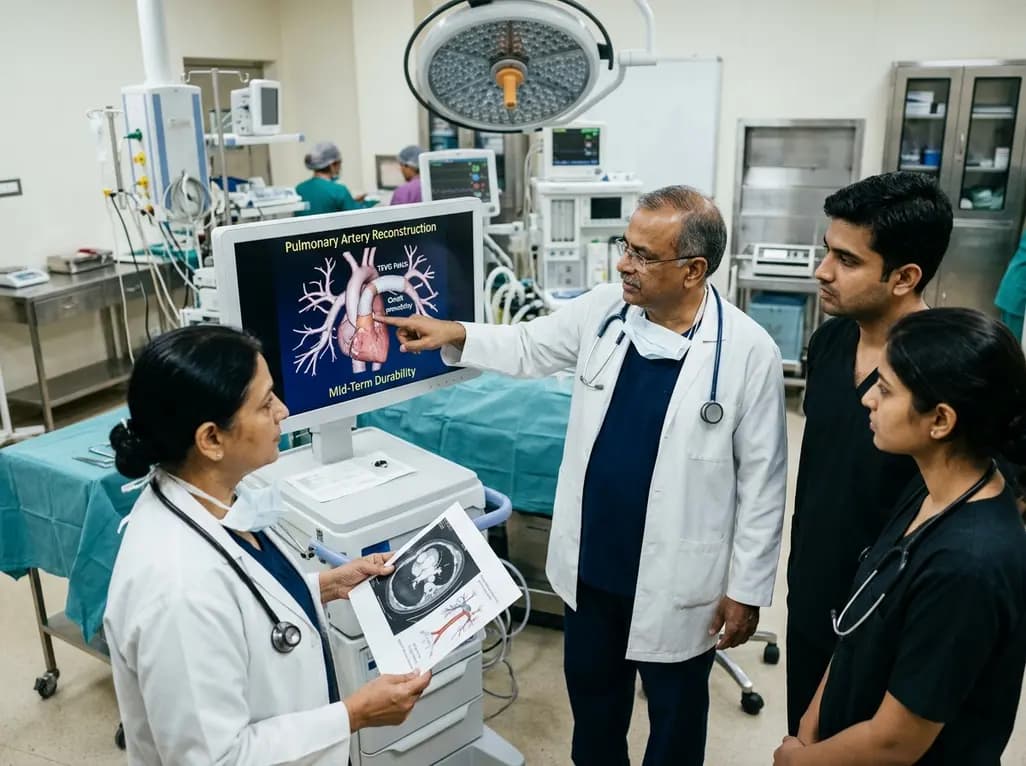
Autologous tissue-engineered vascular graft patches created via in-body tissue architecture show excellent mid-term durability and safety for pulmonary artery reconstruction in congenital heart surgery, particularly for peripheral branch augmentation.
Today

A novel cluster analysis of real-world datasets reveals four distinct CPPD disease phenotypes, validating existing EULAR categories while uncovering previously unrecognized monoarticular and axial presentations to refine patient management.
Today

Recent pharmacokinetic research demonstrates that trace dermal exposure to microgram quantities of trenbolone and metenolone produces detectable urinary metabolites for days to over a week, providing critical objective data for evaluating unintentional contamination claims in sports drug testing.
Today
